Latest
  • visit www.artsghana.net for information on the arts
  • visit www.artsghana.net for information on the arts

Arts Ghana

MENU
  • Home
  • About Us
  • Upcoming Events
  • Latest News
  • Artistes Database
  • Archives
  • Links
  • Contact Us
  • Music
  • Dance
  • Theatre
  • Literature
  • Visual Arts
  • Film
  • Fashion
  • You Tube
  • Facebook
  • April 28, 2026 • 114

    Festival reaffirms Togo as a jazz hub

  • April 24, 2026 • 285

    Music shaped by ancestry, improvisation, and transcendence

  • April 23, 2026 • 263

    Brass bands showcase tradition and experimentation

  • April 21, 2026 • 188

    Set design mirrors dynamism of contemporary African performance

  • April 17, 2026 • 229

    Shifting portraits of the complexities of male identity

  • April 17, 2026 • 220

    Rhythmic footwork and grounded movements

  • April 16, 2026 • 507

    Raw physicality with spiritual introspection  

  • April 16, 2026 • 260

    Imposition, interruption, and provocation by LED screen

  • April 15, 2026 • 173

    Sonic meditation on tradition and transformation

  • April 15, 2026 • 291

    Subtle exposure of constraints that shape female identity

  • African Footprint / Afro Moses / Danish Bands mesmerize audience

    April 5, 2016 • FeaturedArticle, News • 3378

    By John Owoo
    (At large in Cape Coast)

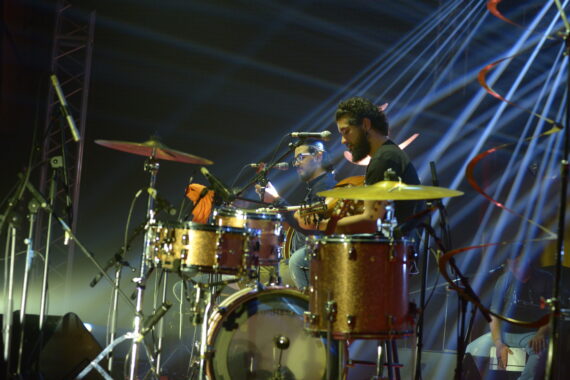
    African Footprint Legends, Australia based star Afro Moses and two Danish Bands last week delighted live music lovers in Cape Coast with a magnetic performance during the maiden edition of Green Music Festival.

    The festival, which will be held annually, is aimed at promoting the use of eco friendly energy to power equipment during festivals, concerts, workshops, seminars, film shows and other related events.

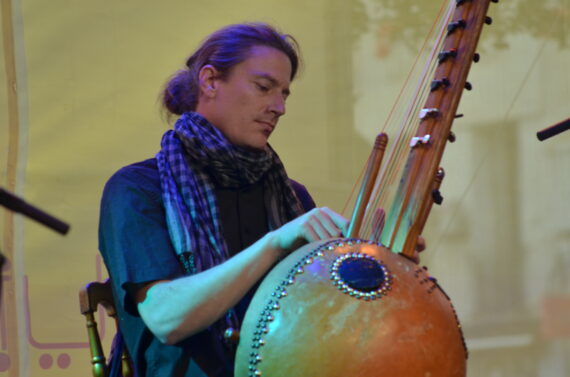
    A master of fourteen instruments including mbira, seperewa and kora, Moses mounted the stage at the Addison’s Square Garden and immediately went into his own world and dished out a dramatic blend of afrobeat, reggae, funk, jazz and Ghanaian traditional compositions.

    Joined by African Footprint Legends (Denmark/Ghana), Total Hip Replacement, Junglelyd (Denmark) and Dzesi Band, the all female Ghanaian group, Moses exhibited extreme showmanship as music full of energy flowed from the stage.

    With refreshing tunes from his seperewa, Moses uplifted, inspired and transported the audience to a refreshing groove, while lyrics laced with humour and social commentary filled the festival grounds.

    With Danish soloist Luca Sophia Krohn on vocals, African Footprint Legends dished out a dramatic blend of highlife, rock and jazz as the voice of Krohn, who appeared to sing from the bottom of her heart, cleaved through the air like a sparrow in full flight.

    Total Hip Replacement, a youthful funk/reggae band, took the stage by storm with highly bouncing sounds that engaged the crowd. Indeed, their warm repertoire enriched by lively rhythms created a cool atmosphere of bliss.

    Dzesi Band, led by Della Hayes charged the audience with their Afro sound as they drowned the stage with cross rhythms that turned into a highly poetic performance resulting in cheers from the enthusiastic crowd.

    Junglelyd band, which included Ghanaian drummer Cici Frank, sent the crowd deep into the forest with elegant rhythms and beats that equally mesmerized the audience while topping up with tunes laced with rhythms from Northern Ghana.

    All the participating groups also performed at the TV3 Studios (Music Music), Piano Bar and +233 Jazz Bar and Grill (all in Accra) where they entertained diverse audiences with their various compositions.

    The Royal Academy of Music, Maths Records, Klejtrup Musikefterskole, Den Rytmisk Højskole, Vestergaardskolen, Addisons Mighty Works Aps (all in Denmark), Music Department – University of Cape Coast (Ghana) and Hello Afrika (Hungary) are partners of the festival.

    Read More »
  • Sporadically embellished sacks engulf National Theatre

    March 22, 2016 • FeaturedArticle, News • 12950

    By John Owoo
    (In sack clothes)

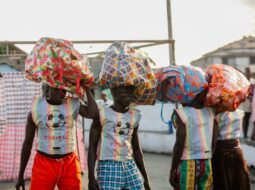
    A stunning installation of sewn cocoa sacks by the Ghanaian public artist Ibrahim Mahama that question the conditions of supply and demand in African markets last week engulfed the National Theatre in Accra.

    The installation, which has completely overwhelmed the huge edifice, forms part of Ghana Culture Day, which was held in the same building that Mahama has effectively turned into a kind of protective zone while dispersing diverse messages.

    His ambitious art derives its potency from continuous research and unrestrained dedication. Undeniably, his questions do not only require answers – they equally end up posing more questions.

    By carefully recycling cocoa sacks that have been reconditioned into charcoal sacks and stitching huge chunks together, he adds texts that include names of markets and market women while adding tiny patches of red paint.

    The rough nature of the sacks coupled with the loose hanging; radiate tenacious power as one begins to imagine the time, effort and number of people required to erect this gigantic artwork.

    Mahama sporadically embellishes the installation by inserting foreign made wax prints and other colourful materials thereby providing another angle of analysis of the large-scale movement of goods and services.

    Wherever his installations are mounted, they constantly take on the mantle of a socio political investigation into the foundation of materials while revealing the transitional nature of ownership of these sacks as they move from one person to the other.

    Undeniably, he has succeeded in drawing attention to the global transportation of goods across borders through immersive installations, which are found in art spaces and market places in several cities and towns in Africa and Europe.

    Read More »
  • Visually captivating & emotionally striking dance woo audience

    March 1, 2016 • FeaturedArticle, News • 2487

    By John Owoo
    Alliance Française – Accra

    “The March”, a dance piece which involved artists from diverse cultures that explored human perception and challenged inherent sensitivities last week received cheers at the Alliance Française in Accra.

    Comprising Hamadou Sanogo (Mali) Foli Adjo Delali (Togo), Mbali Nkosi (South Africa) Kossi Sebastien Aholou-Wokawui (Togo) alongside Felix Dompreh (Ghana), the group radiated tenacious power as they engaged in complex movements that were inspired by images of American photographer Kenturah Davies.

    Choreograhed by Felix Dompreh, the piece is full of sleek, compelling and clever movements. Undeniably, the dancers exhibited raw talent and skill acquired through their involvement in unpredicatble works commissioned from a range of choreorgraphers over the past several years.

    With shadows cast on the screen, which created a feeling of multiple scenes, their bodies moved in unison while fingers, arms and heads transmitted messages through highly controlled and well crafted movements.

    The dancers, who appeared visually and emotionally striking on stage, exhibited a rather captivating body language that laid bare the power and ability of the human body to tell stories.

    Employing the use of a flag to convey the power of cultural symbols while projecting strength and solidarity, the commitment of the group was clearly phenomenal as they provoked a myriad of interpretations from the audience.

    Interspersed with refreshing solos and duets, the piece, which was characterized by interwoven layers of well-structured scenes, was equally full of rhythm, innovation and originality.

    Earlier dancers from the Noyam African Dance Institute in Dodowa (near Accra) engaged the crowd with a brilliant piece that set the tone for “The March”, which is set to tour several African and European countries in the next several months.

    Read More »
  • Cultural Crossings project unveiled in Accra

    March 1, 2016 • FeaturedArticle, News • 2646

    By Nii Laryea Korley

    Smiles and laughter – inspired by optimism – lit up the atmosphere at the Best Western Premier Hotel, Accra, as artistes of different persuasions came together for the launch of a multi-flanged project dubbed Cultural Crossings.

    It is basically a platform to enable eligible African artistes travel on the continent and share relevant experiences. The brains behind the project are Liberian-born, England-based artist Sarah Güsten-Marr and Ghanaian spoken work exponent and founder of the Ehalakasa poetry movement, Benedict Kojo Quaye (aka Sir Black).

    They took time to explain the essence of the project to the gathering which included the Deputy Minister of Tourism, Culture and Creative Arts, Dzifa Gomashie; actress and film producer, Juliet Asante; Daddy Bosco of the Musicians Union of Ghana; photographer and music industry publicist, Cary Sullivan and Liberian photographer and actor, Omanza Shaw.

    Sarah Güsten-Marr is a well-travelled, bubbly, eloquent character with a deep passion to see African artistes explore more of their continent and help each other excel at what they do. She owns Gallery GM in Yorkshire, England, and was the hub of the gathering as she explained the different components of the Cultural Crossings project.

    “I truly believe that travelling enhances knowledge, so the more we travel, the more we are open to different things, which is exactly what we need in the world. Sir Black and I got together and decided it was important to give opportunities to our brothers and sisters in the arts on the continent,” she said.

    “We have these beautiful countries side by side but we do not know each other’s country so we have decided that Gallery GM, together with the Ehalakasa movement, will support one artist every year to do a cultural crossing for the next 10 years and experience another African country.” “If you have extra funds, forget about another pair of shoes. Put it into an orphanage, put it into another artiste.”

    Paul Forjoe Jnr, also known as 100 per cent, winner of the 2015 Ehalakasa Slam Championship for spoken work artistes, will, therefore, be sponsored to an African country, at a date to be announced soon, to interact with other artistes there.

    Cultural Crossings is also bent on helping to strengthen cultural ties between Ghana and Liberia and there will be frequent exchange of artistes between the two countries.

    Sarah Güsten-Marr said her artiste-in-residence programme at Yorkshire was still functional and African artistes were welcome to participate. Her Gallery GM has also made provision to support a culture-driven environmental programme for a section of Liberians in the Central Region under the Cultural Crossings project.

    Omanza Shaw, co-ordinator of the Cultural Crossings project in Liberia, also pointed out that the arts, more than any other field of endeavour, has the capability to unite and rejuvenate communities. He urged for support from artistes and other relevant bodies for the project.

    The Deputy Minister of Tourism, Culture and Creative Arts praised the Cultural Crossings project because “it helps to create a platform for young people to have a stage on which they can fly higher than we are doing.”

    Cary Sullivan, who is reggae star Rocky Dawuni’s wife, described the arts as a weapon for social change and said people, must get into it primarily for the passion they have for it and not for the money.

    Read More »
  • Photos masked by protests, criticism & hope on show in Accra

    February 12, 2016 • FeaturedArticle, News • 2734

    By John Owoo

    Following the 4th World Conference on Women, which was held in the Chinese capital Beijing (1995), a number of organizations and individuals have moved into action on issues relating to equality of women and their contributions to development and peace.

    In Ghana, Nana Kofi Acquah, a suave world travelled photographer has kept the objectives of the conference alive with a crusade that has unearthed women in diverse circumstances through the power of imagery.

    One of a few artists who have tirelessly ensured the dynamism and development of photography in Ghana, his photos are masked by protests, replete with criticism, veiled in hope and celebration and characterized by subtle confrontation.

    Acquah’s work, which is currently on display at the Alliance Française in Accra, show him as master craftsman with images that effectively capture cultural values, emotion, achievement and resilience while commenting on stereotyping.

    Titled “Don’t Call Me Beautiful”, the exhibition provides a factual account of the situation of the African woman – victories, woes, achievements, hopes, distress – and most importantly – how she gracefully braces herself and handles them.

    Also known as the African Male Feminist, he goes beyond mere documentation – indeed his pictures reveal a particular attention to detail alongside intense emotions and broad conceptualized planes of colour, which reached extremes in images like “Women of Power” and “Cashew Nut Girls”.

    Yet another photo (Sirigu Grandmother) of an aged woman recall the old tradition of body painting while unearthing a set of eyes that gaze at the viewer with wisdom, pain, sorrow, joy, courage, despair, confidence and experience.

    Undeniably, cohesiveness and singularity in his work are quite phenomenal – although they appear simple, his photos are complex and intellectually detailed as they radiate an atmosphere of active calm and subtle agitation.

    With a remarkable use of light, Acquah who is noted as a torchbearer in the repositioning of Africa through photography has managed to place the spotlight on women not only through exhibitions but also interviews and crusades in the media.

    The exhibition ends on Wednesday March 9.

    Read More »
  • MusicXchange to unite music and healthcare in Ghana

    January 18, 2016 • FeaturedArticle, News • 3264

    By John Owoo
    In Kumasi

    Traditional music groups from the Greater Accra, Ashanti and Eastern regions last week showcased their artistic creations in a concert that sought to create awareness of a project that seeks to unite global music and healthcare in Ghana.

    Performing at the Centre for National Culture in Kumasi, Hewale Sounds (Greater Accra), Catholic Youth Choir / Ammamreso Agofomma (Ashanti Region) and the Nkabom Children’s Cultural Group (Eastern Region) delighted the audience with compelling performances loaded with sharp contrasts.

    Dubbed MusicXChange Ghana, the project stems from a deep interest in ethnomusicology and is driven by a firm belief that music can be an effective tool for change while providing a platform for local musicians to showcase their talents and impact positively on healthcare.

    The project, among others aims at promoting traditional Ghanaian music to a worldwide audience, encourage the use of music therapy in Ghana, raise USD 50,000.00 to support a new HopeXChange Medical Centre in Kumasi and develop a pilot programme in music therapy for Ghana.

    Another highlight of the project is a MusicXchange Ghana album that includes a diverse compilation of sounds and songs selected from a wide range of musical styles and genres.

    Indeed, the album portrays a wide picture of Ghanaian musical culture – Ewe, Ashanti and Ga traditional repertoire – while featuring voice and percussion groups as well as choirs, instrumental ensembles and solo performers.

    The HopeXChange Medical Centre is set to provide high quality medical care, cutting edge biomedical research and medical education to prevent and treat diseases of public health significance – notably infectious diseases and cancer.

    Federico Masetti, director of MusicXChange led a delegation from the United States, which included students of Berklee College of Music (Boston), medical officers / health personnel and musicologists for coordination of various activities.

    The US Embassy in Accra, Centre for National Culture, Komfo Anokye Teaching Hospital, School of Medical Sciences (Kwame Nkrumah University of Science and Technology (all in Kumasi) sponsored the performance.

    Read More »
  • Tuumatu Festival exposes raw talent in James Town

    January 5, 2016 • FeaturedArticle, News • 5517


    By John Owoo

    A number of music and dance groups treated a huge crowd to captivating performances during the last day of the 2015 edition of Tuumatu Festival, which was recently held at James Town, a suburb of Accra.

    With completely different approaches to composition and choreography, the groups severally performed purified traditional / contemporary music and dance pieces that have been skillfully laced with conventional movements.

    Without doubt, the performances revealed a wealth of talent that abound in James Town and its environs as group after group conspicuously revealed its artistic creations to art lovers and residents of this sprawling neighbourhood.

    Unik Afro Dance Company delighted the audience with a contemporary piece based on the day-to-day activities of the residents of James Town. Accompanied by live music from a traditional orchestra, they dancers moved in unison as subtle, fluid and vigorous movements recounted the story of this popular suburb.

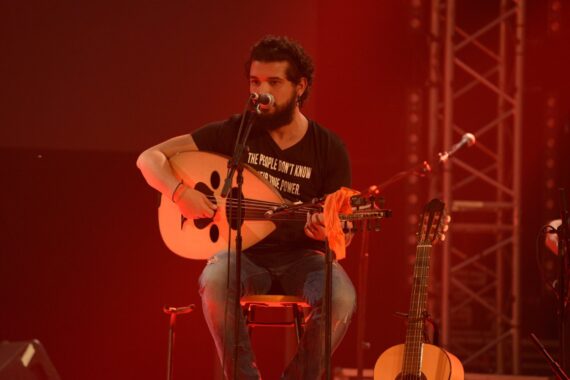
    Sasa Nzeri, a neo traditional music group performed a warm repertoire that was sustained through a variety of wooden instruments that managed to stretch traditional rhythms into their contemporary extensions.

    With a variety of wind instruments, Weku Kronkron, a youthful band that has been creating waves in the city, charmed the crowd with a cool combination of traditional and western instruments, which created sounds that emphasized the beauty of fusion.

    Music by Indigenous Afrique Rhythms was supplemented by acrobats and footballers, who simulated a football match on stage while Burkina Boys, a band comprising Burkinabe musicians resident in Accra treated the crowd to traditional Burkinabe sounds.

    Accompanied by local dancers, Australia based dancer / choreographer Kofi Yeboah thrilled the crowd with “Evolution”, a thirty-minute dance piece that was characterized by an elegant step between traditional and contemporary movements.

    Earlier, over two hundred primary school kids drawn from various schools and communities around James Town, a suburb of Accra, last week had their turn to participate in the 2015 edition of Tuumatu Arts Festival.

    Full of enthusiasm, they re-enacted games that have been abandoned in recent years. These include racing with car toys fashioned out of discarded tins, car tyres and a hundred meter dash with cloths tied to their waists.

    With music playing at the background, they were introduced to toy making through the use traditional techniques with discarded and recyclable objects while sensitizing them on the benefits to the environment.

    Other games including hopscotch, flying of kites, playing of Oware and engaged the kids while others took part in dance, modeling and poetry competitions, which attracted loud cheers, catcalls and applause.

    Lucky Lartey, a Ghanaian dancer and choreographer based in Australia, organized Tuumatu, which is gradually becoming a regular feature of the arts calendar of James Town.

    Read More »
  • Lyrical / Frenetic moods at Artists Alliance Gallery

    December 21, 2015 • FeaturedArticle, News • 2818


    By John Owoo
    In Accra

    An exhibition of acrylic / oil paintings by Kate Badoe that are characterized by simple and complex patterns, combs, masks and geometric shapes ended recently at the Artists Alliance Gallery in Accra.

    With subdued colours, she produces drawings and paintings that employ diverse technics alongside forms and traditional African art, which she effectively translates in contemporary terms.

    Fully inspired by African image crafting including carved masks and presentational combs, Badoe’s mastery of the technique required for these fine line drawings is indisputable as her works grabs and sustain the attention of the viewer.

    Currently based in the United States, her artworks uncover coordination and regularity – a move that inevitably reveal modern and traditional practices as well as objects of her rich Ghanaian cultural heritage.

    Badoe clearly has talent to spare as she exhibits an ability to touch on a wide range of moods – from the lyrical to the frenetic – while carving out to more ambitious territory. Indeed, stylized human forms and worm-like lines culminate in mask heads that accompany extremely distorted human bodies.

    Obviously, there is a quality of childlike wonder in her pieces – both in the primary colours and the sharp contrasts of light and dark – not to mention a regular / structured craftsmanship that evoke works that are wrapped in philosophical underpinnings.

    She “transplants” the heads of Akuaba dolls on giant combs and near circular human bodies in a manner that reveal some form of tension between innocence and sophistication as geometric shapes lurk at random on her canvas.

    Patches of white space that often recur in her works enable the pieces to sparkle. Undeniably, her “Sankofa” birds abound in spurts of color and are realized in geometric shapes as she attempts to bring nature down to earth and within our own realm of comprehension, while admitting us the her own sense of awe.

    Read More »
  • Dramatic fusion of Ghanaian and Indian symbols at The Loom Gallery

    December 14, 2015 • FeaturedArticle, News • 3502

    By John Owoo
    In Accra

    The Loom Gallery in Accra – undoubtedly one of the pioneering promoters of the visual arts in Ghana, has consistently and persistently exhibited the works of female artists notwithstanding their background, country or culture.

    Recently, the gallery opened its doors to Soma Sen, an Indian artist whose works comprise a dramatic fusion of the elements of Ghanaian and Indian culture that tend to reveal the simplicity and complexity of both societies.

    Trained at the School of Fine Arts in Jamshedpur / Ranchi University (India) and the Ghanatta College of Art & Design (Ghana), paintings by Sen show her as an artist who makes a successful foray into sea / landscapes, open flora, abstracts, animal / human figures, still lifes and terra cotta works.

    She creates interesting allusions to culture through a dramatic incorporation of Ghanaian and Indian symbols while touching on a wide variety of moods with a delicate use of colour. Consequently, she attempts to bring nature down to earth – indeed, within our own level of comprehension.

    Her works are laced with diverse traditional Ghanaian influences including a heavy use of Adinkra symbols, symbolic colours and other art forms such as traditional music, dance, festivals and court practices.

    In the process, she waxes freely between Indian and Ghanaian cultures by fusing diverse images, symbols, motifs and forms to deliver messages that can relate to people from both cultures.

    She makes a theatrical use of adinkra symbols, sankofa birds and effectively extends them with symbols and other images from India thereby creating a cool amalgamation of two formidable and distinct cultures.

    Colonial castles, takai dancers, bare chested footballers alongside peacocks, flowers, abstracts, land and seascapes with stylized clouds are conspicuous in her works, which combine to reveal an influence of diverse cultures.

    A member of the Foundation for Contemporary Art / Ghana Association of Visual Artists, Sen’s work posses a quality of childlike wonder – nevertheless, rigorous social, cultural, environmental and historical underpinnings characterize her paintings.

    Broad-brush strokes that end up as stylized human figures inundate her backgrounds and cloud formations. She wittingly allows a pronounced amount of light in some works thereby allowing them to sparkle.

    Terra cotta works by Sen employ geometric shapes, flowery symbols and abstracts that are tactically placed to enhances their texture and heightens their visual impact while capturing the attention of the viewer.

    Sen’s exhibition is the first following a devastating flood in the middle of the year, which dumped five feet of water in the gallery. The raging floods subsequently caused a fire that killed dozens of people in a nearby filling station.

    Read More »
  • A dynamic blend of traditional / contemporary beads and leather works

    December 8, 2015 • FeaturedArticle, News • 2589

    An exhibition of beads and leather works by Kati Torda and Gill Quarcoopome that tend to push boundaries ended recently at the Nubuke Foundation in Accra.

    With meticulous precision, Torda’s works are bold, colourful, stylish and ambitious. Indeed, they comprise a dramatic fusion of Ashanti bronze / Dogon pendants, recycled glass, antic European trade beads, circular granite stones and a cool fusion of leather and suede.

    Her installation of beads is a mass of colour with beads arranged in circular formations. At first glance they appear spontaneous, however a careful observation reveals a creative sequence and expertise that dates back to the early 1990s.

    With some works hanging on framed canvasses and improvised mannequins alongside loose hanging cloths, they evoke and radiate an atmosphere of active calm as exquisite designs majestically confront the viewer in all directions.

    Full of symbolic language, her work is a curious mix of traditional and contemporary – indeed they generate a calm effect on contemporary art in Ghana while resonating the roots that underpin the sanctity of bead jewelry.

    Designs by Quarcoopome employ the use of geometric shapes in diverse ways. With a number of them embellished with gold weights, her works are both evocative and fashionable while encompassing diverse cultures.

    Comprising belts, necklaces, bangles, purses and bags among other wearable items, she sometimes adorns them with glass, animal horns and bronze works, while other pieces, which are cut in various shapes, hang alongside paintings and mirrors.

    Quarcoopome, who was attracted to leather in 1980, has worked with Torda on numerous projects and group exhibitions since 1990. The exhibition, which is titled “Negative to Positive”, is their first collaboration.

    Read More »
« 1 … 36 37 38 39 40 … 44 »

Subscribe to Arts Ghana News

Enter your email address to subscribe. Receive notifications of new posts by email.

RECENT VIDEOS

Simple Slideshow

  • Goethe Institut
  • Alliance Française
  • Arterial Network

© 2026 Arts Ghana™

Website Managed by DelTin Technologies