Latest
  • visit www.artsghana.net for information on the arts
  • visit www.artsghana.net for information on the arts

Arts Ghana

MENU
  • Home
  • About Us
  • Upcoming Events
  • Latest News
  • Artistes Database
  • Archives
  • Links
  • Contact Us
  • Music
  • Dance
  • Theatre
  • Literature
  • Visual Arts
  • Film
  • Fashion
  • You Tube
  • Facebook
  • April 28, 2026 • 114

    Festival reaffirms Togo as a jazz hub

  • April 24, 2026 • 285

    Music shaped by ancestry, improvisation, and transcendence

  • April 23, 2026 • 263

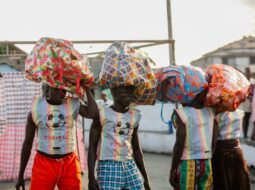
    Brass bands showcase tradition and experimentation

  • April 21, 2026 • 188

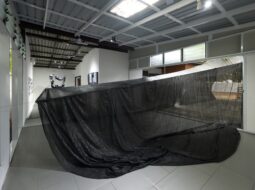
    Set design mirrors dynamism of contemporary African performance

  • April 17, 2026 • 229

    Shifting portraits of the complexities of male identity

  • April 17, 2026 • 220

    Rhythmic footwork and grounded movements

  • April 16, 2026 • 507

    Raw physicality with spiritual introspection  

  • April 16, 2026 • 260

    Imposition, interruption, and provocation by LED screen

  • April 15, 2026 • 173

    Sonic meditation on tradition and transformation

  • April 15, 2026 • 291

    Subtle exposure of constraints that shape female identity

  • Prof. F Nii Yartey – He died as he lived – A devotee to dance in Ghana

    December 3, 2015 • FeaturedArticle, News • 7488

    By John Owoo

    A Ghanaian dance colossus has fallen – Prof. F. Nii Yartey, the recent past director of the Department of Dance Studies, University of Ghana (Legon) and the acting Director of the Ghana Dance Ensemble – passed on last week at the age of 69 -after a short illness during a national assignment in the Indian capital, New Delhi.

    An astute dancer, choreographer, academic and arts administrator, his contributions to the development of dance in Ghana since the 1970s can simply not be overstated. Undeniably – he died as he lived – a selfless devotee to the enhancement of dance studies and performance in Ghana.

    Also the director of Noyam Afrcan Dance Institute, a school he set up in 1998 to admit talented dancers who cannot meet the basic requirements for tertiary education, his choreographic works of over forty pieces include “Musu-Saga of the Slaves”, “Asipim”, “Solma”, “Legend of Okoryoo”, “Sochenda”, “Bukom” and “Fire of Koom”.

    A former director of the National Dance Company, he will be remembered for widely effervescent dance pieces that are definitely on the contemporary tip but with their “hearts” firmly embedded in traditional Ghanaian and African dance forms and movements.

    Easily the father of Ghanaian contemporary dance, Yartey is the author of several publications. These include “Contemporary Transformations of African Dance in Ghana”, “Creation and Presentation of Traditional African Dances” and “Development and Promotion of Contemporary Choreographic Expressions in Ghana”.

    He has been involved in the choreographic components of the opening and closing ceremonies of all international football tournaments Ghana has hosted since 1999. These include the opening ceremony for the World 11 versus Africa 11 football tournament that commemorated the 2011 Africa Union Day celebrations.

    Easily the father of Ghanaian contemporary dance, Yartey is the recipient of diverse local and international awards including the Grand Medal (Civil Division) in 2000 for his contribution to choreography and dance development in Ghana. He has also been listed in the 28th Edition of Dictionary of International Biography, which was published by the International Biography Centre in United Kingdom.

    He has left an indelible legacy of robust, articulate and creative young men and women who have excelled not only in academia but also in choreography and performance. His footprints are dotted over several universities, colleges and theatres in the United States, Europe, Asia, the Caribbean and other parts of Africa.

    Though he describes his work with Noyam as contemporary African dance, Yartey finds the label somewhat limiting. Indeed, his experimentation has been in response to the choreographic heritage he received from the late Prof. Mawere Opoku, who was the first artistic director of the National Dance Ensemble and a pioneer in the development of African dance theatre.

    An apostle of collaborations, Yartey has engaged in extremely fruitful partnerships with diverse institutions and choreographers throughout the world including Nana Nilsen (Denmark), Monty Thompson (Virgin Islands), H. Patten / Harley Matthews (United Kingdom) and Meno Preto (Cape Verde).

    Others are Reginald Yates / Jeanine Osayande (USA) and Jacque Van Meel (The Netherlands), Germaine Acogny (Senegal / France), Mundial Productions (The Netherlands), DANIDA (Denmark) and United Cultures for Development Network (South Africa) among others.

    He will be profoundly missed in lecture / rehearsal halls, theatres and research centres in many parts of the world. May his soul rest in perfect peace.

    Read More »
  • All-bass German saxophone quartet charm audience in Accra

    November 28, 2015 • FeaturedArticle, News • 2316

    A group of Ghanaian saxophonists led by Stephen Aidoo Borsah last week joined an all-bass saxophone group from Germany to charm a near capacity audience at the Geothe-Institut in Accra with highlife orchestrations and improvisations.

    Employing rhythms from the Yaa Amponsah tune as well as compositions from Bessa Simon and Gyedy Blay-Amboley, they vigorously revealed the beauty of cross-cultural collaborations as cheers flowed from the multi racial audience.

    Urged on by continuous applause, the musicians moved within the audience as they performed the results of a one-day workshop, which was held to expose the artists to music traditions of both Ghana and Germany.

    Earlier, Deep Schrott, the only all-bass saxophone quartet in the world, took the crowd on a cool musical journey with tunes that are characterized by tremendous emotional power, depth and sensitivity. Indeed, they managed to get the audience glued to their seats as tune after tune revealed their ability to “stretch” only bass saxophones to their limits.

    Comprising Andreas Kaling, Wollie Kaiser, Jan Klare and Dirk Raulf, who are internationally well known as instrumentalists and composers, Deep Schrott delighted the audience with epic compositions from diverse musicians, which they interspersed with compositions from their own repertoire.

    Noted for devoting themselves exclusively to the tonal and technical possibilities of the bass saxophone, the group surprised the crowd with fluid-like pitches as well as contrasting sounds while swaying them with basic melodies and durable grooves.

    Goethe-Institut in Accra supported the concert.

    Read More »
  • Whimsical woodworks in Accra explore form and convention

    November 15, 2015 • FeaturedArticle, News • 3955

    By Antonia Bamford
    Michealis School of Fine Art
    University of Cape Town
    South Africa

    Whisked away in a ‘Tro Tro’ in true Ghanaian style is the way to travel across Accra, the busy capital of Ghana. First stop was to see the great wood and cement sculpture works by Alex Sefah Twerefour.

    On entering this hidden cave of such incredible, intricate and somewhat magical, mysterious but also monumental space, I am amazed by giant works that have taken over his snug studio space. Sefah Twerefour has over the past four years been sculpting full time after his retirement as Director of the Centre for National Culture in Accra.

    His works are mainly in woodwork form and tend to take natural shapes that he says “speak out to him” [Sefah-Tee, 2015]. This is his approach to the commission he may do for my final exhibition as part of my “Honors in Curatorship” at the Michaelis School of Art, Cape Town, South Africa.

    Most of the wood he says is collected from the bush and all varying in forms. Some used for the drums [acacia], some very soft [nim tree] and some that was naturally very decorative which formed the snake sculpture, measuring over 12 metres, which was actually the roots of a tree [mahogany].

    After visiting this extraordinary palace, not only was it inspiring having been exposed to so many varieties of wood but it also made me want to further my career as an artist, to allow his work to breath and feel a lot freer, which I hope Cape Town will satisfy these needs.

    Sefah Twerefour’s studio taught me a lot about the powerful language wood develops into forming the sculptures. In a similar way theorist Michael Foucault would say, “the arts of existence but techniques of the self”. [Foucault, 1958:54] These techniques and strategies of carving I had learnt appeared useful in the next visit to Fontomfrom Furniture Collections.

    What a breathtaking welcome I received at Osei Adjekum’s workshop of abstract tables. These showed something truly unique and all from local sources around Accra, whatever the shape or size of wood – it had a creative use.

    Adjekum guided me around his personally built home, including a spare guest lodge, which could easily be a 5 star guest lodge – pure, beautiful granite stone shower and exquisite mosaics to perfect the finish. Oh and forgetting to mention the bamboo doors and fittings. This is somewhere I would advise anyone to go and catch a good nights rest away from the hustle and bustle of Accra.

    Finally, but not yet the final for my project research we paid a visit to Eric Adjetey Anang, who’s decorative / designer coffins again are something completely new to the aesthetic eye. These are objects of importance and to remember ones life – for instance, the football boot for the professional players, or the guitar to pay tribute to the musician.

    His current build is a lobster for a local, well-known and loved fisherman. Although his presence will be truly lost, he will be remembered and rest within what he loved doing. I questioned Eric about designing a spoon shaped coffin for me, one that would be suitable to transport over to South Africa. This may put another spanner in the works [excuse the pun].

    To finish off the day and as the rain began to fall we stopped at the Artists Alliance Gallery, again a never-ending experience of so many traditional art forms. It was so madly unorganized for a curator, and gave me the want to regulate the organization of space but hey at least there’s the space to house some works.

    Together with this, the 4th floor exhibited contemporary works of Nigerian artists. I came away with a poster of the Adinkra symbols cloth and a patchwork rug made of different materials – something to remember such a fantastic day.

    Many thanks to arts reporter John Owoo for guiding me around the crazy city of Accra, I would not have been able to navigate around the “tro tro” service, speak twi and certainly not know where to go for a relaxing and refreshing beverage. I will be back soon.

    Read More »
  • Mali solidifies its reputation as a hub for photographic practice in Africa

    November 8, 2015 • FeaturedArticle, News • 3058

    By John Owoo
    At large in Bamako (Mali)
    Courtesy – Royal Air Maroc

    The 10th edition of “Rencontres de Bamako”, the largest African Biennial of Photography, opened on Saturday October 31 with a glimmer of hope for African photography in the coming years.

    Titled “Telling Time”, the festival, which could not be held in 2013 owing to the political crises in Mali, is without doubt the rallying and challenging point for young African photographers and their bid to move onto the world stage.

    Indisputably, “Telling Time” attempts to present a collection of subjects and problems that tend to reframe the conformist explanations of our time through conspicuous and inconspicuous structures while offering alternative methods of engaging narratives, occurrences and aspirations of Africa.

    Curated by Bisi Silva (director of Centre for Contemporary Art, Lagos – Nigeria) with Antawan Byrd (Doctoral candidate in Art History at the Northwestern University, USA) and Yves Chatap (independent curator / art critic) as Associate Curators, the thirty-nine selected artists from diverse countries and cultures in Africa expatiated on several issues relating to identity, colonialism, capitalism, politics and culture among others.

    The artists made bold pronouncements that hinge on philosophical debates on politics and technology, colonial temporalities and their links to capitalism as well as interventions by liberation movements. Indeed, they offered observers the opportunity to access the role of “Rencontres de Bamako” as an international convener of questions relating to photography in Africa.

    Photos by the Ghanaian award winning photographer Nyani Quarmyne, literally turned an unattractive / harsh refugee camp in Southern Mauritania into an appealing one. Images of tea sharing, colourful clothes, tending of animals, football matches and skinning of slaughtered animals definitely tell a different story from constant misery and desperation painted by the media.

    Works by South African photographer, Lebohang Kganye on display at the National Museum in Bamako show her as a master craftswoman. She reinvents the presence of her late mother through digital editing thereby leading to imaginary “stalking” of her past and present life.

    Employing bold approaches of reenacting and recreating, Nigerian Uche Okpa-Iroha, who won the highest prize, deftly places himself in the frame of black and white pictures from Francis Ford Coppola’s 1972 Hollywood film “The Godfather”. He creates in the process a separate story that relate to history.

    Black and white photos by Nassim Rouchiche from Algeria depict the perilous living conditions of a community of migrants from Sub Saharan Africa in the Algerian capital Algiers. His apparition-like images effectively blend with nondescript walls that tend to place the viewer in the situation of the migrants.

    Depressing photographs from the Congolese photographer Jean Euloge Samba show the aftermath of missile explosions and subsequent damage and destruction of a community that is sited dangerously close to a military facility in the capital Brazzaville. They forcefully comment on lack of adequate planning of growing cities in Africa.

    Images of health workers clad in biohazard suits by Emmanuel Bakary Daou (Mali) recall horrifying memories of the Ebola virus that wrecked havoc early this year in Guinea, Liberia and Sierra Leone. The suit, which shields the identity of health workers, equally recalls the activities of undercover reporters who appear at public enquiries completely hooded.

    Politically charged photos from the Burkinabe photographer Hipolyte Sama, illustrate chaotic scenes that characterized the “people’s revolution”, which toppled long time ruler Blaise Compaore. Indeed, the images forcefully reveal the mood of Burkinabes, who fearlessly demonstrated their frustration and anger on the streets.

    Photographs, videos and presentations of “Telling Time”, which ends on Thursday December 31, will without doubt reverberate throughout the continent of Africa and beyond. Ministry Culture in Mali organized the biennial in collaboration with the French Embassy in Bamako and the Institut Français in Mali.

    Photo Credits
    Nyani Quarmyne, Emmanuel Bakary Daou, Jean Euloge Samba, Hypolyte Sama, Uche Okpa-Iroha and Nassim Rouchiche

    Read More »
  • An interaction of nudes and semi nudes at Chale Wote Street Art Festival

    October 13, 2015 • FeaturedArticle, News • 7746

    By John Owoo
    In Accra

    Performance art has without doubt been prevalent in Ghana for generations – nevertheless a kind of renaissance is gradually unfolding following bold performances by Bernard Akoi Jackson, Akwele Suma Glory and Olaniyi Akindiya in the early 2000s.

    Since then a number of highly charged performances have rocked Accra and beyond during exhibitions comprising a number of local and foreign artists. Undeniably, these acts were technically and intellectually thorough – and appeared quite simple although complex and quite multifaceted.

    In recent years, the Chale Wote Street Art Festival, which is without doubt becoming a powerful fixture on the Ghanaian arts scene, has been noted for presenting various performing artists – both local and foreign.

    Indeed, during the 2015 edition of the festival, South African artist / photographer Dean Hutton, Italian artist Natascia Silverio and Ghanaian artists Va-Bene Elikem Fiatsi (crazinisT artisT) and Serge Attukwei Clottey, who appeared with a retinue of performers managed to challenge conventional, social patterns and past artistic values as they emphasized the human body’s role in art.

    Dubbed “African Electronics”, it was an interaction of nudes and semi nudes, wires, chains and ropes that radiated an atmosphere of an uncanny calm. Also noticeable were facial expressions that evoked tales of physical and supernatural phenomena, which touched on humanity and mankind.

    With her naked body and hair painted in gold and a school bell hanging on her waist by means of a rope, Hutton moved along the streets of Jamestown (Accra) with a majestic awe as she laid bare the sacred nature of the human body and its ability to transmit messages.

    Although she may not meet beauty standards elsewhere, Hutton surely met the benchmarks in James Town (a suburb of Accra) with her body – both men and women stared in awe with some ladies stealing “jealous” glances, as some members of the audience gazed with utter amazement and remote attention.

    Much of Dean’s work is concerned with social issues including the rights of women and the dispossessed while giving a voice to those who are rarely heard above the furor of mainstream media coverage and middle class indignation.

    A “duet” by Fiatsi and Silverio created a “tremor” effect as Fiatsi, totally naked and painted in black lay motionless while Silverio, with a piece of cloth around her breasts and waist sits over him in a rather listless yet equally mobile manner as interconnected wires and other items interconnect.

    All together, three performances were composed as one installation piece that explored the collective flow of energy from three different power stations to question a variety of possibilities in Africa – regardless of sexuality, race, gender and cultural identities.

    Young dynamic artist Attukwei Clottey led a procession of artists in deep social, spiritual and philosophical march that expressed a manifestation of vibrational harmonic resonance. With a mask fashioned out of plastic gallons with his legs and feet tired in ropes, he effectively charmed the audience as he moved from street to street commenting on social and environmental justice.

    Art lovers in Ghana must be poised for more of this approach to making art – which is developed on logical analyses of conceptual expressionism – indeed, it is set to continue challenging, engaging and confronting the population at large.

    Read More »
  • Visual exploration into signs at Alliance Française

    August 18, 2015 • FeaturedArticle, News • 3985

    The recent use of digital technology by Barbering / Hair Dressing Salons in Ghana for advertising purposes has without doubt imparted on the visual landscape of the country as more trendy salons spring out on a regular basis.

    Indeed, the result of an artistic and visual investigation into these signs by Dr. Joseph Oduro-Frimpong, a lecturer at the Department of Arts and Sciences, Ashesi University (Berekuso) is on display at the Alliance Française in Accra.

    The over dramatized signs, which comprise text in both English and local languages, appear to deal with a variety of issues relating to Ghana and Africa through discursive, provocative and eye-catching representations.

    These include “Dumsor Spoil My Fridge Klean Kuts”, “Say No to Brazilian Hair Grooming Palace”, Suro Nipa”, “The Young Shall Grow Beauty Klink”, “Dzi Wu Fie Asem”, “Eye Asem Ooo”, “Married But Available (MBA) Unisex Salon” and “Paddle your Own Canoe”.

    A striking feature of these signs is the conspicuous use of light skinned models. In a country with about ninety-nine percent of its population as dark skinned, the use of light skinned models is quite strange and could spark some kind of research by art critics.

    Nevertheless, the signs are colorful and easily attractive to the eyes. They are equally laced with comical material as well as grammatical errors and spelling mistakes. However, a combination of these factors appears to add to the fun thereby grabbing and sustaining the attention of the viewer.

    Are these works “folk art”, “street art”, “naïve art”, “wayside art” or contemporary African art? Can we continue to describe these artists or “sign writers”, “untrained”, “outsiders” or “self trained”?

    Dubbed “Married But Available”, the Alliance Française in Accra is sponsoring the exhibition, which ends on Wednesday September 2, 2015.

    Read More »
  • Creative industries can give Ghana a boost

    August 3, 2015 • FeaturedArticle, News • 3337

    By Baba Abdulai

    It is often the case that when it comes to the contributions of the creative industries to national development in this country, the recognition is at best to give them footnote positions in our national scheme of things or at worst to remain mute about what they contribute.

    However, some actors in the creative industries have started taking steps to right this wrong and one of them, Institute of Music and Development (IMD) with funding from the Business Advocacy Challenge Fund (BUSAC), has gone as far as commissioning a study on the challenges and opportunities facing the industries as its way of contributing towards enriching the Implementation of the Creative Sector Medium-Term Strategic Plan (2010 – 2012).

    I happened to have seen a copy of the report of the study and I must say there is a lot contained in it for progress, if and only if, the authorities are open to fresh suggestions. For example, it is a known fact that the creative industries’ contribution to sustainable development has been recognised in many developing countries, particularly in Asia where effective policies are being put in place to augment their potential for national development.

    In West Africa, Nigeria’s film industry, which is now third in the world and worth $250 million a year and a direct employer of nearly half a million people is fast becoming a significant contributor to the Nigerian economy. In 2013 Nollywood, as the industry is called in Nigeria, contributed £76.9 billion to the economy of United Kingdom thus representing five percent of the Gross Domestic Product (GDP) and created over 2.6 million jobs.

    What the IMD report seeks to understand is the challenges that faced the implementation of the Creative Sector Medium Term Strategic Plan which was developed under the framework of the Ghana Shared Growth and Development Agenda (GSGDA) 2011 – 2013.

    It has to be mentioned that Ghana has adopted the UNCTAD definition of the creative sector which identifies nine areas: cultural sites, traditional cultural expressions, visual arts, performing arts, publishing, audio visuals, new media, creative services and design. These nine identifiable areas are functional with the performing arts and the audio visuals being the most dominant ones.

    It is to harness the opportunities embedded in the sector that the IMD in collaboration with the National Development Planning Commission (NDPC), who are the implementing partners, regulatory bodies and other civil society groups developed the Creative Sector Medium Term Strategic Plan (CSMTSP).

    The report stated that the “main objective was to develop and strengthen Ghana’s Creative economy in ways that would enable the nation to actively engage in the world trade in creative goods and services,” adding that about “17 strategic initiatives were identified and respective action plans developed.”

    However, the implementation of the Plan was believed to have been unsuccessful due to a number of reasons and the IMD study was aimed at identifying these factors and making the necessary recommendations. To understand the challenges in the implementation of the Plan, the study adopted a direct approach of interviewing stakeholders and questionnaires were designed to understand the challenges in the development of the Plan and its implementation.

    Majority of the interviewees disagreed that the Plan achieved its initial objectives and common challenges pointed out by the interviewees were the lack of capacity (financial and human resources) to implement the Plan, lack of coordination, lack of leadership and ownership of the Plan and competing activities. It has to be mentioned that in Ghana there is no specific legislation or policy on the creative industries and therefore what Ghana has are a number of laws and policy documents that partly address the needs of the sector.

    The following is how the report captured it:
    “A review of the legislations and policies revealed that the existing regulations are fragmented and need to be consolidated to address the changing needs of the creative industries. Existing laws are not dynamic in nature to address the changing phase of the creative industries.

    A review of the strategic plans for the Ministry of Tourism, Culture and Creative Arts and Ministry of Justice and Attorney General’s Department suggests that strategies have been put in place to enhance the competitiveness of the industry. Two bills, the Broadcasting Bill and the Film Bill are currently at advanced stages of being passed in Parliament. The bills have provisions which include the setting up and strengthening of authorities to ensure proper oversight of the creative sector.”

    The report also stated that access to finance for the creative industries is limited and that businesses in the sector do not have any credit system specifically designed for them and compete for the traditional sources of funds from banks and credit institutions, adding that challenges with finance include the lack of understanding between the sector, lack of good business practices, lack of information and expensive lending terms.

    A review of financing revealed creative sources of funds from public and private for the sector such as assisting the businesses to put in place best practices by providing free business advice and linking businesses with financiers. Also in the report, a review of policies and best practices focused on the structure of the sector, tax incentives, funding, legislation, infrastructure and marketing, showed that UK and South Africa have put in place programmes and policies to support access to finance through specific tax incentives, providing tax breaks for businesses, and improving educational curriculum with local content being promoted on television stations and at festivals to promote the rich culture of the countries.

    “Best practices in other jurisdictions include the creation of a Council for Creative Industries which is legally mandated to provide strategic direction and policies for the sector. In some states in the US such as Massachusetts, a specific legislative instrument was enacted to create a council. The councils perform specific roles such as providing policy direction for the sector, developing strategic plans, promoting the sector internationally and identifying funding for the businesses,” the report captured.

    These councils are resourced with a secretariat, qualified members and directors representing both government and the private sector as contained in the legislative instrument setting the councils up and which also defines tenure of the members, their roles and the administration of the council.

    Recommendations contained in the report are varied and I hope that when the report is made available to the right authorities, steps will be taken to reap the huge benefits the creative industries are capable of providing this country.

    Read More »
  • Evocative installations question ambiguities of the 21st Century

    July 12, 2015 • FeaturedArticle, News • 6734


    By John Owoo

    An exhibition of artworks by final year students of the Department of Painting and Sculpture, Kwame Nkrumah University of Science and Technology (Kumasi) that seek to enquire into the ambiguities of the 21st century is currently underway at the Museum of Science and Technology in Accra.

    Touching past anthropocentric visions, the two dozen artists / lecturers and guest artists, delve into physical and tangible evaluations and move down to the level of the earth, animals, plants, winds, machines, sounds and sciences.

    Paying attention to small objects – particles, subtleties, shadows and stains, they re-orient perceptions and positions of experience through potentialities, impossibilities and contradictions that bedevil current generations throughout the world.

    With a variety of evocating installations, the exhibition revealed new sensibilities through communal and collaborative systems and processes that enable residual entities gain new significance and fresh life.

    Monumental installations of jute sacks by Ibrahim Mahama inundate almost the entire edifice of the museum. Indeed, a colossal 45,000 square feet of stitched jute drape the building, which question issues relating to humanity, labour and capital.

    Works by Elolo Bosoka employ used charcoal sacks, recycled canvas, rusted tomato tins strands of rope and flour bags that reveal a quality of childlike wonder alongside rough and spontaneous craftsmanship. Belying his pieces are rigorous scientific underpinnings.

    A gigantic wheelchair comprising metal and crushed rocks by Chartwell Cofie is rather strong, simple and yet complex. By carefully selecting materials, Cofie appears to wax freely on humanity’s psychological, spiritual and social conditions.

    Emmanuel Azumah tends to punch holes at the institutionalized art world’s treatment of sacred objects with a rather provocative installation of a discarded toilet bowl, car tires, basins, gas stoves, computer screens and a fufu pestle.

    Environmental installations of hundreds of metal plates fashioned into masks by Edwin Bodjawah are nearly flattened despite their steep perspectives. With over 1,500 masks scattered all over the museum, Bodjawah work make subtle comments on communality in a modern postcolonial society.

    Yaw Owusu’s equally gigantic installation of “millions” of one pesewa coins appears to challenge and question the relevance of laws on defacing currencies. Conspicuously hanging from the ceiling, the large round metal on which Owusu carefully pasted the coins, also comment on economic policies / actions and inactions by the politicians.

    Yet another installation by Emmanuel Opoku Manu recalls the damage to the environment. Hanging loosely on walls, they are like votive items with varying degree of sizes and shapes. Acquired from family and friends, the items, which include chairs, sacks, shoes, cookers and televisions among others touch on a variety of subjects.

    Curated by Robin Riskin, Selom Kludjie, Patrick Okanta Ankrah and Mavis Tetteh-Ocloo, the exhibition, which ends on Friday July 17, is being supported by the French Embassy in Accra, Ghana Museums and Monuments Board, Nubuke Foundation, Kwame Nkrumah University of Science and Technology, DPi and Black Star Line.

    Read More »
  • Explorations into idiosyncratic world of music and dance at National Theatre

    July 10, 2015 • FeaturedArticle, News • 2788


    By John Owoo
    (National Theatre, Accra)

    Cool winds from the low nighttime temperature lash the magnificent edifice of the National Theatre in Accra as I move past several patrons while acknowledging greetings from artists, arts administrators and academics.

    My mission – a very simple one – to see “Diema”, a contemporary Ghanaian music and dance performance composed and choreographed by Prof. Paschal Younge and Dr. Zelma Badu-Younge (Ohio University, USA). It eventually turns out to be one of the inspiring productions in recent years.

    Comprising members of the National Symphony Orchestra, National Dance Company, Noyam African Dance Institute, Bi-Tonic Singers, Azaguno, Chinese dancer Chengxin Wei and Osu Presby SHS Choir, the production is without doubt a creative brainstorm with indelible images and fast moving scenes that kept viewers glued to their seats.

    With influences from several Chinese, Korean as well as indigenous classical / folk dance forms derived from Chinese opera, martial arts and temple dances, one could clearly notice the commitment of the dancers as they move in near flawless formations.

    Directed by Nii Tete Yartey and conducted by Isaac Annoh, “Diema” is indeed a thrilling, magnificent and spectacular performance that is packed with rhythm, songs, dance and drumming that appear to raise the roof of the theatre as loud cheers and applause greet every scene.

    With soft, nimble and swift movements alongside flailing arms, wrists, hands and heads, the dancers sometimes move in unison while interspersing delicate moves with solos and duets that move in harmony with tunes from the orchestra.

    Undeniably, the use of traditional dances form several cultures by the choreographer dazzled the crowd who applauded while showcasing their appreciation for a highly contemporary production that has its heart firmly implanted in ancient traditions.

    Employing Japanese Taiko drumming, Korean Samulnori alongside inflections from Mande pieces (Guinea and Senegal) and Adzogbo, Gadzo, Adowa, Tora (Ghana), the orchestra together with the dancers engaged the audience in a dialogue as they made explorations into the idiosyncratic world of music and dance.

    With shakers and other light instruments made available, the enthusiastic members of the audience joined the fun as they play the instruments at the least opportunity -sometimes interfering with refreshing sounds from the orchestra.

    Ohio University, Azaguno, National Investment Bank, Family Life Hotel, Glory Oil, Trafix Restaurant, Print Innovation, Yetron, Cowbell and Sky Falls sponsored the production, which is dubbed “Ghana Meets the World”.

    Read More »
  • Expansive / Specific Climaxes of Sound at Mayors Summit

    June 23, 2015 • FeaturedArticle, News • 2782

    By John Owoo
    (Accra International Conference Centre)

    The Pan African Youth Orchestra last week overwhelmed dozens of mayors who have gathered in Accra for a summit with re-compositions of traditional music into orchestral versions.

    Performing at the Accra International Conference Centre as part of opening ceremonies for the mayors’ meeting, the group surprised the visitors with a dramatic combination of varied traditional instruments out of which produced complex rhythms.

    Armed with re-compositions by the late Ghanaian musicologist / composer, Nana Danso Abiam, who was inspired by nationalistic movements that arose during the 1960s, the group charmed the audience with neo traditional tunes that clearly revealed the power and capabilities of African instruments.

    Conducted by Kweku Kwakye (aka Kweku Breaker), rhythms from a vast array of traditional instruments including giant fontonfrom drums, xylophones, atentenben flutes, talking drums and a variety of shakers / bells sent the audience on a musical journey that was definitely on the contemporary tip but with its heart and soul firmly embedded in Africa.

    Delivering new forms to traditional Ghanaian music, the group appeared to be recreating tradition within tradition while showcasing conventional music in an orchestral disposition that recalled the authenticity of indigenous African music and compositions.

    Without doubt, compositions by Abiam, which were performed in an irresistible rendition, are similar to open landscapes that have been continuously rocked by expansive / specific climaxes of sound.

    Hailed for his use of contrasting sounds alongside compositions with tremendous emotional power, depth and sensitivity, the legacy of Abiam will forever revitalize the music scene in Ghana as these talented young artists continue to showcase his work.

    Undeniably, it was an unscheduled concert in the memory of a legend, who raised the bar for high quality compositions in Ghana and managed to place the country on the orchestral music map of the world.

    Other groups and artists who performed during the three-day summit include Amandeba Brew, flute magician Dela Botri and Noyam African Dance Group among others.

    Read More »
« 1 … 37 38 39 40 41 … 44 »

Subscribe to Arts Ghana News

Enter your email address to subscribe. Receive notifications of new posts by email.

RECENT VIDEOS

Simple Slideshow

  • Goethe Institut
  • Alliance Française
  • Arterial Network

© 2026 Arts Ghana™

Website Managed by DelTin Technologies