


By John Owoo
(Abidjan – Côte d’Ivoire)
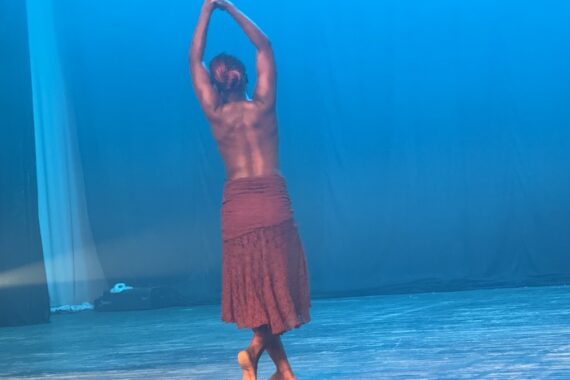
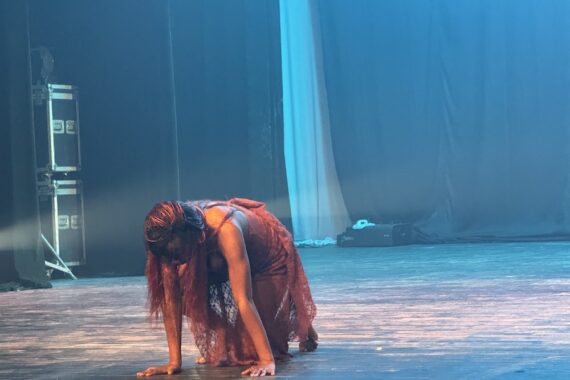
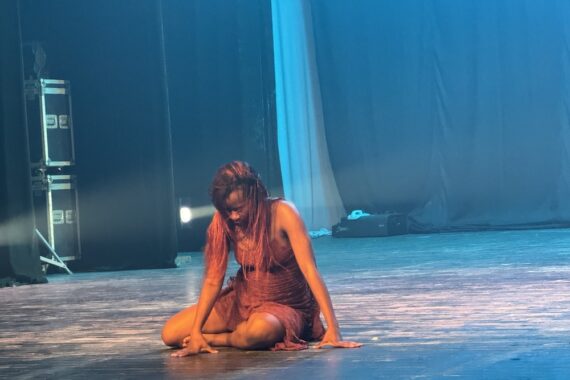
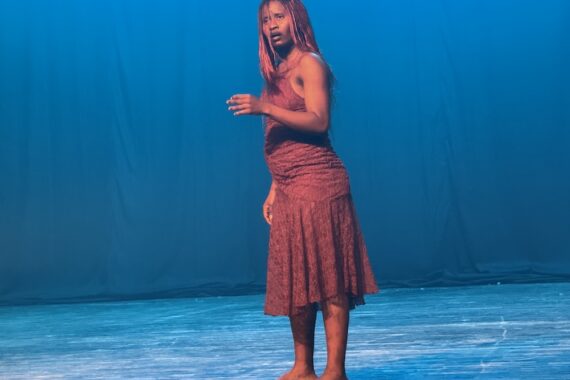
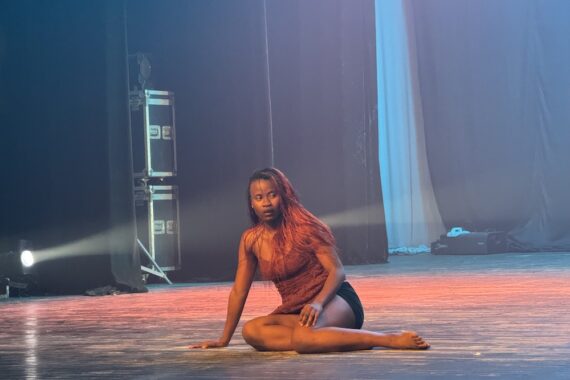
Salle Kodjo Ebouclé (Palais de la Culture) came alive with a magnetic production, Amelle, a contemporary dance solo created and performed by Mai-Júli Machado, offering an intimate and evocative exploration of womanhood, memory, and transformation.
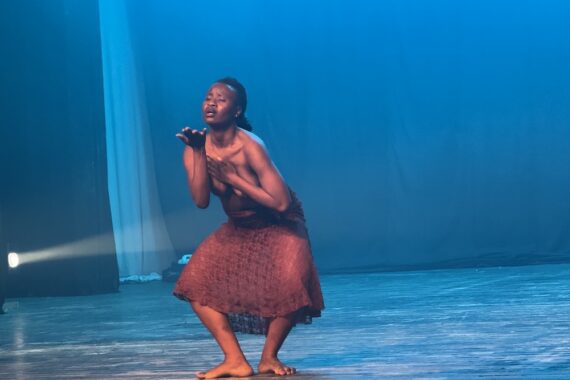
Conceived as a ritual of transmission, Amelle traces the symbolic journey from girlhood to womanhood, drawing deeply on personal recollections and shared female experiences. From the outset, Machado establishes a contemplative atmosphere, her presence both grounded and vulnerable. With minimal staging, the focus remains squarely on the body as a vessel of memory and resistance.
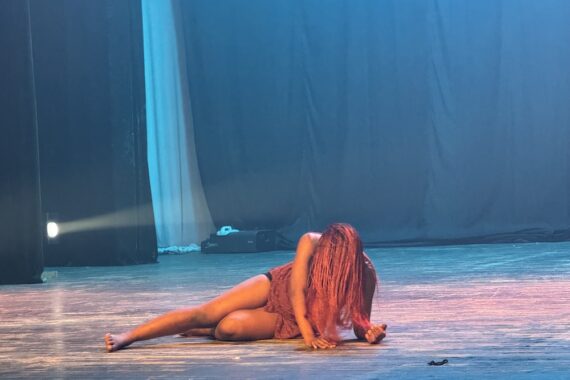
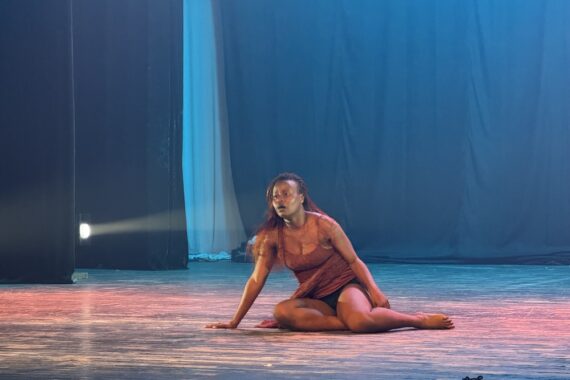
Performing at the 2026 edition of Market for African Performing Arts, she moves between restraint and release. At times, her gestures are subtle—almost internal—suggesting the quiet, often invisible shifts that accompany emotional and psychological growth.
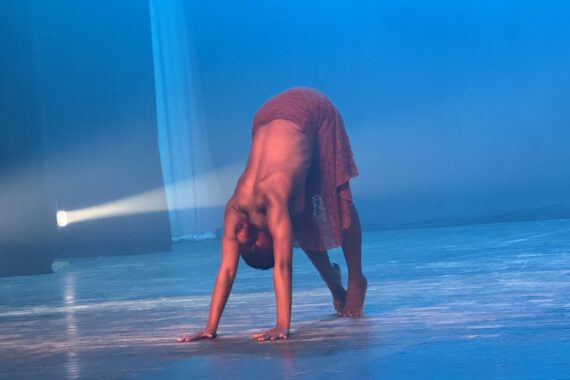
Initially appearing topless on stage, she at other moments expands her body into the space with urgency, as though pushing against unseen forces. This dynamic interplay effectively mirrors the tensions inherent in the societal expectations placed upon women.
Machado’s performance is deeply embodied. Each movement feels intentional, carrying layers of meaning that unfold gradually. The transitions between sequences are fluid yet deliberate, allowing the audience to witness the self’s evolution in real time. Her use of stillness is particularly striking; pauses become moments of reflection, inviting viewers to engage with the weight of her narrative.
The thematic core of Amelle is its critique of imposed norms and restrictions. Without resorting to overt didacticism, the piece subtly exposes the constraints that shape female identity—cultural, social, and even internalized. Through her physical articulation, Machado conveys both the burden of these expectations and the resilience required to navigate them.
Sound and silence play a crucial role in shaping the piece’s emotional landscape. The understated auditory elements complement the choreography, enhancing its introspective quality. The interplay between sound and movement creates a rhythm that feels both personal and universal.
What makes Amelle particularly compelling is its authenticity. Machado does not merely perform; she fully inhabits the work, blurring the line between the personal and the performative. This sincerity resonates strongly, drawing the audience into a shared space of reflection and empathy.
As part of MASA’s diverse programming, Amelle stands out for its introspective depth and emotional clarity. It is a quiet yet powerful testament to the complexities of becoming and a poignant reminder of the stories held within the body.


