

By John Owoo
(Abidjan – Côte d’Ivoire)
Échos Célestes, a contemporary dance work created in 2024 by the Ivorian company Alkebulan Danse, offers an ambitious, thought-provoking exploration of human existence, perception, and spirituality.
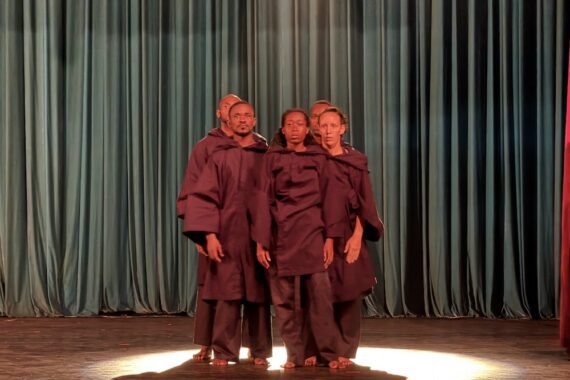
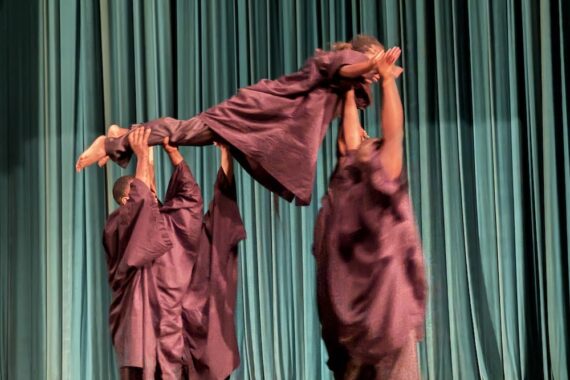
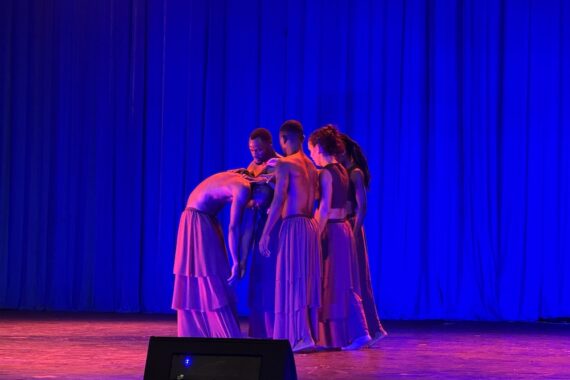
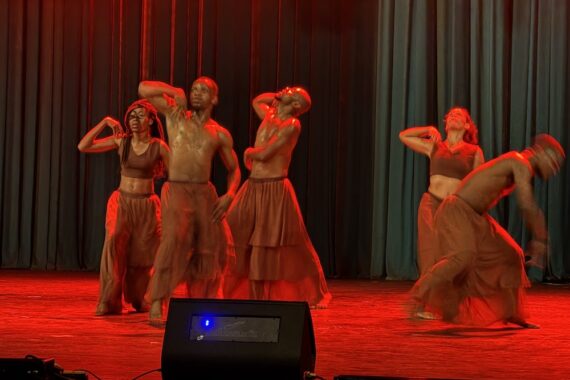
Performed by five dancers at Salle Lougah François (Palais de la Culture) as part of MASA 2026, the piece explores humanity’s enduring obsession with being seen—by others, by unseen forces, and perhaps by heaven.
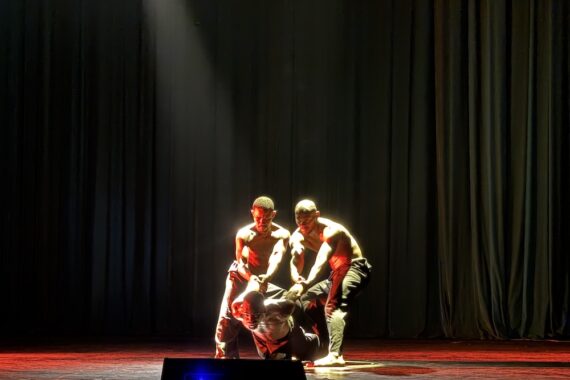
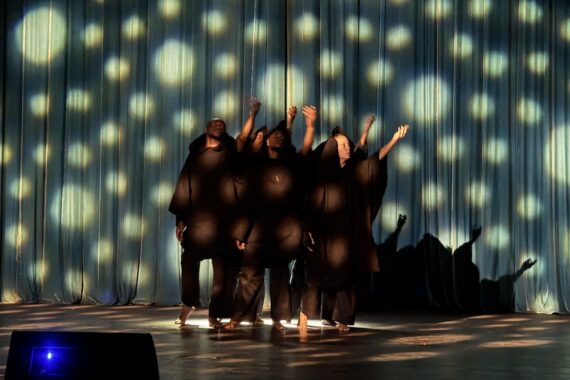
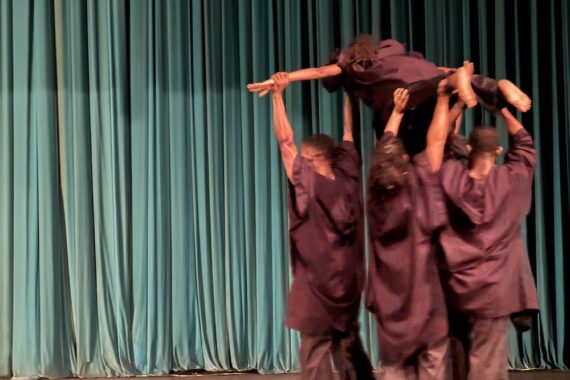
From the outset, the choreography establishes a charged atmosphere. The dancers move with a striking blend of urgency and restraint, embodying a tension between visibility and invisibility. Their gestures often reach outward, as if seeking validation, connection, or recognition, yet just as often retreat inward, suggesting doubt and introspection. This push-and-pull becomes the emotional backbone of the performance.
What makes Échos Célestes particularly compelling is its philosophical depth. The work raises complex questions: Are we merely fragments of a larger whole, or do we carry something godlike within us? How do we define ourselves in relation to others, and what traces do we leave for future observers? These themes are conveyed not through narrative but through a potent physical language that fuses symbolic movement with visceral intensity.
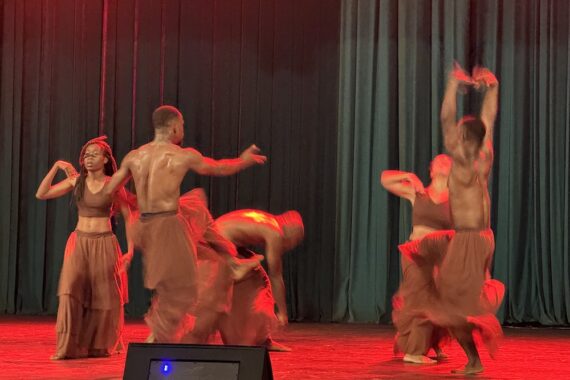
Alkebulan Danse’s signature fusion of traditional African dance and contemporary techniques is on full display. Rhythmic footwork and grounded movements, rooted in Ivorian and broader African traditions, are seamlessly interwoven with fluid, expansive contemporary forms. This synthesis creates a dynamic visual vocabulary that feels both deeply ancestral and strikingly modern.
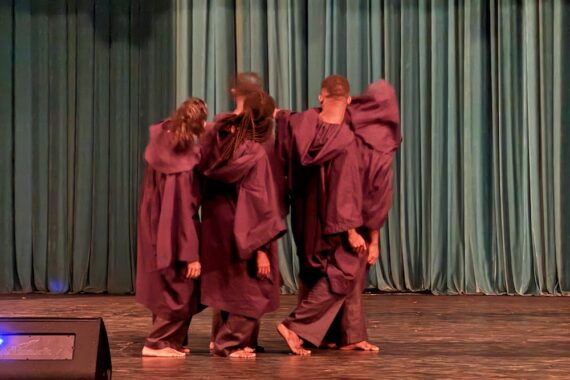
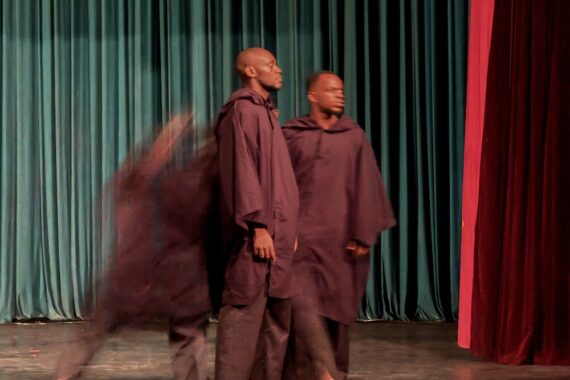
The ensemble’s cohesion is another highlight. Each dancer brings a distinct presence, yet they move as a unified organism, reflecting the piece’s meditation on interconnectedness. At times, their synchronization suggests harmony and collective purpose; at others, fragmentation and dissonance emerge, mirroring the uncertainties of human identity.
Under Henri Michel Haddad’s direction, the choreography is both intellectually rigorous and emotionally resonant. His international experience is evident in the work’s refined structure and layered composition, yet the piece remains firmly rooted in its cultural context. The work clearly aims to bridge worlds—tradition and modernity, the physical and the metaphysical, the individual and the collective.
Ultimately, Échos Célestes is not an easy work, nor does it aim to be. Instead, it invites the audience into a space of reflection and inquiry. Its strength lies in evoking rather than explaining, in suggesting rather than concluding. In doing so, it leaves a lingering impression—one that continues to resonate long after the final movement fades.


