

By John Owoo
(Abidjan – Côte d’Ivoire)
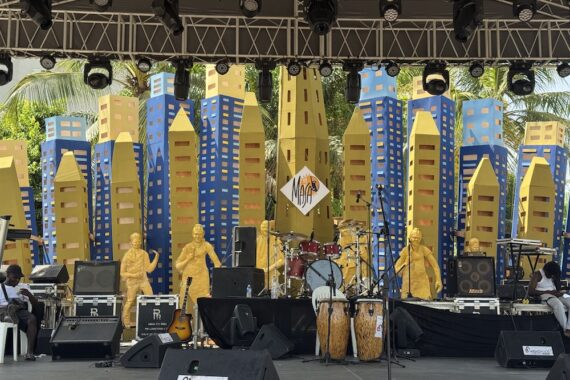
During the 14th edition of the Market for African Performing Arts Festival (MASA), it is not only the performances that command attention—the set design itself has emerged as a striking centerpiece, particularly under the glow of nightfall.
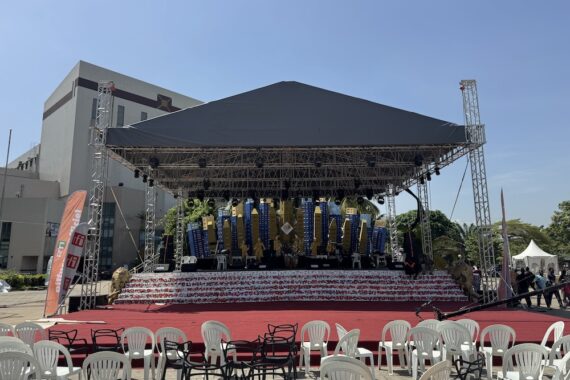
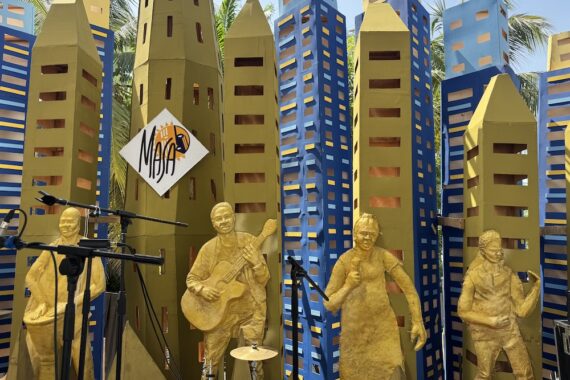
Conceived by Les Ateliers PDG under the artistic direction of renowned choreographer Georges Momboye, the stage architecture offers a bold visual narrative that mirrors the dynamism of contemporary African performance.
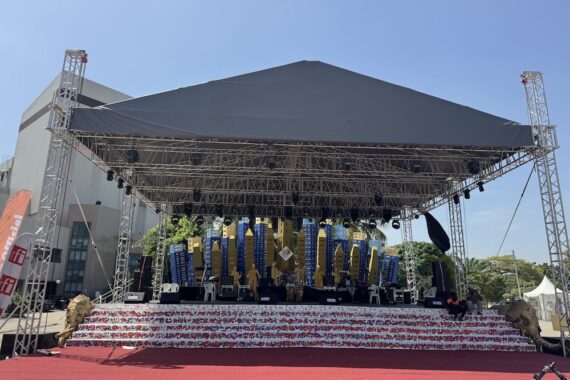
Spread across two expansive platforms—one measuring 16 by 12 meters and elevated at 1.5 meters, the other slightly lower at 36 centimeters—the design is as functional as it is symbolic.
Built to withstand both the unpredictability of the elements and the physical intensity of large-scale dance productions, the structure accommodates hundreds of performers with ease. From high-impact jumps to complex ensemble formations, the stage proves resilient, underscoring the technical foresight behind its construction.
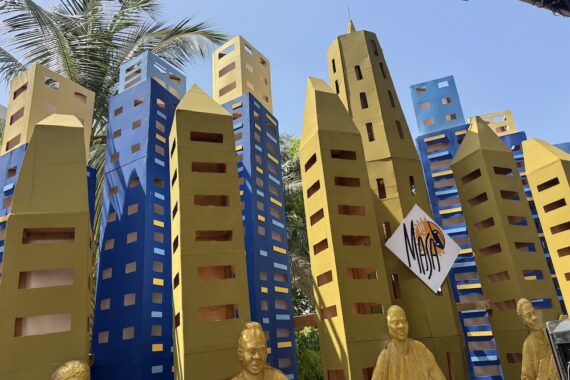
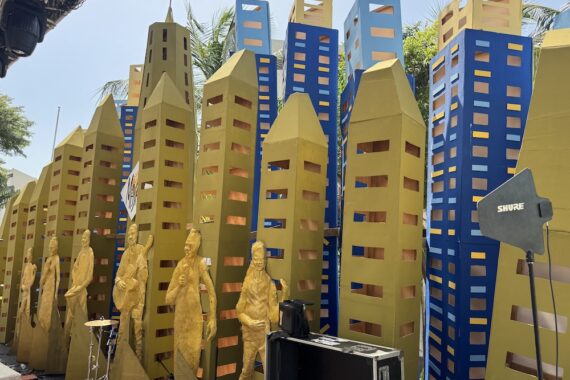
Visually, the set transforms into a luminous cityscape at night. Rows of illuminated architectural forms evoke the skyline of Abidjan, with a central feature—Tower F—rising to an impressive 6.5 meters.
This vertical dominance anchors the composition, creating a focal point that draws the audience’s gaze. On either side of the stage, mirrored replicas of the iconic ADO Bridge extend the urban metaphor, paying homage to one of Côte d’Ivoire’s most recognizable infrastructural landmarks.
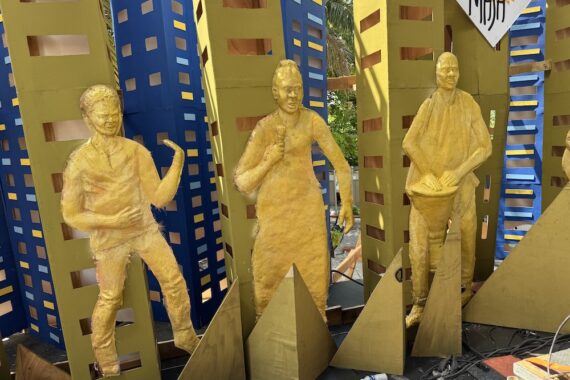
Beyond its architectural references, the set design integrates sculptural elements that reflect MASA’s multidisciplinary spirit. Figures representing dance, music, and theatre are seamlessly embedded within the structure, reinforcing the festival’s role as a convergence point for diverse artistic expressions. These elements do not merely decorate the space—they animate it, creating a dialogue between performers and their environment.
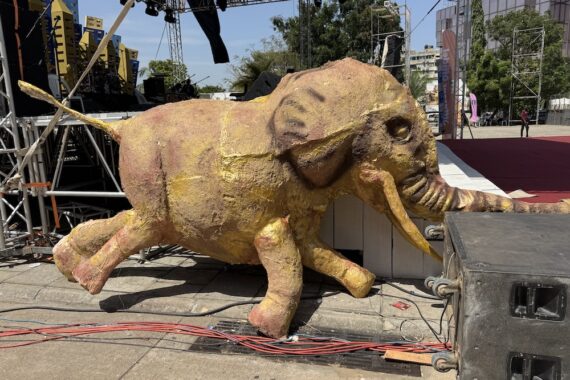
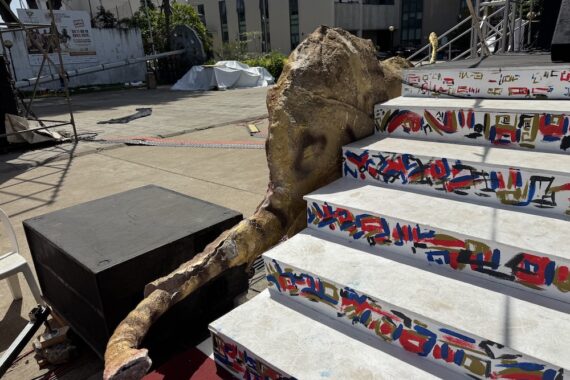
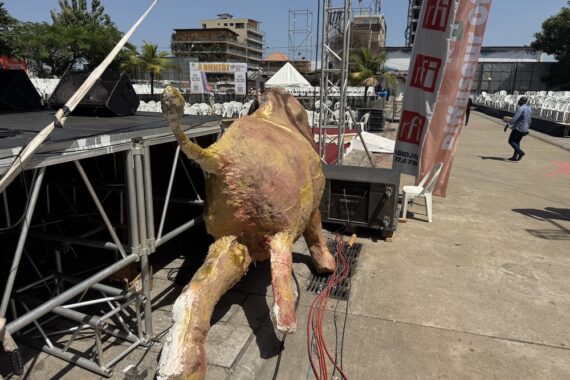
Flanking the stage are monumental elephant sculptures, a powerful nod to the national symbol of Côte d’Ivoire. Their presence adds both grandeur and cultural resonance, grounding the contemporary aesthetic in a sense of identity and heritage.
For Momboye and his team, the project presented significant challenges, from engineering durability to achieving visual coherence on such a scale. Yet the result is a triumph—an immersive сценography that elevates the festival experience.
As MASA 2026 unfolds, the set stands not just as a backdrop but as a living, breathing participant in the artistic narrative, signaling new possibilities for stage design across the continent.


