

By John Owoo
(Abidjan – Côte d’Ivoire)
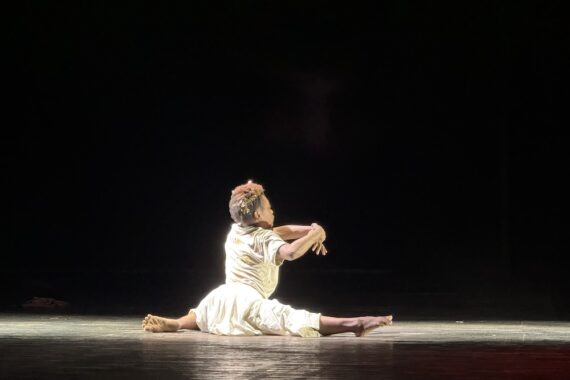
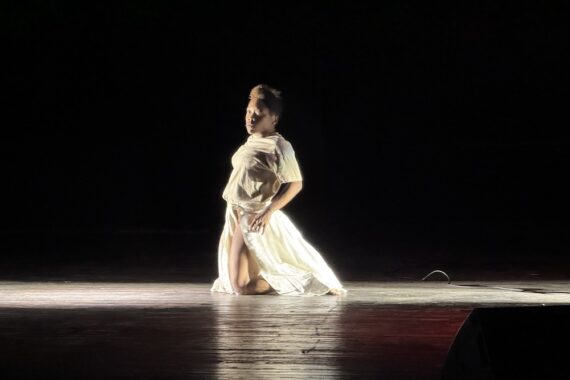
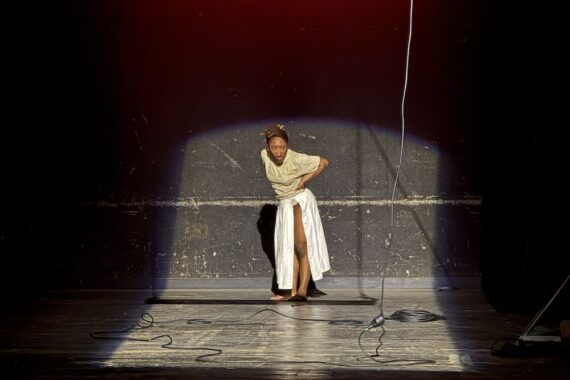
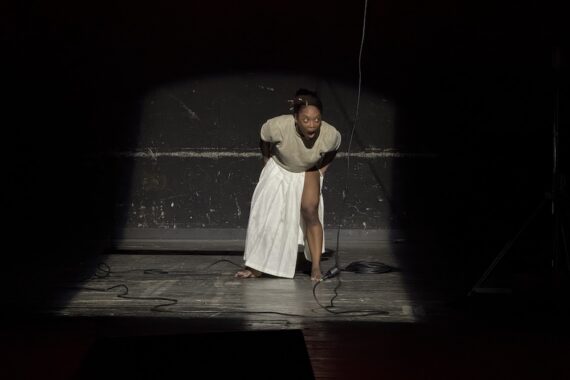
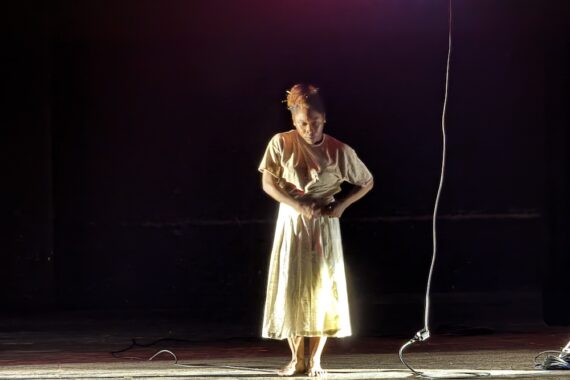
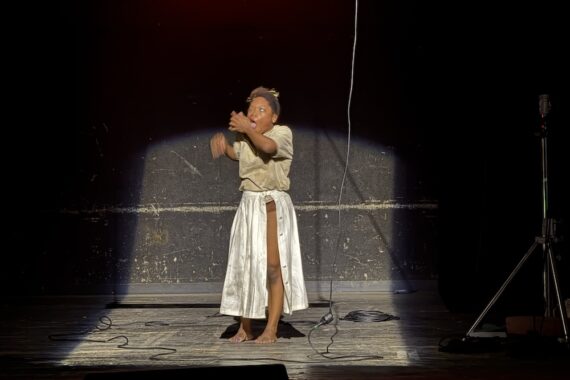
Guyanese dancer Johana Malédon’s latest conceptual solo offered a striking meditation on the fraught relationship between body and language, unfolding as both a performance and a provocation at the 2026 Market for African Performing Arts.
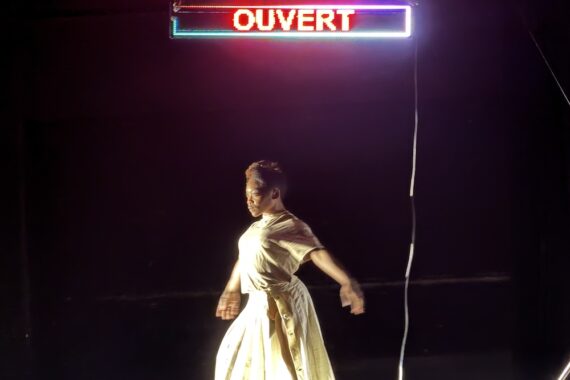
Presented as an evolving dialogue between the dancer and an LED screen displaying random words, the piece occupies the intersection of choreography and sociological inquiry, where meaning is constantly constructed—and dismantled—in real time.
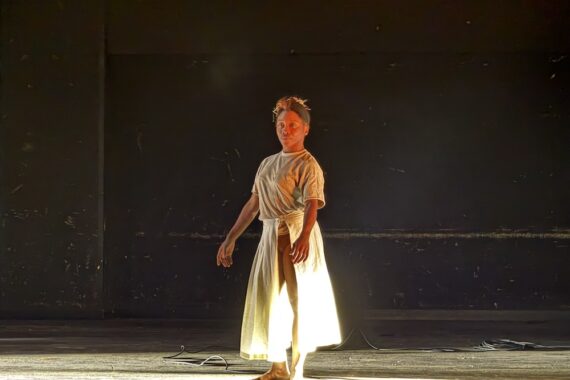
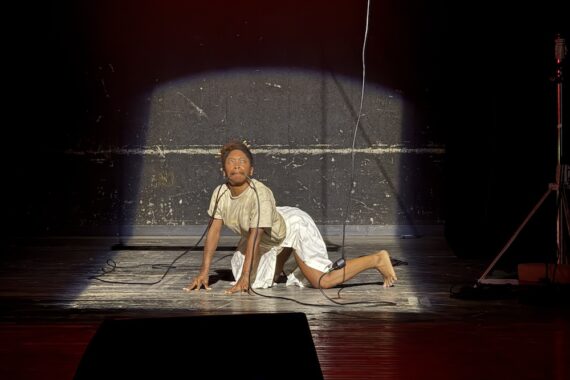
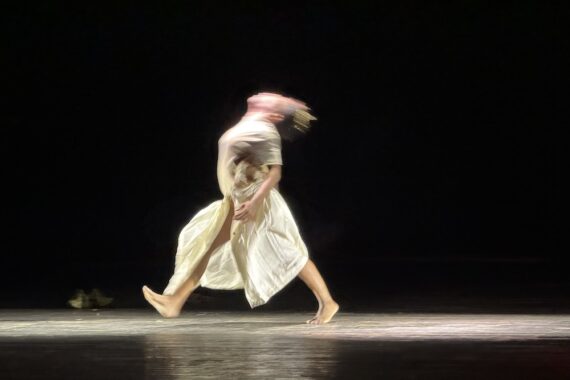
From the outset, Malédon commands the stage with a presence that is both grounded and elusive. Her movement language resists easy categorization, shifting between fluid continuity and abrupt fragmentation.
This physical ambiguity mirrors the instability of the words flashing behind or beside her—labels that attempt—and repeatedly fail—to define her. The tension between these projected terms and the dancer’s embodied responses becomes the work’s central dramaturgical engine.
Rather than illustrating or submitting to the imposed language, Malédon engages in a subtle yet persistent act of defiance. At times, her body seems to absorb and echo the words, only to distort them through unexpected gestures.
At other times, she seems to reject them outright, carving out a space of resistance that feels both personal and political. This push-and-pull dynamic creates a compelling sense of unpredictability, keeping the audience alert to each shift in rhythm and intention.
The use of technology here is particularly effective, not merely a visual accessory but an active partner in the performance. The LED screen functions almost as a second performer—one that imposes, interrupts, and provokes.
Yet it is the human body that ultimately reclaims agency, asserting its capacity to transform beyond fixed definitions. In this sense, the piece reads as a quiet manifesto against the rigidity of identity labels and the societal impulse to categorize.
Malédon’s work also resonates on a broader cultural level, particularly in its interrogation of how identities are constructed and perceived. By exposing the arbitrariness of the words that seek to define her, she invites the audience to question their complicity in these processes. The performance does not offer easy answers; instead, it creates a space for reflection, where ambiguity becomes a form of liberation.
If there is a lingering critique, it may lie in the piece’s conceptual density, which can at times feel opaque to viewers unfamiliar with its theoretical underpinnings. However, this complexity is also part of its strength, demanding active engagement rather than passive consumption.
In the end, she delivers a thought-provoking, visually arresting work that celebrates the body’s capacity to resist, transform, and exist beyond imposed narratives.


