Latest
  • visit www.artsghana.net for information on the arts
  • visit www.artsghana.net for information on the arts

Arts Ghana

MENU
  • Home
  • About Us
  • Upcoming Events
  • Latest News
  • Artistes Database
  • Archives
  • Links
  • Contact Us
  • Music
  • Dance
  • Theatre
  • Literature
  • Visual Arts
  • Film
  • Fashion
  • You Tube
  • Facebook
  • April 28, 2026 • 139

    Festival reaffirms Togo as a jazz hub

  • April 24, 2026 • 287

    Music shaped by ancestry, improvisation, and transcendence

  • April 23, 2026 • 266

    Brass bands showcase tradition and experimentation

  • April 21, 2026 • 190

    Set design mirrors dynamism of contemporary African performance

  • April 17, 2026 • 230

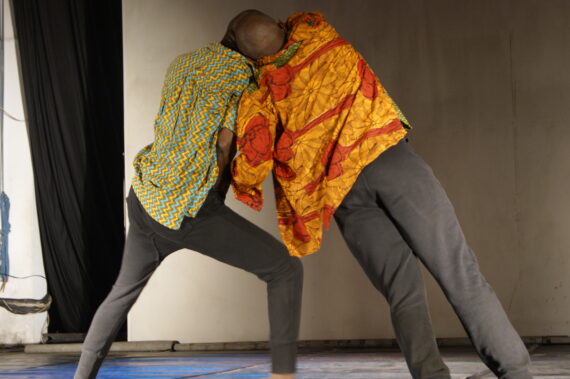
    Shifting portraits of the complexities of male identity

  • April 17, 2026 • 222

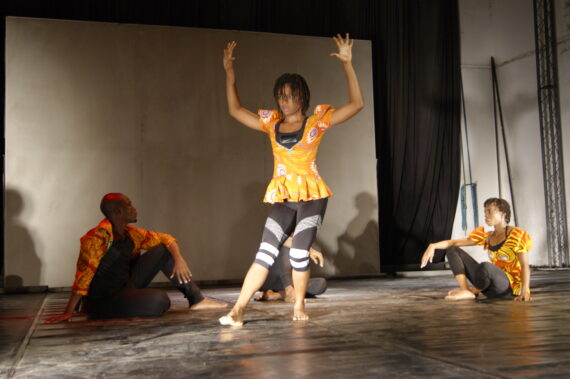
    Rhythmic footwork and grounded movements

  • April 16, 2026 • 515

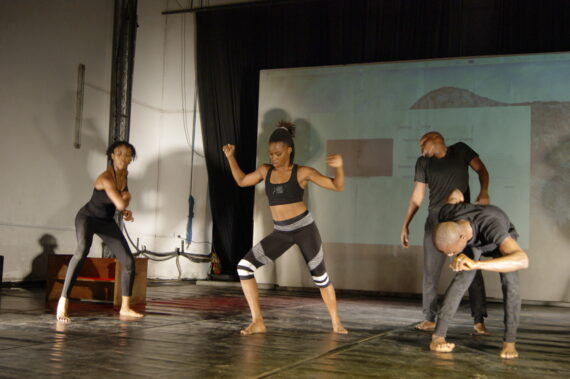
    Raw physicality with spiritual introspection  

  • April 16, 2026 • 263

    Imposition, interruption, and provocation by LED screen

  • April 15, 2026 • 173

    Sonic meditation on tradition and transformation

  • April 15, 2026 • 292

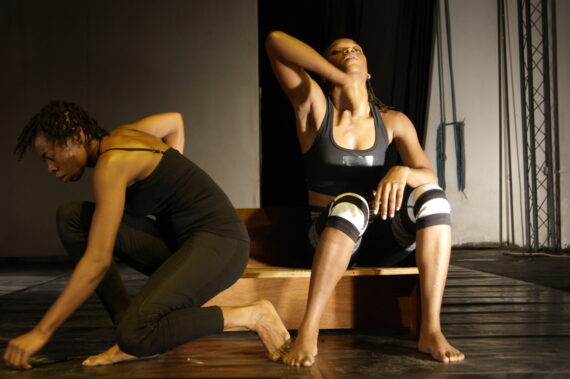
    Subtle exposure of constraints that shape female identity

  • Carthage Film Festival revitalizes film heritage preservation debate

    November 2, 2016 • FeaturedArticle, News • 2396

    By John Owoo

    (At the Carthage Film Festival in Tunis – Tunisia)

    An international symposium at the ongoing Carthage Film Festival in Tunis (Tunisia) – which dilated on the issue of loosing film heritage in Africa and the Arab world due to poor or non existent preservation techniques – has once again brought the sensitive issue to the fore.

    Put together by the Tunisian film maker Mohamed Challouf and moderated by an expert of African Cinema History Prof Aboubakar Sanogo (University of Ottawa, Canada) and Hichem Ben Ammar (Tunisian Filmmaker / Documentarian), specialists from various parts of the world shared the difficulties and bottlenecks that inhibit the effective preservation of African and Arab film heritage.

    Undeniably, film is a fragile medium due to its unstable chemical properties with old films suffering from nitrate deterioration while new ones suffer from colour fading and what is known as the “vinegar syndrome” not to mention digital technology, which has has its own preservation problems.

    Panelists include José Manuel Costa (Director of the Cinema Museum in Portugal), Christophe Dupin (Managing Director of the International Federation of Film Archives), Nicola Mazzanti (Curator of the Royal Belgian Film Library) and Hédi Jallab (Director General of the National Archives of Tunisia).

    Others are Gahité Fofana (Director of CRAG – An Audio Visual Resource Centre in Guinea), Tsogo Marie Nadége (Profesor of History and Film Studies at IFCPA / CRTV), Ahmed Bedjaoui (Professor at the Algiers University School of Communication Studies) and Léa Morin (Independent Researcher / Curator in Casablanca, Morocco).

    Issues raised include a review of the evolution of thinking about conservation policies and safeguarding film heritage, role of film archives as a tool of resistance, resilience and therapy as well as problems relating to ongoing projects in the field of conservation and safeguarding of film heritage in Europe, North and Sub Saharan Africa.

    The symposium also touched on questions relating to private, public, national and international plans that have already been initiated, made a review of deficit of institutions specializing in the preservation of film heritage as well as projects underway and the obstacles they are encountering.

    Panelists expatiated on the need to choose either a national or continental approach – or better still a combination of the two as well as developing restoration facilities or sub contracting them to Northern countries and the need to tap skills of experts of film heritage preservation on the continent.

    Others are viable models that would be suitable for Africa and the Arab World, use of state subsidies, contribution of relevant international institutions (eg UNESCO), dissemination of film heritage, distribution channels, copyright, ownership and intellectual property issues among others.

    The Tunis symposium has without doubt rekindled the need to preserve the irreplaceable body of moving images in Africa and the Arab World – it is up to governments, private enterprise, civil society, filmmakers and lovers to ensure that adequate resources are devoted to film heritage preservation.

    Pictures – Carthage Film Festival 


    Read More »
  • Carthage Film Festival opens with splendor

    October 31, 2016 • FeaturedArticle, News • 2299

    By John Owoo

    (At large in Tunis – Tunisia)

    The 27th edition of Carthage Film Festival opened last week in the Tunisian capital Tunis with a clear message of preservation, revitalization and development of the film industry to take its rightful place in society.

    Marked by a series of tributes and musical interludes by Tunisian Zoheir Gouga and Algerian Kaddour Hdadi, the event, which was majestic in all forms ushered in yet another edition of one of the longest film festivals on the African continent.

    Opened by Tunisian Prime Minister Chahed Youssef amidst tight security, the colourful ceremony culminated in the screening of  “Flower of Aleppo”, a film directed by Ridha El Behi on conflicts in the Arab world and the attraction to conservatism.

    Known as a hub for Arab and African filmmakers and critics, the festival, which is celebrating its Golden Jubilee is set to screen over 100 films in various venues including Palais des Congres, movie theatres, universities, prisons and street islands.

    Other events lined up include an exhibition of fifty posters to mark each year of the festival, activities to support an artist’s healthcare plan and a tribute programme to honour Haydée Chikli Tamzali and other pioneers of Tunisian cinema.

    Additional programmes are an exhibition that would take visitors through the world of the late Egyptian filmmaker Youssef Chahine, visits and trips to famous tourist sites including the Bardo National Museum, Village of Sidi Bou Said, and the archaeological site of Carthage.

    Also on the bill is an international symposium on the topic “Film Heritage at Risk”, which will feature experts from diverse countries in Africa, Asia and the Arab world, will be moderated by Prof Aboubakar Sanogo of the University of Ottawa, Canada.

    Tributes will equally be paid to cameramen and other technicians, whose works remain unpublished through a subjective defining moment in the history of Tunisian cinema since its independence in 1956.

    Several parallel sections, honors to past directors, an overview of prizewinning films from previous editions and a special focus on Russian and Asian cinema will be held alongside a special prize to be awarded to Tunisian director Ferid Boughdir for his passion for cinema and commitment to the Carthage Film Festival.

    The festival ends on Saturday November 5.

    Pictures – Carthage Film Festival


    Read More »
  • Multifaceted / intricate portraits at Gallery 1957

    October 21, 2016 • FeaturedArticle, News • 2428

    By John Owoo

    (At the Kempinski Hotel – Accra)

    An exhibition of works by Ghanaian painter Jeremiah Quarshie that comprise sophisticated portraits characterized by distinctive realism is closing at Gallery 1957, which is located at the Kempinsky Hotel in Accra.

    Titled “Yellow is the Colour of Water”, paintings on display revolve around water and the ever-present yellow plastic gallons that permeate all parts of Accra thereby vividly revealing one of the problems facing the city.

    Indeed, his multifaceted and intricate portraits of people from all walks of life, who he gracefully places on “thrones” of gallons, reinforce the importance of this resource, which requires effective management and control.

    These include images of his grandmother, footballers, laborers, nurses, pregnant women, market mummies, expatriates and several others who elegantly perch on these colourful gallons thereby exposing the contradictions that border on the quality of water and its availability.

    Employing features of studio photography and a distinctive painterly language coupled with a subtle appropriation of traditions of the old masters, Quarshie effectively questions the construction of imagery and the boundaries of portraiture.

    Curated by Robin Riskin, the exhibition is in a range of media formats and set across a network of site-specific mediations. These include Kotoka International Airport and the Tema Bus Station where gallons equally take the role of backdrops, props and chairs.

    Educated at the College of Art, Kwame Nkrumah University of Science and Technology (Kumasi), Quarshie’s work takes its history from social illogicalities in contemporary life while negotiating anxieties with satire and lightness.

    He has participated in several group exhibitions – these include National Museum of Science and Technology, Prime Motors Ltd, Goethe-Institut, La Villa Boutique Hotel, Nubuke Foundation (Ghana), Villa Mohr (Germany), Sabi Yu Rutu (Suriname), and the Stedelijk Museum Bureau (The Netherlands).

    Gallery 1957, which was founded by art collector Marwan Zakhem, is a new gallery with a curatorial focus on contemporary Ghanaian art presenting a programme of exhibitions, installations and performances by Ghana’s most significant artists.

    The exhibition ends on Saturday October 22.

    Read More »
  • Expressive / Imaginative Movements at Noyam Theatre

    October 14, 2016 • FeaturedArticle, News • 2875

    By John Owoo

    (On the hills of Dodowa – Ghana)

    An international group of artists and academics last week presented a devised group work that portrayed issues relating to borders, checkpoints and language at the Noyam Theatre in Dodowa, near Accra.

    Titled “Broken Word, Broken World”, this impressive dance drama is visually stimulating with dancers engaging in highly expressive and imaginative movements that helped unfold the dilemma of language barriers and its effects on diverse activities.

    Employing elements of earth, water, fire and wind, the “language” of directors Gameli Tordzro (Scotland/Ghana), Tawona Sithole (Scotland/Zimbabwe) and choreographer Nii Tete Yartey (Ghana) is compelling and limitless – and was clearly visible through swift and subtle movements on stage.

    “This production is more than entertainment – it explores varied issues some of which border on traditions, values, beliefs and culture – it is an astounding artistic creation and I hope this collaboration continues in the years to come”, said Danny Clerk, a cultural journalist in Accra.

    Accompanied by passionate and contemporary tunes from flute magician Dela Botri (Ghana), saxophonist Katrine Suwalski (Denmark), flutist Simon Winse (France/Burkina Faso), percussionists Sam Tachie / Alfred Tamakloe (Ghana/Denmark) and Kalimba player Clare Robertson (Scotland), the group put up a rather brave, bold and sophisticated performance that attracted the imagination of the audience.

    Interspersed with Ghanaian traditional dances such as Takai, Adzogbo, Kpanlogo, Fume Fume as well as Ewe / Akan drum accompaniments, the versatility of the young dancers was vividly revealed as their agile bodies attempted to interpret and translate multilingualism and its related issues.

    “This is a dance drama shaped by moods and motives, it is exciting to see young Ghanaian dancers physically and emotionally imbed themselves in the piece as they share the passion of the directors and choreographer”, added Adzo Adibie, a dancer in Accra.

    Funded by the UK Arts & Humanities Research Council (AHRC), the production equally made forays into Translating Cultures by studying the role of translation in the transmission, interpretation, transformation and sharing of languages, values, beliefs, histories and narratives.

    Other members of the team of researchers for the project include Scottish principal investigator Prof. Allison Phipps, German technical designer Kai Fischer, Ghanaian Costume designer Naa Dansua Torzdro and German applied theatre researcher Dr. Katja Frimberger among others.


    Read More »
  • ASO in a witty, delightful and sparkling concert

    October 10, 2016 • FeaturedArticle, News • 2749

    By John Owoo

    (Accra International Conference Centre) 

     The Accra Symphony Orchestra (ASO) last week easily attracted over two- dozen octogenarians to its maiden public concert at the Accra International Conference Centre.

    This brings into sharp focus the failure of arts / entertainment industry players in Ghana to tailor events for the elderly, who have been completely ignored in most of the recent artistic creations.

    Performing alongside vocal group Lumina, ASO charmed the capacity audience with epic compositions and re-compositions that resemble great climaxes of sound while fluid tone colours flowed with relative ease.

    “In the midst of constant dark news from the media, a concert of such enlightenment asserted itself – I have not seen a performance of this nature for over a decade and I have no regrets for doing so tonight” said Ebo Donkor, a retired pharmacist in Accra.

    Conducted by Benedictus Acolatse, whose technical and interpretational capabilities surprised the audience, there was a cool interplay between the orchestra and the opera singers – a feat, which Acolatse proved adept with his balancing skills.

    With awe inspiring precision, passion and musicality from the Lumina singers, the orchestra wooed the crowd with its explorations into the music of the afro rock group Osibisa, Cameroonian saxophonist Manu Dibango and late Afro Beat King Fela Kuti as the singers displayed high vocal standards with voices that endeared the audience with raw pleasure.

    Notwithstanding a rather high sound from the singers, the instruments were in spectacular form for the interweaving performance – thereby ensuring that the orchestra and singers were not so much in contention – but in a fruitful collaboration.

    “This is a witty, delightful and sparkling concert – successful classical / operatic shows have to do with expression – and the communication was clear while the tightness of the orchestra never faltered”, added Ian Lambeth, an arts promoter on holidays from the United Kingdom.

    An imaginative, tasteful and highly entertaining concert, ASO’s interpretation of Osibisa’s classic tune “Woyaya” brought nostalgic feelings to the audience as they recalled this famous tune which served as a signature tune for Osofo Dadzie series, which run on local TV in the 1970s.

    With such a magnetic entry into the arts scene in Ghana, ASO will certainly be on the watch list of promoters, critics and other orchestras outside the country. Capital Bank, Daily Graphic, Joy FM, Citi FM, TV 3 and www.artsghana.org supported the concert.

    Pictures – Charter House


    Read More »
  • Asipim – A dance piece with rhythmic and visceral weight

    October 8, 2016 • FeaturedArticle, News • 3232

    By John Owoo

    (National Theatre – Accra)

    The National Dance Company of Ghana last week presented a stunning rendition of “Asipim”, a piece comprising a dramatic fusion of various traditional Ghanaian dances at the National Theatre in Accra.

    Employing wide-ranging movements from Northern and Southern Ghanaian dance forms, the artists unveiled a story of greed, gallantry, war, peace, spiritual warfare and struggles for power amidst cheers from the audience.

    Accompanied by an assortment of African percussive instruments and xylophones, the group through a striking performance managed to express in a refined way, the beauty and diversity of traditional Ghanaian dance forms.

    Directed by Nii Tete Yartey, the performance was a fascinating diversity of movements and a subtle exploration of interactions between conventional and modern dances while revealing the significance of both.

    “It is fascinating to see a wide variety of our traditional dance pieces theatrically put together in a manner that vividly showcases unity in diversity. It was purely traditional but laced with contemporary elements”, said Yaw Opoku Addo, a poet in Accra.

    “This is a show with rhythm – the singing, dancing and drumming converged and rose to the roof. It was an evening of spectacular and fast moving scenes”, added Elvia Hayes, a volunteer from the United Kingdom.

    An allegory about the struggle for leadership in Sub Saharan Africa, ‘Asipim”, is interspersed with ritualistic dances that equally highlighted the issue of super natural battles. Undeniably, it is rich in musical and dramatic nuance and actually rises to the scale of the set design.

    With a near bare but outstanding scenography, which comprise a King’s stool and giant umbrellas alongside over two dozen dancers and musicians, the choreography is quite elaborate with bodies crafted by years of training engaging in fluid and swift movements.

    Stylistically, the late F. Nii Yartey, who co-choreographed the piece with Prof. CK Ladzekpo, has deeply steeped himself in the language of dance – often reinventing it with a rhythmic and visceral weight, thereby unleashing a new gestural vocabulary.

    The performance formed part of the 2016 edition of Ghana Theatre Festival, which ended last week at the National Theatre in Accra.


    Read More »
  • Documentary scrutinizes music across borders

    October 6, 2016 • FeaturedArticle, News • 2527

    By John Owoo

    (In Accra)

    “Music Across Borders”, a documentary film by the Ghanaian filmmaker / composer Gameli Tordzro last week premiered at the School of Performing Arts, University of Ghana, Legon.

    Shot in Ghana, Scotland and Denmark, the 45-minute film, which centres on Danish saxophonist Katrin Suwalski, explores how music cuts across physical and mental borders, power of languages and its impact on both artists and the public at large.

    The film, which forms part of a research into “Creative Arts and Translating Cultures”, equally makes allusions to migration in the light of the ongoing risky trips amidst loss of life by migrants attempting to reach Europe through the Mediterranean Sea.

    Employing Ewe, Danish and English, languages, Tordzro ensures the emotional, spiritual and multi cultural essence of the documentary vividly pops up at the viewer as artist after artist narrates his / her experience with music collaborations that cross borders.

    Interspersed with scenes of performances and rehearsals, percussionist Ayi Solomon (Denmark/Ghana), singer/composer Elivava Mensah (Ghana), percussionist Odomankoma Okyerema Pra (Ghana) and others join Sulwalski in recalling a journey she made over twenty years ago to Ghana, which resulted collaborations that were musically and spiritually rewarding.

    Solomon, who is a member of Suwalski’s band “Another World”, joined her on a tour of Ghana in 2008, which was full of reminiscence of her previous trip and it’s positive influence on her career as a musician. Indeed, Suwalski relived her first visit with further performances in Cape Coast and Accra.

    In spite of some limitations, there is big-heartedness at the film’s core that comes across powerfully while revealing the uncanny flow of energy among artistes notwithstanding their background, culture or country of origin.

    Music Across Borders forms part of a wider study on the role of translation – understood in its broadest sense in transmission, interpretation and transformation – as well as sharing of languages, values, beliefs, histories and narratives.

    Others are research interpreting, translation and multilingual practices in challenging contexts at the borders of language, body, law and state as well as evaluating appropriate research methods (traditional and arts-based) and develop theoretical approaches for this type of academic exploration.


    Read More »
  • Agya Koo Nimo’s legacy must be preserved

    September 13, 2016 • FeaturedArticle, News • 7765

    By Kouame Koulibaly

    Renowned ethnomusicologist and composer, Emeritus Prof. J.H. Kwabena Nketia, has said  Agya Koo Nimo’s  legacy of  beautiful music and  unique way of playing the guitar  must be preserved  in our educational system.

    Speaking at the launch of a 315-page book titled “Six Strings and a Note, Legendary Agya Koo Nimo in His Own Words”, at the Institute of African Studies, University of Ghana, Legon, Prof Nketia described the launch as a landmark event in honour of a man with a deep affection for his culture and country.

    “The man’s legacy must be institutionalized so there is a bit of  Agya Koo Nimo that people must learn when  they go to music school or take music courses. I would like everyone to think about it because the man  cannot do that by himself ,” Prof. Nketia stated. The book was written by Mr E. Obeng-Amoako Edwards, an entrepreneur and philanthropist who lives in Texas, United States and Accra. Prof. Nketia wrote the book’s foreword.

    Born Kwabena Boa-Amponsem 85 years ago, Agya Koo Nimo has collected numerous accolades locally and internationally for his unique compositions. In the book, the author carefully travels through Agya Koo Nimo’s early memories in Foase, a small village in the Ashanti Region; and his encounter with Mr. Daniel K. Sam, a catechist who taught him to play the organ, and eventually exposing him to music in addition to what he had learned from his parents.

    The book also takes interesting turns through the philosophy woven through Agya Koo Nimo’s being, and the psychology behind the music he creates. Speaking on “The Koo Nimo I Know” at the launch, Prof. Kwesi Yankah, Vice Chancellor of the Central University said Agya Koo Nimo was “the epitome of indigenous learning and philosophy allied with a rare capacity to lucidly convey his thoughts in diverse forums, traditional settings and contemporary academic settings.” He said Agya Koo Nimo’s intimacy with his guitar cannot be mistaken as a metaphor.

    “He confesses visualizing the acoustic guitar as an ideal female body that deserves gentle handling and cuddling. Never a coarse stroke or rough handling from Agya Koo Nimo’s fingers,” Prof. Yankah stated. He described “Six Strings and a Note” as “a rare treasure in which the life of the legend is painstakingly recounted.”

    The book’s author said it had been an interesting journey working on the book over the last four years and that it was necessary for Ghanaians to embrace their history and heroes.

    “If we don’t know where we are coming from, it is almost impossible to identify where we are going,” Mr Edwards said. Copies of the book were available at the launch and  popular music star, Kojo Antwi bought the first copy  when it was auctioned by emcee for the event, KSM.

    “Agya Koo Nimo is a man I cherish so much for what he has done for our music and our country. He is a hero who has inspired me and others in many ways  and I’ll  always treasure him,” Kojo Antwi said.

    The launch event was punctuated with performances by Agya Koo Nimo as well as the seprewa players, Osei Korankye and his 16-year-old daughter, Abena Serwaa. Agya Koo Nimo is well known for songs such as ‘Aburokyire Abrabo’, ‘Naa Densua’, ‘Akura Dua Kube’, ‘Ohia Ye Ya’, ‘Odo Akosombo’ and ‘Efie Ni Fie’.


    Read More »
  • Colourful / Classy Performances at Triangle Folklore Festival

    August 26, 2016 • FeaturedArticle, News • 3948

    By John Owoo

    (In Vejle – Denmark)

    A number of Danish cities and towns in the Jutland region recently turned colorful with highly magnetic performances by folk music and dance groups from several countries.

    Performing as part of the 2016 edition of the Triangle Folklore Festival, groups from Latvia, Italy, Indonesia, Taiwan, Serbia, Denmark and the United States among others, they powerfully showcased the similarities and indeed the differences of European folk music and dance.

    With music characterized by a strop/lie structure and lines that are repeated several times – each time with different words – the dancers follow in unison as they move in various directions amidst flying and hovering of costumes.

    “It is a memorable event performed by marvelous artists – some of whom have international acclaim – I was extremely delighted with the classical folk dances and the colourful costumes”, said Mette Nielsen, an anthropologist in the town of Vibourg.

    With dance episodes piling up with irresistibly increasing urgency during most of the performances – the audience, majority of whom are elderly, simply immersed themselves in the performances as rain and winds turned into an integral part of the outdoor performances.

    With accordions, guitars, violins, drums, harps, banjos, flutes, horns alongside vocals, music from the various groups often appeared to be a stream of entrancing sound in which long tones drift across vocal laments alongside thudding low drumbeats and shy sax interjections.

    With violinist Steffan Søgaard Sørensen and guitarist Peter Eget Hansen opening performances of gala shows in theatres, the scene is always set for a magical display of the richness, similarities and diversity of folk music and dance forms, which inundate the cities and towns of Jutland every third year.

    “The music is sophisticated and atmospheric – it veers between ambient and soul styles – it is pleasant rather than exciting – I always look forward to this festival”, added Henrik Henriksen, a retired doctor in city of Vejle.

    The initiative to initiate the Triangle Folklore Festival came from Rejseholdet, a dance group of young dancers and musicians, who toured the world showcasing Danish folk music and dance.


    Read More »

  • Utamaduni Camp simulates African village scenes in Denmark

    August 5, 2016 • FeaturedArticle, News • 3389

    By John Owoo

    (At large in the forests of Ramten Skov – Denmark)

    Unrestrained rain, cold winds, sun and darkness interspersed the 2016 edition of Utamaduni Camp, which has over the past thirty four years presented the magic of traditional African festivals in Denmark.

    Held in the pristine forests of Ramten Skov, located in the Midtjylland region of Denmark, the scene is reminiscent of a simulated African village with huts, tents of diverse shapes and sizes, colourful clothes, drums, craft shops and people with love for culture.

    Traditional drums from Eastern and Western Africa pound the crisp air while Danish dancers clad in flamboyant costumes embellished with feathers and beads move in unison as fellow campers cheer and relish near impeccable African dance movements.

    “I have been a regular participant of the “Utamaduni” Camp for several years – it is a soul searching moment – it enables me to reconnect with my inner self, those around me and indeed the universe”, says Mia Petterson, a shop assistant in Aarhus, Denmark’s second city.

    Pulsating rhythms from wooden drums appear to harmonize with the tranquil forest atmosphere as group after group showcases its skills in traditional African drumming and dance – especially Tanzanian dance forms.

    They move in circles as they perform, often ignoring the heavy rain, which inevitably becomes part of the performances that equally encompass ritualistic dances, chants and incantations.

    Undeniably, interactive engagements, workshops in African music, dance and songs alongside sales of rich hand woven fabric / textile and collectible artifacts are a regular feature as people congregate for an experience of African spirituality and wellness.

    “It is a gathering, a feast and a wonderful celebration of African culture with only acoustic traditional instruments. We need it to strengthen our connections to culture, nature, ourselves and with each other. Indeed, it’s a chance for Danish nationals to meet and commemorate African culture with Africans”, adds Camilla Nielsen-Englyst, an international NGO advisor in the Danish Capital Copenhagen.

    “Utamaduni”, a swahili word meaning “culture”, was adopted by a dance troupe after a Danish cultural exchange with the Tanzanian tribe of Sukuma in 1977. Dubbed “Daraja la Utamaduni” (the cultural bridge), the Danes also performed their traditional dances during the project.

    From that embryonic beginning of a cultural exchange, rich and fertile images of African culture are absorbed by Danes courtesy of the Sukuma people. Since then “Utamaduni” has woven from a tapestry of dance, drum and song rhythms into a bond of friendship.

    Read More »
« 1 … 34 35 36 37 38 … 44 »
Subscribe to Arts Ghana News

Enter your email address to subscribe. Receive notifications of new posts by email.

RECENT VIDEOS

Simple Slideshow

  • Goethe Institut
  • Alliance Française
  • Arterial Network

© 2026 Arts Ghana™

Website Managed by DelTin Technologies