Latest
  • visit www.artsghana.net for information on the arts
  • visit www.artsghana.net for information on the arts

Arts Ghana

MENU
  • Home
  • About Us
  • Upcoming Events
  • Latest News
  • Artistes Database
  • Archives
  • Links
  • Contact Us
  • Music
  • Dance
  • Theatre
  • Literature
  • Visual Arts
  • Film
  • Fashion
  • You Tube
  • Facebook
  • August 4, 2026 • 351

    Landmark festschrift honors El Anatsui’s legacy

  • July 29, 2026 • 249

    Everyday objects, extraordinary meanings

  • July 23, 2026 • 334

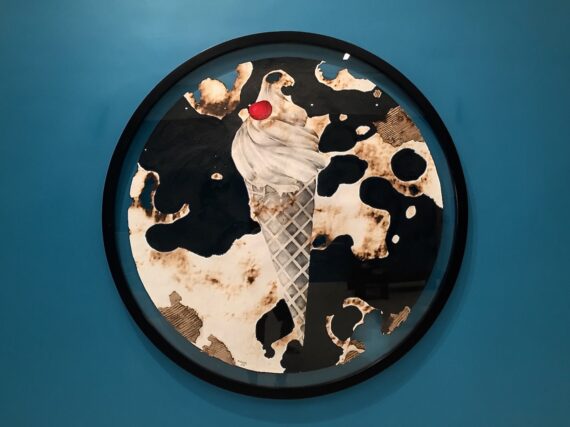
    Stain as transformation: reimagining purity

  • July 20, 2026 • 3598

    Artist unmasks hidden architects of galamsey

  • July 19, 2026 • 352

    Explorations into memory and human presence

  • July 10, 2026 • 476

    Artist turns urban wanderings into textured acts of reinvention

  • July 2, 2026 • 533

    Abstract worlds speak through texture and emotion

  • June 25, 2026 • 541

    Echoes of slavery resound at Christiansborg Castle

  • June 10, 2026 • 549

    Five artists map memory, mobility, and material realities

  • June 5, 2026 • 775

    Sweeping landscapes and still-life compositions

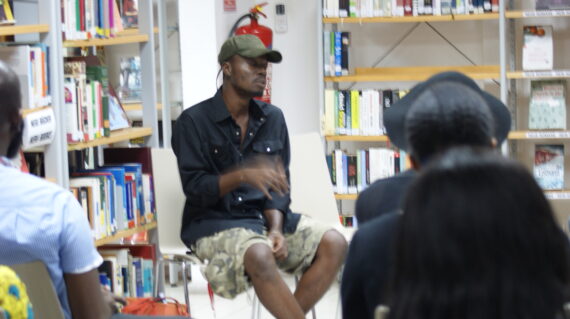
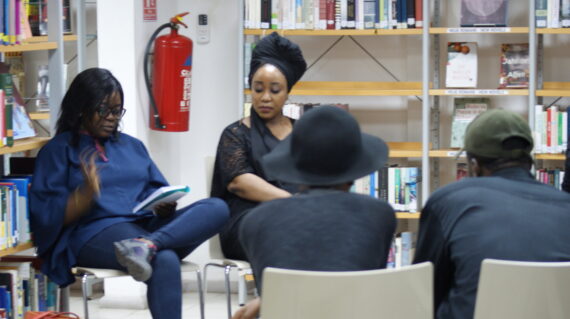
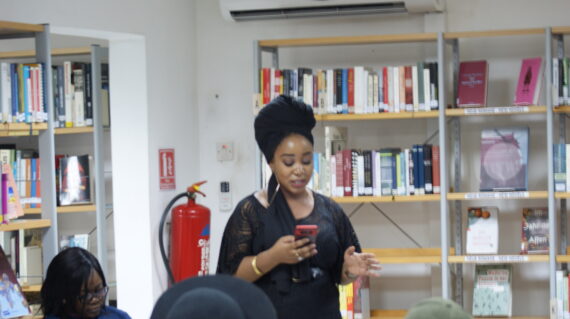
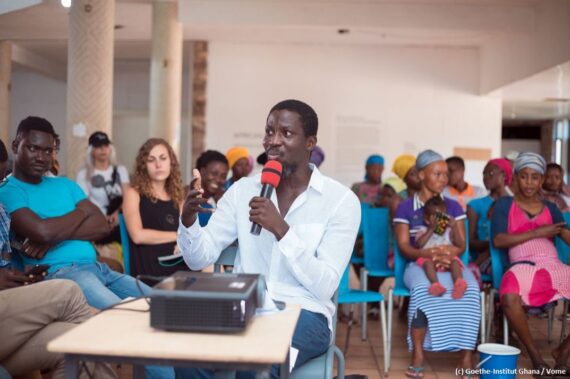
  • “Stretched Terrains” artists share experiences

    May 28, 2018 • FeaturedArticle, News • 1689

    By John Owoo

    In Accra – Ghana

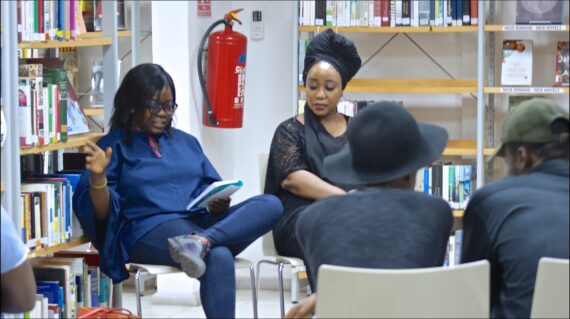
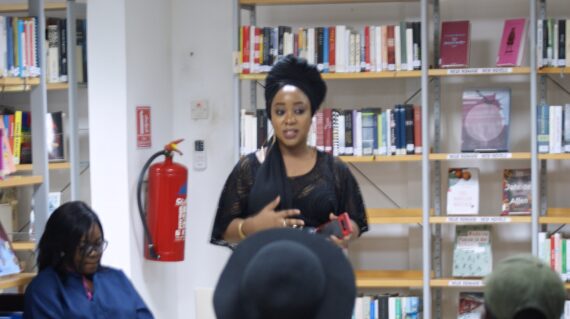
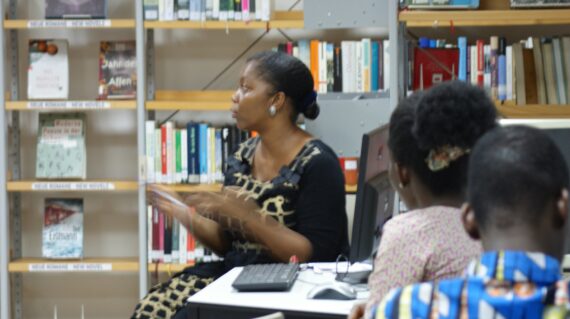
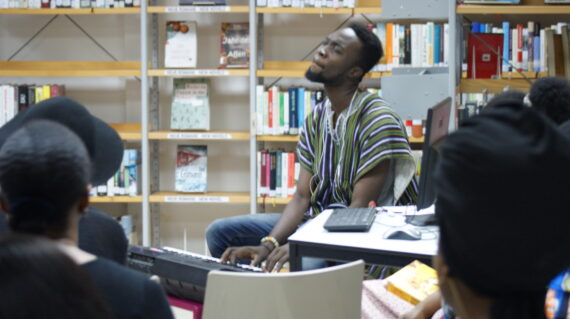
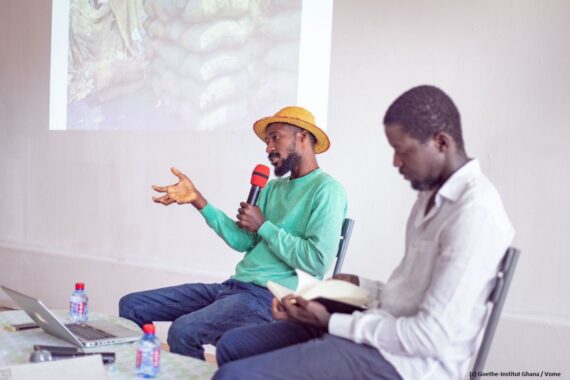
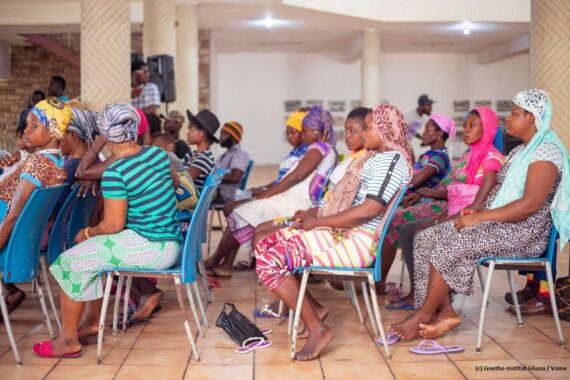
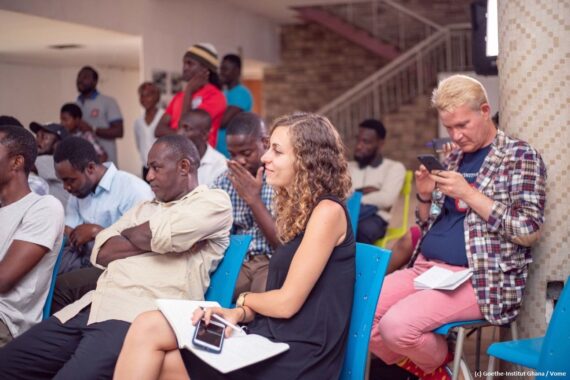
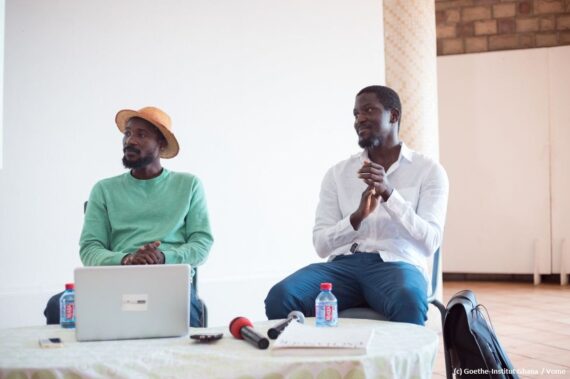
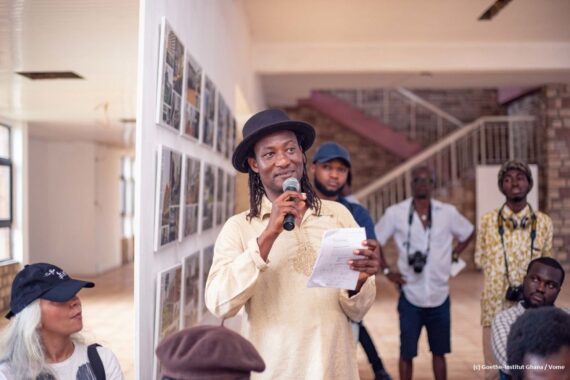
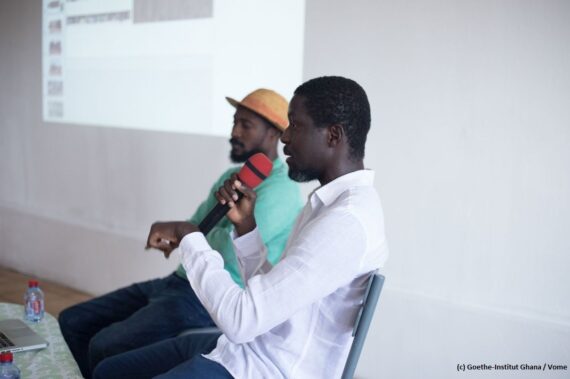
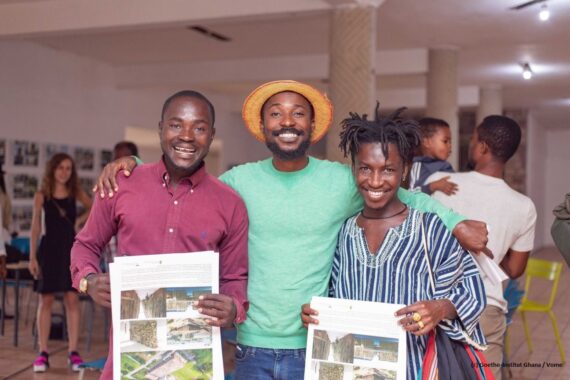
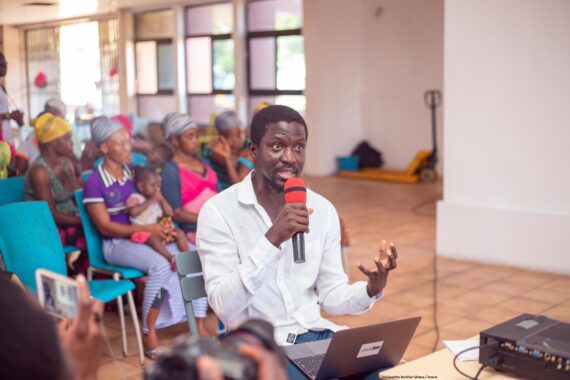
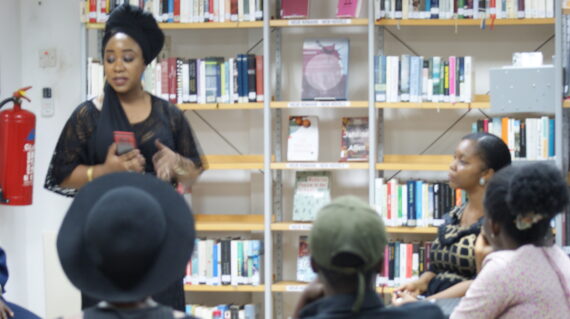
    A group of artists who participated in a Mobile Museum project that covered nearly 10,000 kilometers by bus – from Nigeria to Senegal to participate in the ongoing Dak Art Biennial – last week shared their experiences at the Goethe-Institut in Accra.

    Curated by the Nigerian / German artist Emeka Udemba, the journey began in Nigeria and moved through Benin, Togo, Ghana, La Côte d’Ivoire, Burkina Faso and Mali before arriving in the Senegalese capital Dakar for the biennial.

    Dubbed “Stretched Terrains”, it is a mobile artist residency project inside a bus, which has been transformed into a rolling art space. Throughout the journey, the artists examined diverse public spaces as communication zones of social and political interaction as they travelled through forests and deserts of West Africa.

    Briefing a group of artists and art lovers, Udemba said traditional concepts of museums and public spaces do not necessarily work in most African countries the way they should adding that everyone needs culture and not only people with access to museums.

    Udemba, Dame Diongue (Senegal), Soulayman Konate (La Côte d’Ivoire), Ray-Claver Agbo (Ghana), Monsuro Alashe (Nigeria) and Gabriel Goller (Germany) narrated the challenges, frustrations, experiences and more importantly inspirations that will guide their work in the near and distant future.

    Challenges at border crossings, harassment by police, corruption, lush forests, plantations, deserts, baobab trees, bus breakdowns and interactions with inhabitants of remote villages among others will serve as a reference point for future work by the artists.

    During the long drive, the artists equally experimented on ideas and areas they will normally not touch on when working in their studios, unearthed hidden talents and abilities while developing concepts for individual and collaborative work through memorable experiences.

    On arrival in the Senegalese capital Dakar, the artists participated in the ongoing biennial, interacted with artists and finalized works created on the road for an exhibition / presentations at the Goethe-Institut in Dakar.

    Supported by Lufthansa and Brussels Airlines Africa, “Stretched Terrains” was organized by Goethe-Institut Nigeria in co-operation with the Goethe-Institutes in Ghana, Togo, La Cote d’Ivoire, Senegal and the German-Malian Cultural Centre in Bamako.


    Read More »
  • President Sall pledges more support for Dak Art Biennial

    May 25, 2018 • FeaturedArticle, News • 1886


    By John Owoo

    In Dakar – Senegal

    Courtesy – Royal Air Maroc

    The Senegalese President H/E Macky Sall has promised to increase state support for Dak Art Biennial from 500 million FCFA to one billion FCFA to ensure its development, growth and sustenance.

    Speaking at the official opening of the 13th edition at the state of the art Grand Theatre in Dakar, he said new modalities for the finance of art and culture are critical due to failure of traditional forms of support in recent years.

    “I will advocate for more funding for arts and culture in Africa, indeed, I am willing to talk to fellow leaders to recognize the importance of diversifying new ways for the support of culture and actually implementing them” he told a full capacity audience.

    President Sall stated that the “Africa Market Report” recently indicated that top African artists were beneficiaries of art education adding that effective training alongside support from institutions like La Francophonie and UEMOA would be in a good direction.

    He added that adequate devices such us royalties will be a major step for artists since it will provide benefits for their work and ensure regular income while providing an enabling environment for creativity.

    “We have lost a number of artists since the last edition of Dak Art – undeniably these artists speak to us through their works. We salute them and commemorate their indelible acts of creativity”, said the president on a sad note as he asked for a minute silence for the departed souls.

    President Sall congratulated Rwanda and Tunisia for being invited as special guests adding although the share of Africa in terms of global marketing of contemporary art is still low; the interest continues to grow all over the world.

    Four artists Leila Adjovi (photographer – Benin), Mehdi-Georges Lahlou (Artist – Morocco), Frank Fanny (Photographer – Ivory Coast) and Tajmosu Oranwaju (Artist – Nigeria) received various prizes for extraordinary works.

    The ceremony was interspersed with diverse performances by groups from various countries, which created a cool blend of the visual and performing arts. Acclaimed Senegalese group Les Frères Guissé delighted the crowd with a series of tunes alongside a magnetic stage poise that drew cheers from the audience.

    A mass choir conducted by Jean Bakhoum that comprised 350 singers took the auditorium by storm as voices cleaved through the air like birds in flight while the Tunisian violin virtuoso Zyad Zouari surprised the crowd with an amazing skill on the violin.

    Accompanied by frenzied drumming; Ballet Rwanda showcased some pieces from the East African country that exhibited elements of South African gumboot dance whereas a Senegalese dance company treated the crowd with a choreographed contemporary piece.

    Dubbed “The Red Hour”, Dak Art 2018, which is being held under the patronage of H/E Macky Sall and the auspices of the Senegalese Ministry of Culture, ends on Saturday June 2.


    Read More »
  • Dak Art 2018 dilates on innovative funding for the arts

    May 25, 2018 • FeaturedArticle, News • 1689

    By John Owoo

    Dakar – Senegal

    Courtesy – Royal Air Maroc

    The question of funding once again became a focal point at the ongoing Dak Art Biennial with experts providing the basis for new mechanisms to be put in place owing to the apparent drying up of traditional forms of funding.

    In a packed conference at the plush Pullman Terenge Hotel in Dakar, Javier Guiterrrez, Vice President of the Board of Directors of the International Confederation of Societies of Authors and Composers, provided information on the benefits of Private Copyright.

    He stated that an effective legal environment is required for private copying levies, which offer creative people compensation for acts of copying that cannot be efficiently licensed or scrutinized by the authorities concerned.

    Private Copying can loosely be described as an exception to the authors exclusive right of authorizing the reproduction of his or her work, which allows the person to make a copy of the work for personal use. This is the result of technological advances in mobile phones, tablets and other recording equipment.

    Indeed, global collections of private copying levies topped a total of 310 million Euros in 2015 – and notably forming a whooping fifty percent of the local society’s income in Burkina Faso, which is one of the few African countries alongside Algeria that have successfully managed the scheme.

    Nevertheless, there were concerns about the suitability of the scheme owing largely to the diverse nature of African economies and the fact some form of laws on private copying exist in some countries, thereby raising concerns of acceptance and effective management owing to lack of applicable institutions in some African countries.

    In a related presentation on the financing of arts in the Canadian province of Quebec, Réjean Perron, Director of broadcasting and outreach support to the Quebec Arts and Letters Council provided a deep insight on how the province successfully supports the arts.

    He underscored the fact that Quebec prioritized culture in a conscious effort to give expression to the province’s distinct identity thereby instituting various kinds of support mechanisms for the arts.

    Perron mentioned the role of banks, cultural investment funds, tax incentives, communication / distribution funds alongside other support instruments that helped catapult the arts scene in Quebec onto the world scene.

    Presently, the Quebec cultural panorama is flourishing owing to the dependable financial support for the arts from the government as well as an accessible cultural infrastructure that celebrates artistic achievement through events and award schemes.

    Panelists, which include the Senegalese Minister of Culture Abdou Latif Coulibaly and his colleagues from Gambia, Togo, Rwanda and Tunisia alongside participants equally shared experiences from their various countries on the drive to create alternative sources of funding for the arts.

    Samuel Sangwa, African director of CISAC, moderated the programme, which forms part of activities marking Dak Art 2018.


    Read More »
  • Dak Art: Artists Rights & Repatriation of African Cultural Properties

    May 20, 2018 • FeaturedArticle, News • 2051

    By John Owoo

    In Dakar – Senegal

    Courtesy – Royal Air Maroc

    The repatriation of African cultural properties currently housed in Museums in several European countries alongside rights of artists and marketing took centre stage in one of the conferences at the ongoing Dak Art Biennial.

    Addressing a capacity audience on “Rights and Market for African Art” at the Pullman Terenga Hotel in Dakar, Anne Ferry Fall, Director General of the Society of Owners of Rights of Graphic and Fine Arts, said there is very little revenue for private copying owing to low rate of publications on the visual arts.

    She added that most of the revenue was basically from sales adding that rights to resale is a balancing act since art from Africa is currently invading the world with lightening speed with some galleries specializing only in African art in Europe and the United States.

    Dilating on the “Repatriation of African Cultural Properties”, Dr. Felwin Sarr, an economist and lecturer at the Gastion-Berger University in Saint Louis (Senegal), indicated that restitution could take various forms while calling for continuous dialogue on the issue.

    Nevertheless, he hinted on widespread debates on the capacity of African countries to create appropriate storage facilities, environmental changes, functions and roles these returned relics are supposed to play as well as appropriate infrastructure to house them.

    However, the Senegalese Culture Minister Abdou Latif Coulibaly disagreed with the question of Africa not being able to protect and preserve these artifacts adding that with all the modern technology we should have not problems in preserving any returned artifact.

    There was a consensus on the fact that the absence of artistic riches is a great loss to African economies and actually contributes to the loss of national and personal identity, hence a call for their return.

    Indeed, some people are of the view that these priceless artifacts, some of which have spiritual significance should not be returned to the continent owing to civil wars, poverty, mismanagement and lack of institutions and resources to maintain them.

    Nevertheless, not all African countries are wallowing in poverty, civil wars, famine and deep insecurity – thus there are countries that can effectively manage these artifacts on their return to the continent.

    Undeniably, the mere absence of antique art creates a feeling of vacuum in the history and cultural heritage of any society and the impact can be enormous in terms of inspiration, enthusiasm, creativity and improvement.

    Other panelists include Ministers of Culture from Tunisia, Gambia and Togo alongside academics, artists, curators and arts advocates from Senegal and other countries around the globe.

    Curated by the Cameroonian critic Simon Njami, the 2018 edition of Dak Art features a pavilion for Senegal, will offer a showcase of choice of national creativity under the direction of artist Viyé Diba.

    In the International Exhibition and in several other official sites, spaces of awakening will be created for children to be introduced to the contemporary art of the continent.


    Read More »
  • Dak Art 2018: Creating Value for African Contemporary Art

    May 16, 2018 • FeaturedArticle, News • 1905

    By John Owoo

    In Dakar – Senegal

    Courtesy – Royal Air Maroc

    Simon Njami, curator of the 2018 edition of the Dakar Art Biennial, has stated that Africa does not posses the tools to promote its contemporary art at this point in time and called for massive investment in this direction.

    Speaking at a lecture on “Creating Value for African Contemporary Art” at the Théodore Monod Museum for African Art in Dakar, Njami noted that Africa needs decent art, collectors, writers, galleries, infrastructure and venues to promote contemporary art in order to attract appropriate value for its art.

    “Without these and other appropriate structures, contemporary African art will continue to be invisible – indeed we need to make efforts at increasing the number of African galleries that are able to participate in international art fairs”, he said.

    Moderated by the former director of Dak Art Biennial Ousseynou Wade, Njami expressed concern that infrastructure that host the few biennials in Africa tend to lie fallow in between biennials and called for their effective utilization in and outside biennales.

    Adama Sanneh, Chief Operating Officer of Moleskine Foundation, said market of African contemporary art is mainly a perception adding that the perceptions say it will grow. He stated that the figures relating to the marketing of contemporary art in Africa is not encouraging but the trend is positive.

    He reiterated the point that more curators, galleries, African collectors, investors, data transparency and infrastructure among others are critical to ensure that Africa gets the right value for its contemporary art.

    “Mainstream investors rely on data and most African artists are not tracked by data – thus it’s an important area that must be tackled while we put in place mechanisms to stimulate local consumption of artworks”, added Sanneh, who is also a gallerist.

    Participants emphasized the need to adopt the “Market Stall” approach while courting government and private sector support, which is present in many developed countries. The issue of constructing storages to house artworks equally attracted the interest of participants.

    Undeniably, African art accounts for a very minute portion of the international art market with African artists being treated like outsiders. Nevertheless, the demand for works from Africa has greatly increased over the past decade.

    With the growth of African economies, patronage of African contemporary art is set to continue rising. Indeed, with wealth popping up from the telecoms, agriculture and oil / gas sectors in several African countries, local consumption is set to increase.


    Read More »
  • Contemporary African Art on Display in Dakar

    May 15, 2018 • FeaturedArticle, News • 2246

    By John Owoo

    In Dakar – Senegal

    Courtesy – Royal Air Maroc

    The 2018 edition of Dak Art Biennial, which is currently ongoing in the Senegalese capital Dakar, is a fine testimony of the evolution, progress and capacity of contemporary African art.

    Opened by Senegalese president HE Macky Sall, the festival, which has works of 70 artists from 33 countries on display, equally brought into the spotlight the issue of value for works by contemporary African artists.

    Dubbed “The Red Hour” and curated by the Cameroonian writer / art critic Simon Njami, the expansive range of artworks that have inundated the city of Dakar, is a clear indication of the multiplicity, complexity and universality of works that are being produced in Africa and the diaspora.

    With support from Alya Sebti (IFA Gallery in Berlin), Bonaventure Soh Bejeng Ndikung (SAVVY Contemporary – Berlin), Marisol Rodriguez (Author – Mexico), Cosmin Costinas (Para Site – Hong Kong) and Marianne Hultman (Kunstforening – Norway), Njami included over 300 artists in the off-section thereby spreading artworks all over the city.

    Nevertheless, a vast number of Senegalese appear not to be aware of the biennial, despite its international bearing – and the organizers must begin to find effective ways of attracting local interest and participation.

    The biennial equally touched on issues relating to “Artists Rights / Marketing & Repatriation of African Cultural Properties”, “Innovative Funding for the Arts in Africa”, “Creating Value for African Contemporary Art” and “The Development of Infrastructure”.

    Diverse works fashioned out of materials including discarded metals, wooden boxes, colorful fabrics, wires, books, plastics and other recycled items appear to communicate with each other at a former Senegalese High Court, which housed the international exhibition.

    Noted for his large-scale sculptures that are mostly wall based, Ghanaian master El Anatsui’s works permeated a rather large well lit room with its intricately woven materials that constantly exude a luminous and majestic presence.

    UK based Ghanaian artist Godfried Donkor’s stock market prints from Financial Newspapers, which contain “millions” of data, are perched coolly on walls close to the entrance of this giant edifice as they transmit their queries on the commercialization of people.

    A gigantic work by the Nigerian artist Olanrewaju Tejuoso, comprise domestic waste that he turned into an award-winning piece while exploring a process of accumulation through artistic and visual heights.

    Cuban artist Juan Milano Benito presented a replica of a famous but out of use swimming pool from the 1950s in Cuba to depict failure. The piece indicates disappointment associated with diverse human endeavors and actions that continue to haunt us to this day.

    Moshekwa Langa from South Africa showcased a playful installation that reveals experiences of his life, which he maps and incorporates into his rather complex and adjustable installations. In their numeric strength, they encompass an archive of his life and works.

    Unassuming sculptures by France based Mozambican artist Téo Betin are characterized by a close attention to detail while bringing together diverse elements of a complete narrative. A staircase he constructed vividly establishes links with nearby objects.                                                                                                                                                                                                                         Moroccan artist Mohssin Harraaki installed a series of rocks that have been tired with black cables in the form of trees that end up as light bulbs. The installation, which expresses a diversity of ideas, is equally linked to genealogy, inheritance and history.

    Dak Art 2018, which ends on Saturday June 2, aims at being a space of different prejudice-free visions alongside approaches and inspirations that analyze issues in relation to a plurality of influences from both immediate and distant sources.


    Read More »
  • National workshop in Ghana on artistic freedom

    May 1, 2018 • FeaturedArticle, News • 1851

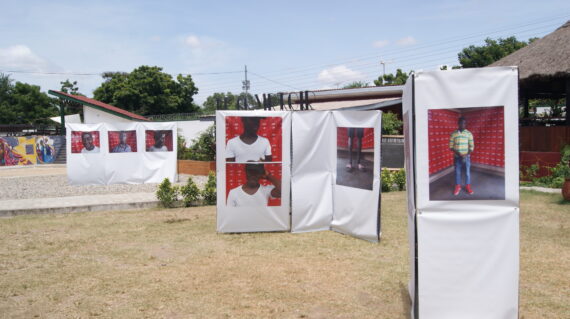
    Within the framework of the re-designed Aschberg programme for artists and cultural professionals, UNESCO will on May 3th and 4th organize a two-day training workshop for Ghanaian civil society and government officials on policies and measure to promote and monitor artistic freedom.

    Catherine Afeku (Minister of Tourism, Arts and Culture), Ama Serwah Nerquaye-Tetteh (Secretary General – National Commission of Ghana for UNESCO) and Danielle Cliche (Secretary of the 2005 Convention and Chief of the Section for the Diversity of Cultural Expressions) will open training, which also marks World Freedom Day 2018.

    The workshop, which will be conducted by M. Ole Reitov (former Executive Director of Freemuse) and Sara Whyatt (former Deputy-Director of PEN International), will bring together about twenty people persons from governmental and non-governmental actors working in Ghana on issues related to artistic freedom.

    This workshop will facilitate a better understanding of the 2005 Convention on the Protection and Promotion of the Diversity of Cultural Expressions and its goal to promote human rights and artistic freedom.

    Others are exchange on existing laws, policies and measures which promote and protect artistic expression and challenges that countries face while increasing knowledge and understanding of the obligations that governments (in close cooperation with civil society) have in terms of reporting on policies and measures taken to promote artistic freedom.

    The first day of the workshop will introduce participants to the concept of artistic freedom and help to engage a discussion on global challenges to artistic freedom, the international legal frameworks regulating artistic freedom, social and economic rights of artists and data collection mechanisms.

    The second day will focus on how to report on artistic freedom worldwide and in Ghana. Through group works, the participants will qualify how Ghana may report on artistic freedom as part of the forthcoming quadrennial periodic report submission to UNESCO on the implementation of the 2005 convention, which Ghana signed in 2016.

    Picture:-

    Aïda Muluneh

    Darkness Give Way to Light

    Lumières d’Afrique Exhibition

    Ethiopia – 2015

    Read More »
  • Wiz Kudowor – forty years of distinction

    April 2, 2018 • FeaturedArticle, News • 2675

    By John Owoo

    (In Accra – Ghana)

    Communicative paintings by the Osaka Triennial award winning artist Wiz Kudowor that span a period of forty years are currently on display in three galleries in Accra.

    Titled “Retrospective” – the exhibitions, which are being held at the ANO, Berg and Artist Alliance Galleries – effectively trace the chronological trajectory, imaginative vocabularies and vigorous artistic language of Koduwor.

    Curated by Sela Kodjo Adjei, Kudowor’s work at the Artists Alliance Gallery simultaneously draw on diverse energies and manages to push them beyond fixed spaces and characteristics in his quest to explore and interpret hidden truths.

    Easily one of Ghana’s best respected and acclaimed modernist painters, his paintings are influenced by rich African symbolism, out of which he creates impenetrable messages that are characterized by stimulating titles and designations.

    Employing pastels, acrylics, charcoal, inks, collages and watercolors, his bold figures tend to highlight body contours, faces, scenes and shapes that equally rejuvenate and conjure Ghanaian traditional themes while exploring geometric and revolutionary styles.

    Emotions and facial expressions are deeply embedded in works on display at the Berg Gallery, which illustrate his mid-career period. Abstract masks, motherhood and feminine essence among others are quite pronounced in these small-scale paintings.

    His works at the ANO Gallery from his early days as an artist reveal varied details of faces and their vocabularies in his dancing and romantic figures, market women and beer downing gatherings that largely portray practices in the local Ghanaian art scene in the 1970s.

    Educated at the College of Art and Sculpture, Kwame Nkrumah University of Science and Technology (Kumasi), Kudowor has exhibited widely across Africa, Europe, Asia and the United States of America.

    His works can be found in a number of international collections including the Ministry of Culture (People’s Republic of China), African American Museum (Texas, USA), Ghana Museums and Monuments Board (Accra, Ghana) and the Osaka Prefecture Contemporary Art Collection (Osaka, Japan).

    A multidisciplinary artist / academic, Adjei graduated with an MPhil in African Art and Culture from the Kwame Nkrumah University of Science and Technology (Kumasi). He has curated a number of exhibitions including the famous Chale Wote Street Art Festival.

    The exhibitions end on Wednesday April 18.


    Read More »
  • Eerie, expressive and voluptuous bodies at Gallery 1957

    March 31, 2018 • FeaturedArticle, News • 1887

    By John Owoo

    (In Accra – Ghana)

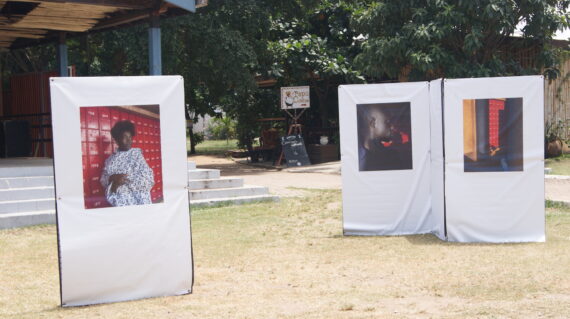
    The walls of Gallery 1957 provide an imperturbable sense of belonging – indeed the burgundy coloured walls offer a true feeling of intimacy that border on a boudoir – as one gets encircled with artworks by the Haitian American artist Florine Demosthene.

    Located within the premises of the elegant Kempinski Hotel in Accra, the atmosphere is one of both familiarity and interference as one moves from one artwork to the other, some of which are decorated with elaborate frames.

    A close scan of the walls show Demosthene as a masterful technician – who employs a penetrating fusion of figurative and abstract forms to examine diverse issues that confront the contemporary world – while engaging her own profile as a reference point.

    Titled, “The Stories I Tell Myself”, the mixed media works are conceptual and does not illuminate one meticulous notion, event or history. “For me, my art has been a passing away of layers of preconceived ideas; much in the way as a snake sheds its skin. This slow shedding process can be viewed as a continual rebirth of our identity”, she explains.

    Indeed, it is an unrestricted body of work that actually enjoins the viewer to conceive and communicate his or her own ideas. Consequently – the works, some of which are uncanny – attract a flurry of concepts including femininity, race, sensuality, heroines and gender issues.

    With images that seem to be hovering in the universe, she effectively re-appraises socio-political constructions and circumstances that currently encircle female sexuality and physicality as her delicate figures tend to initiate a kind of dialogue around female bodies.

    Demosthene earned a BFA the Parsons New School for Design and an MFA from Hunter College (both in the United States). She has shown her work extensively in group and solo exhibitions in the Caribbean, United Kingdom, Slovakia, Germany, the United States and several parts of Africa.

    She was a recipient of a Joan Mitchell Foundation Grant in 2011 and was featured in the premiere issue of “Arc”, a magazine that is dedicated to highlighting emerging and established Caribbean artists.

    The artist is also a 2012 Keyholder resident at the Lower East Side Printshop in New York (USA), a Guest Artist for the 2014 Dakar Art Biennale and a participant in the first Kampala Art Biennale in Uganda.

    The exhibition ends on Sunday May 6.


    Read More »
  • MASA 2018 – Solo dancers show class

    March 21, 2018 • FeaturedArticle, News • 2059

    By John Owoo

    (In Abidjan – La Côte d’Ivoire)

    It was a cool evening at the Salle Kodjo Ebouclé, one of the theatres located within the premises of the Palais de la Culture – a giant edifice that overlooks the scenic Lagoon Ebrie in Abidjan (Côte d’Ivoire).

    There is an eerie silence and the audience remain attentive as they await Judith Olivia Manantenasoa – a courageous Malagasy dancer / choreographer – who as widely expected sends the audience on an unforgettable journey.

    Clad in a mainly white flowing gown with a spotlight in tow, Manantenasoa lunges into “Metamorphoses”, a solo piece she choreographed that show her as a creator / interpreter. She remains motionless for minutes and evokes an imagery of diverse organisms while bending into controllable movements.

    In the process she takes off her top, exposing her breasts as she begins a process of transfiguration. Employing movements and gestures that are technically proficient alongside pensive phrasing, she looses her individuality while assuming the character of an object.

    She eventually moves closer to lines of twines tired on stage with colorful pegs hanging loosely on them. Further complex movements lead to a nude show as extremely dim lights overshadow the stage. In the process, she fully becomes and embodiment of the word “metamorphoses”.

    “Manantenasoa is an extremely audacious artist – she expresses herself in a manner she deems fit – and her message gets across with amazing ease”, says Marie Hervè, a visual artist / poet from Cotonou, Benin.

    In yet another compelling solo performance titled “Energy”, Cameroonian dancer / choreographer Agathe Tamo Djokam moves with calculated steps and facial motions as she works her way through what appears to be dense air.

    With a metal ladder on her shoulders that signify a satirical symbol of flight or ascent – she climbs, crashes, pulls and carries the ladder while collapsing again and again on the stage – a move that denotes difficulty in her quest for flight.

    Through static animation, she seems to be fighting within herself for some form of control – undeniably for energy to assert herself as an artist – but the ladder proves to be extremely heavy. Nevertheless, the quest for her right to choose still persists.

    “A self-motivated artist with a mission – Djokam is full of concepts and beliefs that can be effectively and successfully transferred onto the stage. This is surely a teaser”, added Yao Kouame, a dancer in Abidjan.

    Over 70 music, dance and theatre groups alongside poets, storytellers, slammers and street artists from various countries in the world performed during the festival, which ended on Saturday March 17.


    Read More »
« 1 … 30 31 32 33 34 … 45 »
Subscribe to Arts Ghana News

Enter your email address to subscribe. Receive notifications of new posts by email.

RECENT VIDEOS

Simple Slideshow

  • Goethe Institut
  • Alliance Française
  • Arterial Network

© 2026 Arts Ghana™

Website Managed by DelTin Technologies