Latest
  • visit www.artsghana.net for information on the arts
  • visit www.artsghana.net for information on the arts

Arts Ghana

MENU
  • Home
  • About Us
  • Upcoming Events
  • Latest News
  • Artistes Database
  • Archives
  • Links
  • Contact Us
  • Music
  • Dance
  • Theatre
  • Literature
  • Visual Arts
  • Film
  • Fashion
  • You Tube
  • Facebook
  • April 28, 2026 • 147

    Festival reaffirms Togo as a jazz hub

  • April 24, 2026 • 289

    Music shaped by ancestry, improvisation, and transcendence

  • April 23, 2026 • 267

    Brass bands showcase tradition and experimentation

  • April 21, 2026 • 191

    Set design mirrors dynamism of contemporary African performance

  • April 17, 2026 • 231

    Shifting portraits of the complexities of male identity

  • April 17, 2026 • 223

    Rhythmic footwork and grounded movements

  • April 16, 2026 • 517

    Raw physicality with spiritual introspection  

  • April 16, 2026 • 264

    Imposition, interruption, and provocation by LED screen

  • April 15, 2026 • 175

    Sonic meditation on tradition and transformation

  • April 15, 2026 • 294

    Subtle exposure of constraints that shape female identity

  • Brilliant fusion of artistic creativity buzz audience

    July 6, 2018 • FeaturedArticle, News • 1962

    By John Owoo

    (In Accra – Ghana)

    Expectations are extremely high when an artistic production involving Prof. Paschal Younge and Prof. Zelma Badu-Younge is about to unfold – and when the production includes other acclaimed artists from Ghana and beyond – the anticipation intensifies.

    Consequently, the audience at the National Theatre sit calmly in the totally dark auditorium as they anxiously await the performance of “Agoro” – a charismatic blend of choral / classical music, contemporary / Sufi dance movements and theatre with griot undertones.

    Presented by the National Theatre, Azaguno Inc and the Ohio University with Prof. Paschal Younge (composer), Prof. Zelma Badu-Younge (choreographer), Mawuli Semevor (Director of Drama), Isaac Annor (Conductor) and Nii Tete Yartey (Artistic Director), “Agoro” is undeniably an epic production that is deeply focused and grandly beautiful.

    With an overall cast of 120 artists from Ghana, Canada and the United States, “Agoro” is simply a brilliant mixture of visual creativity and artistry, indeed an imaginative brand of expressive dances that are set against the well-calculated speed of Sufi inspired movements.

    “One successful production after the other – I salute all the artistic directors involved in this project who have surprised us with masterful productions over the past three years. In the process, they have forcefully revealed the power and beauty of cross cultural collaborations”, said Nii Tackie Tawiah, a dancer in Accra.

    With contemporaneous compositions by Prof. Paschal Younge, music of tremendous emotional power from the National Symphony Orchestra, Bi-Tonic Singers, National Fire Service Central Band and percussionists from all three countries inundated the auditorium as the audience cheered and applauded.

    In a rather tranquil atmosphere, Canadian multi-disciplinary artist Sashar Zarif and five Ghanaian dancers presented a choreographed piece of Sufi rituals (first in a non-religious setting in West Africa) that consisted of poetry, music and Dervish movements, which captivated the audience who sat and watched in utter silence.

    With internationally acclaimed artists, academics and students including Dr. Erik Forst, Keith Moone, Dr. Kristofer Olsen, Tom Berich, Gcinile Shongwe and John Meriwether, “Agoro”, equally showcased a cool fusion of indigenous / contemporary Australian, Pan African, South African, Caribbean and American movements and music forms.

    Along emotional scenes, late directors of the National Theatre including Prof. N.Z. Nayo, Prof. Komla Amoaku, Prof. F Nii-Yartey and Efo Kojo Mawugbe were honored with a rendition of popular spirituals and compositions that date back to the period of the slave trade.

    Enterprise Group, Ohio University, Prestige Hotel, GTP, PGEES Catering and Azaguno Inc. supported the production, which formed part of activities marking the 25th Anniversary of the National Theatre of Ghana.

    Read More »
  • Visually stimulating dance at Alliance Française

    July 2, 2018 • FeaturedArticle, News • 2070

    By John Owoo

    (In Accra – Ghana)

    A peculiar silence engulf the outdoor stage at the Alliance Française in Accra – as a rather cold breeze – a product of low lying clouds that moved into the city from the Gulf of Guinea create a cool atmosphere.

    Alongside highly dimmed lights, six dancers move on stage with controlled precision, probably just as prescribed by the choreographer. They gradually engage in monologues that remind mankind or our duties to mother nature.

    Choreographed by French dance connoisseur Valerie Miquel, “Back to our Roots” employs a dramatic fusion of movement, text, music, video effects and sound that effectively evolve into a production that comments on one of the critical issues facing the world at large.

    “Miquel seduced us with “Wake Up”, now she has mesmerized us with “Back to our Roots”, which is conveying a vey important message to world – I am looking forward to yet another production from this wonderful choreographer”, said Naa Kwale Quartey, an artist / fashion designer in Accra.

    Undeniably, “Back to our Roots”, is tenderly moving and compelling. It is a dance theatre with so much energy, emotion and interwoven layers of well-structured imagery that managed to keep the cheering audience on the edge of their seats.

    Interspersed with energizing solos and duets, the six dancers comprising Miquel, Fatima Fadel, Cherryl Nortey, Omoyemi Davies, Pucky Lucky and Emma Amerwornu revealed their talent and expertise as this intellectually satisfying and visually stimulating production progressed.

    With colorful costumes, some of which have fanciful designs, they move in coordinated precision – fore arms flaying, heads turning, legs shooting high in the air – alongside gestures that question our respect to nature and the consequences that seem eminent if we fail to do so.

    With video effects by Delphy Photography, they equally employ traditional drums and giant calabashes that effectively blend with smart variations from the choreography. In the process, the dancers move in and out of the stage with swiftness that tends to go in sync with the rather strong and consistent dancing.

    An acclaimed choreographer/ dancer, Miquel who is the vice president of CID-UNESCO, has received many awards for her work and is respected for diverse productions including “Kadogos”, “The Power of Hope”, “Cry for Women’s Dignity”, “Solidarity” and “Wake Up”.

    Alliance Française in Accra supported the production.


    Read More »
  • Virtual Reality exhibition ends at Goethe-Institut

    June 10, 2018 • FeaturedArticle, News • 1965

    By John Owoo

    (In Accra – Ghana)

    An exhibition of virtual reality (VR) productions by Jonathan Dotse (Ghana), Jim Chuchu (Kenya), Selly Raby Kane (Senegal) and N’gendo Mukii (Kenya) that revealed the potential of real-time / interactive VR ended last week at the Goethe-Institut in Accra.

    Dubbed “New Dimensions”, it follows a recent workshop in the South African capital Johannesburg, which explored the potential for mobile virtual reality to create stories that reflect the diversity of Africa while building the capacity for cross-disciplinary experimentation.

    A piece by Dotse, a Ghanaian Afro futurist, which captures the vibrancy and exuberance of the famous Chale Wote Street Art Festival in Accra, provides a virtual experience for those who missed the event while introducing those who witnessed it with a completely new capacity to recollect and reflect on the festival.

    Titled “Spirit Robot”, it is a cacophony of images from performances, crowds, historical buildings and fisher folk on the Gulf of Guinea alongside voices and effects that effectively take the viewer on a virtual journey. Furthermore, it vividly reveals the essence of the festival, which is an alternative platform for artists.

    “Let This be a Warning” by Kenyan artist / film maker Jim Chuchu is a short movie that explores the future with Africans who have managed to flee the earth and set up a colony on one of the distant planets and their response when an intruder encroaches on their territory.

    Peering though the device, the viewer immediately gets the feeling of an unsafe territory – images of men wielding assault rifles and people going around with body guards is enough for the viewer to be alarmed while being reminded of the fact that no one is welcome to this exclusive territory.

    Titled “The Other Dakar”, Senegalese designer / artist Kane showcased a magical 360 degree film, which transports viewers on a mute journey that encompasses the past and the future with emphasis on diverse people involved in the creative arts.

    Noted for her three-dimensional molded shapes, bold patterns and use of unusual materials, her film presents highly enthusiastic artists who are bringing fresh energy and vigor onto the creative arts scene in the Senegalese capital Dakar.

    Mukii’s “Nairobi Berries” show two women and a man in a state of struggle that depicts crime and other security related problems in the Kenyan capital Nairobi. Indeed, they appear to be fighting for “fruits” that have been promised, which are gradually turning out to be fairy tales.

    Presented as a poetic allegory, it allows for an extreme inner understanding – indeed, without control or power to make decisions, they seem to move from one scene to the next while participating almost as voyeurs – undeniably, being part of things but unable to direct them.

    Opened by Dr. Fara Awindor, a senior lecturer at the National Film and Television Institute, “New Dimensions” was presented by Electric South / Goethe-Institut with support from Big World Cinema, Blue Ice Docs and the Bertha Foundation.


    Read More »
  • Documentary film provokes “Galamsey” debate

    June 8, 2018 • FeaturedArticle, News • 2375

    By John Owoo

    (In Accra – Ghana)

    A panel discussion that followed the screening of “Galamsey – For a Fistful of Gold”, a documentary by the award winning German director Johannes Preuss, vividly revealed the long-term health, economic, social, security and other implications on Ghana and beyond.

    In a highly informative and educative discussion at the Goethe-Institut in Accra, Prof. Kwabena Frimpong Boateng (Minister of Environment, Science, Technology and Innovation), Dr. Benedict Calys-Tagoe (Public Health Specialist), Kenneth Ashigbey (Convener of the Media Against Galamsey) and director Preuss dilated on the menace that has reached alarming proportions in recent years.

    Opened by the German Ambassador to Ghana, H/E Christoph Retzlaff and moderated by economic journalist Emmanuel Dogbevi, the panelists severally and jointly pointed out to the dire consequences that “galamsey” would have on the sustenance of life in the affected communities and beyond if the authorities do not take long lasting measures.

    Contamination and adulteration of rivers with substances such as mercury, oil and grease, deforestation, climatic changes, accidents from crude processing methods, migrations, premature deaths, noise pollution, rise in violence / crime, destruction of the eco system and revision of laws were equally discussed by panelists.

    Set in Twifo Praso in the Central region, the twenty-eight minute documentary brilliantly exposed the danger faced not only by communities close to these illegal mines but also the country at large. Intense images show dangerous chemicals being washed into rivers by these miners resulting in the death and destruction of various forms of aquatic life and putting human lives at great risk.

    Preuss, who without doubt has seemingly good intensions, engaged local authorities, poor workers, supervisors, middle men, traditional leaders, town folks and traders as he sought for answers as to why an act that threatens the survival of the communities and the country as a whole, largely remains unchecked.

    Trained at the Baden-Württemberg Film Academy in Ludwigsburg (Germany), this documentary by Preuss is a direct result of his previous experience as a development worker in Twifo Praso during which he observed the problems and challenges surrounding illegal gold extraction.

    “Galamsey – For a Fistful of Gold”, which won a Student Oscar in 2017, also touched on the equally disturbing issue of corruption and exploitation, which have been one of the hallmarks of the illegal mining of gold in Ghana.

    Preuss, who also has a Master’s degree in politics, history and roman literature studies from the University of Bonn (Germany), made fruitless attempts to talk to the giant mining companies, who he thinks are part of the problem.

    German Cooperation, GIZ and Goethe-Institut Ghana supported the screening and discussion.


    Read More »
  • “Stretched Terrains” artists share experiences

    May 28, 2018 • FeaturedArticle, News • 1624

    By John Owoo

    In Accra – Ghana

    A group of artists who participated in a Mobile Museum project that covered nearly 10,000 kilometers by bus – from Nigeria to Senegal to participate in the ongoing Dak Art Biennial – last week shared their experiences at the Goethe-Institut in Accra.

    Curated by the Nigerian / German artist Emeka Udemba, the journey began in Nigeria and moved through Benin, Togo, Ghana, La Côte d’Ivoire, Burkina Faso and Mali before arriving in the Senegalese capital Dakar for the biennial.

    Dubbed “Stretched Terrains”, it is a mobile artist residency project inside a bus, which has been transformed into a rolling art space. Throughout the journey, the artists examined diverse public spaces as communication zones of social and political interaction as they travelled through forests and deserts of West Africa.

    Briefing a group of artists and art lovers, Udemba said traditional concepts of museums and public spaces do not necessarily work in most African countries the way they should adding that everyone needs culture and not only people with access to museums.

    Udemba, Dame Diongue (Senegal), Soulayman Konate (La Côte d’Ivoire), Ray-Claver Agbo (Ghana), Monsuro Alashe (Nigeria) and Gabriel Goller (Germany) narrated the challenges, frustrations, experiences and more importantly inspirations that will guide their work in the near and distant future.

    Challenges at border crossings, harassment by police, corruption, lush forests, plantations, deserts, baobab trees, bus breakdowns and interactions with inhabitants of remote villages among others will serve as a reference point for future work by the artists.

    During the long drive, the artists equally experimented on ideas and areas they will normally not touch on when working in their studios, unearthed hidden talents and abilities while developing concepts for individual and collaborative work through memorable experiences.

    On arrival in the Senegalese capital Dakar, the artists participated in the ongoing biennial, interacted with artists and finalized works created on the road for an exhibition / presentations at the Goethe-Institut in Dakar.

    Supported by Lufthansa and Brussels Airlines Africa, “Stretched Terrains” was organized by Goethe-Institut Nigeria in co-operation with the Goethe-Institutes in Ghana, Togo, La Cote d’Ivoire, Senegal and the German-Malian Cultural Centre in Bamako.


    Read More »
  • President Sall pledges more support for Dak Art Biennial

    May 25, 2018 • FeaturedArticle, News • 1820


    By John Owoo

    In Dakar – Senegal

    Courtesy – Royal Air Maroc

    The Senegalese President H/E Macky Sall has promised to increase state support for Dak Art Biennial from 500 million FCFA to one billion FCFA to ensure its development, growth and sustenance.

    Speaking at the official opening of the 13th edition at the state of the art Grand Theatre in Dakar, he said new modalities for the finance of art and culture are critical due to failure of traditional forms of support in recent years.

    “I will advocate for more funding for arts and culture in Africa, indeed, I am willing to talk to fellow leaders to recognize the importance of diversifying new ways for the support of culture and actually implementing them” he told a full capacity audience.

    President Sall stated that the “Africa Market Report” recently indicated that top African artists were beneficiaries of art education adding that effective training alongside support from institutions like La Francophonie and UEMOA would be in a good direction.

    He added that adequate devices such us royalties will be a major step for artists since it will provide benefits for their work and ensure regular income while providing an enabling environment for creativity.

    “We have lost a number of artists since the last edition of Dak Art – undeniably these artists speak to us through their works. We salute them and commemorate their indelible acts of creativity”, said the president on a sad note as he asked for a minute silence for the departed souls.

    President Sall congratulated Rwanda and Tunisia for being invited as special guests adding although the share of Africa in terms of global marketing of contemporary art is still low; the interest continues to grow all over the world.

    Four artists Leila Adjovi (photographer – Benin), Mehdi-Georges Lahlou (Artist – Morocco), Frank Fanny (Photographer – Ivory Coast) and Tajmosu Oranwaju (Artist – Nigeria) received various prizes for extraordinary works.

    The ceremony was interspersed with diverse performances by groups from various countries, which created a cool blend of the visual and performing arts. Acclaimed Senegalese group Les Frères Guissé delighted the crowd with a series of tunes alongside a magnetic stage poise that drew cheers from the audience.

    A mass choir conducted by Jean Bakhoum that comprised 350 singers took the auditorium by storm as voices cleaved through the air like birds in flight while the Tunisian violin virtuoso Zyad Zouari surprised the crowd with an amazing skill on the violin.

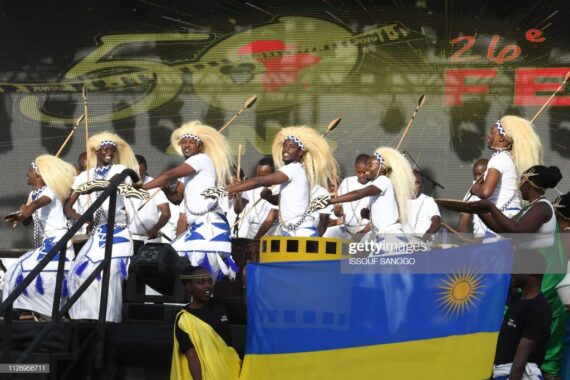
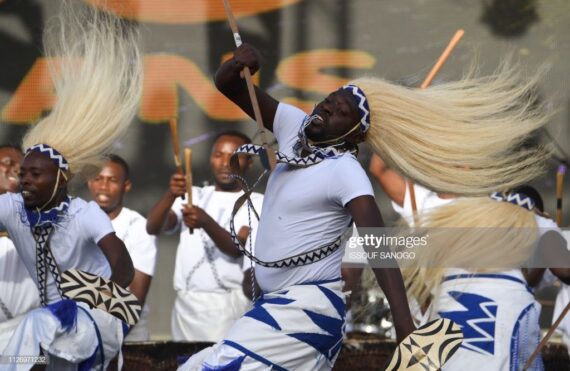
    Accompanied by frenzied drumming; Ballet Rwanda showcased some pieces from the East African country that exhibited elements of South African gumboot dance whereas a Senegalese dance company treated the crowd with a choreographed contemporary piece.

    Dubbed “The Red Hour”, Dak Art 2018, which is being held under the patronage of H/E Macky Sall and the auspices of the Senegalese Ministry of Culture, ends on Saturday June 2.


    Read More »
  • Dak Art 2018 dilates on innovative funding for the arts

    May 25, 2018 • FeaturedArticle, News • 1593

    By John Owoo

    Dakar – Senegal

    Courtesy – Royal Air Maroc

    The question of funding once again became a focal point at the ongoing Dak Art Biennial with experts providing the basis for new mechanisms to be put in place owing to the apparent drying up of traditional forms of funding.

    In a packed conference at the plush Pullman Terenge Hotel in Dakar, Javier Guiterrrez, Vice President of the Board of Directors of the International Confederation of Societies of Authors and Composers, provided information on the benefits of Private Copyright.

    He stated that an effective legal environment is required for private copying levies, which offer creative people compensation for acts of copying that cannot be efficiently licensed or scrutinized by the authorities concerned.

    Private Copying can loosely be described as an exception to the authors exclusive right of authorizing the reproduction of his or her work, which allows the person to make a copy of the work for personal use. This is the result of technological advances in mobile phones, tablets and other recording equipment.

    Indeed, global collections of private copying levies topped a total of 310 million Euros in 2015 – and notably forming a whooping fifty percent of the local society’s income in Burkina Faso, which is one of the few African countries alongside Algeria that have successfully managed the scheme.

    Nevertheless, there were concerns about the suitability of the scheme owing largely to the diverse nature of African economies and the fact some form of laws on private copying exist in some countries, thereby raising concerns of acceptance and effective management owing to lack of applicable institutions in some African countries.

    In a related presentation on the financing of arts in the Canadian province of Quebec, Réjean Perron, Director of broadcasting and outreach support to the Quebec Arts and Letters Council provided a deep insight on how the province successfully supports the arts.

    He underscored the fact that Quebec prioritized culture in a conscious effort to give expression to the province’s distinct identity thereby instituting various kinds of support mechanisms for the arts.

    Perron mentioned the role of banks, cultural investment funds, tax incentives, communication / distribution funds alongside other support instruments that helped catapult the arts scene in Quebec onto the world scene.

    Presently, the Quebec cultural panorama is flourishing owing to the dependable financial support for the arts from the government as well as an accessible cultural infrastructure that celebrates artistic achievement through events and award schemes.

    Panelists, which include the Senegalese Minister of Culture Abdou Latif Coulibaly and his colleagues from Gambia, Togo, Rwanda and Tunisia alongside participants equally shared experiences from their various countries on the drive to create alternative sources of funding for the arts.

    Samuel Sangwa, African director of CISAC, moderated the programme, which forms part of activities marking Dak Art 2018.


    Read More »
  • Dak Art: Artists Rights & Repatriation of African Cultural Properties

    May 20, 2018 • FeaturedArticle, News • 1947

    By John Owoo

    In Dakar – Senegal

    Courtesy – Royal Air Maroc

    The repatriation of African cultural properties currently housed in Museums in several European countries alongside rights of artists and marketing took centre stage in one of the conferences at the ongoing Dak Art Biennial.

    Addressing a capacity audience on “Rights and Market for African Art” at the Pullman Terenga Hotel in Dakar, Anne Ferry Fall, Director General of the Society of Owners of Rights of Graphic and Fine Arts, said there is very little revenue for private copying owing to low rate of publications on the visual arts.

    She added that most of the revenue was basically from sales adding that rights to resale is a balancing act since art from Africa is currently invading the world with lightening speed with some galleries specializing only in African art in Europe and the United States.

    Dilating on the “Repatriation of African Cultural Properties”, Dr. Felwin Sarr, an economist and lecturer at the Gastion-Berger University in Saint Louis (Senegal), indicated that restitution could take various forms while calling for continuous dialogue on the issue.

    Nevertheless, he hinted on widespread debates on the capacity of African countries to create appropriate storage facilities, environmental changes, functions and roles these returned relics are supposed to play as well as appropriate infrastructure to house them.

    However, the Senegalese Culture Minister Abdou Latif Coulibaly disagreed with the question of Africa not being able to protect and preserve these artifacts adding that with all the modern technology we should have not problems in preserving any returned artifact.

    There was a consensus on the fact that the absence of artistic riches is a great loss to African economies and actually contributes to the loss of national and personal identity, hence a call for their return.

    Indeed, some people are of the view that these priceless artifacts, some of which have spiritual significance should not be returned to the continent owing to civil wars, poverty, mismanagement and lack of institutions and resources to maintain them.

    Nevertheless, not all African countries are wallowing in poverty, civil wars, famine and deep insecurity – thus there are countries that can effectively manage these artifacts on their return to the continent.

    Undeniably, the mere absence of antique art creates a feeling of vacuum in the history and cultural heritage of any society and the impact can be enormous in terms of inspiration, enthusiasm, creativity and improvement.

    Other panelists include Ministers of Culture from Tunisia, Gambia and Togo alongside academics, artists, curators and arts advocates from Senegal and other countries around the globe.

    Curated by the Cameroonian critic Simon Njami, the 2018 edition of Dak Art features a pavilion for Senegal, will offer a showcase of choice of national creativity under the direction of artist Viyé Diba.

    In the International Exhibition and in several other official sites, spaces of awakening will be created for children to be introduced to the contemporary art of the continent.


    Read More »
  • Dak Art 2018: Creating Value for African Contemporary Art

    May 16, 2018 • FeaturedArticle, News • 1835

    By John Owoo

    In Dakar – Senegal

    Courtesy – Royal Air Maroc

    Simon Njami, curator of the 2018 edition of the Dakar Art Biennial, has stated that Africa does not posses the tools to promote its contemporary art at this point in time and called for massive investment in this direction.

    Speaking at a lecture on “Creating Value for African Contemporary Art” at the Théodore Monod Museum for African Art in Dakar, Njami noted that Africa needs decent art, collectors, writers, galleries, infrastructure and venues to promote contemporary art in order to attract appropriate value for its art.

    “Without these and other appropriate structures, contemporary African art will continue to be invisible – indeed we need to make efforts at increasing the number of African galleries that are able to participate in international art fairs”, he said.

    Moderated by the former director of Dak Art Biennial Ousseynou Wade, Njami expressed concern that infrastructure that host the few biennials in Africa tend to lie fallow in between biennials and called for their effective utilization in and outside biennales.

    Adama Sanneh, Chief Operating Officer of Moleskine Foundation, said market of African contemporary art is mainly a perception adding that the perceptions say it will grow. He stated that the figures relating to the marketing of contemporary art in Africa is not encouraging but the trend is positive.

    He reiterated the point that more curators, galleries, African collectors, investors, data transparency and infrastructure among others are critical to ensure that Africa gets the right value for its contemporary art.

    “Mainstream investors rely on data and most African artists are not tracked by data – thus it’s an important area that must be tackled while we put in place mechanisms to stimulate local consumption of artworks”, added Sanneh, who is also a gallerist.

    Participants emphasized the need to adopt the “Market Stall” approach while courting government and private sector support, which is present in many developed countries. The issue of constructing storages to house artworks equally attracted the interest of participants.

    Undeniably, African art accounts for a very minute portion of the international art market with African artists being treated like outsiders. Nevertheless, the demand for works from Africa has greatly increased over the past decade.

    With the growth of African economies, patronage of African contemporary art is set to continue rising. Indeed, with wealth popping up from the telecoms, agriculture and oil / gas sectors in several African countries, local consumption is set to increase.


    Read More »
  • Contemporary African Art on Display in Dakar

    May 15, 2018 • FeaturedArticle, News • 2151

    By John Owoo

    In Dakar – Senegal

    Courtesy – Royal Air Maroc

    The 2018 edition of Dak Art Biennial, which is currently ongoing in the Senegalese capital Dakar, is a fine testimony of the evolution, progress and capacity of contemporary African art.

    Opened by Senegalese president HE Macky Sall, the festival, which has works of 70 artists from 33 countries on display, equally brought into the spotlight the issue of value for works by contemporary African artists.

    Dubbed “The Red Hour” and curated by the Cameroonian writer / art critic Simon Njami, the expansive range of artworks that have inundated the city of Dakar, is a clear indication of the multiplicity, complexity and universality of works that are being produced in Africa and the diaspora.

    With support from Alya Sebti (IFA Gallery in Berlin), Bonaventure Soh Bejeng Ndikung (SAVVY Contemporary – Berlin), Marisol Rodriguez (Author – Mexico), Cosmin Costinas (Para Site – Hong Kong) and Marianne Hultman (Kunstforening – Norway), Njami included over 300 artists in the off-section thereby spreading artworks all over the city.

    Nevertheless, a vast number of Senegalese appear not to be aware of the biennial, despite its international bearing – and the organizers must begin to find effective ways of attracting local interest and participation.

    The biennial equally touched on issues relating to “Artists Rights / Marketing & Repatriation of African Cultural Properties”, “Innovative Funding for the Arts in Africa”, “Creating Value for African Contemporary Art” and “The Development of Infrastructure”.

    Diverse works fashioned out of materials including discarded metals, wooden boxes, colorful fabrics, wires, books, plastics and other recycled items appear to communicate with each other at a former Senegalese High Court, which housed the international exhibition.

    Noted for his large-scale sculptures that are mostly wall based, Ghanaian master El Anatsui’s works permeated a rather large well lit room with its intricately woven materials that constantly exude a luminous and majestic presence.

    UK based Ghanaian artist Godfried Donkor’s stock market prints from Financial Newspapers, which contain “millions” of data, are perched coolly on walls close to the entrance of this giant edifice as they transmit their queries on the commercialization of people.

    A gigantic work by the Nigerian artist Olanrewaju Tejuoso, comprise domestic waste that he turned into an award-winning piece while exploring a process of accumulation through artistic and visual heights.

    Cuban artist Juan Milano Benito presented a replica of a famous but out of use swimming pool from the 1950s in Cuba to depict failure. The piece indicates disappointment associated with diverse human endeavors and actions that continue to haunt us to this day.

    Moshekwa Langa from South Africa showcased a playful installation that reveals experiences of his life, which he maps and incorporates into his rather complex and adjustable installations. In their numeric strength, they encompass an archive of his life and works.

    Unassuming sculptures by France based Mozambican artist Téo Betin are characterized by a close attention to detail while bringing together diverse elements of a complete narrative. A staircase he constructed vividly establishes links with nearby objects.                                                                                                                                                                                                                         Moroccan artist Mohssin Harraaki installed a series of rocks that have been tired with black cables in the form of trees that end up as light bulbs. The installation, which expresses a diversity of ideas, is equally linked to genealogy, inheritance and history.

    Dak Art 2018, which ends on Saturday June 2, aims at being a space of different prejudice-free visions alongside approaches and inspirations that analyze issues in relation to a plurality of influences from both immediate and distant sources.


    Read More »
« 1 … 28 29 30 31 32 … 44 »
Subscribe to Arts Ghana News

Enter your email address to subscribe. Receive notifications of new posts by email.

RECENT VIDEOS

Simple Slideshow

  • Goethe Institut
  • Alliance Française
  • Arterial Network

© 2026 Arts Ghana™

Website Managed by DelTin Technologies