Latest
  • visit www.artsghana.net for information on the arts
  • visit www.artsghana.net for information on the arts

Arts Ghana

MENU
  • Home
  • About Us
  • Upcoming Events
  • Latest News
  • Artistes Database
  • Archives
  • Links
  • Contact Us
  • Music
  • Dance
  • Theatre
  • Literature
  • Visual Arts
  • Film
  • Fashion
  • You Tube
  • Facebook
  • April 28, 2026 • 148

    Festival reaffirms Togo as a jazz hub

  • April 24, 2026 • 289

    Music shaped by ancestry, improvisation, and transcendence

  • April 23, 2026 • 267

    Brass bands showcase tradition and experimentation

  • April 21, 2026 • 191

    Set design mirrors dynamism of contemporary African performance

  • April 17, 2026 • 231

    Shifting portraits of the complexities of male identity

  • April 17, 2026 • 223

    Rhythmic footwork and grounded movements

  • April 16, 2026 • 517

    Raw physicality with spiritual introspection  

  • April 16, 2026 • 264

    Imposition, interruption, and provocation by LED screen

  • April 15, 2026 • 175

    Sonic meditation on tradition and transformation

  • April 15, 2026 • 294

    Subtle exposure of constraints that shape female identity

  • Ssue captivates enthusiastic crowd in Accra

    December 9, 2018 • FeaturedArticle, News • 1810

    By John Owoo
    (In Accra – Ghana)

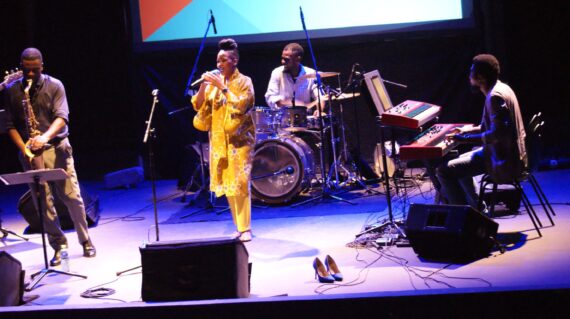
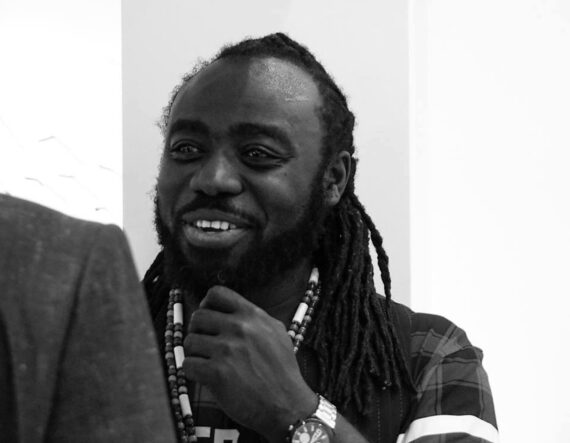
    Slight raindrops from a cloud-less sky blessed a mega concert by Afro Pop sensation Ssue at the Alliance Française in Accra as the young diva turned the stage and its environs into a music fiesta.

    Despite a brief interruption by the rain – the concert – ironically dubbed “Commotion”, continued with its superlative fusion of diverse styles including R&B, Soul, Blues, Highlife, Gospel, Jazz and Rock.

    Interspersed with joint performances with acclaimed Ghanaian musicians including rap initiator Gyedu Blay-Ambolley, highlife legend Pat Thomas, and saxophonist Steve Bedi, Ssue exhibited a talent that showed her as an astute performer with the skill and charisma that will always light up the faces of her audience.

    Together with traditional and contemporary dancers from the Africana Dance Ensemble and the Kassah Dancers, the talented singer showcased a remarkable technique, thoughtfulness and above all abundant entertainment, which resulted in some of the audience heading to the dance floor.

    “The concert gradually turned into a mini music festival as one talented musician after the other joined Ssue on stage for renditions that brought old memories thereby rejuvenating the audience”, said Kofi Atiso, a visual artist in Accra.

    “It was truly an evening of some of the finest musicians in Ghana – I felt so happy to support the talents of other musicians – and I danced my heart out to all of them”, added Pat Kerkenaar, a percussionist from Australia.

    With a great deal of energy emanating from the stage, Ssue continued to charm the audience with further performances with the US based Ghanaian computer engineer / guitarist Nathan Pryce and popular singer Immanuel Emmanuel with both singers delighting the audience with their various styles.

    Also on the bill were rappers Baby G, Paa Kwesi and Kurrency alongside acclaimed Ghanaian poet Oswald Okaitei, who treated the crowd to varied performances severally and jointly with Ssue, who won the hearts of the audience with her versatility.

    Scratch Studios and Music Publishing organized the concert with support from the Alliance Française and Appraise Music and Media. It was in honour of the veteran Ghanaian saxophonist / percussionist Teddy Osei.

    Read More »
  • Visa for Music enchant audiences in Rabat

    December 1, 2018 • FeaturedArticle, News • 1487

    By John Owoo

    (In Rabat – Morocco)

    Spread across a number of venues in the lovely city of Rabat, Visa for Music 2018 witnessed several ground-breaking, powerful and well structured performances that turned parts of the city into a music grove.

    With a line-up that covered diverse music traditions from the Middle East, Europe, Asia, Africa and North America, the festival offered a knockout of global sounds and beats that captured the imagination of constantly cheering fans.

    Among the groups is the Belgium based Moroccan band Marokin’ Brass, who created an ultimate fan experience with a blend of Mediterranean and Moroccan rhythms during a performance at Palais de Tazi.

    With the Belgian / Ghanaian flutist Esinam Dogbatse on stage, the group through an intimate and communicable vibe alongside varied brass instruments, wooed the crowd with intricately woven rhythms.

    France based Senegalese singer Magou Samb and his Dakar Transe Band treated the audience to an intense fusion of blues, mbalax, mandigo and salsa  while his raucous voice reminded the crowd of the ills and tribulations in the world.

    Also based in France, Turkish baglama lute, sax and flamenco guitar player Serkan Uyar and two other instrumentalists exhibited amazing show-power alongside a skillful display of lyrics that seem to touch and communicate with the soul.

    With voices that would move the most insensitive ear, members of the Moroccan group Joudour Sahara, exhibited a phenomenal performance alongside a show of real commitment from the artists, who seemed to be having fun on stage.

    Among the goals of Visa for Music, which is under the direction of Brahim El Mazned, include promoting music from Morocco, Africa and the Middle-East to Europe and northern markets, encourage artistic mobility between African countries and the Middle-East while participating in the development of local cultural sectors.

    Others are develop the music scene at an international level while contributing to the improvement of the status of artists from southern countries, strengthen the North-South and South-South relationships in the cultural sector

    The festival was held under the auspices of King Mohammed VI.

    Photos:-

    Kenza Allouchi

    Karim Ejjaoui

    Yasmine EL

    Nabyla Maan

    Read More »
  • VFM 2018 – Magical performances mark opening ceremony

    November 24, 2018 • FeaturedArticle, News • 1755

    By John Owoo

    (In Rabat – Morocco)

    Magical performances from diverse music traditions marked the opening of the 2018 edition of Visa For Music, which took place yesterday at the King Mohammed V National Theatre in Rabat, Morocco.

    The festival, which is dedicated to promoting artists and music from Africa, Middle East and the Caribbean, will showcase acts from several countries including South Korea, Lebanon, Palestine, France, Senegal, Guinea, Burkina Faso, Tunisia, Guadeloupe and Morocco.

    Raw talent, piercing voices, instruments that produce wild rhythms, magnetic stage presence and effective technicians turned the evening into a memorable one as the stage was transformed into a fast flowing musical stream.

    Moroccan oriental flute sensation, Rachid Zeroual virtually turned the theater into a serene arena as cool rhythms flowed from his flutes while energetic bass and guitar lines complimented an unforgettable routine from a skillful performer.

    Zeroual, who is also known for his hypnotic concerts in the Middle East and Europe, delighted the cheering audience with music that is sincere, soft and honest. Indeed, he captured and sustained the attention of the audience with his calm and peaceful nature.

    Cameroonian singer, composer and guitarist Lornoar raised the tempo with a dramatic fusion of rhythms – bikutsi, bossa nova, makossa, batanga, ekank, ekomot, mbalax, reggae, highlife and pop that galvanized the audience into a party mood.

    With a magnetic stage presence alongside anecdotes that engaged the crowd, the lady with a golden voice electrified the theatre with a rather high dose of energy that consistently and persistently emanated from the stage.

    Accompanied by a voice that soared in the theatre, Jordanian vocal genius, Farah Sirag charmed the crowd with a fine combination of traditional Middle Eastern tunes that have been elaborated with jazz, flamenco, pop and bossa rhythms.

    Also known as the Jordanian music ambassador, Sirag who sings in Arabic, Spanish and English, dazzled the crowd with her magical poise alongside a colorful costume with extraordinary sleeves that constantly swayed in the air.

    As part of the opening ceremony the Ivorian director of Market for African Performing Arts Festival (MASA) Prof. Yacouba Konaté of the Ivory Coast was honored alongside EAC Boulevard for their long-standing contribution to the development of the arts in Africa.

    The festival is being held under the auspices of King Mohammed VI of Morocco.

    Photos:

    Mohammed Omari

    Khalil Ibrahim Chardoudi

    Haadiya Numani


    Read More »
  • “Emotional Surgery” exhibition ends at Goethe-Institut

    November 18, 2018 • FeaturedArticle, News • 2064

    By John Owoo

    (In Accra – Ghana)

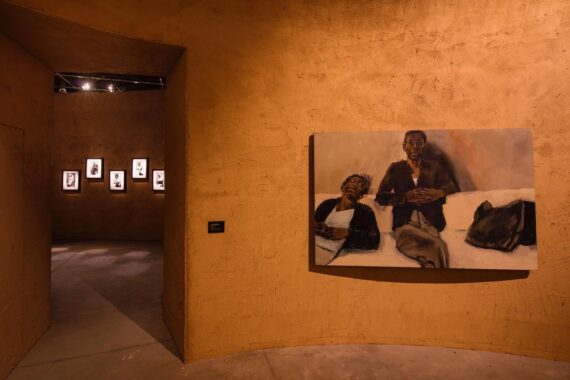
    Internationally acclaimed pathologist Prof. Agyeman Badu Akosa recently opened an exhibition of artworks on “Emotional Surgery” that have the capacity to reduce and stabilize stress at the Goethe-Institut in Accra.

    In a brief lecture, he stated that works by the artist Dr. Robert Grimmond-Thomspon, who initiated Emotional Surgery, possess the power to reduce stress adding that the rhythmic movements that are prevalent in his works, have the ability to send the body into a restful state.

    He said the concept recognizes surgery as a huge emotional activity and its use of colours, geometric shapes, lines and dots speak through the eyes to the brain to reassure the brain while bringing all the components of the body to a base equilibrium.

    “It is best prior to anesthesia after the anesthetist has done his/her pre-assessment. Either as a slide show or video, the patient is introduced to an array of colours and objects in a soothing mix that slowly and gradually brings the activities of the body to its resting level”, he said.

    “Consequently, the patient is rid of all anxiety and a minimum anesthetic dose may be enough to allow surgery to take place successfully. Indeed, it is even better if the patient is introduced to emotional surgery when surgery is being contemplated”, he added.

    Prof. Akosa stated that “Emotional Surgery” can be introduced as a television programme for winding down after a hard day’s work or as a montage for viewing at home or in a gallery. He pointed out that the pervasiveness of general anxiety in today’s society calls for it to be made a daily endeavor thereby bringing quietness, calmness and serenity to the soul.

    Undeniably, “Emotional Surgery” works by Grimmond-Thompson comprise cool colours embedded in diverse shapes including rectangles, triangles, circles and other symmetrical outlines and silhouettes that help reduce peripheral awareness while relaxing the viewer.

    In other works, the artist employs jute sacs, which are stitched together into a large mass. He incorporates diverse items such as calabashes, brooms, raffia fans, beads, and wooden musical instruments while embellishing them with bits of colour through discarded car toys.

    Goethe-Institut Ghana supported the exhibition, which ended on Friday November 16.

    Read More »
  • “Seperewa” family mesmerize audience at Goethe-Institut

    November 11, 2018 • FeaturedArticle, News • 1967

    By John Owoo

    (In Accra – Ghana)

    A family of “seperewa” players – comprising a father and his two daughters – on Wednesday transferred a cheerful audience to a tranquil village through a refined expression of traditional Ghanaian music.

    Performing at the Goethe-Institut in Accra, seperewa virtuoso Osei Korankye, young players Abena Korankyewaa / Serwaa Korankye and prepremsiwa player Osei Kwame created their own world of sounds that are well known in some royal courts of Southern Ghana.

    A vibrant encounter between two musical generations and traditions, the quartet flattered the audience with historical lyrics that touched on diverse subjects while showcasing a more transparent texture of “seperewa” rhythms.

    Indeed, harmony and rhythm merged into a continuous stream with soothing and possibly therapeutic rhythms flowing freely from the stage as father and daughters effectively manipulated the “seperewa” – a harp-lute chordophone – into a refreshing musical extravaganza.

    “We were treated to a dramatic fusion of sweet and light music with three simple instruments that managed to sustain the interest of the audience throughout the entire performance”, said Tom Nsiah, a retired mechanical engineer in Accra.

    A devotee of traditional Ghanaian music, Korankye and his kids surprised the audience with a brilliant rendition of compositions by living legend Agya Koo Nimo and the late highlife exponent E.T. Mensah as the crowd listened with immersive attention.

    Abena and Serwaa entertained the crowd with “Adenkum”, a calabash instrument that produces sounds when slapped with hands and forearms with accompanying chants and songs. A little known instrument, Adenkum is currently receiving attention among academics and music students.

    The performance forms part of a monthly acoustic music session dubbed “Goethe-Abansuro”, which offers a platform for musicians and poets to showcase their artistic creations while having a close engagement with their audiences.

    Read More »
  • Exhibition explores Berlin’s diverse narrative in the 1990s

    October 28, 2018 • FeaturedArticle, News • 1708

    By John Owoo

    (In Berlin – Germany)

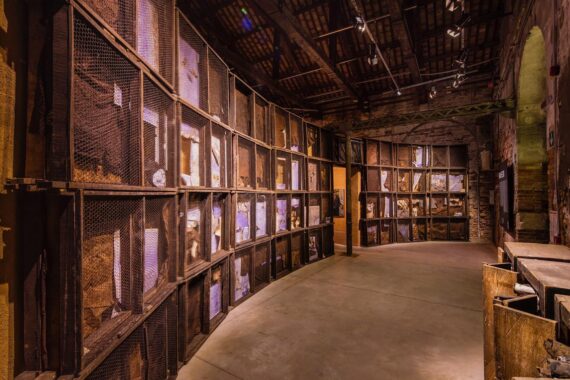
    An epic multi media exhibition that effectively captures life in the German capital (Berlin) in the 1990s – is currently on display at the Alte Münze – a former coin manufacturing plant in the centre of Berlin.

    Dubbed “Nineties Berlin”, the exhibition re-echoes Berlin’s reputation as a vivacious party city, political hub and a symbol of freedom that has attracted people from far and beyond to share in the life of this amazing city.

    The visitor is confronted with a 270° multimedia presentation of videos and photographs that can comfortably be viewed from stands as well as a tunnel that vibrantly portrays events at the Berlin Wall and other parts of the city.

    Indeed, the images can create a bit of perplexity as it rolls and rolls in front of the viewer while revealing glimpses of diverse life in Berlin during the period. These formidable images and sounds confront the viewer with anecdotes that tend to make one part of Berlin’s recent history.

    Scenes include love parades, squatted buildings, installations by artists in free spaces, creation of art in spaces without permission, music, monetary union, relocation of the German parliament, Stasi headquarters, new clubs, club culture, morbid events at the Berlin wall, housing shortages, guns and the merging of police forces among others.

    The love parade was a popular and free-access music festival that featured stages alongside floats with live music, DJs and dancers, who move continuously through the audience. It attracted huge crowds and was a significant part of the arts calendar in Berlin.

    Undeniably, Berlin in the 1990s was one of the most symbolized, traditionalized and often misinterpreted periods of the last century largely due to geopolitical changes as well as cultural / social alterations – and the images provide an insight into this part of Berlin’s narrative.

    The exhibition ends in February 2019.

    Pictures – Courtesy of Nineties Berlin 

    Read More »
  • Undoing Stress – Role of emotional surgery with artworks by Robert Grimmond-Thompson

    October 11, 2018 • FeaturedArticle, News • 2920

    By Prof Agyeman Badu Akosa

    (In Accra – Ghana)

    Stress is a natural component of everyday living and as is said the body requires a bit of it to keep it in shape and focus. It is a bit like an organization undergoing fire drills to keep the system in good nick. The body practices preparing itself for fight, flight and freeze as the acceptable reactions in times of stress, the first two being the most common in times of danger.

    The body’s biochemical systems control the reactions. Two hormones produced by the adrenal medulla and cortex are paramount in the preparations. Adrenaline is secreted by the adrenal medulla and it causes the ‘get go’ sympathetic nervous system to respond by increasing pulse rate and blood pressure, decrease blood sugar level by pushing the sugar into the tissues and shunting of blood from the digestive tract to the muscles, all in preparation for heightened body activity.

    Effects of the adrenaline increases metabolism and generates increased energy, for effective action. These actions are all quick and purposeful. Once the threat is dealt with the body reorganizes itself through the secretion of cortisol from the adrenal cortex, which brings the body to normal. It sets another chain reaction to decrease pulse rate and blood pressure and increases blood sugar level, the opposite of what prepares the body for action.

    The time it takes to return the body to normal varies from person to person. People with a greater ability to control their emotions do a better job. The stew of stress hormones secreted when a person is upset, takes hours to become reabsorbed in the body and fade away. Within the time to full withdrawal of the hormones the slightest upset mounts an even exaggerated response. It is the reason why in a fight or quarrel anything said however innocuous creates its own chain reaction. It is the touching of a raw nerve.

    In the scenarios where there is no need to fight or flight, the absence of physical danger, the energy generated must find expression. Most of the stress of today’s existence fall into this category. It is in our everyday life, work related, relationships, sibling rivalry or quarrels, examinations or interviews and on the roads, pervasive in character. These are described as environmental stress. The other is internal stress. People usually bring it on themselves; worrying about things we know we have no control over.

    Others invariably and knowingly put themselves in stressful situations. The short-term stress leads to a faster pulse or heartbeat and rapid breathing, Increased sweating and creating a sick feeling in the stomach described as ‘butterflies’. It also leads to headaches, tense feeling, difficulty in concentration and a sense of frustration.

    It is however, the slow decline in hormones and the regularity of arousals that appear to constantly mount a heightened agitation that leads to long term symptoms of headaches, poor sleep, poor appetite, nervous disposition, fatigue, confused and unable to take decisions. It may affect personal appearance, mood swings and lead to dependence on food, alcohol, tobacco and drugs and also affect sex life.

    There must be a masterful way to overcome stress and all its associated consequences on the body. Many ways have been proposed including relaxation, long walks and regular exercises, listening to good music, reading a good book, watching a good film, comedy, meditation, reducing work load and creating time with friends as a support network. Others ways also include understanding the body and how it deals with emotions and influencing it to make it beneficial such as a positive attitude and optimistic outlook.

    Emotional Intelligence

    The ability to understand, appreciate and control one’s emotions and also recognize and value the emotions of others is what has been described as Emotional Intelligence and has spawned a whole industry of books, videos and workshops. It is about knowing oneself very well, critically assessing self and boosting the individual’s self confidence in conjunction with being socially aware, able to accurately assess people’s emotions and understanding what is going on within them and creating opportunities to know and develop others and the culture of mutual harmony.

    Anyone who is described as emotionally intelligent knows how to live in his environment and creates a harmonious relationship with many if not all people. Such persons are not easily distracted and stressed out and maintain a level of control of themselves and faculties. It is the reason why they do better in life because they not only present a calm exterior but have an assurance within themselves as well. This is a type of intelligence that many must learn to keep them cool and calm and not easily affected by the many goings on. It is particularly important in those who create internal stress and worry about things outside their control. A suggestion to inculcate the principles into high school teaching must be adopted.

    Emotional Surgery

    The role of the many listed strategies are all to bring the body’s temperature and pressure to as near baseline or rested levels as possible. Emotional surgery is a new concept introduced by a Ghanaian artist Robert Grimmond-Thompson with a deep knowledge and understanding of psychology and neuroscience. The concept recognizes surgery as a huge emotional activity for everybody and uses colours and abstract objects to speak through the eyes to the brain to reassure the mind. It is reminiscent of hypnosis but self-induced and brings all components of the body, organs and all, to a base equilibrium.

    It is best prior to being given anaesthesia after the anaesthetist has done his/her pre-assessment. Either as a slide show or video, the patient is introduced to an array of colours and objects in a soothing mix that slowly and gradually bring the body’s activities to its resting level. The patient is rid of all anxiety and a minimum anaesthetic dose may be enough to allow surgery to take place successfully.

    It is even better if the patient is introduced to emotional surgery when surgery is being contemplated. It allows the decision to have the surgery to be made, devoid of anxiety and in an emotionally pleasing atmosphere that will boost the confidence of the surgeon and the rest of the team. Again because of the state of equilibrium in which patient was prior to surgery, recovery from anaesthesia is quick and hopefully, also from the surgery.

    Emotional surgery can be introduced as a television programme for winding down after a hard day’s work or as a montage for viewing either at home or in a gallery. The pervasiveness of general anxiety in today’s society must make a programme such as this an everyday endeavour and a must watch that will bring quietness, calmness and serenity to the soul. All patients with stress related diseases in particular the non-communicable diseases such as hypertension, diabetes and a myriad of nervous disorders must incorporate emotional surgery into their management. The businessmen and women and high-end executives need emotional surgery to reduce their anxiety levels. It could be incorporated into strategic planning and team building regimen to create a harmonious work environment.

    As a Ghanaian, I feel proud about emotional surgery and the originator being Ghanaian makes it even more worthwhile. I have always believed that where a disease abounds the treatment or mitigation lurks in the backyard. Ghana unfortunately has an explosion of non-communicable diseases and there is no concerted effort to find the reasons for the epidemic. A 2% prevalence for hypertension in the 1950s has now become almost 50% in some studies and 0.2% for diabetes in the 1960s is now almost 10%. Anywhere else the alarm bells would have sounded a longtime ago and research work started on why the explosion. In a country where no money is spent on research, nothing happens other than diagnosis and treatment. It is business as usual.

    At least Grimmond-Thompson’s artistry may give many Ghanaians some respite by bringing our body and soul into equilibrium.

    Pictures – Courtesy of Robert Grimmond-Thompson

    The article was first published in Daily Graphic on 18/04/18

    Read More »
  • Reading Festival ends in Accra

    October 10, 2018 • FeaturedArticle, News • 1809

    By John Owoo

    (In Accra – Ghana)

    Dr. Ziblim Iddi, Deputy Minister of Tourism, Arts and Culture last Saturday led a group of academics, writers, poets, civil / public servants, poets and students for a reading in local languages during the maiden edition of the Ghana Reading Festival.

    Completely dedicated to local languages, readings from novels, poems, reviews and texts in various local languages including Ga, Twi, Dagbani, Nzema, Ewe, Krobo, Fanti and others mesmerized guests as the poetic and diction power of our languages were laid bare.

    Undeniably, the aspirational and commercial value that English commands is appreciated, but it appears that our impeccable English is at the cost of our inability to read, write and speak our own local languages.

    In a brief speech, Dr. Iddi said habits, values, nuances and others are shaped by our mother tongues both in tangible and intangible ways adding that our languages are currently endangered while averring that we need a sustained effort to make it vibrant.

    He called for the translation of books on science and other disciplines into local languages while appealing to parents to allow their kids to speak and read books in local languages since our local languages are indispensable instruments of intellectual, physical and moral aspects of education.

    The Chairman of the National Media Commission Nana Gyan-Appenteng said the lack of support and investment resulted in the disappearance of publications in local languages from bookshelves and newspaper stands while stressing that connotations of inferiority associated with local languages exacerbated the problem.

    Acting Director of the Bureau of Ghana Languages, Philip Essien stated that his outfit is bent on using the festival to inculcate the habit of reading in the local languages among the youth since most of the adults have lost the interest and ability to read in the local languages.

    Awards were presented to personalities who have contributed in diverse ways to the development and sustenance of local languages. They include Prof. Kofi Agyekum, Dr. Osei Kwame Despite, Ataa Oko Dagadu, I.S. Blay, Daniel Adi, Seth Akafia, Urfang Bobar Mgnensoo and Tia Sulemana.

    The Bureau of Ghana Languages organized the festival under the auspices of the Ministry of Tourism, Arts and Culture.

    Read More »
  • German cultural festival rocks Accra

    October 7, 2018 • FeaturedArticle, News • 2041

    By John Owoo

    (In Accra – Ghana)

    Guitarist Yogendra Ahimi, violinist Calvin Gyasi, flutist Richmond Ansong and rapper Pampana last Friday delighted over 500 students who participated in the 2018 edition of the National German Cultural Festival, which was held at the Goethe-Institut in Accra.

    Fuelled by a fresh fusion of traditional and contemporary sounds, the quartet provided a new rhetoric thereby infusing fresh rhythms into their music as Ahimi filled the air with songs that are related to personal life experiences.

    With a rather relaxed yet formidable stage presence, the group treated the young audience to a warm repertoire that was accompanied by a lively, brilliant and engaging performance, which was interspersed with refreshing solos.

    The students were emotionally excited about the exploits of young acrobats who exhibited amazing skills with street dancing while performing stunts with flames that glowed on the edge of firewood.

    German language study clubs known as “Partners for the Future” (PASCH), from various educational institutions throughout the country participated in the festival by showcasing diverse performances including drama, music, poetry, reading and drawing – with a few schools picking up prizes.

    These include Accra Academy, German Swiss School, Complex School, Cradle of Grace Montessori School, Collège St. Pierre Claver, Wesley Girls and Opoku Ware who showcased their skills of the German language through presentations that received applause from their colleagues and elderly members of the audience.

    The PASCH initiative was launched by Germany’s Federal Foreign Office and it’s implemented in cooperation with the Central Agency for Schools Abroad, Goethe-Institut, German Academic Exchange Service and the Educational Exchange Service of the Standing Conference of the Ministers of Education and Cultural Affairs in Germany.

    It operates with four main guiding principles – prospects through education, broadened horizons through multilingualism, access to language / education and joint tackling of future problems as members of an international community of learners.


    Read More »
  • Feelings, Emotions and Swimming at Gallery 1957

    September 30, 2018 • FeaturedArticle, News • 1894

    By John Owoo

    (In Accra – Ghana)

    Gallery 1957 – a contemporary art space located within the plush confines of the Kempinski Hotel in Accra – is currently hosting multi-media works by the Togolese Nigerian artist Modupeola Fadugba.

    Titled “Dreams from the Deep End”, the works, which are the result of a recent residency at the International Studio and Curatorial Programme in New York (USA), characterize paintings, drawings and socially charged installations that address various issues.

    These include ideas of identity, social justice and a game theory that enable her navigate contested cultural hierarchies – while exploring community and teamwork in water – through the lens of tense racial history of communal swimming pools.

    Largely influenced by “Contested Waters: A Social History of Swimming Pools”, a book by American author Jeff Wiltse, which explores the history of public pools and their privatization in relation to race politics and community life, Fadugba equally has an intense attraction for swimming pools.

    Curated by writer Katherine Finerty, paintings on display boldly present an emphatic story while offering a clarification of the feelings and emotions felt by the swimmers – whether afloat or submerged beneath the calm waters of swimming pools.

    Her familiar use of burnt paper, which she expertly drapes with gold leaves, pastel hues and monochromes is currently applied to new motifs that fully embrace lifeguards, melting ice cream cones, swimmers of varying ages, gender and perseverance.

    Despite her previous work figuratively portraying swimmers, her latest paintings have moved from the ideas of abstractness to characterizing figures that shed personality and convey a story of collaboration and competition.

    Born in Lomé (Togo), Fadugba has a background in economics, engineering and education and holds a BEng in Chemical Engineering / MA in Economics from the University of Delaware and MEd from Harvard University – all in the USA. She lives and works in the Nigerian capital Abuja.

    Also an independent curator and art historian, Finerty focuses on research-based and socially engaged practices, trans local identity politics and contemporary African art. She works collaboratively to develop alternative cultural discourses while creating multi-disciplinary art experiences that encourage immersive participation and progressive exchanges between diverse publics.

    Finerty has a Masters in Curating Contemporary Art from the Royal College of Art, London (UK), a BA in History of Art and Africana Studies from Cornell University, New York (USA) and has studied History of Art at Pembroke College, University of Cambridge (UK).

    The exhibition ends on Wednesday October 31.

    Read More »
« 1 … 26 27 28 29 30 … 44 »

Subscribe to Arts Ghana News

Enter your email address to subscribe. Receive notifications of new posts by email.

RECENT VIDEOS

Simple Slideshow

  • Goethe Institut
  • Alliance Française
  • Arterial Network

© 2026 Arts Ghana™

Website Managed by DelTin Technologies