Latest
  • visit www.artsghana.net for information on the arts
  • visit www.artsghana.net for information on the arts

Arts Ghana

MENU
  • Home
  • About Us
  • Upcoming Events
  • Latest News
  • Artistes Database
  • Archives
  • Links
  • Contact Us
  • Music
  • Dance
  • Theatre
  • Literature
  • Visual Arts
  • Film
  • Fashion
  • You Tube
  • Facebook
  • May 1, 2026 • 121

    Poems by Dr. Anas Atakora in retrospect

  • April 28, 2026 • 235

    Festival reaffirms Togo as a jazz hub

  • April 24, 2026 • 347

    Music shaped by ancestry, improvisation, and transcendence

  • April 23, 2026 • 313

    Brass bands showcase tradition and experimentation

  • April 21, 2026 • 215

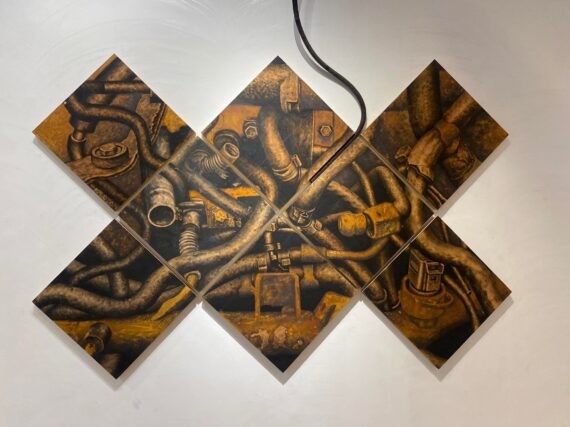
    Set design mirrors dynamism of contemporary African performance

  • April 17, 2026 • 252

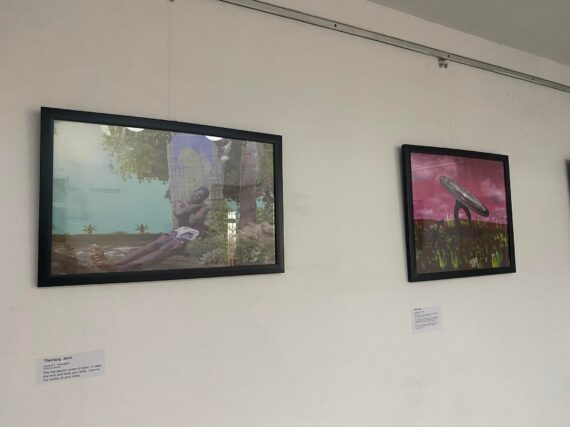
    Shifting portraits of the complexities of male identity

  • April 17, 2026 • 235

    Rhythmic footwork and grounded movements

  • April 16, 2026 • 565

    Raw physicality with spiritual introspection  

  • April 16, 2026 • 291

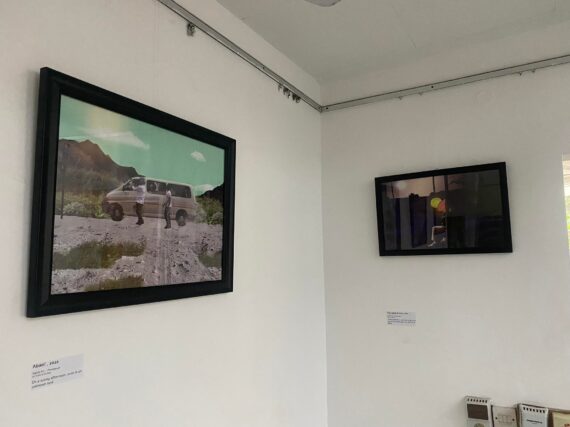
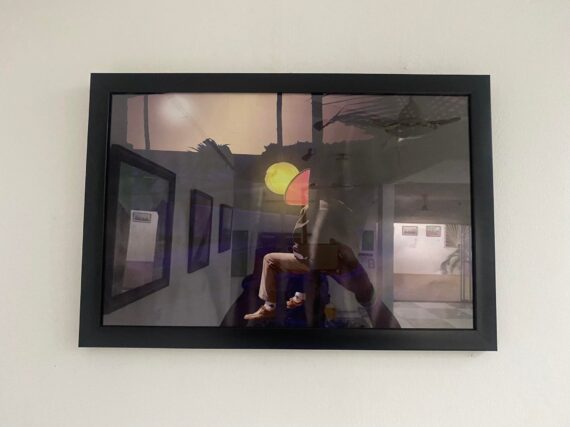
    Imposition, interruption, and provocation by LED screen

  • April 15, 2026 • 189

    Sonic meditation on tradition and transformation

  • Highlife renaissance at Goethe-Institut

    March 30, 2022 • FeaturedArticle, News • 874

    By John Owoo

    (In Accra – Ghana)

    Young singer / songwriter Essi alongside the Essi Band last week electrified an enthusiastic audience with a magnetic poise and stage presence that opened a highlife soiree at the Goethe-Institut in Accra.

    With a marvelous voice and sleek dancing between romantic lyrics from both traditional and contemporary highlife, the young diva descended into her own world and proved the fact that young Ghanaian musicians are capable of taking highlife a notch higher.

    Undeniably, Essi is ready to reach the stars – she is without doubt an amazing performer with a bright future ahead of her – not forgetting her confidence on stage as well as a shrewd knack to engage and sustain the interest of the audience.

    Her performance recalls brave and remarkable women including Lola Everet and Charlotte Dada, who radiated energy from the 1960s through their contributions to the development of Ghanaian highlife and the current group of female artists, who have continued to make a sustained and remarkable presence.

    Atenteben dynamo Dela Botri surprised the audience as he sang a number of his recent compositions alongside those of the Kumasi Trio, Pat Thomas and the late Nigerian star Sir Victor Uwaifo while interspersing them with brilliant solos from the atenteben flute.

    Backed by the Abiza Band, he brought the crowd to his feet through his new songs, which drew heavy inspiration from Afro Beat, Calypso, Palm Wine Highlife and a number of traditional Ghanaian rhythms such as Adowa, Agbadza and Kpanlogo.

    Dripping with sweat, acclaimed guitarist Akablay showcased a restructured / intellectual music language as he played highlife that has been heavily spiked with Kundum rhythms from the Nzema area of the Western region.

    In recent years, a festival titled Kundum has been transformed into a spectacular sight of silhouettes, bright nights and a wonderful ambience filled with highlife rhythms as waves from the Atlantic Ocean gently pound beaches, which are replete with diverse musical and dance performances.  

    Goethe-Institut Ghana supported the performance.

    Pix – Matthew Hansen

    Read More »
  • African Identities to show at Venice Biennial

    March 24, 2022 • FeaturedArticle, News • 1100

    By John Owoo

    (In Accra – Ghana)

    AKKA Project will from Sunday April 23 to Sunday November 27, 2022 showcase works of selected African artists in Venice – a famous art venue located in North Eastern Italy.

    Dubbed “African Identities”, the show – which will run during the duration of Venice Biennial – is aimed at highlighting the importance of the Arts and Artists from the African continent while revealing trends that have emerged in Africa over the past few years.

    The maiden edition will focus on the art scene of East African countries such as Kenya, Uganda, Zimbabwe and Mozambique where artists are drawn from many different ethnic groups and cultures as well as talents and styles.

    Artists, whose works will be on display include Evans Mbugua, Maina Boniface, Peterson Kamwathi, Elias Mung’ora, Hilda Mumbi Nadia Wamunyu, Allan Kioko, Onyis Martin, Rasto Cyprian, Longinos Nagila, Peteros Ndunde Solomon Luvai and Michael Soy.

    Others are Xenson Samson Senkaaba, Donald Wasswa, Patrick N. Karanja, Goncalo Mabunda, Reinata Sadimba, Djive Samuel, Ngule Kiire Yusuf, Ronex Ahimbisbwe, Filipe Branquinho, Matt Kayem, Charles Bhebe and Doddridge Busingye.

    Indeed, the AKKA Project aims at gathering and presenting varied artists, including established and young talents under one roof while providing them with an opportunity for much needed interactions and fruitful dialogues.

    Undeniably – each country has mastered its unique distinctiveness and has individually bloomed from the fertile soil and risen to diverse original contemporary artists – who masterfully experiment with new subjects, flairs and materials.

    AKKA Project aspires to create a unique and enriching experience while allowing visitors to discover and perceive the works and stories by these artists during the entire period of Venice Biennale 2022, which is being curated by the Italian art director Cecilia Alemani.

    Initiated in 2016 by the Serbian curator Lidija Kostic Khachatourian, AKKA Project commenced as a commercial art gallery in Dubai (2016) and in Venice (2019) with the objective of promoting artists from Africa and encouraging their growth through exhibitions, art fairs and residencies.

    Through other projects such as “Africa & the other 54 countries”, she has contributed to the celebration of the art, culture and cuisine of multiple African countries. In 2019, she curated the exhibition titled “The Past, the Present and the in Between”, at the Pavilion of Mozambique, for the 58th edition of the Venice Biennial, which featured a number of artists including Goncalo Mabunda, Filipe Branquinho and Mauro Pinto.

    Khachatourian equally curated “Inspiring Changes” by Mohamed Amin, a project in collaboration with Salim Amin, whose aim was to create educational interactions (exhibitions and other initiatives) through the vast photographic archive of Mohamed Amin. Currently, she is in the process of opening a third gallery in Switzerland to further support the growth of African artists.

    Pix – Courtesy of AKKA Project

    Read More »
  • Politically charged lyrics end Highlife Festival

    March 17, 2022 • FeaturedArticle, News • 1072

    By John Owoo

    (In Accra – Ghana)

    Highlife Festival 2022 – which attracted locals and foreigners alike – ended last Friday at the Alliance Française with politically charged lyrics by the African gypsy Wanlov Kubolor.

    Accompanied by subtle guitar lines from Akablay, Kubolor made sharp references to the use of super luxury cars by political leaders, good governance, mismanagement, corruption, the contentious electronic levy and LGBTQI++ rights among others. 

    With a cool line up of traditional and contemporary highlife musicians including Akablay, Naana Blu, Trigmatic, Samuel Owusu and Kumi Guitar, the musicians turned the amphitheater of the Alliance Française into a musical groove, where highlife flowed in a continuous stream.

    Backed by the V One V Band, the musicians descended into their own world and dished out tunes that moved away from Highlife’s original constructions thereby creating a new synthesis that surprised the attentive audience, who cheered and applauded.

    Singer and songwriter Naana Blu brought nostalgic feelings to elderly members of the audience with a brilliant rendition of compositions by the late Bob Cole and Kakaiku alongside her own compositions while showcasing her stagecraft through spectacular dance movements and gestures.

    Ace guitarist / festival director Akablay showcased a modern version of highlife, which have been intensely blended with Kundum rhythms from the Western region, which forms part of recreational music and dance by the Ahantas and Nzemas.

    A vivid performance by hip hop artist Trigmatic was reminiscent of urban / coastal highlife alongside Afrobeat that captured the attention of the crowd. Also a songwriter / composer, the award winning musician worked his way into the hearts of the audience with remarkable dexterity.

    Samuel Owusu, who bounced onto the Ghanaian music scene in the early 1980s, brought sharp memories of the period, which is noted for a revolution in the annals of the Ghanaian music industry. His classic song “Mempe Meho Asem” drew cheers from the crowd as his peculiar voice soared through the air.

    Noted for addressing societal issues through his rich lyrics, highlife artist Kumi Guitar coolly engaged the audience in a chat as he performed well-paced and delightful tunes that proved that young artists are equally apostles of Ghanaian highlife.

    The festival was sponsored by Goethe-Institut Ghana, Adonko Next Level, Gold Star Airlines, Special Ice, Chop and Chill Restaurant and Norsway Multi Media.

    Read More »
  • Migration / Re-migration in retrospect through photos

    March 4, 2022 • FeaturedArticle, News • 903

    By John Owoo

    (In Accra – Ghana)

    A three-day event comprising a photo exhibition, book reading and a panel discussion that examined issues relating to migration and re-migration ended last week at the Goethe-Institut in Accra.

    Physicist, Dr. Martin Egblewogbe engaged German author Jenny Erpenbeck on her book “Go Went Gone”, alongside an exhibition titled “No Man’s Land” by Katharina Behling and a panel discussion comprising representatives from the Ghanaian-German Centre, Adventist Development and Relief Agency as well as two Ghanaian returnees from Germany.

    Photos by Berlin based Behling, which are currently on display at the Institut, vividly portray diverse narratives and authentic emotions – in real life situations – together with personal and collective chronicles that focus on people and social contexts.

    Indeed, emotive and un-emotive photos intensely portray the challenges of migrants as they travel through the Sahara desert, detentions, torture and abuse in Libya, risky trips on the Mediterranean Sea and the frustrations / uncertainties after arrival in Europe.

    The images draw the attention of the viewer to the harsh economic conditions in developing countries while bringing memories of the massive loss of life through the use of rickety boats thereby turning the Mediterranean into a sea of death.

    Behling, whose work has been published in magazine and book formats, has received diverse awards and has been supported by funding agencies including DAAD, Käthe-Dorsch-und-Agnes-Straub-Stiftung Berlin and Stiftung Kulturwerk der VG Bild-Kunst.

    A 2018 Puterbaugh Fellow, Erpenbeck’s “Go, Went, Gone”, alludes to the fact that the word “displacement” has become a reality to millions of people owing to a number of factors that are currently afflicting the world.

    Undeniably, it also recalls departures from countries racked by war and poverty, desperate and hazardous journeys on the Mediterranean Sea and eventual frustration from a bureaucratic process that refuses to allow them to be recognized and their stay regularized in Europe.

    Throughout the novel, the author is thoughtful while personal – indeed, national issues relating to culture and custom are brought to the fore through her characters as refugee interlocutors negotiate their relationships with one another.

    In a discussion moderated by Nana Yaw Sarpong of the Writers Project of Ghana, Benjamin Woesten, head of the Ghanaian-German Centre in Accra and Justice Abbey from the Adventist Development and Relief Agency equally dilated on the issue of Migration and Re-Migration as relates to the work of the two institutions.

    Two returnees shared thought-provoking experiences in Germany that culminated in their return to Ghana alongside re-integration strategies, procedures and support they received from these agencies and others.

    The exhibition ends on Thursday March 31, 2022.

    Read More »
  • Intersecting rhythms shake Goethe-Institut

    February 28, 2022 • FeaturedArticle, News • 991

    By John Owoo

    (In Accra – Ghana)

    A cheering audience at the Goethe-Institut recently sat on the edge of their seats as dynamic trumpeter Kuuku Ansong alongside his Sunkwah Band treated them to a cool blend of Highlife, Afrobeat and Jazz rhythms.

    In a magnetic performance last Wednesday that formed part of the Institut’s live music series dubbed “Kotosa”, Ansong and his fellow musicians whipped up amazingly paced arrangements that caught the attention of the crowd who responded with steps on the dance floor.

    Indeed, rhythms from percussive instruments driven by horns and guitars turned the stage at the Institut into a musical ditch where music seemed to flow in a continuous stream thereby compelled members of the audience to hit the dance floor.

    With Nii Bano (drums), Jojo Ansong / Harry Nelson (percussion), Fred Gbomittah (keyboard) Odartey Lamptey (backing vocals), Ransford Zico (bass guitar), Jerry Tee (piano) and Kuuku Ansong (trumpet / lead vocals), the group showcased a performance loaded with a focus on vocalized lyrics, intersecting rhythms and percussion.

    Undeniaby, tunes such as “Ambolley”, “Prayers”, “Time”, “Push”, “Biako Ye”, “Papa Mbra”, “Beautiful Flower”, “Onokwafo”, “Kokroko” – composed by Kuuku Ansong, “Wokokoko” (Richard Bona) and “Local Chain” (Public Domain) mesmerized the enthusiastic audience.

    Gyedu Blay-Ambolley, the legendary Ghanaian musician joined the young artists on stage and performed a song with his fulfilling and eloquent voice resulting in massive cheers and applause for the saxophonist, who has performed a number of times at the Goethe-Institut.

    With songs unfolding in a rather cool and infectious mode, the group churned out iconic dance sounds that equally caught the attention of the crowd who responded with more steps on the dance floor.

    A group of kids later joined the band on stage for a dance thereby enticing elderly members of the audience to join in a free for all dance that was quite infectious and alluring. 

    The concert was organized and supported by the Goethe-Institut Ghana.

    Read More »
  • Graphic novel workshop ends in Accra

    November 19, 2021 • FeaturedArticle, News • 1311

    By John Owoo

    (In Accra – Ghana)

    A workshop for thirteen writers and illustrators aimed at spearheading a renaissance in the production and publishing of comic novels in Ghana ended recently at the Susanna Lodge Hotel in Accra.

    Organized and sponsored by the Goethe-Institut in Accra, the workshop, which comprised participants from Nigeria and Ghana, dilated among others the literary choices of author’s, narration or plot and funny or satirical regardless of the putative seriousness of the topics addressed.

    Moderated by Michael Ross (Germany) and Nana Akosua Hanson (Ghana), other topics discussed include “a brief history of graphic novels”, “types of graphic novels”, “how to tell a good story”, “creating compelling characters”, “world building”, “creating plot twists” and “pacing in storytelling”.  

    Participants were equally made to develop concepts / story ideas, which will be transformed into graphic novels, reading some graphic novel scripts before illustration while exploring different styles / techniques and discovering which styles and techniques they resonate with.

    Others are “structure in writing for graphic novels”, “definitions of the technical terms such as, panels, spread, gutter and borders”, “creating a visual style guide”, story boarding (for writers and for illustrators), “tips for writers who are not illustrators and  “tips for illustrators who are not writers”.

    Participants, who commenced preparatory work on their graphic novels have a total of thirty days to work and develop their own graphic novel which will be published by the Goethe-Institut and distributed widely in Africa and beyond.  

    In Ghana, Leti Arts has digitally published a number of graphic novels with the aim of bringing an authentic Africa to a worldwide audience through digital comics and games while celebrating the containment’s diverse culture, history, folklore and culture.

    Dubbed Afri Comics, the project encompasses a number of African countries including Cote d’Ivoire, Kenya, Ethiopia, Sudan, Namibia, Togo, Tanzania and Democratic Republic of Congo.

    Read More »
  • Tillmans multi-facetted photos at Science Museum

    November 8, 2021 • FeaturedArticle, News • 1261

    By John Owoo

    (In Accra – Ghana)

    An exhibition of pictures by the renowned German photographer that showcase the simplicity and complexity of his style will on Sunday November 14, close at the Museum of Science and Technology in Accra.

    Titled “Fragile”, the show which has equally been extended into the city of Accra through billboards – has caught the attention of motorists and pedestrians – who ply these busy intersections on a daily basis.

    Noted for his constant re-definition of photography, Tillmans work, which comprise diaristic photography, large-scale abstraction, landscapes, still lifes, video projections, portraits and book installations among others, subtly convey the perspicacity of a comprehensive documentation.

    Indeed, the exhibition hall, which has been completely transformed with support from Institut für Auslandsbeziehungen (Germany) and the Goethe-Institut in Accra, is awash with dozens of photos of varying sizes that singularly and collectively provide a wide-ranging overview of his work.

    Undeniably, the viewer will notice how anthropological and non-anthropological elements appear to co-habit as one explores the photographs in this rather large space while observing his subtle commentary on extremism, populism, ideology, negativism, sexuality, parochialism and isolationism.

    His portraits reveal more than the naked eye will immediately appreciate – but at the same time viewers can easily relate them to their personal lives – and this he does by not necessarily following art historical patterns, thereby providing the opportunity to see people in an intimate manner.

    Indeed, the richness, penetration and variety of his images enable people outside typical art audiences and circles to equally appreciate his work and actually identify with their balances, contradictions, tensions and juxtapositions.

    A close analysis of his works equally reveal the fact that size (large or small scale) of his pictures does not indicate its value or importance – but rather how the viewer engages and interacts with them alongside his or her fascination with the photographer’s images on club culture in the 1990s among others.

    Born in Germany, Tillmans spent the early part of his career in London (UK) after graduating from the Bournemouth and Poole College of Art and Design. In 2000, he was awarded the prestigious Turner Prize, marking the first time the prize had been awarded to a photographer or non-British artist.

    Currently, he lives and works between Berlin and London. His works are presently held in the collections of the Art Institute of Chicago, The Museum of Modern Art in New York (USA), the Hamburger Bahnhof in Berlin (Germany) and the Kunstmuseum Basel (Switzerland) among others.

    In 2006, he established “Between Bridges”, a non-profit exhibition space located in Berlin (Germany) while setting up a survey show titled “Wolfgang Tillmans: 2017”, which opened at the Tate Modern in London to critical acclaim.

    “Fragile”, which has been shown in Kinshasa (Democratic Republic of Congo), Nairobi (Kenya), Johannesburg (South Africa), Addis Ababa (Ethiopia) and Yaounde (Cameroon), is being organized and supported by Institut für Auslandsbeziehungen (Germany) in collaboration with Goethe-Institut Ghana and the Museum of Science and Technology in Accra.  

    The exhibition is set to open in the Ivorian capital, Abidjan later this month.

    Read More »
  • Swedish trombonist / Ghanaian flutist at Goethe’s anniversary bash

    October 17, 2021 • FeaturedArticle, News • 1044

    By John Owoo

    (In Accra – Ghana)

    Nils Landgren, an acclaimed Swedish trombonist together with Ghanaian flutist Dela Botri on Tuesday treated guests at the 60th anniversary celebrations of the Goethe-Institut to a musical feast.

    A stunningly erudite musician, Landgren and the flute magician melted music’s geographical barriers with a cool blend of traditional Ghanaian and Swedish rhythms that swayed the audience, who responded with cheers and applause.  

    Indeed, Botri’s version of traditional music from the Upper East and Upper West regions of Ghana and Landgren’s Swedish folk tunes showcased the harmonies and differences in musical forms and functions of both cultures.

    With kpanlogo drums, rattles, bells, xylophone and atenteben alongside a trombone from Landgren, the musicians transformed the Institut into a groove, where apostles of cross-cultural collaborations would connect and create refreshing tunes.

    Noted for being rhythmically imaginative, the Swedish musician is a splendid performer – the kind of artist whose sound is light and smooth – thereby making it seem effortless, graceful and natural.  

    He is equally respected for a light-husky voice and a perfect intonation – a trait that played a huge role in the concert with Botri and Hewale Sounds – a group widely acknowledged for diverse collaborations with foreign artists.

    A devotee of contemporary music, Botri has held workshops in a number of universities in several countries and performed to varied audiences in the Middle East, Europe, United States and several countries in Africa.  

    Acclaimed for composing traditional music with their contemporary extensions, Botri has participated in the Cubadisco Festival (Cuba), World Music Village (Finland), Copenhagen Jazz Festival (Denmark) and the Pan African Music Festival (Algeria).

    Goethe-Insitut Ghana supported the concert.

    Pictures – Yao Ladzekpo

    Read More »
  • Politically charged performance at CNC

    September 19, 2021 • FeaturedArticle, News • 1293

    By John Owoo

    (In Accra – Ghana)

    A socio-politico backed theme recently marked a performance by artist Amasa Abifao during the opening of an exhibition at the Centre for National Culture (CNC) in Accra.

    With most parts of the world under lockdowns and diverse restrictions owing to the Covid 19 pandemic, the artist maneuvered through brightly coloured car tyres as he delivered messages relating to challenges associated with life.

    Indeed, West Africa has been beset with economic and political upheavals alongside challenges to security and stability. In recent years, other stresses have been added to the list – these include youth exclusion, migration, rapid development of extractive industries and land management.

    Undeniably, West Africa is making impressive progress in economic growth, democratization and regional cooperation. However, the recent rise in violence and conflict as well as drug trafficking, piracy, extremism and other emerging threats have sparked concerns over its future development.

    Clad in a white costume with half of his face painted in strips and a rope hanging on his neck, Abifao climbed into a pack of tyres painted in red with his head popping as his audience gazed in readiness for a surprise.

    Titled “Variations – Spectrum of Life”, the artist waded into the complexities of life as one develops from an infant, teenager and adulthood to an advanced age, which has been aggravated in recent years due a variety of challenges.

    With most members of the audience in face masks owing to what is now referred to as the “new normal”, Abifao harped on the need climb out of the tyres, which symbolically represented enormous problems currently facing and drowning mankind. 

    The performance forms part of “Variations” an ongoing exhibition organized by the Greater Accra branch of the Ghana Association of Visual Artists at the CNC in Accra. It ends on Tuesday October 28, 2021.

    Pix – Nii Tackie Yarboi

    Read More »
  • Performative art marks Chale Wote Festival

    September 12, 2021 • FeaturedArticle, News • 1312

    By John Owoo

    (In Accra – Ghana)

    An art performance by Martin Toloku, Lena Czerniawska and Emilio Gordoa recently turned the Ussher Fort Prison in Accra into an artistic den with a magnetic performance that effectively questioned the idea of time and space while highlighting political and environmental issues.

    In a performative and installative work during the 2021 edition of Chale Wote Street Art Festival, which was virtual owing to restrictions relating to Covid 19, Toloku evoked memories of past events that showed discarded electronic machinery feeding into our human genetic system.

    Clad in a surreal costume alongside a series of improvised dance and body movements, he questioned the decomposition of speed and lamented on the robotization of death while inferring that civilization is a deadly toy that brings excitement, change and demise.

    Indeed, he bemoaned the presence of industrial and technological machinery in our everyday activities while an ambiance coordinated by Mexican musician Emilio Gordoa, guided the “decayed” robotic body of Toloku.

    Through a series of improvised dance and body movements, he created an accident scene, whilst Polish artist Lena Czerniawska forcefully unwrapped an untold story through a series of drawings on a scrap automobile, which was commandeered into the prison. 

    The apparent consequence of modernity is represented by a lonely garbage dump as well as a broken window, torn clothes, precipitously aged shoes, a crushed car and a broken phone, which are part of items mankind leaves behind thereby becoming part of a huge garbage dump.

    Undeniably, it is evident that the ghosts of modernity wander through landfills, get entangled in cables and plastic bags among others, which signify the downfall of humanity while exposing greed and selfishness.

    Chale Wote Street Art Festival is an alternative platform that brings art, music, dance and performance out of the galleries and onto the streets of James Town, a suburb of Accra. The 2021 edition was largely virtual and curtailed owing to Covid 19 limitations.

    Read More »
« 1 … 14 15 16 17 18 … 44 »

Subscribe to Arts Ghana News

Enter your email address to subscribe. Receive notifications of new posts by email.

RECENT VIDEOS

Simple Slideshow

  • Goethe Institut
  • Alliance Française
  • Arterial Network

© 2026 Arts Ghana™

Website Managed by DelTin Technologies