

By John Owoo
(Lomé – Togo)
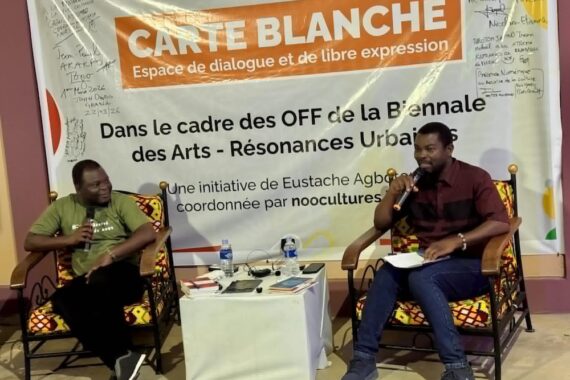
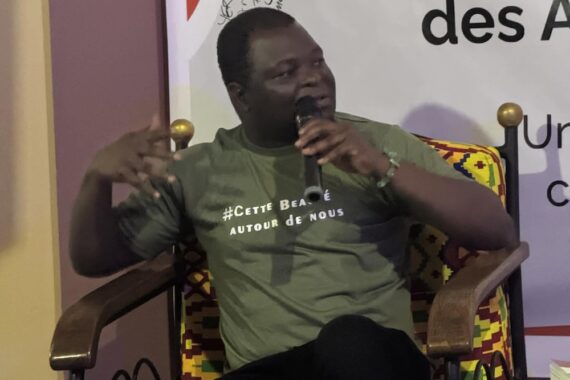
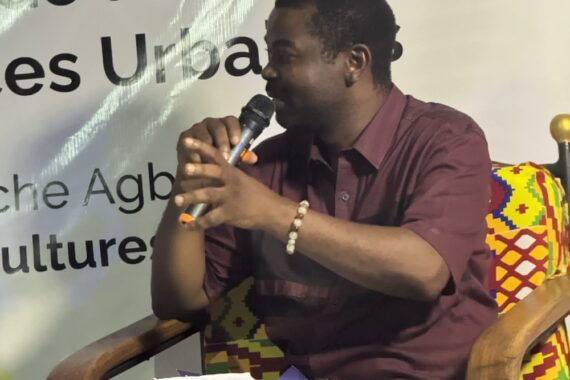
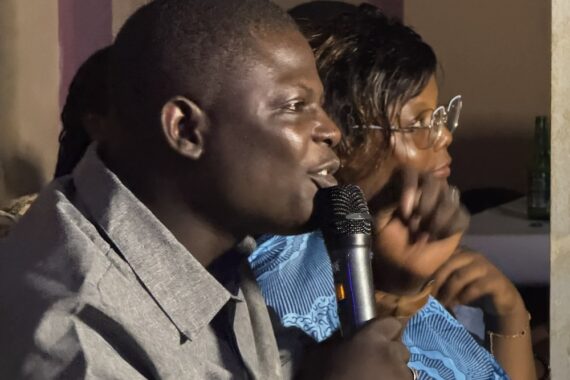
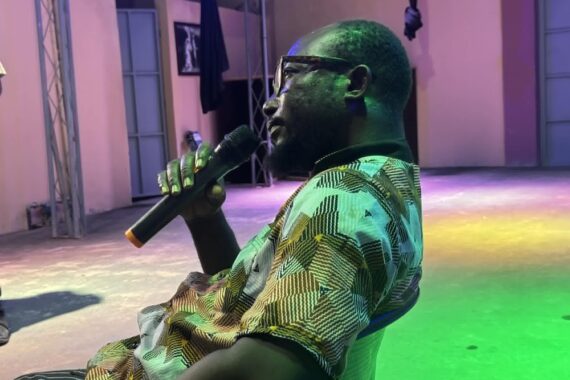
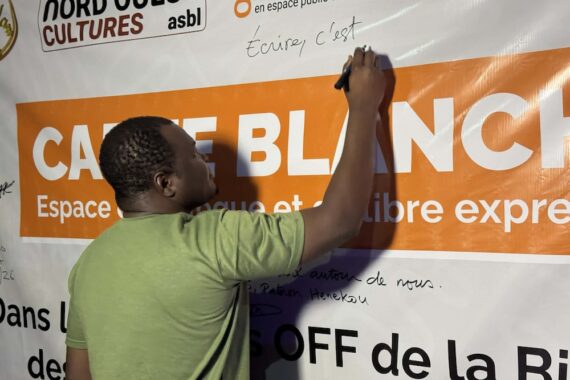
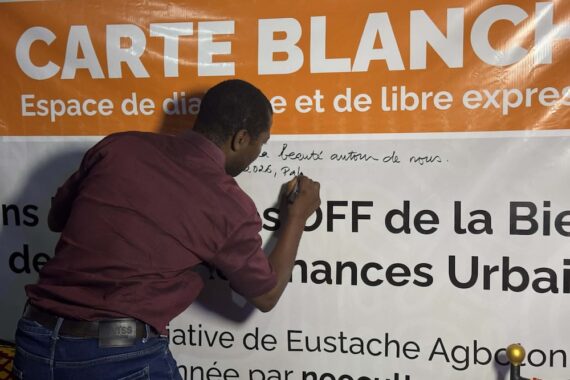
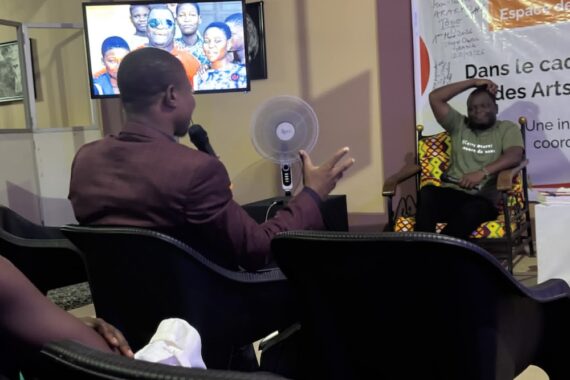
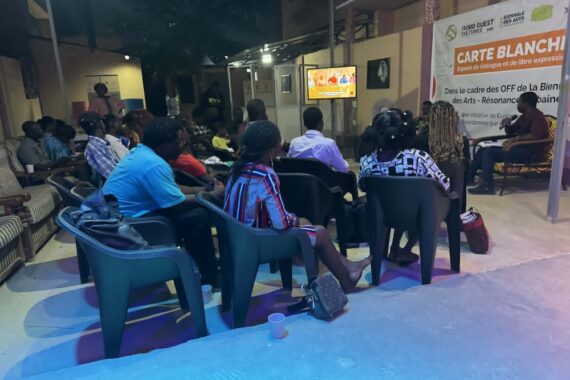
A mind-blowing discussion featuring academics – Dr. Anas Atakora and Dr. Patron Henekou – recently captivated an attentive audience at the Maison des Arts et du Social in Lomé, as part of a series titled “Carte Blanche”.
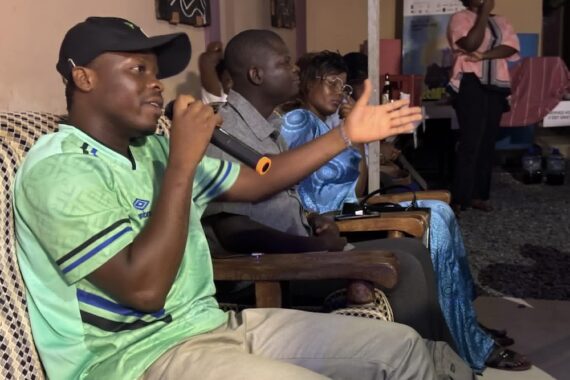
Coordinated by noocultures.info, the program, which is part of the Biennale of Public Space Arts in Togo’s OFF program, provided the audience with informative content that sparked questions and contributions from patrons.
Atakora and Henekou quickly set the tone for a fluid, almost intimate exchange. Their discussion, grounded in shared intellectual foundations, avoided oversimplification while making complex ideas accessible without diluting their depth. It struck a careful balance between rigor and openness.
Central to the encounter was a performative reading of excerpts from Atakora’s poems En chair et en ville (Les Éditions de la Francophonie, 2025) and La vie que nous menons ici (Les Éditions Awoudy, 2023). These works outline a poetic universe in which the city is anything but passive. In Atakora’s writing, urban space exerts force—it imprints itself on bodies, imposes constraints, and shapes lived experience.
While such themes are not new to contemporary poetry, Atakora approaches them through a sensorial lens. His writing seeks less to describe the city than to make it physically felt, emphasizing that urban life is defined not only by infrastructure but also by intimate, personal experience. For him, “being a poet today is an urgency”—a call to slow down and restore depth to existence in environments that often flatten sensation and perception.
An underlying question lingers: is this sense of urgency unique to Atakora’s voice, or does it reflect a broader current in contemporary poetry? The discussion subtly invited the audience to consider this tension.
The exchange also ventured into more personal territory. Moving beyond theory, Atakora reflected on the foundational figures in his imagination—his mother, grandmother, and father—and on how they continue to shape his work. This perspective sheds light on his debut collection, Partir pour les mots (Les Éditions Awoudy, 2012), revealing a consistent trajectory of movement and displacement.
Undeniably, Atakora’s writing is defined by a dynamic interplay between here and elsewhere. This dual anchoring enriches his relationship with language and informs a body of work that continues to evolve. With eight publications to his name, he has established a solid literary path, and his frequent returns to Lomé signal a commitment to staying connected to his roots.
Beyond the strength of his texts, the event ultimately highlighted Atakora’s positioning as a poet whose work serves as a form of sensitive resistance—an attempt to confront and make sense of the rapid transformations of urban life.


Congratulations to you, Mr. Owoo and the dedicated organizers of such an event. What I have read here from Togo proved that with the Art World, there is a consistency. It means there are committed intellectuals at the forefront offering their services to keep Art where it belong. Their services create intellectual discourse for a better understanding of society. I hope the gathering was well patronized for its purpose. More of these efforts to keep the Art World its forwards Ever. Salute and Jah Blessed! Yours sincerely