Latest
  • visit www.artsghana.net for information on the arts
  • visit www.artsghana.net for information on the arts

Arts Ghana

MENU
  • Home
  • About Us
  • Upcoming Events
  • Latest News
  • Artistes Database
  • Archives
  • Links
  • Contact Us
  • Music
  • Dance
  • Theatre
  • Literature
  • Visual Arts
  • Film
  • Fashion
  • You Tube
  • Facebook
  • May 1, 2026 • 121

    Poems by Dr. Anas Atakora in retrospect

  • April 28, 2026 • 234

    Festival reaffirms Togo as a jazz hub

  • April 24, 2026 • 347

    Music shaped by ancestry, improvisation, and transcendence

  • April 23, 2026 • 313

    Brass bands showcase tradition and experimentation

  • April 21, 2026 • 215

    Set design mirrors dynamism of contemporary African performance

  • April 17, 2026 • 252

    Shifting portraits of the complexities of male identity

  • April 17, 2026 • 235

    Rhythmic footwork and grounded movements

  • April 16, 2026 • 565

    Raw physicality with spiritual introspection  

  • April 16, 2026 • 291

    Imposition, interruption, and provocation by LED screen

  • April 15, 2026 • 189

    Sonic meditation on tradition and transformation

  • Psychological dreamscapes at Gallery 1957

    October 31, 2022 • FeaturedArticle, News • 927

    By John Owoo

    (In Accra – Ghana)

    An exhibition of paintings by Araba Opoku that relate to the current socio-economic turmoil facing Ghana is currently on show at Gallery 1957 in Accra.

    Indeed, she paints psychological dreamscapes that delve into socio- economic problems with this particular body of work, which focusses on fetching water in the middle of the night – a daunting yet dreamlike cycle that appears in resonance with the moon.

    Influenced by her current studies for a degree in Psychology at the University of Ghana, she embarked on a research that explored individual and familial effects on those deprived of basic needs, while commending their resilience and ability to withstand such shocks.

    With her ethereal works largely in abstract formats, aquatic blues and vegetative greens, she subtly brings to the fore her formalized experience of collecting water – a familiarity she acquired in one of the sprawling neighborhoods in Accra.

    Undeniably, this immersive show invites viewers on a sensory journey that starts with the artist’s ritualistic vigil and travels across the many moons of our solar system while investigating their origins and mythological namesakes.

    Deriving her titles from Sci-Fi TV shows including the fantastical “Sandman”, “Stranger Things”, animated space opera “Final Space” and adult comedy “Rick and Morty” among others, Opoku manages to present science as a discipline shrouded in secrecy as we witness some form of communication between the creator, planets and galaxies.

    While surveying a tradition of fetching water at midnight across generations, the artist takes into consideration the effects of moonlight, which is believed to energize and relieve stress while improving relaxation by prompting the natural release of melatonin.

    Also on display is Opoku’s first video directed by Christine Boateng. Titled “Spiders Blanket”, it documented the sensory, insomniatic stages of midnight rising and water rationing with her sister.  

    The exhibition is being curated by Catherine Finerty.

    Read More »
  • Diverse themes unfold in a theatre duet

    October 16, 2022 • FeaturedArticle, News • 828

    By John Owoo

    (In Accra – Ghana)

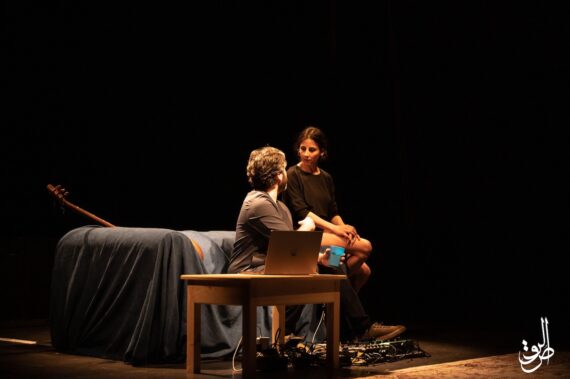
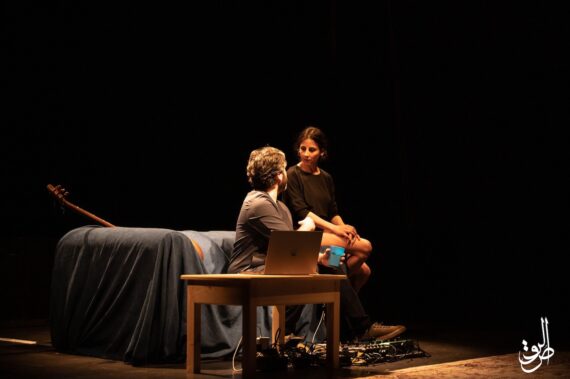
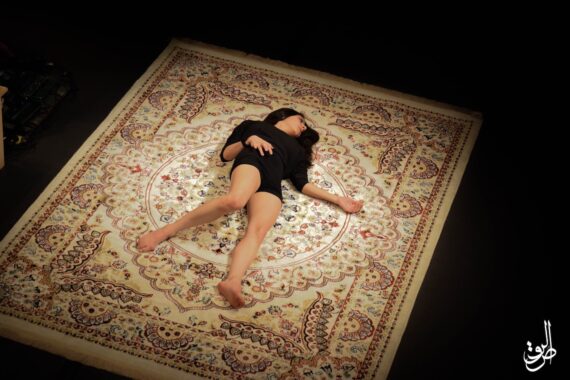
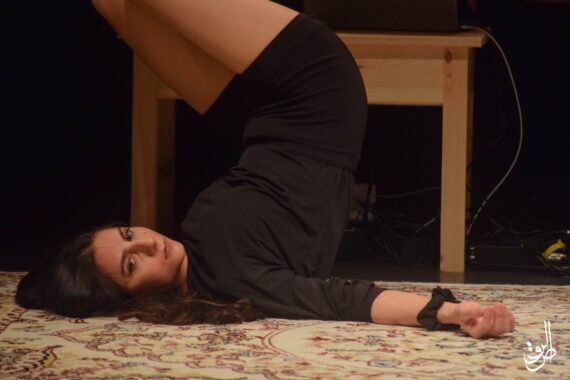
    “Be-Longing” – a duet piece by Cactus Junges Theatre that created an entire world on stage by invoking diverse contemporary issues – recently delighted a capacity audience at the Goethe-Institut in Accra.

    A dynamic play in its action and smooth in its tone, “Be-Longing” reveled in its theatricality, thereby revealing the effects of this courageous production. Indeed, it was slow, intense and electric at the same time while moving the audience to cheer and applaud intermittently.

    As diverse themes including slavery, colonialism, racism, culture, perilous journeys across the Sahara, poverty in Africa and Europe among others unfolded during the performance, the crowd appeared to sit on the edge of their seats as they await a surprise from the next scene.

    The hour-long piece equally touched on subjects relating to romance, flexibility and new paradigms of mutual respect and equality between men and women, idealistic African entrepreneurship and the awareness of the fact that there is power in partnership within the continent of Africa and beyond.

    With Emmanuel Edoror and Gifty Wiafe on stage, the dialogues were nuanced and thoughtful thereby resulting in a combative intellectual complexity alongside sheer bare-toothed drama, which took the audience by storm.  

    Drawing equally on dance, music, comedy and spoken word, the production is accessible in many senses – through its incorporated subtitles alongside a simple, easy-to-understand approach. Indeed, it told neatly rounded stories, some of which are unpalatable and unpleasant.

    Directed by Barbara Kemmler with texts from Petra Kindler and Chief Moomen, the drama is replete with elemental power while possessing a great deal of thematic potential, which were by and large explored by the two writers.

    With choreography by Frank Sam and scenography by Henry Nyadiah, the play is a carefully crafted metaphor and a delightful narrative despite the fact that it is equally representing real issues that is plaguing and continues to harass many parts of the world.

    Cactus Junges Theatre, which is based in the German city of Münster collaborated with Accra based Tete Adehyemma Theatre. The State of North Rhine-Westphalia within the Ghana Partnership, Fachstelle Weltkirche Katholische Bistum Münster, Engagement Global and Goethe-Institut Ghana supported the performance.

    Read More »
  • Art – prowess of the human hand in sharp focus

    October 2, 2022 • FeaturedArticle, News • 828

    By John Owoo

    (In Accra – Ghana)

    Anatomy of the human hand is quite fascinating and complicated – indeed, it is composed of many different bones, muscles and ligaments – that allow for a large amount of movement and dexterity.

    Consequently, losing it can result in numerous setbacks, a situation that nearly befell Ghanaian artist Nana Frema Amoabeng, whose paintings, which are currently on display at the Goethe-Institut, unwrap the human hand as a centerpiece.

    She paints huge black human figures that vibrate with human hands as heads while incorporating pieces of mirrors, clothes and other reflective materials, which are embellished with necklaces and rings.

    Characterized by uniform colorful backgrounds, the works reveal the fashion sense of Amoabeng as she adorns her figures with flamboyant clothes while exaggerating fingers that seem to perch perilously and realistically on the heads of her figures.

    Undeniably, the human hand has been at the center of visual art history – not just as the main tool of creation – but also as an important focus of representation as well as painting details of delicate bones and cartilages of fingers.

    Through surrealistic images, Amoabeng focused on the expressive possibilities of the hand not only to represent emotions, despair and disdain but also to subtly represent identities, conflict and collaboration since the hand needs other vital organs to function effectively.

    Although, the artist employs hands largely due to her predicament, the symbolism of the hand is rich and varied. It equally represents benevolence, influence, faith, dynamism, work and divine grace / presence. Undeniably, hands are also capable of a wide variety of functions – touching, grasping, feeling, holding, manipulating and caressing among others. They are a vitally important part of who we are and how we see ourselves – and Amoabeng effectively employs it to tell us who she actually is.

    Currently the coordinator of Women Art Institute Africa, Amoabeng, who was trained at the erstwhile Ghanatta College of Art (Accra), is an alumnus of CritLab, a project that empowers artists and has participated in the famous Chale Wote Street Art Festival, which takes place annually in Accra.

    Goethe-Institut Ghana is sponsoring the exhibition, which ends on Wednesday October 5, 2022.

    Read More »
  • Benin bronzes on show ahead of restitution

    September 27, 2022 • FeaturedArticle, News • 871

    By John Owoo

    (In Hamburg – Germany)

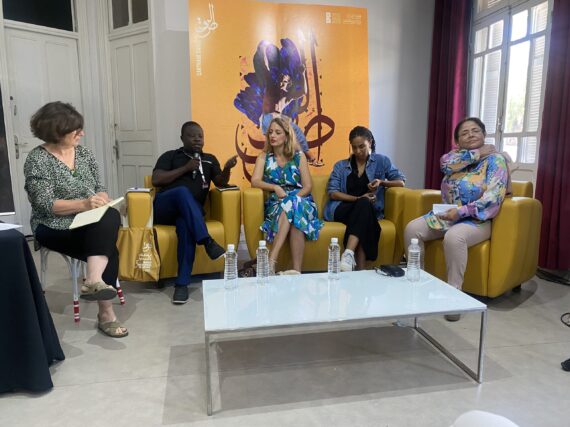
    A total of 179 looted artefacts, which are currently on show at the Museum am Rothenbaum Kulturen und Künste der welt in the Germany city of Hamburg, will soon find their way to their country of origin – Nigeria. 

    The exhibition confronts Germany’s colonial legacy with curators presenting the collection in its entirety for the first time in a century. Indeed, the works are shown alongside contemporary objects and testimonials from Nigerians, who are already celebrating the significance of their return.

    Titled “Benin: Looted History”, the exhibition, which opened in December 2021, is showcasing an impressive array of bronze, ivory and wood works alongside jewelry, which were looted largely from then Kingdom of Benin (now Edo State). Undeniably, they are scheduled to be restituted together with over 1,000 additional objects from other German museums.

    Edo Museum of West African Art, which is currently under construction, will house the returned objects that were looted by British troops in a retributive expedition in 1897 in which the Benin Royal Palace was ransacked and burned.

    However, dealers and shippers in Hamburg laid their hands on them and re-distributed these artifacts across Western Europe with a good number of them remaining in Hamburg and other parts of Germany.

    The artefacts, which are exceptional artworks with world historical significance, were commissioned by the royal family around the 16th century and created by talented craftsmen and women, who were at the service of the royals.

    Ministry of Culture and Media of the Free and Hanseatic City of Hamburg, Ernst von Siemens Kunststiftung, Hubertus Wald Stiftung, Herbert-Pumplün-Stiftung, Freunde des Museums am Rothembaum and the German Lost Art Foundation are supporting the exhibition.

    The exhibition is expected to run until the precise date of the restitution is coordinated.

    Read More »
  • Total Hip Replacement & Anyankofo earn nomination

    September 4, 2022 • FeaturedArticle, News • 1161

    By Alfred Tamakloe

    (In Copenhagen – Denmark)  

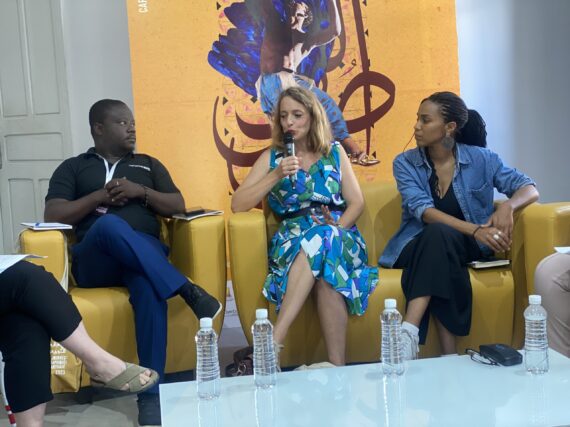
    Youthful, high energetic Total Hip Replacement Band from Aarhus in Denmark took their audience on an ecstatic musical journey during their recent European tour to promote their new album titled “Anyankofo”.

    The tour also took them, among others, to Germany, Sweden, Denmark and as far as Greenland where the band got stuck for a few days due to snow storm and were unable to fly out.

    Incorporating three talented young Ghanaian musicians namely; Richmond Lamptey Bilson (trumpet), Kobina Prah (percussion and fontomfrom) and Emmanuel Ackon (bass) of Ebo Taylor’s Saltpond City Band. The set up-was a delight on stage at Mariska Pavillion in Malmo, where I caught up with the band on their Sweden-leg of the tour, put together by Malmø based promotion outfit Mix Musik.

    Kobina Prah’s high energetic percussion and fontomfrom rhythms, intertwining with Jacob De Place’s drum beats, sent the hall into an infectious dance frenzy, with the audience joining in the chorus. Their tight horns section featuring Lasse Damsgaard (alto & tenor sax) Richmond Bilson (trumpet) and Victor West Hosbond (trombone & lead vocals) was a delight to watch.

    Consequently, their energetic live shows have now earned them nomination in the Roots Category of the Danish Music Awards 2022. Prior to their European tour, Total Hip Replacement spent months in Ghana writing and recording the “Anyankofo” album; a name emanating from their encounter with Ghanaian musicians they collaborated with during their sojourn in Ghana, to spice the album with some Ghanaian musical rhythms.

    “Anyankofo”, meaning friends, a 12-track album, featured rising star Asi Rennie and some of Ghana’s biggest stars such as Wolasi, Rocky Dawuni, legendary Pat Thomas and Kwame Yeboah, both of Kwashibu Area Band, who had hands in arrangements and recording at the Kwashibu studios in Accra.

    Photos – Mix Musik

    Read More »
  • Analogous body of works on show at MARKK Museum

    September 4, 2022 • FeaturedArticle, News • 984

    By John Owoo

    (In Hamburg – Germany)

    Attention-grabbing images by Ghanaian artist Kelvin Haizel that address diverse memories and queried meanings of a collection of photos, are currently on show at the Museum am Rothenbaum Kulturen and Künste der Welt (MARKK) in the German port city of Hamburg.  

    Originally owned by a German merchant and now in the possession of MARKK Museum, the images, which were shot in various parts of Singapore in the late 19th Century depict bygone days of this Asian country and the Malay Archipelago in general.

    Its capital, also known as Singapore was largely cosmopolitan during the period with a large Indian, Tamil, Chinese and Malay populations. Indeed, this diversity – which is vividly depicted in the album – equally describes the country as a multi-ethnic state.

    Curated by Gabriel Schimmeroth and Martha Kazungu, the collection offers a rare glimpse of life during one of Singapore’s least-examined years – they include landscapes, monuments, buildings, rich and poor people and ceremonies that are characterized by breath taking serenity.

    Titled “Archive of Experiences”, Haizel scanned the non-digital black and white photos after a painstaking selection and consciously modified them with an intrinsic energy that ended up in an analogous body of works.

    Through meticulous manipulations, he successfully plunged selected images from the passive album into a mass of works that confront the viewer while bringing alive pictures that have somehow evaded public view for a considerable length of time.

    In the process, four installations emerged from his engagement while subtly avoiding an iconographic touch to these historical photographs. Consequently – he combined the images, which he scrutinized microscopically – with antique imagery in digital collages.

    Undeniably, the works on display, offer a reflection of the emancipatory potential of these historical photographs in the context of power irregularities, which can also be read against the grain of hegemonic knowledge.

    A 2022 MARKK in Motion Artist in Residence, Haizel is currently a PhD candidate at the Department of Painting and Sculpture, Kwame Nkrumah University of Science and Technology (Kumasi) and a member of blaxTARLINES KUMASI and Exit Frame collectives. He has exhibited in Mali, South Africa, Switzerland, Denmark, Ghana and United States.

    The Free and Hanseatic City of Hamburg / Department of Culture and Media supported the exhibition, which is a project of MARKK in Motion, an initiative for ethnological collections of the German Federal Cultural Foundation.

    The exhibition, which forms part of the 8th Triennial of Photography Hamburg, ends on Sunday October 16, 2022.

    Read More »
  • Interactive aesthetics at Documenta 15

    August 23, 2022 • FeaturedArticle, News • 1161

    By John Owoo

    (In Kassel – Germany)

    Despite Documenta 15’s anti-semitic controversy that largely revolved around a mural by Indonesian Collective Taring Padi, which turned the event into a combative exhibition, the art festival continues to attract visitors from various parts of the world.  

    Titled “Peoples Justice”, the mural was eventually taken down amidst jeering, shrieking, hooting and clapping from spectators. Originally showcased in Australia in 2002, it features a soldier-like figure depicted as a pig wearing a scarf with a Star of David and a helmet bearing the word “Mossad” – the designation of Israel’s intelligence agency.

    Nevertheless, works on display at the two main venues – Fridericianum Museum and Documenta Halle – reveal a dominance of works that could be termed as collective sculpture, interactive aesthetics or an archival hub.

    Undeniably, the exhibition is gigantic – indeed, so huge one cannot easily experience all artworks on display. Curated by Indonesia based collective Ruangrupa, dozens of collectives and solo artists were invited resulting in a brain-busting program that featured thousands of names in diverse venues.

    Indeed, works by the Roma artist Selma Selman, which comprise paintings on car parts, that reminiscent her father’s dealings with scrap metals, coolly stand out alongside other highly visible and compelling collaborative determinations.

    An artist’s initiative dubbed Baan Noorg Collaborative Arts and Culture from Thailand,  showcased projects that include an installation of documentary videos dedicated to the dairy industry in Germany and Thailand, a shadow-puppet theater and a skateboard ramp.  

    The Britto Arts Trust Collective from Bangladesh focused on nutritional policies and communities suffering the effects of industrialization. They took on issues related to environmental changes as well as foods that are fast disappearing from communities that had them as staples.

    Through a large-scale installation titled “Rasad”, the collective recreated a small-town bazaar that was fully stocked with food items realized through crochets, ceramics, metals and embroidery, which lighted the exhibition hall with originality. 

    An installation by the Nest Collective powerfully conveyed a message on trash from the fashion industry in Kenya while Centre d’art Waza from Congo touched on the effects of mining and extraction of both natural and human resources from the Congolese Copperbelt.

    Titled “lumbung” (a collective name for a rice barn), the effect on visitors to Documenta 15 through direct engagement with artworks by diverse collectives, surprisingly renders the experiences of individuals personal. It’s sheer size simply ensures views to unfold over time. 

    Documenta 15 ends on Sunday September 25, 2022.

    Read More »
  • Swinging dance movements in grassland

    August 14, 2022 • FeaturedArticle, News • 1070

    By John Owoo

    (In Münster – Germany)

    A duet dance performance near a bird sanctuary in the city of Münster treated a largely enthusiastic audience to swinging movements created from imaginary beings sent from the cosmos to help solve problems on earth.

    Performed by Gifty Claresa Wiafe and Emmanuel Edoror, the piece is characterized by sheer juxtaposition of human performance laced with emotive scenes and a soothing soundscape, which soared into the vast field like the birds hovering over the sanctuary.  

    Clad in black costumes with shoulders tilted – the duo showcased calculated steps, little hops, twirling waists, flapping arms, penetrating facial expressions and tiptoed walks – as they moved across the vast field with trees lurking in the background.  

    Choreographed by Edoror with support from Wiafe, the two artists without doubt are the classification of varied acts. Indeed, each of them possesses an individual style that contributed to their collective efforts. Consequently, moving collectively or singularly advanced and enhanced the acts on stage.

    Organized by Gloster Production under the direction of Carsten Bender, they displayed unity and focus on their mission on earth as Wiafe carried a calabash containing bells with Edoror clasping a wooden pole, which signified some sort of supernatural authority.

    However, confusion sets in resulting in disagreements that end in pitched battles between the two “saviors”, thereby throwing the mission from the cosmos in disarray. Skirmishes were couched in vivid imagery that revealed a textured ritual of people in distress.

    Edoror studied Physical Theatre at the Folkwang University (Essen) while Wiafe is currently pursuing a Masters degree in Sustainable Development Management at the University of Applied Sciences (Kleve). They have performed in various countries including Norway, Ireland, Cyprus, Namibia and Ghana. In 2016, they performed for the German president Joachim Gauck.

    The performance forms part of events marking the 2022 edition of Rieselfelder Cultural Days, which also focused on the world of literature alongside inputs from the fields of history, visual arts, music, radio and ornithology. 

    It was funded by the Cultural Office of the City of Münster and Landschaftsverband Westfalen-Lippe in cooperation with the Literature Commission for Westphalia and Broadcasting Museum Baumberge with support from the Biological Station in the in the Rieselfelder and Cactus Junges Theater.

    The four-day festival ends on Sunday August 14, 2021.

    Pictures – Joerg Kersten

    Read More »
  • Ghanaian choreographer shines in Australia

    July 30, 2022 • FeaturedArticle, News • 1335

    By John Owoo

    (In Accra – Ghana)

    Australia based Ghanaian choreographer / dancer Lucky Lartey has in recent years being creating waves with his performative interventions – which often end up generating imaginary vehicles – that tend to assist or prolong human movement.

    Employing PVC tapes, digitally printed cut-outs and the famous / infamous “Ghana Must Go” synthetic bags, he creates simple but powerful imagery, which are charged with manifold narratives that grab the attention of audiences.  

    One of his pieces titled “In Transit” formalizes three large-scale scenes in which a man is sailing on a boat, riding a bicycle and pushing a car. Indeed, the overriding child-like quality of the tape-drawings, along with the low fidelity of the prints, actually sets the mood and operational context of the production.

    Undeniably, the child-like aesthetic approach he engages – may be associated with the absence of detail – a feature that actually transmits information while enabling easy deciphering. Consequently, the absence of detail in “In Transit” vividly signifies an act of resistance.

    Characterized by circular and anti-clockwise movements preceding each work, they reinforce the idea of resistance to its readability – indeed, a resistance against the Western notion of “reading” the work alongside its systematic disempowerment of it.

    Lartey’s performative intercessions seek to position mankind within an imaginary space where universal and personal issues can be examined – not in their separateness or in isolation – but in our ability to experience them.

    His choreographic works are at the forefront of exploring intercultural dance practices as part of the contemporary dance space while contributing to an ongoing dialogue regarding intercultural dance practice and its meaning in Australia.

    It is equally informed by themes of social justice and explorations of what it means to live as a person of African descent in a Western culture. His current investigations include the exotification of non-Western bodies and subjectivities, the relationship between hip hop culture and African oral traditions and environmental issues such as plastic consumption and waste.

    Lartey, who has performed in Europe, Asia, Australia and other countries in Africa, is the founder and director of Tuumatu Creativity, a music and dance festival, which is held annually in Accra as part of events ushering in Christmas festivities and celebrations.

    Pictures:-

    Zan Wimberley

    Art Gallery of NSW

    Lucky Lartey

    Read More »
  • Book Review: Augustine Kwasiga Younge in retrospect

    July 24, 2022 • FeaturedArticle, News • 1004

    By John Owoo

    (In Accra – Ghana)

    A 325-page book written by Prof. Paschal Yao Younge that tackle the life and work of Augustine Kwasiga Younge was recently launched in several venues in the Greater Accra and Volta regions of Ghana.

    Divided in various sections including “Life Stories”, “Musical Career”, “Revitalization and Africanization of Liturgy and Mass”, “Compositions and Creative Works”, “Creative Contemporaries”, Family Stories”, “Family and Professional Intersections”, the book delves into Kwasiga Younge’s introduction of traditional tunes into the Catholic mass among others.

    Written in simple language, the book details his persistence in this direction and how he moved on with his plan by effectively replacing Latin hymns through a vigorous infusion of Ghanaian culture into the church despite stiff opposition from people who saw this laudable move as a retrograde step.

    The late Kwasiga Younge was without doubt an inexhaustible composer, who has been credited with over one thousand tunes by the writer, who happens to be his last child. A rather dramatic feature in the book is how he and the late Phillip Gbeho (composer of Ghana’s National Anthem) studied how to read and write Western classical music notations on cutlasses in the early 1950s.   

    Undeniably, one can safely attribute the wide use of traditional Ghanaian musical instruments in Catholic and other churches to the efforts of Kwasiga Younge, who worked tirelessly for this idea while composing dozens of tunes, which range from Liturgy and Mass, Anthems and Songs, Funeral Hymns, re-workings of Latin, English and German Hymns and Action / Game songs.

    Published by DApkabli and Associates, it equally captures his contemporaries – whose contributions to the development of music during the period cannot be under-estimated – these include Adalbert Kodjo Mensah Tibu, Philip Gbeho, Emmanuel Gakpo Gadzekpo, Togbe Afiatsoa II, George Kwame Akordor, E.Y. Egblewogbe and Cornelius Kofi Doe-Williams, who was popular known as C.K.

    Outside the annals of music, he was also involved in the Ghana Boy Scouts and played a boundless role in the flourishing of the association until it began to weaken in the face of competition from the Young Pioneers Movement. Nevertheless, he stayed loyal to the course of the association throughout its challenging times and eventual resurrection in the late 1960’s.

    Kwasiga Younge married Catherine Afiwor Kassah-Younge in 1935 and they were blessed with six children. Equally musically inclined, Madame Younge was highly active the music scene and actually formed and directed a number of music groups.

    Currently based at the University of Ohio (USA), Prof. Younge is a specialist in African choral and brass band music, a clinician in other sub-Saharan African musical arts / world percussion and an advocate of intercultural, interdisciplinary and multicultural music.

    He has presented and performed at several festivals, concerts and conferences in over twenty-five countries and several parts of the United States and Canada. Younge also taught at West Virginia University (USA), where he served as Director of the World Music Center.

    A 2020 Ohio Heritage Fellowship Awardee and Carnegie African Diaspora Fellow, he was also a Principal Music Instructor and director of several ensembles, including brass bands, choirs and other instrumental groups at the University of Ghana (Legon).

    Augustine Kwasiga Younge died peacefully in December 2002 at a ripe age of 100. May his soul rest in peace.

    Read More »
« 1 … 12 13 14 15 16 … 44 »
Subscribe to Arts Ghana News

Enter your email address to subscribe. Receive notifications of new posts by email.

RECENT VIDEOS

Simple Slideshow

  • Goethe Institut
  • Alliance Française
  • Arterial Network

© 2026 Arts Ghana™

Website Managed by DelTin Technologies