


Latest
  • visit www.artsghana.net for information on the arts
  • visit www.artsghana.net for information on the arts

Arts Ghana

MENU
  • Home
  • About Us
  • Upcoming Events
  • Latest News
  • Artistes Database
  • Archives
  • Links
  • Contact Us
  • Music
  • Dance
  • Theatre
  • Literature
  • Visual Arts
  • Film
  • Fashion
  • You Tube
  • Facebook
  • August 19, 2026 • 240

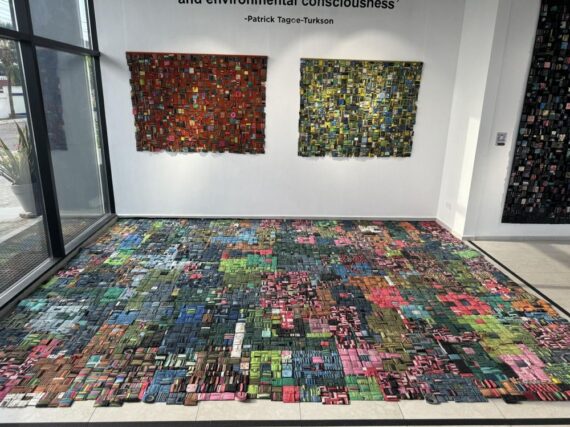
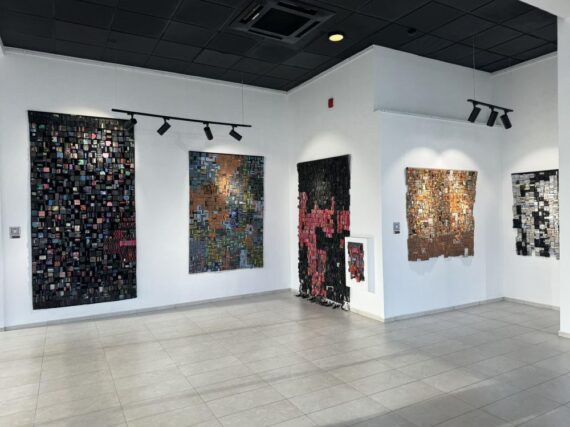
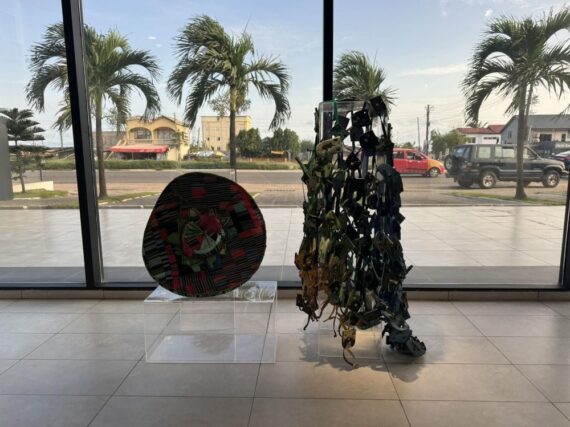
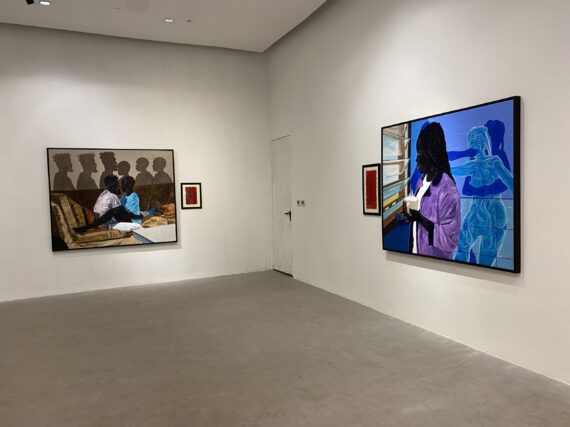
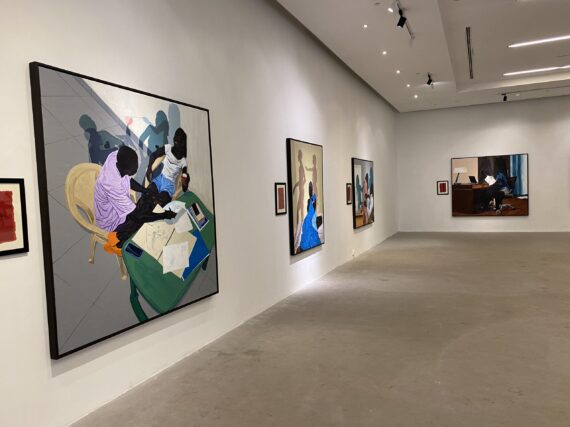
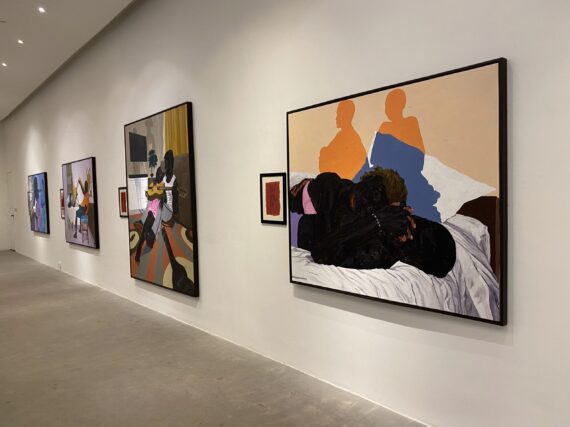
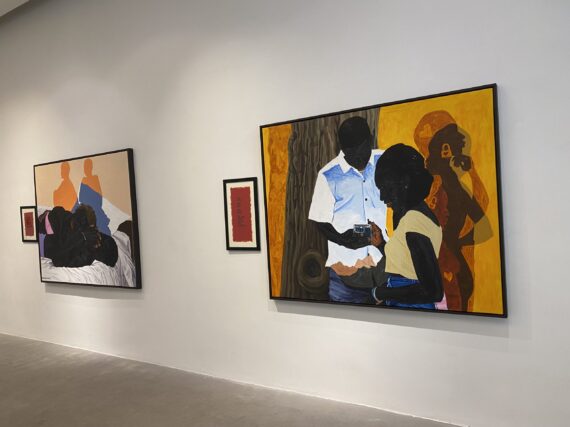
    Memory finds a home at Gallery 1957

  • August 15, 2026 • 260

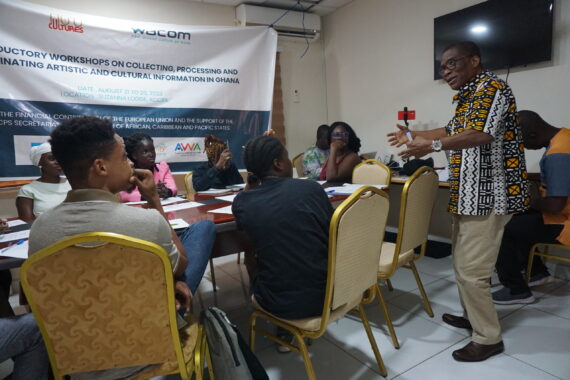
    Five emerging lights in a shared constellation

  • August 4, 2026 • 505

    Landmark festschrift honors El Anatsui’s legacy

  • July 29, 2026 • 410

    Everyday objects, extraordinary meanings

  • July 23, 2026 • 406

    Stain as transformation: reimagining purity

  • July 20, 2026 • 6126

    Artist unmasks hidden architects of galamsey

  • July 19, 2026 • 399

    Explorations into memory and human presence

  • July 10, 2026 • 526

    Artist turns urban wanderings into textured acts of reinvention

  • July 2, 2026 • 569

    Abstract worlds speak through texture and emotion

  • June 25, 2026 • 585

    Echoes of slavery resound at Christiansborg Castle

  • Panelists dilate on issues affecting dance development  

    June 16, 2023 • FeaturedArticle, News • 1310

    By John Owoo

    (In Tunis – Tunisia)

    Carthage International Dance Festival 2023

    A number of panel and round table discussions on various topics and subjects formed an integral part of the 5th edition of the Carthage International Dance Festival, which is currently ongoing in the Tunisian capital, Tunis. 

    Panelists include dance academy administrators, choreographers, dancers, festival directors, academics, policy makers and journalists among others, who represent various countries around the globe. 

    Topics discussed among experts and patrons include “The Critic – The Artists Best Enemy?”, “Pedagogy or Transmission – What is Dance Education Like in Tunisia?” and “Audience and Contemporary Dance in Tunisia” among others. 

    On the role of critics, questions raised include who is the critic writing for? do they serve as a bridge? do their analysis outlive the artistic creation? is he /she an ally or destroyer of the artist? does he /she has the power to enhance a creative work that has no intrinsic value? –  and the relationship between a critic and an artist.

    Panelists for this topic, which include Eustace Agboton (Journalist, No’o Cultures), Léa Chalmont (Manager, Franceand Germany), Oumaima Bahri (Dancer, Tunisia) and Hayet Essayeb (Journalist, Tunisia) dilated on the issue from diverse perspectives with Elsa Despiney (France) as moderator. 

    It was generally agreed that an art critic needs to follow some fundamental steps including observation, reflection, analysis, contextualization, interpretation and others to ensure fairness, professionalism and accuracy in reporting.

    Equally, there is a need for an indispensable interaction between artists and critical journalists since in most cases, this relationship is harmed because each party is unaware of the other party’s role and tend not interact with each other.

    It also touched on artists ego as well as the limits and legitimacy of art critics, especially in the age of the explosion of social media. Thus, several questions were put on the table including – what public(s) are critics writing for? What audience(s) are artists creating for?

    The experience of a No’o Cultures program led by the Association of North-West Cultures, which initiated the establishment an arts critics seminar and award schemes and a website that specializes in arts criticism in Africa, which has been of immense support, was equally shared at the forum. 

    Read More »
  • Spiritual ascent, mental luminescence and dance 

    June 15, 2023 • FeaturedArticle, News • 1290

    By John Owoo

    (In Tunis – Tunisia)

    Carthage International Dance Festival 2023

    Colourful costumes, wild drum beats, chiffon head braids, cool rhythms from traditional flutes wide crowns, bead necklaces, painted sticks, musicians and dancers alike – stay in position – as they wait for a cue to commence the performance. 

    Dubbed “Dbak Tball”, the performance, which was put together by the Tunisia National Folk Arts Troupe and the Tunis Opera Theatre – reminisced the beauty and cohesive power of tradition and culture – as the capacity audience impatiently waited for the show to commence.

    In a remarkable performance at the Bernard Turin Theatre, the dancers moved forwards, backwards and sideways as drums, flutes and keyboards fill the theatre with melodies and steps that recall the richness and beauty of traditions in the North-Western part of Tunisia.

    “It was a memorable event performed by marvellous artists, who are proud of their culture. I am extremely delighted to have seen this performance and thanks to the directors of the group for preserving and sustaining this vibrant music and dance”, said a Pierre Letornou, retired artist from France.

    With typical steps and one arm raised and the other outstretched, the drummers join in unison while a master drummer with two huge drums kept the tempo on stage. At some point they become Dervish turners and engage in over one dozen rotation stunts.  

    In another performance at the El Hamra Theatre, a powerful duet by Améni Chatti and Alma Douki drew inspiration from a bond between two sisters while revealing the looming possibilities of a fall out.

    Titled “Libération”, the dancers engaged in a dialogue with swift movements connoting tension and some level of anxiety among them. With a tinge of minimalism, a lone sofa on stage became a rallying point for the piece, which equally exhibited peace, passion and angst.  

    Through perceptive moments and gestures, they managed to capture the substance of life and mortality while reminding the audience of the tenuousness of life and the beauty of the human spirit, which remains firm in the face of adversity.   

    The two dancers were often in a tight and loose grouping, which reminds us of the realities of life and the consequences that can befall humankind, including ones that can deeply hurt and wound one’s soul. 

    Pictures – Carthage International Dance Festival

    Read More »
  • Bodies harnessed in vertigo sensitization drive  

    June 14, 2023 • FeaturedArticle, News • 1288

    By John Owoo

    (In Tunis – Tunisia)

    Carthage International Dance Festival 2023

    “Vertigo” – a piece performed by Madagascan and Mozambican dancers exposed the anxiety and challenges faced by people with conditions that result in repeated, unexplainable and inconsequential acts. 

    Performing at the Bernard Turin Theatre, Carolina Manuel (Mozambique) and Judith Olivia Manantenasoa (Madagascar), employed circus, acrobatics and dance movements in the piece that forcefully revealed the helplessness and powerlessness in the face of vertigo.

    Clad in red costumes – with a near bare scenography comprising a long rope and a circus loop that swayed precariously on stage – bodies, arms and heads moved in repeated gestures and movements that encompassed the stage from the beginning to the end.   

    Through abstract and expressive means, the pair rolled from one end of the stage to the other, they climbed ropes and hang on the loop for quite some time as they expressed the feelings, emotions and insecurities characterized by sufferers of vertigo. 

    They marshalled their knowledge of circus and acrobatics on stage as a series of duets and solos appeared to explore the interconnectedness between personalities that have the circumstance of vertigo and those who are not connected to it.

    Indeed, Vertigo is a symptom, rather than a condition in itself and is characterized by the sensation that an individual or the environment is moving or spinning. This feeling may be barely noticeable, or may be so severe that you find it difficult to keep your balance and not be able to manage everyday tasks.

    In a related performance, Institut Français Tunis hosted French artist Massimo Fusco, who is also a masseur with a production titled “Sound Bodies Duo” that embraced a choreographic installation, through an immersive audio, visual and sound installations.

    With patrons lying on specially arranged cushions with head phones tugged onto their heads, they experienced an immersive sound layer while receiving massages from the two artists during the show. 

    Pictures – Courtesy of Carthage International Film Festival

    Read More »
  • Traditional, contemporary & hip hop at Carthage Festival

    June 14, 2023 • FeaturedArticle, News • 1411

    By John Owoo

    (In Tunis – Tunisia)

    “Om(s) de Ménage”, a dramatic fusion of traditional and contemporary dance alongside Hip Hop on Monday delighted a near capacity audience at the 4ème Art Theatre as part of the ongoing Carthage International Dance Festival.

    Choreographed by Hamdi Dridi and performed by Ewa Bielak, Maria Mikolajewska, Emmanuel De Almeida alongside Dridi, the quartet exhibited the power of cohesion and a slow crescendo that left the audience in awe as the watched out for the next move.

    The Tunisian group effectively blended music and dance with De Almeida playing drums live on stage while music from loud speakers complimented his rhythms – in the process, they created a memorable scene that honoured their sisters, brothers, parents, friends and their ancestors.

    As they moved on stage, they employed aspects of tap dance as they marshalled the soles of their feet and their palms and stomped the stage while a refreshing solo by Bielak that also involved the constant shaking of her long hair celebrated the influences of female richness.

    The artists pulled a rather fast one on the audience – lights went out they bowed to the crowd amidst applause and cheers – and the performance suddenly continued beginning with a solo and the drummer scrumptiously joining the show alongside the others.

    At the El Hamra Theatre, two performers from Lebanon captured the imagination of the audience with a performance that encompassed music, dance and theatre while recollecting history of a family at a time when dancing was seen as a form of fitness.  

    Titled “Evidence of Things Not Seen” and characterized by a simple set comprising one sofa, laptop, loop machines, woollen carpet and an oud, electro musician Abed Kobeissy and dancer / choreographer Stephanie Kayal, told a story of a family living a dream-like situation while avoiding the realities before them.

    Through a “conversation” that was not audible to the spectators and subtle movements together with some form of aerobics from Kayal, the duo kept the audience at the edge of their seats imagining what else will pop up from the stage. 

    Pictures – Courtesy of Carthage International Dance Festival 

    Read More »
  • Stream of movements on Habib Bourguiba Avenue

    June 13, 2023 • FeaturedArticle, News • 1292

    By John Owoo

    (In Tunis – Tunisia)

    “Sidewalk Stories”, a piece by six American choreographers / dancers on Sunday charmed an enthusiastic crowd through a continuous stream of movements at the Habib Bourguiba Avenue in downtown Tunis.   

    Performed by the E Company as part of the 2023 edition of Carthage International Dance Festival, over twenty dancers from Tunisia and the United States turned the stage into a dance groove with a level of connectedness that pervaded the entire piece.

    Choreographed by A.J. Guevara, Robert J. Priore, JaMyra LaSalle, Jade Stewart, Philip Baraoiden and Paul Gordon Emerson – abstract and expressive movements enabled the dancers to explicitly reveal the power and beauty of cross-cultural collaborations – as they blended various dance traditions while creating a new synthesis in the process.

    Indeed, arms were constantly flaying while pointing in different directions as others held aloft dancers who jumped into their arms – and gently placing them back as the crowd cheered and applauded the dancers – whose bodies have been well crafted by the act they have so gracefully mastered. 

    Recorded music blurring from loud speakers and their steps folded into one another as tender movements of torsos moved in unison while making their way out of the stage and returning soon after with fresh moves and acrobatics. 

    Indeed, the music starts with a smooth swaying rhythmic feel and steadily deepens as the dance progresses. The movements of the dancers matched the music even as it became sharp and direct in certain aspects of the dance.

    Students and some instructors from the Ridha Rzig’s Hip Hop and Circus School in Tunis mounted a short production at the serene Bab & Cité El Khadra district, which overlooks the Mediterranean Sea that confounded patrons.

    Overshadowed by a unique Tunisian context, the performers (aged between 9 and 14) were rotated in and out of stage alongside recorded music – it was a sight to behold as one can feel the joy in a performer once he or she takes the spotlight.  

    Carthage International Dance Festival, which is being held in various venues in Tunis is under the directorship of Selim Ben Safia. It ends on Saturday June 17,2023.

    Pictures – Courtesy of Carthage International Dance Festival

    Read More »
  • Carthage Int Dance Festival 2023 opens in Tunis

    June 12, 2023 • FeaturedArticle, News • 1378

    By John Owoo

    (In Tunis – Tunisia)

    The 2023 edition of Carthage International Dance Festival (JCOC) opened last Saturday with a brilliant performance of “Archipel”, a piece choreographed by the acclaimed French director, Mathilde Monnier at the Théâtre des Régions Cité De La Culture in the Tunisian capital, Tunis. 

    A prolific collaboration by the Ballet de l’Opera de Tunis and the Choreographique du Conservatoire National Supérieur de Musique et de Dance de Paris, the production encompassed dancers and other professionals with varying degrees of expertise and experience.

    The piece equally brought some important points on multiculturalism and social-cohesion with its twenty-four dancers who criss-crossed the dance floor with diverse movements and sequences that moved into each other with relative ease. 

    With gently paced movements, the dancers called on the audience to embrace and immerse themselves in unacquainted sceneries and revel in the joy of discovering new territories while making the best out of the situation.

    Accompanied by diverse music interspersed with episodes of silence – they moved as if they have been programmed as they passed by each other with very little upper body movement and without “noticing” each other – thereby keeping the audience un suspense as to what comes next. 

    Earlier, a musical trio comprising Kel Assouf (Niger), Imed Alibi and Michel Marre (Tunisia) alongside the Burkinabe dancer / choreographer Salia Sanou entertained the audience with tunes composed for the occasion that were dedicated to Africa. 

    Director of JCOC, Sélim Ben Safia underlined the importance of the festival stressing that the various performances and round table discussions were designed to ensure the growth and development of the act of dance while enhancing collaboration among institutions and countries. 

    The Minister of Cultural Affairs, Dr. Hayet Germessi Getat, who opened the festival said JCOC represents a special place among international cultural events organized and hosted by Tunisia as it promotes choreographic works while attracting new audiences. 

    She added that employing the human body as a medium of artistic creation while showcasing expressive and visually stunning movements is a highly commendable feat adding that the Ministry will continue to support the festival. 

    Partners of the festival include Théatre de l’Opera, Institut National du Patrimoine, Conservatoire National Supérieur de Musique et Dance de Paris, Archipel, Prohelvitia, Djerba, Institut Français, Institut Fraçais Tunisie, ODV and No’o Cultures.  

    Pictures – Courtesy of JCOC

    Read More »
  • Artist heightens intensity of anxieties in society

    June 11, 2023 • FeaturedArticle, News • 1380

    By John Owoo

    (In Accra – Ghana)

    Over sixty large-scale paintings by the Ghanaian multidisciplinary artist / academic Dr. Sela Adjei, which largely draw from Frantz Fanon’s theory of catharsis and the aesthetics of violence, are currently on display at the Museum of Science and Technology in Accra.  

    Partially inspired by a collection of poems by Dr. Mawuli Adzei, a senior lecturer at the University of Ghana (Legon), works on show have been visually reconfigured onto large canvases, which hold modular chromatic palettes that tell highly uncomfortable stories.

    Employing distorted human figures in reds and greens, the exhibition focuses on the confluence of state violence and the modes of resistance that accompanies it. Undeniably, a critical observation of his work reveals deep spiritual undertones. 

    Curated by Nii Dodoo Darku, “Zadokeli” (eclipse of the sun in English) casts references to a number of solar and lunar eclipses that occurred in 2020, which in Ewe esoteric norms connotes misfortunes. Consequently, Adjei visually expands the discussion of analogizing the predicament blacks through a recurring image of a gloomy eclipse. 

    Adjei’s role here as an artist who draws links between the 2020 eclipses and the rise in anti-black violence and injustice, positions him among the far-seeing priests and diviners who seek answers in an effort to “restore” cosmic and social order through propitiation rites. 

    The exhibition is being complemented by poems from Elikplim Akorli, which will form a virtual component of the display in order to reach a global audience. As a collaborating artist, Akorli also thrilled patrons at the opening reception with a spoken word performance.

    Undeniably, Adjei’s background in multimedia and African Art History allows him to engage in a complex multidisciplinary practice ranging from photography, design, film, digital illustration, painting and sculpture. 

    He is noted for confronting socio-political phenomena such as the #EndSARS movement and the killing of George Floyd by a policeman in the United States. Indeed, his paintings reveal themselves as a creative outlet that recreates racial memories and haunting images of his iconic black and white biomorphic optical illusions. 

    Also a researcher and curator with degrees in Communication Design and African Art and Culture from the Kwame Nkrumah University of Science and Technology (Kumasi) and a PhD in African Studies from the University of Ghana, Legon. 

    He is a member of the African Studies Association, ACASA, AI4Afrika and the International Society for Folk Narrative Research. Adjei has participated in over twenty exhibitions and curated high-profile exhibitions and art festivals. He has also worked as a curator / art consultant with reputable Art Galleries, Museums, Publishers, Research Institutes and Universities.

    The exhibition ends on Sunday June 25, 2023.

    Read More »
  • Ghanaian, Cuban musicians thrill Japanese audience

    June 7, 2023 • FeaturedArticle, News • 1445

    By John Owoo with files from Tokyo

    (In Accra – Ghana)

    Ghanaian flute magician Dela Botri and the Cuban Tres guitar virtuoso Hector Ferran alongside other musicians recently thrilled a capacity audience at the Akasaka Civic Centre in the Japanese capital Tokyo.

    The artists proved the beauty and power of cross-cultural collaborations with an exquisite blend of traditional Ghanaian music and Cuban rumba that delighted members of the audience at the Cultural Centre.

    It was an amazing performance that explored the history and customs of both countries and the amalgamation of music traditions, which have existed hundreds of years and have been subjected to analysis by ethnomusicologists from diverse parts of the world.

    With Luis Valle (trumpet), Ludwig Nunez (drums), Kai Petite (bass), Armando Torres, Abraham Kamoah (gome) and Hector Ferran (keyboard) Aaron Bebe (xylophone), the group showcased different approaches to playing traditional music while creating a dramatic synthesis of different rhythms and beats.

    An apostle of traditional / contemporary music, Botri has held workshops in a number of universities in several countries and performed to varied audiences in the United States, Cuba, Algeria, Ivory Coast, South Africa, Mali, Niger, Mauritania, Denmark, Germany and Egypt among others.  

    In recent years, he has participated in the Cubadisco Festival (Cuba), World Music Village (Finland), Copenhagen Jazz Festival (Denmark), Pan African Music Festival (Algeria) and joined Liberian star Miatah Fanbulleh to perform at the 2011 Novel Peace Prize Awards in the Norwegian capital, Oslo.

    Singer, songwriter, guitarist and multi-instrumentalist, Ferran has developed a successful career in the Cuban and international music scene. In 2007, he was awarded in the prestigious Jojjaz contest based in the Cuban capital Havana.  

    He has been a member of very important groups in Cuba including Lucia Huelgo, Emilio Vega, Raul Paz, Paulo FG, Laritza Bacallao and Waldo Mendoza among others. His work as a composer has been versatile and has a catalog of works in the field of concert, symphonic, Jazz and popular songs to his credit.

    The performance, which was repeated in the Sakado Cultural Centre in Tokyo, was organized by the Embassies of Ghana and Cuba in Japan. It was sponsored by CLOUDY, Degas, DIDI GRANDE, Ethiopian Airlines, Fuji Oil, GRA, Index Strategy, JafriQ Radio, Lotte, Shimzu Corporation, TWO ROOMS and World Star Cafe.

    Photos – Kengo Abe

    Read More »
  • Artist re-interprets and re-imagines royal umbrellas  

    May 22, 2023 • FeaturedArticle, News • 2122

    By John Owoo

    (In Accra – Ghana)

    Results of an exploration into culture, identity and history by Rita Mawuena Benissan that involved the re-imagination of customary objects including the pervasive royal umbrella are currently on display at Gallery 1957 in Accra.

    Indeed, the Ghanaian American interdisciplinary artist has reinterpreted the umbrella as an emblem of Ghanaian uniqueness while adopting a cross-disciplinary approach by redesigning them through a close collaboration with traditional umbrella markers.

    Gigantic and vivid umbrellas on display at the Gallery show Benissan as master technician, who has generated interest among the public with installations that are replete with history, tradition, beauty, symbolism and elegance. 

    Documented as part of Asante custom since the 18th century (possibly earlier), these umbrellas depict the various hierarchies of Akan chieftaincy and are normally decorated with patterns but the artist replaces them with other motifs and human figures.

    She employs an archival portrait of a Ghanaian chief dressed in traditional robes and heavily accessorized in gold. Indeed, by crafting works that are part tapestry, part sculpture, Benissan reconfigures the role of the umbrella, turning it from an object symbolic of history and tradition to an item that in itself grapples with questions of memory and identity.

    During processions, the Asantehene (Ashanti King) requires seven different umbrellas in addition to an eighth umbrella that is used as a reserve. During parades, the reserve umbrella replaces a malfunctioning umbrella until it is hurriedly repaired and swiftly brought back to the formation

    A film by Benissan that was screened during the opening of the exhibition, showed umbrellas stripped of the ceremonial roles – indeed they comprise astonishing shots from the famous Makola Market surrounded by hundreds of umbrellas that shield market queens from the hot African sun.

    Benissan received a Bachelor of Fine Arts Degree in Apparel and Textile Design from Michigan State University (USA) in 2017 and graduated in 2021 from the University of Wisconsin- Madison (USA) with a Master of Fine Arts in photography and an African Studies Program Certificate. 

    She has showcased her work in several venues including Arts + Literature Laboratory in Wisconsin (2021 – USA), the Foundation Contemporary of Art, Afrochella Festival (2021 – Ghana), Gallery 1957 (2022 – Ghana), Dak’Art (2022 – Senegal) and in the group show “EFIE: Museum as Home” in Dortmund, Germany.

    Through her foundation Si Hene, which focuses on preserving Ghana’s chieftaincy and traditional culture, Benissan helped to launch the reopening of the National Museum of Ghana in June 2022. She was the Chief Curator at the Institute Museum of Ghana (Noldor Artist Residency) till 2022.

    Titled “In the World Not of the World”, the exhibition ends on Saturday June 17, 2023. It is being curated by Ekow Eshun.

    Read More »
  • Wanlov, Feli Nuna mesmerize audience at Goethe-Institut

    May 4, 2023 • FeaturedArticle, News • 1534

    By John Owoo

    (In Accra – Ghana)

    Revolutionary artist Wanlov Kubolor alongside singer / songwriter Feli Nuna last Friday joined multi-instrumentalist Beda Ehrensperger and his Massive Tribe Band in a magnetic performance at the Goethe-Institut in Accra.

    Equipped with pre-produced loops on a laptop alongside drums and percussive instruments, they took the audience on a musical journey that showcased the power of improvisation, which effortlessly captured the attention of the audience who swung and rolled along.

    With a warm and reassuring stage presence, Wanlov and Nuna went deep into their own world and dished out refreshing tunes while psychedelic embellishments grounded by deep grooves from members of Massive Tribe kept the stage alive and alert with high energy. 

    Indeed, occasional injections of calmness alongside tasteful genres added to the inspirational nature of the music emanating from the stage as it drew attention to genuine creativity from the artists.

    Wanlov has developed a “Gipsy” persona by wearing only wrappers and no shoes while styling himself as a voice for the masses. Undeniably, he has developed a strong socially conscious identity, which has led him campaign on diverse issues affecting deprived communities.

    A graduate of the University of Ghana (Legon), Nuna signed her first record deal with Lynx Entertainment as “Felly” in 2012 and released her first single “Ghana Girl Swag”. She was also a judge on the voice of West Hills Mall in 2016 and has had the opportunity to perform on big platforms in Ghana and beyond.

    During his studies at the Zurich University of the Arts (Switzerland), Ehrensperger dedicated himself to Jazz, which provided him with a link to African rhythms. He felt compelled to move to Ghana and subsequently worked with master drummer Kofi Missiso and the “Ghana Cultural Ballet” and assimilated African music.

    Goethe-Institut Ghana sponsored the concert.

    Read More »
« 1 … 11 12 13 14 15 … 45 »
Subscribe to Arts Ghana News

Enter your email address to subscribe. Receive notifications of new posts by email.

RECENT VIDEOS

Simple Slideshow

  • Goethe Institut
  • Alliance Française
  • Arterial Network

© 2026 Arts Ghana™

Website Managed by DelTin Technologies

    imunify-bot-check