Latest
  • visit www.artsghana.net for information on the arts
  • visit www.artsghana.net for information on the arts

Arts Ghana

MENU
  • Home
  • About Us
  • Upcoming Events
  • Latest News
  • Artistes Database
  • Archives
  • Links
  • Contact Us
  • Music
  • Dance
  • Theatre
  • Literature
  • Visual Arts
  • Film
  • Fashion
  • You Tube
  • Facebook
  • February 11, 2026 • 298

    Les Afropéennes Festival 2026 to open in Lomé  

  • February 5, 2026 • 480

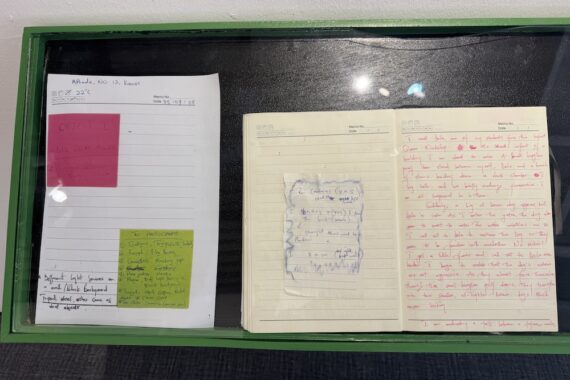
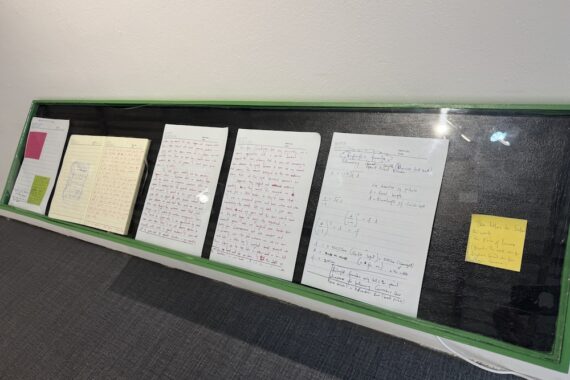
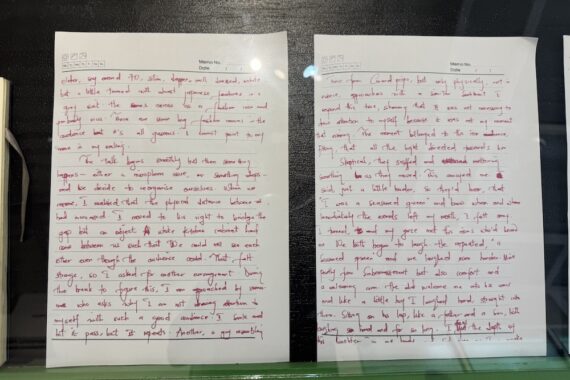
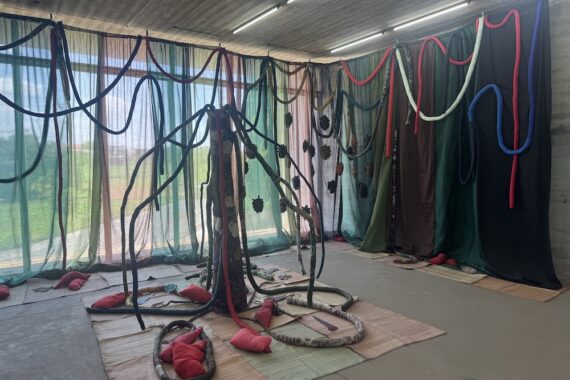
    Philosophy, motifs, poetry and memories

  • February 2, 2026 • 668

    James Town Café Unveils a Nostalgia-Infused Exhibition

  • January 12, 2026 • 727

    Book Review: “Unchained” by SaCut Amenga-Etego

  • January 2, 2026 • 732

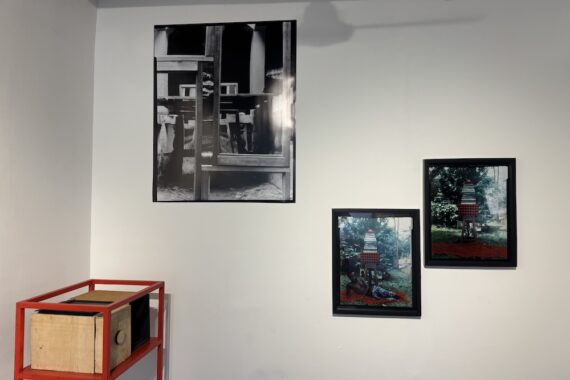
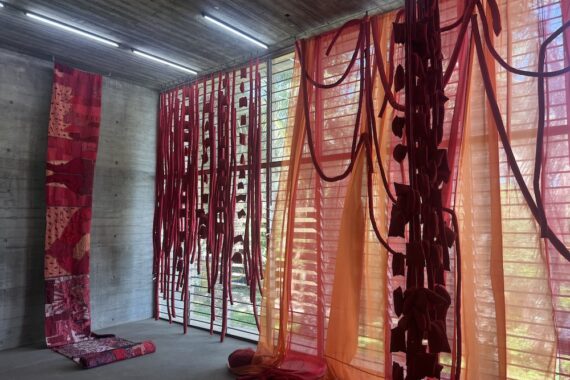
    Monumental installations illuminate Red Clay

  • January 1, 2026 • 712

    Speaking Beyond the Grave

  • December 31, 2025 • 698

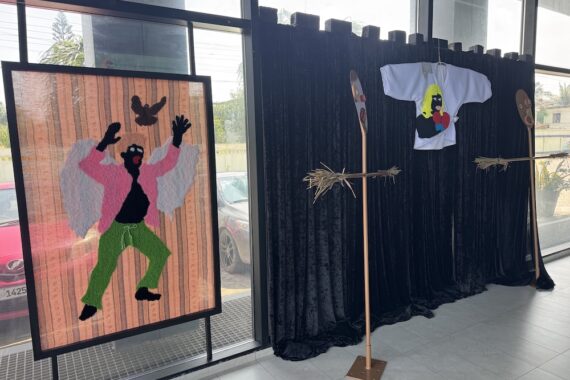
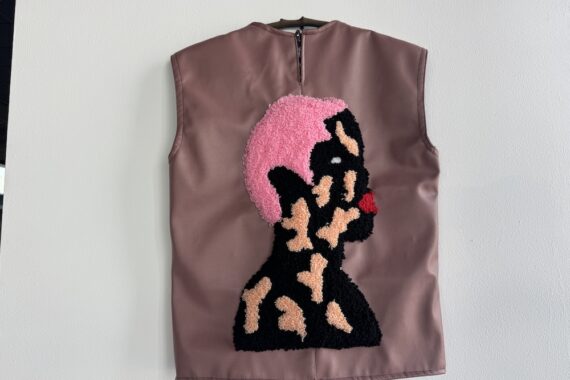
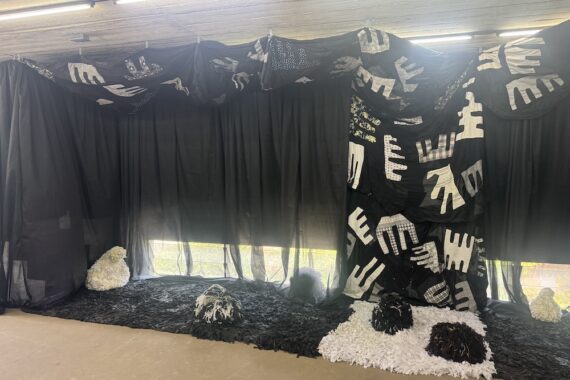
    Reclaiming the Mask

  • December 24, 2025 • 519

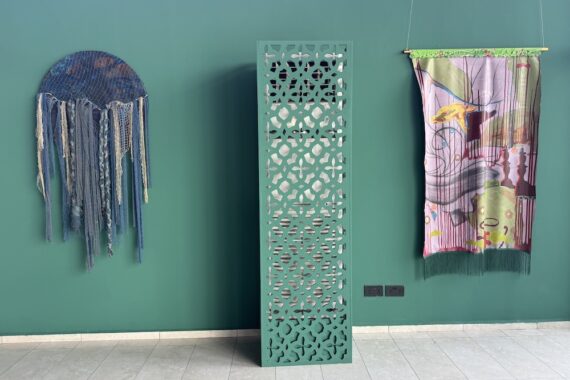
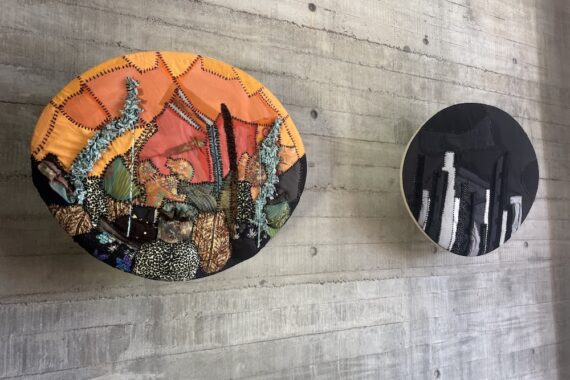
    Diverse visual languages in convergence

  • December 23, 2025 • 617

    Tectonic Transference: Where Landscapes Remember

  • December 22, 2025 • 598

    Amazigh Roots and Global Rhythms rock Agadir

  • Menstruation – artist challenges myths and discriminatory traditions

    November 27, 2025 • FeaturedArticle, News • 801

    By John Owoo

    (Accra – Ghana)

    An exhibition featuring artworks by Samuella Graham that address menstruation—the monthly shedding of the uterine lining, which causes vaginal bleeding as part of the female reproductive cycle—is currently on display at the Worldfaze Art Practice Gallery in Accra. 

    Long burdened by taboo, myth, and discriminatory customs, the menstrual cycle remains one of society’s most policed natural processes – and the artist responds to this widely discussed issue with confrontation rather than subtlety.

    Curated by the Worldfaze team, her abstract red-dominated canvases strike first. The colour is unmistakable: blood, yes, but also insistence—on presence, on life, on the body refusing erasure. The works pulse with tension, capturing both the physicality of menstruation and the emotional weight of a topic wrapped in silence.

    Pixelation, a distinctive technique in the show, emphasizes that point. It implies distortion and censorship, reflecting the blurred cultural understanding of menstruation and even the artist’s own myopia. The result is a visual field that questions who controls what is seen and said.

    But the exhibition’s most striking moments come from Graham’s use of everyday menstrual products. Flowers made from pads, tampons planted in a red pot, and rows of white second-hand underwear stained with red dye confront viewers directly.

    These objects, often hidden from public view, are placed at the center of the room and during the conversation. Her choice of oborɔni wawu underwear is pointed—garments already shaped by unknown bodies now become symbols of shared stigma and buried narratives.

    The show exists in a context where menstrual shame has real consequences: girls missing school due to lack of sanitary products, women barred from religious rituals, and widespread misinformation that shapes attitudes from childhood into adulthood. By bringing these issues into the gallery, she challenges a culture that still teaches many to look away.

    Importantly, she is not providing solutions. Instead, she makes refusal itself the focus—refusing to hide, soften, or sanitize. The exhibition poses direct questions: What have we been taught to believe about menstruation? Who benefits when women’s bodies are kept secrets? And what changes when we choose to confront rather than conceal?

    With this body of work, Graham redefines menstruation as neither shameful nor extraordinary, but fundamental—a cycle that warrants visibility, respect, and above all, honesty.

    The exhibition runs until Wednesday, December 24, 2025

    Read More »
  • Emotional landscapes through material and memory

    November 26, 2025 • FeaturedArticle, News • 774

    By John Owoo

    (Accra – Ghana)

    Selorm Amekorfia’s latest body of work, which offers a reflective experience with sculpture that balances strength and delicacy, is currently on display at Worldfaze Art Practice Gallery in Accra.

    Titled Memories in Forms and developed earlier this year during his residency, his work represents a thoughtful expansion of his multidisciplinary practice. It combines construction materials, reflective surfaces, and painterly gestures in ways that feel both natural and deliberate.

    Curated by a team from Worldfaze, Amekorfia primarily uses mesh, cement, mirrors, and acrylic paint—materials more commonly linked to construction sites than art studios. Still, in his hands, they serve as vessels for emotional expression rather than just structural support. 

    The pieces on view carry a sense of weight, but not heaviness; they assert their physical presence while inviting an inward gaze. This tension between the exterior and interior runs throughout the exhibition, giving it a quiet, meditative energy.

    What stands out in Memories in Forms is the artist’s growing exploration of organic shapes, a transition that adds fluidity to materials known for their solidity. Curved edges, rippling surfaces, and forms that seem to mirror the body’s rhythms appear throughout the exhibit. 

    While his practice is partly rooted in abstraction, these shapes suggest living organisms—bones, shells, and folds of skin—without ever becoming literal representations. Instead, they serve as emotional prompts, inviting viewers to explore their own memories and associations.

    Mirrors, used sparingly but purposefully, enhance this reflective quality. In certain artworks, a glimpse of reflection draws the viewer into the sculpture’s orbit, encouraging a moment of self-awareness. This interaction between material, viewer, and environment highlights the artist’s focus on how we inhabit space—both physical and mental.

    Embedded within the work is the sense of Amekorfia’s dialogue with his surroundings during the residency. The materials he uses evoke building and rebuilding, suggesting a metaphor for relationships, connections, and the emotional framework that holds them together. There is a subtle story of becoming—of forms emerging, shifting, and reshaping in response to unseen forces.

    Memories in Forms resists easy categorization, operating at the boundaries of sculpture and painting, abstraction and narrative. It is this refusal to conform that gives the exhibition its strength. By allowing form, material, and emotion to merge freely, he creates a space where viewers can slow down, observe, and see their own reflections—both literal and metaphorical. 

    The exhibition concludes on Wednesday, December 24, 2025.

    Read More »
  • Ghana’s post-independence history in focus

    November 24, 2025 • FeaturedArticle, News • 629

    By John Owoo

    (Tamale – Ghana)

    Marking the 60th anniversary of Ghana’s historic Sword Monument, a new contemporary art installation reintroduces a lesser-known chapter of Ghana’s post-independence history to the public. 

    Titled “One Man Does Not Rule a Nation,” and created by Polish artists Max Cegielski and Janek Simon, it is currently on display at Red Clay Studios in Tamale as it reconnects Ghana and Poland through a shared history of political idealism, cultural diplomacy, and early post-colonial hopes.

    The project starts with the remnants of the original Sword Monument—once a bold sculptural statement honoring Ghana’s newly gained independence and the Pan-African vision promoted by Dr. Kwame Nkrumah. 

    Today, only the concrete foundation remains. Instead of mourning what has been lost, the artists rebuild the missing form using 3D printing, turning the monument into a reflection on history, memory, and the changing meanings of nationhood.

    This reimagined monument is displayed not in isolation but alongside archival materials, curated recordings, and historical documents that emphasize an overlooked political relationship: the Polish People’s Republic’s involvement in decolonizing African nations. 

    During a period of rapid change across much of the world, Poland sought to build diplomatic and ideological ties with newly independent countries, and Ghana—under Nkrumah’s leadership—became a crucial partner. The exhibition highlights that global solidarities among nations of the “developing world” once carried strong hopes, even if those hopes later faced tough realities.

    Viewed this way, the Sword Monument is more than just an architectural piece. It serves as a symbol of Afro-optimism—the belief that gaining political independence would quickly lead to widespread social and economic changes. While it recognizes this optimism, it also reflects on the disappointments that came afterward: halted development, political turmoil, and the disintegration of Nkrumah’s Pan-African vision.

    Importantly, the exhibition also creates space to think about the emancipation of women, both culturally and structurally. In revisiting the monument and its era, the artists encourage viewers to consider what forms of freedom remain unrealized and how future struggles will require new solidarities—local, continental, and global. By presenting this historical work to contemporary audiences, Cegielski and Simon invite reflection not only on what was lost but also on what can still be achieved.

    With its combination of technology, historical excavation, and political inquiry, “One Man Does Not Rule a Nation” turns a nearly forgotten monument into a living space for dialogue—one that looks back only to challenge us to imagine a more fair and cooperative future.

    The exhibition, previously shown at the Foundation for Contemporary Art in Accra, ends on Saturday, December 13, 2025.

    Read More »
  • Cycles of collapse, revelation, and renewal

    November 20, 2025 • FeaturedArticle, News • 748

    By John Owoo

    (Tamale – Ghana)

    An exhibition showcasing works by 14 women that explore themes of regeneration, ancestry, and speculation is underway at the Savannah Centre for Contemporary Art (SCCA) in Tamale, the northern regional capital. 

    Titled “The Writing’s on the Wall,” participating artists include Dr. Tracy Naa Koshie Thompson, Lois Selasie Arde-Acquah, Priscilla Kennedy, Kezia Ouomoye, Afia Prempeh, Fibi Afloe, Zohra Opoku, Baerbel Mueller, Nuotama Bodomo, Nyornuwofia Agorsor, Na Chainkua Reindorf, Naomi Boahemaa Jr. Sakyi, Akosua Odeibea Amoah-Yeboah, Anna Friemoth, and Penny / Pierre Gentieu.

    While its premise recognizes the gendered setup of the participating artists, the exhibition is careful not to reduce its thematic focus to a simple “women’s art” story. Instead, it highlights broader ideas of mothering, caretaking, conceiving, passing on knowledge, and letting go—roles that go beyond gender to show the wide ways in which life, ideas, and culture grow.

    For example, Dr. Tracy Naa Koshie Thompson uses living microbes and the natural intelligence of saliva ferns to create polymer-like material forms, anchoring the exhibition in ecological questions and the microscopic systems that support life. 

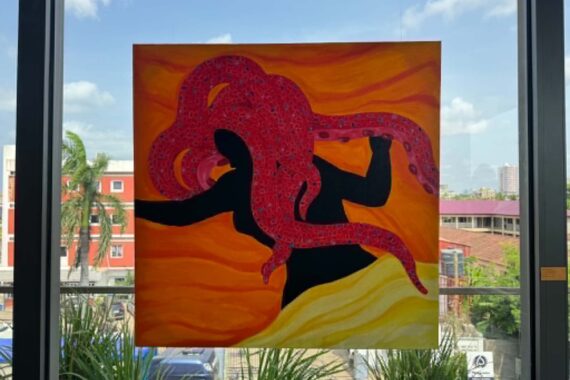
    Na Chainkua Reindorf merges indigenous spiritual cosmologies with magical realist landscapes, creating vibrant, visionary scenes that exist between historical memory and futuristic visions. Similarly interested in hybridity, Priscilla Kennedy weaves fantastical octopoid cyborg forms—part alien, part ancestor—implying bodies that have adapted to new environmental, political, and technological realities.

    Naomi Boahemaa Jnr. Sakyi captures market scenes that evoke memories of her family life in the Bono Region, while Fibi Afloe’s photographs preserve the essence of the home that carries her mother’s memory. Anna Friemoth traces a photographic path that reflects the journeys of her mother and her great-great-great-grandfather, Penny and Pierre Gentieu. Meanwhile, Kezia Ouomoye draws on storytelling methods inspired by German dollhouses, shaping events and characters from her own family history.

    Nuotama Bodomo asks, “We honor our mothers, but do we truly see them?” Her film, centered on the Dagomba heroine Yennenga, reflects on what is forgotten and what often goes unnoticed or unimagined. In a nod to the unknowable, Akosua Odeibea Amoah-Yeboah infuses her curatorial texts with coded language, her cryptic writing resisting both readability and certainty.

    Relatedly, Baerbel Mueller’s vanishing architectures and Lois Selasie Arde-Acquah’s infinite fractals suggest that meaning is never fully attainable—but that the journey toward understanding is as rewarding as the destination itself.

    Curated by Robin Riskin, the exhibition takes its name from the biblical story of divine warning—an image often seen in popular culture—evoking cycles of collapse, revelation, and renewal. Inside the show, this imagery becomes a metaphor for the dual nature of walls and wombs: structures that can both shelter and contain, nurture and restrict. 

    Indeed, the artists explore these tensions through various material and conceptual processes, including microbial matter, digital culture, textiles, handicrafts, mythology, and speculative science.

    While each artist’s practice stands alone, the exhibition consistently emphasizes interconnectedness—across generations, worlds, methods, and mediums. It spans various creative lineages, showcasing millennials and Gen Z alongside Gen X, baby boomers, and the symbolic category of “ancestors.” This intergenerational framing presents the exhibition as an ongoing lineage: a reminder that artistic ideas seldom start or end on their own but move through people, memories, and communities over time.

    Notably, the exhibition goes beyond showcasing material artworks to emphasize the act of creation as a social and collective effort. Process, collaboration, improvisation, and conversation are at the heart of the project, reflecting how many of these artists manage their careers—balancing personal practice with cultural stewardship, community building, knowledge-sharing, and experimentation.

    “The Writing’s on the Wall” demonstrates SCCA Tamale’s ongoing commitment to supporting experimental, boundary-pushing exhibitions that reflect the complexity of contemporary Ghanaian and African visual culture. By allowing artworks, walls, ideas, and curatorial approaches to evolve in real time, the exhibition creates space for new forms of renewal—artistic, emotional, spiritual, and communal.

    The exhibition will close on Saturday, March 14, 2026.

    Read More »
  • Refracted, altered, and filtered memories

    November 14, 2025 • FeaturedArticle, News • 700

    By John Owoo

    (Accra – Ghana)

    An exhibition of works by 2024 Yaa Asantewa Art Prize winner Denyse Gawu-Mensah, which forms part of the Accra Culture Week, is currently on display at Gallery 1957 in Accra.

    Rooted in a family archive spanning Ghana’s post-independence decades, the exhibition presents memory as both fragile and enduring, while exploring how personal histories reflect larger national narratives. 

    Through image transfer techniques and layered textiles, Gawu-Mensah transforms family photographs from the 1960s and 1970s into textured relics—objects that resist fading even as time wears them down.

    The exhibition’s title, “Lightyears of Us,” draws from astronomy to explore the artist’s engagement with distance and time displacement. Just as sunlight takes eight minutes to reach us, her works with memories arrive refracted, altered, and filtered across generations. 

    This temporal gap acts as a metaphor for the archive itself: history is always glimpsed slightly out of sync with lived experience, illuminated by what survives and shadowed by what does not. Photography, which is foundational to her practice, functions as both a literal and symbolic conduit of light across time.

    Curated by Angelica Litta Modignani, the exhibition unfolds in two parts. The first recreates elements of Ghanaian domestic interiors from the post-independence period. Here, wooden chairs, yellowed picture frames, a 1970s Brigade Journal, and simple household objects evoke the everyday atmosphere of middle-class Ghanaian life. 

    Undeniably, these carefully chosen items create an atmosphere that feels both lived-in and suspended, as if viewers are stepping into a preserved memory rather than a reconstructed scene.

    A second room depicts the bedroom of a young Ghanaian man—aspirational, self-fashioning, and tuned to the cultural rhythms of the time. Hair products, a mirror, a neatly made bed, and other personal items suggest private rituals of becoming. 

    On the walls, Gawu-Mensah displays four pieces inspired by imagined highlife album covers and a fictional record label, Santrofi Sound Records. These fake records act as playful counter-archives, suggesting what could have been while honoring Ghana’s musical history’s creative energy.

    Ultimately, “Lightyears of Us” is a deeply personal tribute to heritage and home. Gawu-Mensah invites viewers into the intimate spaces that shaped her, weaving together familial memory, national history, and speculative imagination. The result is a powerful meditation on how stories endure—sometimes clearly, sometimes as a faint afterglow—across the light years between past and present.

    The exhibition concludes on Saturday, January 3, 2026.

    Read More »
  • Rituals of memory, endurance, and survival

    November 10, 2025 • FeaturedArticle, News • 860

    By John Owoo

    (Accra – Ghana)

    At Gallery 1957’s Unlimited Space in Accra, Serge Attukwei Clottey turns personal memory and collective history into an immersive terrain of material, scent, and sound.

    Titled [Dis]Appearing Rituals: An Open Lab of Now for Tomorrow, the exhibition marks a reflective homecoming to Jamestown, the coastal enclave tied to his paternal lineage. But this is no nostalgic return—it is an excavation of endurance, adaptation, and the quiet intelligence embedded in daily survival.

    During a three-month residency at the old City Engineer’s Building, Clottey encountered Jamestown anew—the acrid scent of burning tires, crashing waves, street chatter, and radio melodies filtering through the air.

    Curated by Ato Annan and Allotey Bruce-Konuah, these impressions infuse the exhibition’s sensory field, where materials breathe with memory. His yellow jerrycan panels—cut, stitched, and sutured with copper wire—form luminous tapestries that shimmer between beauty and decay. They evoke both the scarcity and resourcefulness of communities that transform remnants into renewal.

    Clottey’s ongoing concept of “Afrogallonism” anchors the show, using the ubiquitous plastic jerrycan as a metaphor for survival and resilience in West Africa. Once a vessel of necessity, the jerrycan becomes an emblem of creative resistance. In his hands, discarded plastic is reborn into monumental forms that hold stories of migration, labour, and environmental precarity.

    The exhibition extends beyond material assemblage. Disassembled wooden canoes, melted jerrycan sculptures, and charcoal drawings mirror the rhythms of communal life along Ghana’s coast—fragile, industrious, and improvisational. Collaboration also emerges as a theme, notably in paintings created with Clottey’s son, bridging generations through shared gestures and creating.

    What emerges is less an exhibition than an unfolding ritual—a choreography of labour and transformation. Clottey redefines resilience not as endurance through hardship but as an active, creative intelligence. His work resists the passivity often ascribed to survival, instead asserting it as a cultural form —a philosophy born of necessity.

    In [Dis]Appearing Rituals, material becomes memory, and memory becomes resistance. The familiar yellows of jerrycans, the dark grain of wood, and the faint echo of the sea together create a living archive of a community’s will to endure. Clottey’s Jamestown is not disappearing—it is reinventing itself, one stitch, one scar, one story at a time.

    The exhibition concludes on Saturday, January 3, 2026.

    Read More »
  • Reminiscing a nation in motion

    November 6, 2025 • FeaturedArticle, News • 853

    By John Owoo

    (Accra – Ghana)

    An exhibition of pictures by the late American photographer Willis Bell, titled “Light and Shadow: A Movement in Stills,” concluded last month in Accra.

    Indeed, the exhibition presents a remarkable selection of his photographs, prints, and negatives, offering audiences a rare opportunity to experience his vision of Ghana in the years following independence.

    Bell, who made Ghana his home during the transformative 1960s, chronicled the nation’s evolution with both intimacy and breadth. His lens captured the collective energy of a country finding its footing under Kwame Nkrumah, tracing the momentum of independence through parades, rallies, and public celebrations.

    Yet, Bell’s sensitivity extended beyond grand gestures. His photographs linger on dancers mid-step, children at play, and workers immersed in their tasks, while revealing the subtle choreography of daily life.

    The exhibition’s title, Light and Shadow, aptly reflects Bell’s mastery of contrast—not only in tone and texture but also in meaning. Through the interplay of illumination and obscurity, the images meditate on what is visible and what remains hidden, what is preserved and what fades away.

    Noted for documenting vernacular and political life in Ghana during the post-colonial period (1957-1978), Bell’s photographs inhabit the tension between optimism and uncertainty, embodying the light and shadow of a young nation’s aspirations.

    Curated with scholarly precision, the exhibition also acknowledges the meticulous archival work that has brought Bell’s oeuvre to light. The effort to digitize, conserve, and reinterpret his photographs transforms them from historical artefacts into living testaments of Ghana’s cultural memory. These images speak to both the past and present—reminding viewers that history is a continuous movement, not a static record.

    Set within the serene grounds of Mmofra Place, a space steeped in artistic and civic heritage, the exhibition invites reflection. Here, Bell’s images resonate not only as documentation but as poetic meditations on becoming—a reminder that independence was lived through gestures as much as through politics.

    The Willis Bell Archive holds over 48,500 original photographic negatives and prints. Notable for its extensive scope, the archive documents a pivotal period in Ghanaian history, showcasing key political figures, significant events, industrialization efforts, and everyday life in communities across Ghana following independence.

    Mmofra Foundation will digitize 4,375 photographic prints from the archive, preserving this valuable heritage resource and enhancing its accessibility by publishing it in the Modern Endangered Archives Programme’s open-access repository.

    Read More »
  • Bodies of Water – Bodies of Blackness

    October 31, 2025 • FeaturedArticle, News • 789

    By John Owoo

    (Accra – Ghana)

    Ghanaian-born, U.S.-based painter Otis Quaicoe makes a compelling return home with “Where the Waters Meet”, his first solo exhibition in Ghana at Gallery 1957. Indeed, the show marks a deeply personal moment in the artist’s career, reflecting on themes of belonging, freedom, and the radical necessity of rest.

    His new body of work draws on his memories of Ghana and his experiences in the United States, bridging two worlds through the metaphor of water. Pools and oceans become spaces of ease and reclamation, where black bodies—long politicised in art and history—can exist in leisure. It’s a subtle yet powerful statement about self-possession and joy.

    Rendered in a restrained palette of black and grey, Quaicoe’s portraits possess a quiet confidence. His tonal approach heightens the sculptural quality of his figures, who emerge with luminous presence against soft, dreamlike backgrounds. The technique allows him to shift focus from spectacle to emotion—from representation to reflection.

    The artist recreates a vivid beach scene, spreading fine sand evenly across a large plastic sheet to evoke the shoreline. Scattered throughout the installation were traces of human presence—discarded plastic cups, worn children’s toys, and elegant beach chairs—arranged beneath a brightly multicoloured umbrella that conjured both leisure and environmental decay.

    “In Intermission II,” a woman reclines beside a swimming pool, her book and drink suggesting a moment of calm. Yet her hand pauses mid-page, hinting at an undercurrent of unease. The stillness feels momentary, as if rest itself requires negotiation. Elsewhere, in “Diver”, a figure leaps toward water—an act of faith and release. Suspended between sky and sea, she embodies the exhibition’s central idea: that surrender can also be liberation.

    Beyond its painterly grace, “Where the Waters Meet” resonates as a meditation on the diaspora experience. The title evokes the Atlantic Ocean, which connects Ghana to the broader Black world, suggesting a confluence rather than a separation. It also mirrors the artist’s own journey between his base in the US and Accra, as well as the broader desire for balance between mobility and a sense of home.

    What stands out most is Quaicoe’s ability to translate personal emotion into collective experience. His paintings do not shout; they breathe. Through them, rest becomes both aesthetic and political—a way of reclaiming space and presence.

    “Where the Waters Meet” is a mature, reflective exhibition from an artist attuned to both his origins and his evolution. It affirms Quaicoe as a painter who continues to expand the visual language of Black representation—this time, with quiet grace and depth.

    The exhibition ends on Saturday, January 3, 2026.

    Read More »
  • Gestures of memory and movement

    October 17, 2025 • FeaturedArticle, News • 934

    By John Owoo

    (Accra – Ghana)

    Nubuke Foundation in Accra hosted Dr. Senam Okudzeto’s first solo exhibition in Ghana—and on the African continent—and it unfolded like a long-awaited homecoming.

    Known for her mixed-media installations that blend social history, theory, and the politics of identity, Okudzeto shares a more personal side of her artistic journey: a collection of two-dimensional works created between 2002 and 2025.

    These paintings and drawings, many from Ghanaian collections and the artist’s own archive, serve as a meditation on the language of the body. In them, gestures, movements, and subtle postures form a visual vocabulary through which she explores identity, presence, and the passage of time. 

    Her fascination with semiotic gesture—the body’s ability to communicate beyond words—is clear throughout. For instance, in “Turquoise Repose” (2023), the curve of a body transforms into an imagined landscape, simultaneously mountain and wave, suggesting both the stillness of dawn and the pull of the deep sea.

    Curator and art historian Carla Patricia Kojich places these works within Okudzeto’s ongoing exploration of identity and cultural stories. The artist’s brush acts as a mirror—exploring the links between personal memory, dance, and diaspora experiences. In each piece, abstraction and figuration blend, suggesting movement even during moments of stillness.

    What sets this exhibition apart is its quiet intensity. Okudzeto avoids the spectacular in favor of the meditative. Each work invites the viewer to slow down, to feel rather than decode. The rhythm of her compositions echoes the pulse of breath, the shifting of light on skin, or the suspended motion of dance caught mid-gesture.

    Beyond its aesthetic achievements, the exhibition holds symbolic significance. It reconnects the artist—an internationally acclaimed Ghanaian—to her roots, while providing Ghanaian audiences an opportunity to experience her work. It is a return not only for the artist but also for ideas, forms, and histories to familiar ground.

    She earned a bachelor’s degree from the Slade School of Fine Art in 1995 and a master’s degree from the Royal College of Art in 1997. Okudzeto continued her postgraduate studies through the Whitney Independent Study Program (ISP) at the Whitney Museum of American Art and the Radcliffe Institute for Advanced Studies, Harvard University (USA). She obtained a doctorate in Humanities and Cultural Studies from the London Consortium and Birkbeck, University of London (UK), in 2022.

    Since 1998, Okudzeto has developed ‘conceptual drawing’ workshops that combine practical and theoretical approaches to drawing. These workshops have recently been taught at Ecole Nationale Supérieure d’Arts de Paris-Cergy (ENSAPC), The University of Nigeria, Nsukka, and Yaba College of Technology, as part of the international exchange program she organized while serving as the ENSAPC visiting professor during 2018 and 2019. 

    With this thoughtful and understated presentation, Nubuke Foundation reaffirms its place as a vital space for reflection and renewal in contemporary African art.

    The exhibition ended on Sunday, October 11, 2025.

    Read More »
  • Richness of cultural diversity on stage

    September 25, 2025 • FeaturedArticle • 1584

    By John Owoo

    (Berlin – Germany)

    As part of Kuyum Tanzplattform 2025, which concluded last week at Ufer Studios in Berlin, Guinean guitarist, vocalist, and composer Mouctar Paraya Diallo assembled a quartet whose performance showcased the richness of cultural exchange through music. 

    With Moussa Coulibaly (Balafon – Burkina Faso), Janos Crecelius (Djembe – Germany), and Emmanuel Jeau (Saxophone – Martinique), each musician brought a unique voice to the ensemble, transforming the studio into a vibrant musical groove. 

    Undeniably, Diallo’s lyrical guitar and soulful vocals establish a tone of intimacy and depth. His compositions, rooted in the traditions of Guinea but open to experimentation, provide a flexible framework that allows musicians to interact.

    Indeed, Coulibaly’s balafon shimmered with earthy resonance, its melodic patterns playfully dancing with the guitar while grounding the music in a distinctly West African timbre, drawing applause and cheers from the multi-racial audience.

    Crecelius’s djembe infused the performance with dynamic energy. His rhythms alternated between delicate undercurrents and driving, percussive bursts that lifted the ensemble into moments of pure exhilaration.

    Against this background, Jeau’s saxophone provided a surprising and evocative counterpoint, enriching the music with jazz-inflected improvisations and solos. Sometimes soaring, sometimes tender, the saxophone connected continents and traditions, weaving threads of the African diaspora into the fabric of the music.

    What made the evening special was not just the technical skill displayed but the strong sense of exchange. Each piece played like a conversation across borders, mixing tradition and modernity, intimacy and expansiveness. The simple setting of Ufer Studios enhanced this feeling, drawing the audience into a shared experience where music became a language of connection.

    By the end, the performance filled the room with warmth and resonance—a testament to the ensemble’s ability to transcend cultural boundaries while staying rooted in their diverse identities.

    Kuyum Tanzplattform 2025 is being sponsored by Senatsverwaltung für Kultur und Gesellschaftlichen Zusammenhalt, Hochschulübergreifendes Zentrum Tanz Berlin, Ufer Studios, Theatre Haus Berlin, Kulturplakatierung Dinamix, Rausgegangen and Tip Berlin.

    Read More »
« 1 2 3 4 5 … 41 »
Subscribe to Arts Ghana News

Enter your email address to subscribe. Receive notifications of new posts by email.

RECENT VIDEOS

Simple Slideshow

  • Goethe Institut
  • Alliance Française
  • Arterial Network

© 2026 Arts Ghana™

Website Managed by DelTin Technologies