Latest
  • visit www.artsghana.net for information on the arts
  • visit www.artsghana.net for information on the arts

Arts Ghana

MENU
  • Home
  • About Us
  • Upcoming Events
  • Latest News
  • Artistes Database
  • Archives
  • Links
  • Contact Us
  • Music
  • Dance
  • Theatre
  • Literature
  • Visual Arts
  • Film
  • Fashion
  • You Tube
  • Facebook
  • April 28, 2026 • 148

    Festival reaffirms Togo as a jazz hub

  • April 24, 2026 • 290

    Music shaped by ancestry, improvisation, and transcendence

  • April 23, 2026 • 267

    Brass bands showcase tradition and experimentation

  • April 21, 2026 • 191

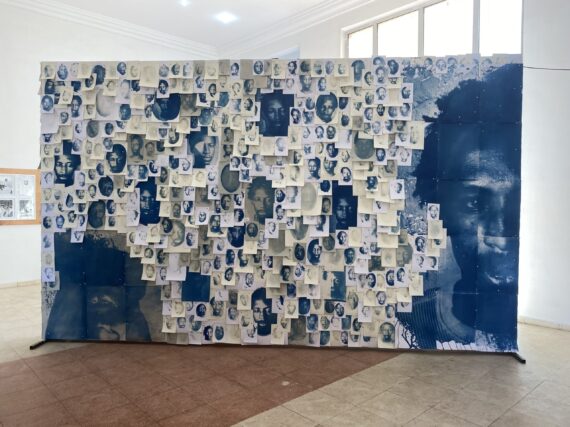
    Set design mirrors dynamism of contemporary African performance

  • April 17, 2026 • 231

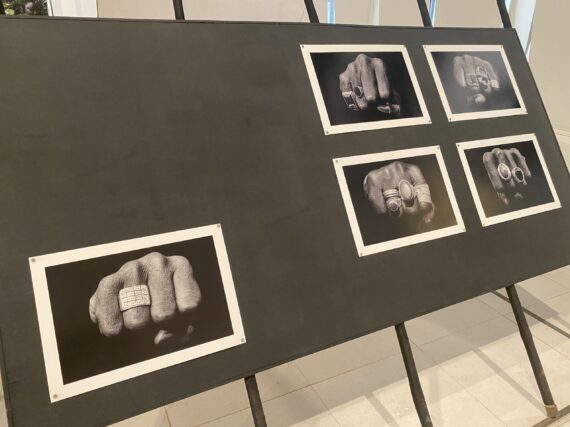
    Shifting portraits of the complexities of male identity

  • April 17, 2026 • 225

    Rhythmic footwork and grounded movements

  • April 16, 2026 • 517

    Raw physicality with spiritual introspection  

  • April 16, 2026 • 264

    Imposition, interruption, and provocation by LED screen

  • April 15, 2026 • 175

    Sonic meditation on tradition and transformation

  • April 15, 2026 • 294

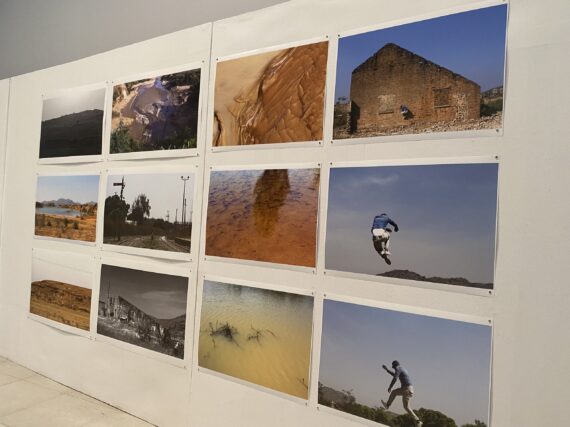
    Subtle exposure of constraints that shape female identity

  • Historic exhibition to open at Dei Centre

    March 31, 2019 • FeaturedArticle, News • 3455

    By John Owoo

    (In Accra – Ghana)

    An exhibition of artworks by Owusu Dartey, Prof. Edmund Tetteh and Albert Osabu Bartimeus – undisputed fathers of Ghanaian modern art – will on Wednesday April 3 open at the Dei Centre for the Study of Contemporary Art in Accra.

    Works by the artists – who are all deceased, explore their ability to describe and convey a sense of beginning, people and places – while highlighting their contribution to the development of Ghanaian contemporary art.

    Whether referencing an identifiable subject matter / content or one that is conceptual / abstract in some sense, each painting encourages the viewer to contemplate and decipher the physical context in which the work was executed.

    The works present a travelogue of locales, festivals, portraits and other thematic compositions. Indeed, they embody networks introduced by a new spirit of contemporaneity, material and political sensitivity while reflecting public engagements.

    Visitors to the Dei Centre, which is located in Tesano (a suburb of Accra), are also expected to witness images that provide oblique references to places thereby facilitating an ability to imagine and reconstruct specific coordinates of the paintings.

    Undeniably, Dartey’s (1927 – 2018) vast expanses of paintings present unobstructed views from seaside life and market scenes embodied by colourful rural life. Furthermore, many of the settings in which the figures are illustrated remain stubbornly elusive and transparent at the same time.

    Subject matter by Bartimeus (1927 – 1988) is somewhat not so different from his contemporary but his technique and mastery over oil paint is enormously contemplative. Some of his subjects recede into the shadows of the enigmatic Ghanaian market life. Indeed, the prominence he gives to his paintings on fish underline the importance of fisher folk to development.

    Master colourist Prof. Tetteh (1924 – 2007) projects the sacredness of Ghanaian portraits. The boldness in rendition of characters and strong brush strokes makes commonplace settings become extraordinary. His choice of colours – which enshrine a hallucinatory and technicolour realm – equally reveal nature’s beautiful embodiments.

    Titled, “Owusu Dartey & His Circle of Friends: Albert O. Bartimeaus, Prof. E.K. Tetteh”, the exhibition equally presents a shared platform not only to celebrate but to also question their roles, how society perceives their contribution and its influences on their professional and personal choices.   

    The exhibition, which is being curated by Leroy Coubagy and Michael Martey, ends on Friday June 28.

    Read More »
  • Koo Nimo stuns audience at Kwan Pa album launch

    March 23, 2019 • FeaturedArticle, News • 2650

    By John Owoo

    (In Accra – Ghana)

    Veteran palm wine music exponent Agya Koo Nimo, recently delighted an enthusiastic audience at the Ghana Academy of Arts and Sciences in Accra with steady rhythms, light percussion and songs that continuously flowed at an upbeat pace.

    Performing at the launch of  “To Wo Ho Fo”, a seven track album by Kwan Pa Band, the 86 year old living legend and his Adadam Agofomma Band charmed the audience with relaxed and calming music that revealed the richness of traditional Ghanaian melodies.

    Full of energy, Koo Nimo was in Accra from his Kumasi base to offer support to Kwan Pa, a group that has taken on the challenge to preserve, develop and promote traditional Ghanaian and African music, which has taken the world music scene by storm in the past several years.

    Employing traditional instruments such as seperewa (harp lute), frikyiwa (castanet), dawuta (twin bell), shekere (rattle), gome (square bass drum), kpanlogo drums and an acoustic guitar, the group entertained the audience with tracks from the album that recall the skills of their elders, who propagated this type of music in the early 20th century.

    Led by Andrew Nkansah Asa, Kwan Pa Band, which shot to fame in December 2018 with a localized version of  “Five Gold Rings” by Murgatroyd/Burrell, descended into their own world and thrilled the crowd with their version of traditional Ghanaian music, which is partially geared in the direction of palm wine highlife. 

    With Frederick Minamor (kpanlogo drums, vocals), Isaac Kojo Baah (Shekere, Dawuta, vocals), Bismark Kwabena Safo (gome, vocals), Andrew Nkansah Asa (guitar, vocals), the album is full of compositions that send us back into the past and forward into the future through an effective use of melodic and rhythmic structures of Akan traditional music.

    Earlier, seperewa virtuoso Osei Korankye together with singer Ewura Ama Agyepong and guitarist Dr. Corlter Harter, a visiting academic from the University of Pittsburg (USA) entertained the crowd with a number of compositions by Korankye, which equally revealed the effectiveness of cross cultural collaboration.   

    Comprising students of the Music Department, University of Ghana, the Legon Palm Wine Band delighted the audience with diverse compositions that spanned several decades while reminding the crowd of the beauty, diversity and power of traditional rhythms.

    “To Wo Ho Fo” was recorded at Sawnd Factory Studios in Accra with Ernest O-Poku and Samuel Nana as engineers.

    Read More »
  • Franco-Togolese band opens Francophonie 2019

    March 20, 2019 • FeaturedArticle, News • 1681

    By John Owoo

    (In Accra – Ghana)

    Vaudou Game, a Franco-Togolese band over the weekend rolled out a refreshing fusion of vodoo and funk rhythms that turned the Alliance Française into a rocking musical experience.

    In a powerful performance that opened the 2019 edition of Francophonie Festival, the group delighted the near capacity crowd with a penetrating show that revealed the beauty and diversity of cross cultural collaboration.

    With three French and three Togolese musicians on stage, the scene was set for a multi cultural experience that embraced sacred songs of voodoo traditions in Benin and Togo as well as indigenous and western rhythms that coolly created a harmonious sound. 

    Led by guitarist / singer Peter Solo, who was clad in multiple layers of beads, western instruments alongside shakers, bells and other traditional percussive instruments combined modernity and tradition, which were jointly and severally upheld on stage.  

    Interspersed with strong rhythmic grooves and bass lines as well as messages on the voodoo faith by Solo, the group blended haunting lines, which are sung in honour of divinities with highly energetic funk ones that drew some members of the audience to the dance floor.

    Undeniably, the group articulated contemporary experiences through an effervescent expropriation of rhythms from traditional African religion while blending it with funk and elements of jazz, soul and blues among others.   

    The term “Francophonie” refers to all the states and governments worldwide who share the French language. The International Organization of La Francophonie, which was created in 1970, represents one of the biggest linguistic zones in the world.

    Education Minister Dr. Matthew Opoku Prempeh and Foreign Affairs and Regional Integration Minister Shirley Ayorkor Botchway alongside Francophonie ambassadors in Ghana were present at the opening ceremony.

    Read More »
  • Captivating poetry rock Goethe-Institut

    March 17, 2019 • FeaturedArticle, News • 1668

    By John Owoo

    (In Accra – Ghana)

    Acclaimed Ghanaian poet / literary coach Nana Asaase virtually stunned a capacity crowd at the Goethe-Institut in Accra with a non-stop performance of several inspirational poems that captures the essentials of life.

    Accompanied by guitarist Hashmullah, Asaase’s prolific voice forcefully transmitted his messages, which ranged from politics, love, hope, divinity, Africa to tradition to an audience that practically expressed their deep interest with rapt attention.

    Clad in a colourful kente cloth wrapped around his body, the poet began with a memorial to the late Emeritus Prof J.H. Kwabena Nketia, who died early in the morning by capturing his contributions to the development of music in Ghana, Africa and the world at large.

    Decked with a traditional sword and a calabash in hand, Asaase gave a compelling rendition of touching, witty and sharp poetry as tranquil guitar riffs helped transform the performance into a dramatic blend of poetry and music. 

    “Asaase is an astute performer – undeniably, he has a very smart way of entertaining his audience while creating a forum for intellectual encounter and contemplation. We need to support and encourage this style of approach to poetry performance”, said Yaw Owusu, a musician in Accra.

    Rendered largely in English and Twi, the audience was treated to thought-provoking by Asaase, whose honesty, humor and story-telling prowess, has won fans across Ghana and parts of Europe. Indeed, his ability to capture the universal truths of a story we all know and love, has endeared him to the hearts of his fans.

    Asaase, who aspires to be one of Africa’s greatest literary evidences of the world, has performed to enthusiastic crowds and held workshops and master classes in various parts of Ghana, the United Kingdom and other parts of Africa.   

    The performance forms part of monthly acoustic sessions dubbed “Goethe Abansoro”, which offers artists and their audiences a cozy atmosphere on a decorated terrace to interact while enjoying music, poetry or both.

    Read More »
  • Dance piece takes on abstract concepts

    March 15, 2019 • FeaturedArticle, News • 1770

    By John Owoo

    (In Accra – Ghana)

    A compelling duet by Israeli dancers Oded Ronen and Ligal Melamed last week turned the ETS Drama Studio at the University of Ghana (Legon) into a dance groove, where agile bodies freely explored abstract issues and concepts.

    Titled “Capsule”, the piece is a philosophical one with the two dancers exhibiting class and craft through restrained and composed movements. Indeed, it encompasses diverse notions including identity, relationships, community and beliefs among others.

    With dozens of card boxes strewn across the stage, Ronen and Melamed employed rather sublime and tender body movements while constructing, assembling, destroying and exploring the mythology of relationships.

    Interspersed with music by Ronen Kozokaro – arms, torsos, heads, hands and other body parts were constantly in motion. Employing classical virtuosity, they effectively combined contemporary sensibilities while unfolding a fascinating experience characterized by majesty and mystery.

    Choreographed by Ronen, “Capsule” is equally about mutual discovery, tenderness and ecstasy that are beautifully articulated through the choreography. Undeniably, a great deal of energy emanated from the stage as the dancers moved with amazing ease from one sequence to the other.

    In some instances they pick up the card boxes so gently it feels as if it embodies their soul – and other cases they just shuffle them around and dump them. In the end, they reassemble them in an upright and delicate manner as their bodies interchanged through expressive movements and gestures.

    Earlier, choreographers / dancers Kofi Anthonio and Sena Atsugah enchanted the audience with a short piece titled “The Match”. With bodies moving in unison alongside subtle curves and tilts, they unveiled a sleek, compelling and moving piece that is equally visually stimulating.

    The pair, who are also academics, vividly showcased the fact that their versatility as performers has grown with smart and unpredictable works in recent times. Indeed, they appeared to be full of freshness, calmness and zeal as they moved from one end of the stage to the other.

    Accompanied by a choir from the Music Department, Anthonio and Atsugah, who are with the Department of Dance Studies, wove together an exhilarating order of movements as they exited the stage with grace and composure.

    Present at the performance, which forms part of activities marking a project dubbed “Dance Bridges” include HE Shani Cooper Zubeida (Israeli Ambassador in Ghana), Prof. Kofi Agyekum (Dean of the School of Performing Arts) and Dr. Sylvanus Kuwor (Head, Department of Dance Studies).

    Israeli Embassy in Accra organized “Dance Bridges”, which also encompassed lectures, workshops, film screenings and master classes in collaboration with the School of Performing Arts, University of Ghana, Legon.

    Read More »
  • Savannah Centre for Contemporary Art to open with exhibition

    March 12, 2019 • FeaturedArticle, News • 2573

    By Dr. Bernard Akoi-Jackson

    (In Tamale – Ghana)

    The Savannah Centre for Contemporary Art (SCCA) in Tamale is honoured to debut its programming with the exhibition: “Galle Winston Kofi Dawson: In Pursuit of something ‘Beautiful’, perhaps…”.

    The exhibition, which opens on Friday March 15, is a retrospective on the work of Ghanaian modernist Kofi Dawson (b. 1940) who coined the term Afro-Journalism to describe his socially committed art practice. “Galle Winston Kofi Dawson: In Pursuit of something ‘Beautiful’, perhaps…” charts the complex trajectory of an artist whose body of works stretches across a multiplicity of forms including serigraphy, etching, wood cut, ink and line drawing, acrylic and oil painting, collage, sculpture and installation.

    A potentially turbulent period spanning more than fifty years of incredible dedication to artistic innovation, experimentation and political resolve is encapsulated in the curatorial selection of objects and texts. Whilst the greater portion of the exhibited works is selected from Dawson’s own holdings, a significant number is loaned or borrowed from a fair sampling of his collector base in Ghana.

    Kofi Dawson’s multifaceted drawings, paintings, prints and objects, as well as his perplexing texts are saturated archives, which are typical examples of his Afro-Journalism. They become likened to crystalline portents that delicately weave vast realms for curious minds to probe.

    In a piece of drawing or painting, we experience a density of hatches, cross-hatches; a skillful configuration of optical space and form. The unsettling straightforwardness of subject matter may sometimes be foiled by witty double takes that offer a visual spectacle as though one is holding up a diamond to the light. The experience is sublime.

    Kofi Dawson’s life and work effectively condense an attitude of tenacity characteristic of a modernist ethos and openness to uncertainty that drives contemporary life. Despite his potentially gigantic stature in the Ghanaian context and the fact that he has participated in a tall list of local and international workshops, seminars, residencies and exhibitions across the West African region and elsewhere, Dawson has remained, to quite a large extent, very independent of the international art world.

    This can be attributed in part, to the dearth of a robust institutional support system for (Contemporary) art in Ghana, and on the other hand, to his enigmatic disposition in relation to the art world. He participates enthusiastically, even to obsessive levels within the Ghanaian Art scene, attending exhibition openings, contributing work to group exhibitions, facilitating or taking part in workshops. At such events, whether it is an art exhibition, talk or seminar, as an ardent participant, Dawson is constantly making copious notes.

    But when it comes to issues of self-promotion or pseudo-artistic posturing, he is extremely distant from the scene. A fair amount of his artistic output has been collected, bought or donated and can be found in a number of notable collections. It is out of this massive legacy that we make humble selections to share with the world.

    The SCCA is an artist run project space, exhibition and research hub, cultural repository and artists’ residency. It is an initiative of world-renowned Ghanaian artist, Ibrahim Mahama, as a contribution towards the development and expansion of the contemporary art scene in Ghana. SCCA-Tamale intends, with its diverse programming and research interests, to spotlight significant moments in Ghanaian and international art in a communal space.

    Affiliated to blaxTARLINES KUMASI, the Centre is operated by committed, dedicated and generous persons who produce critical discourse that will eventually be disseminated through exhibitions, publications and allied activities. SCCA is dedicated to art and cultural practices, which emerged in the 20th Century and inspire generations of artists and thinkers of the 21st Century and beyond.

    Join us on Friday March 15 to celebrate the life and work of Galle Winston Kofi Dawson, a gem of modernist Ghanaian art and probably one of the harbingers of the contemporary ethos.

    Dr. Akoi-Jackson is curating the exhibition.

    Read More »
  • Achromatic gloom eclipse Goethe-Institut

    March 10, 2019 • FeaturedArticle, News • 1894

    By John Owoo

    (In Accra – Ghana)

    The colour black – which is often associated with power, elegance, formality, death, evil, rebellion, aggression and mystery – is at the centre of an ongoing exhibition by Yibor Kojo Yibor at the Goethe-Institut in Accra. 

    Black, which is also associated with the unknown, equally has a negative connotation owing to words and expressions like blackmail, blacklist, black holes, black out and black magic. Nevertheless, it is also required for all colours to have depth and variation of hues.

    Over forty wooden sculptures by Yibor that are in alterable forms, are painted black and stand upright in a circle at the foyer of the Institut. Interspersed with black rectangular metal cases, which also house three sculptures, they indicate various stages of the life of the artist – birth, adolescence and old age.

    Yibor aka Sir Black is obviously infatuated with the colour black – within the circle of sculptures are installations of black personal items spread evenly on black cloth. These include rice, combs, towels, plates, pens, cutlery, brushes, deodorants, and mirrors among others that visually reference his day-to-day life.

    Tucked conspicuously in the courtyard is a gigantic wooden frame also covered with black cloth, which houses a black baby cot and an upright standing black coffin set against a rather dark interior thereby creating an uncanny feeling of “presence / absence”, “physical / spiritual” and  “light / darkness”.

    The exhibition, which largely comprises works in progress – is characterized by micro stories that are laden with installations. Indeed, they are “ambiguous” and “unambiguous” while posing questions relating to objects and subjects in a performance space.

    He hangs a series of mirrors in black wooden frames in varying degrees on walls while glass and metal cases designed like pinhole cameras sit on stools where messages can be read through two little holes or read portions of a book on sale.

    Yibor is an artist working across painting, sculpture, installation and spoken word. Using images, text, sounds, and objects, he is interested in exploring the notion of self-examination within three dimensions – “then”, “now” and “after”.

    Acclaimed Ghanaian sculptor Kofi Setordji opened the exhibition, which is being supported by the Goethe-Institut. Titled “With.Out / With.In”, it ends on Friday March 29, 2019.

    Read More »
  • Ghanaian Film wins FESPACO prize

    March 4, 2019 • FeaturedArticle, News • 2304

    By John Owoo

    (In Ouagadougou – Burkina Faso)

    “Keteke”, a Ghanaian film directed by Peter Sedufia won the 2nd Prize for Best Screenplay during a keenly contested competition at the Pan African Film and Television Festival (FESPACO), which ended last Saturday in Ouagadougou, Burkina Faso.

    The film – which was one of the two productions that opened the festival, featured Adjetey Anang, Lydia Forson, Edwin Acquah and Fred Amugi among others – is an inspiring production that has captured the imagination of viewers through its direction, acting and technical prowess.

    Undeniably “Keteke”, which has been equally nominated for diverse awards during screenings in Nigeria, Egypt, Burundi, Morocco, South Africa, London, America, Australia and Scotland is also funny and bursting with colour, appeal and compassion.

    Produced by Manaa Abdallah, a lecturer at the National Film and Television Institute in Accra, it features a man and his pregnant wife, who wander on train tracks dotted by lush green forests as they frantically search for a train to convey them to an in-law for a memorable delivery.

    They appear to walk “aimlessly” while looking for an elusive train amidst humour, suspense, quarrels, insults, determination, hunger, thirst and practical jokes while vividly expressing fear of the baby arriving before they get to their destination. 

    In the long fiction movie category, the Golden Stallion of Yennenga went to “The Mercy of the Jungle” by Rwandan director Joël Karékezi, Silver Stallion of Yennenga was grabbed by “Karma” by Egyptian director Khaled Youssef while the Bronze Stallion of Yennenga went to “Fatwa” by Tunisian director Mahmoud Ben Mahmoud.

    Regarding long documentary films, Golden Stallion was won by “The Golden Wolf of Balolé” by Burkinabe director Aïcha Boro, Silver Stallion was taken by “In the Time when the Arabs were Dancing” by Moroccan director Jawad Rhalib while the Bronze Stallion went to “Whispering Truth to Power” by the South African director Shameela Sedat.

    Animation films were not left out of the fray – winners include “Briska” by Nadia Rais (Tunisia), “A Kalabanda Eats my Homework” by Raymond Malinga (Uganda) and “Da Tsysy of Tojo” by Niaina Rajaofera (Madagascar). Cameroonian director Jean Pierre Bekolo also won the Sembene Osmane prize from the Ecobank Foundation with his latest film “The Miraculous Weapon”.

    Created in 1969, FESPACO offers African film professionals the chance to establish working relationships, exchange ideas and promote their work. It aims at contributing to the expansion and development of African cinema as a means of expression, education and awareness creation.

    Read More »
  • Bamako Encounters set to open in November 2019

    March 2, 2019 • FeaturedArticle, News • 1943

    By John Owoo

    (In Ouagadougou – Burkina Faso)

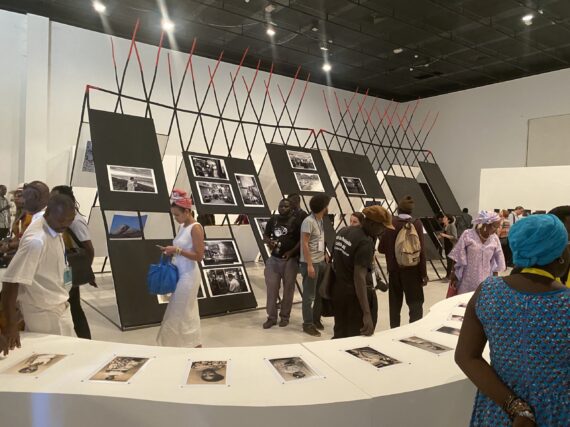
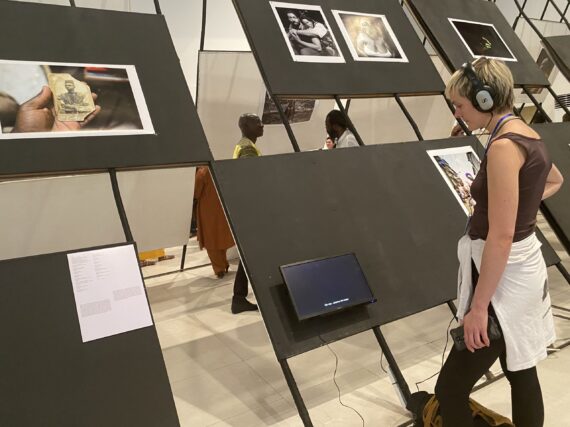
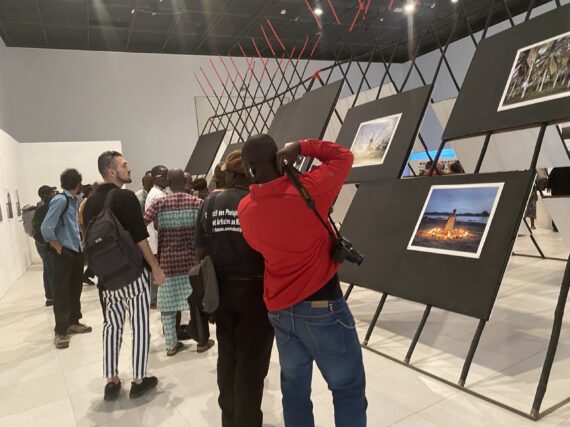
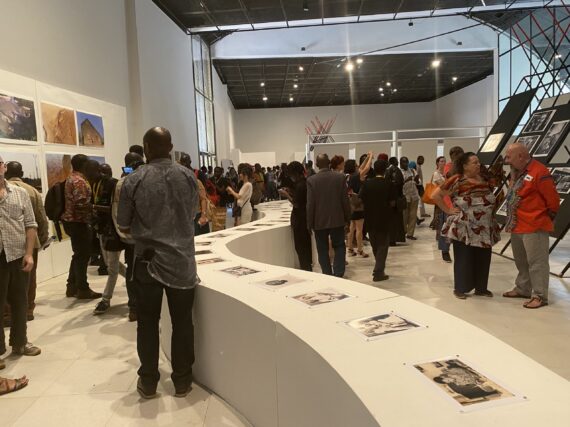
    The 12th edition of Bamako Encounters, an African Photography Biennial is scheduled to take place in the Malian capital Bamako from Saturday November 30, 2019 to Friday January 31, 2020.

    A Malian delegation including it’s new General Delegate Lassana Igo Diarra made this known during a meeting with reporters on the sidelines of the ongoing FESPACO film festival in the Burkinabe capital, Ouagadougou.

    The Biennial, which is celebrating its 25th anniversary, is organized around thematic exhibitions on contemporary photography and is held in various locations in Bamako including the National Museum of Mali, National Library, Modibo Keita Memorial and the District Museum.

    Seminars, workshops, lectures and film screenings equally take place alongside the exhibitions during the biennial, which has served as a catalyst for creativity resulting in many photographers on the continent gaining international acclaim.

    Easily the first event dedicated to African Photography, it has become one of the most followed events on the world cultural stage where talents are tapped and works by great masters are admired, discussed and analyzed.

    A genuine platform for discoveries, exchanges and visibility, Bamako Encounters is an essential venue for the advancement and promotion of African photographers alongside meetings with professionals from various parts of the world.

    Managed by the African House of Photography and co-produced by the Institut Français, Galerie Médina and the Ministry of Culture of Mali, the biennial attracts over 30,000 visitors to exhibitions in Bamako, while 100 to 200 photographers are exhibited and invited to be part of the event during the professional week.

    Diarra is the founder and director of Galerie Médina, a contemporary art space in Bamako. In 2018 he published “In the Heart of Bamako”, a rich and imaginative book on contemporary African creativity. With a number of arts initiatives in Bamako under his sleeve, his curatorial work has been internationally recognized.

    Institut Français, Royal Air Maroc, African House of Photography, Conservatoire Balla Fasake Kouyate, Palais de la Culture Amadou Hampate Ba, CICB, INA, Mémorial Modibo Keïta, CNPM, Reseau Kya Culturel, Photo Art Mali, ASAMSA, European Union, Stichting Doen, Galerie Médina and others will be supporting the biennial.

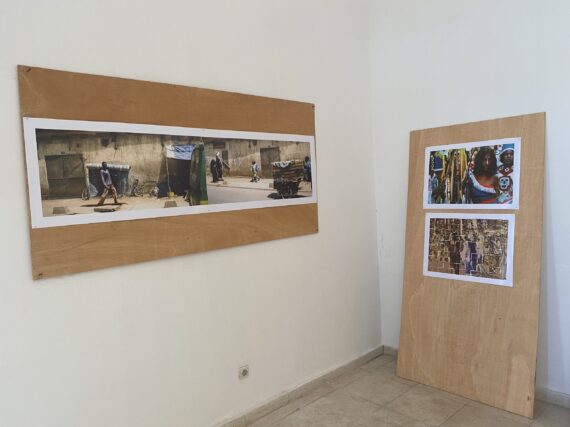
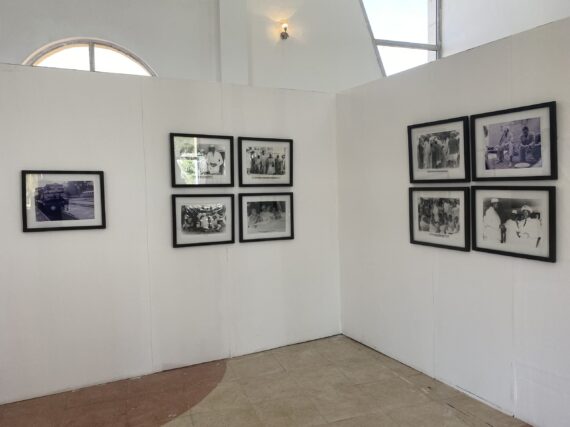
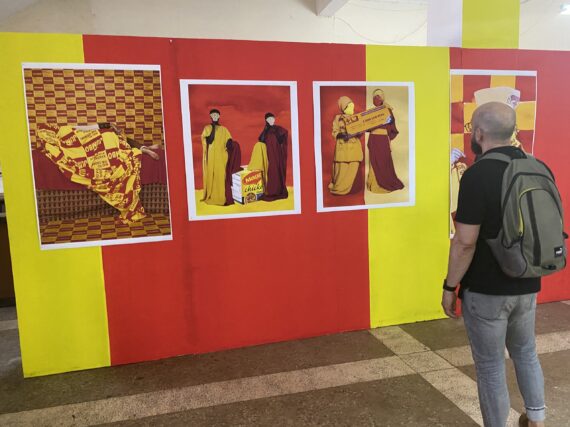
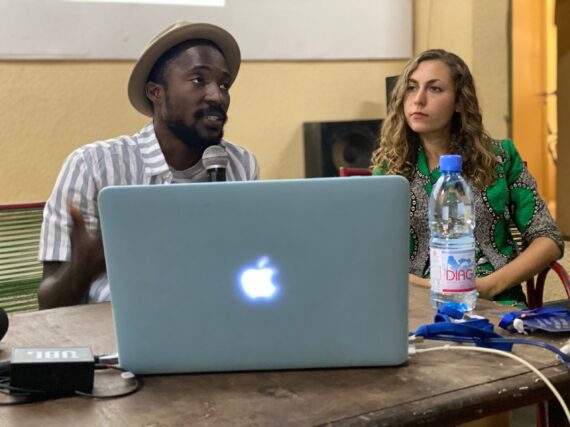
    Photos – Bamako Encounters

    Read More »
  • FESPACO 2019 opens with splendor in Ouagadougou

    February 24, 2019 • FeaturedArticle, News • 1949

    By John Owoo

    (In Ouagadougou – Burkina Faso)

    Music, dance, antics from horsemen and women alongside high security marked the opening of the 2019 edition of the Pan African Film and Television Festival (FESPACO), which took place at the Municipal Stadium in the Burkinabe capital, Ouagadougou.

    Clad in colorful costumes, the groups, which included the National Ballet of Rwanda severally and jointly showcased rich African culture by turning the rectangular shaped stage into a repository of excellence, which will be one of the important words during the one-week festival.

    Over 4,500 members of the film fraternity all over the world as well as one hundred thousand locals will participate in the festival, which has programmed over 450 screenings of African films in Cine Burkina, Cine Neerwaya and other locations throughout the city of Ouagadougou.

    With over 2,000 security personnel deployed in all venues, hotels, restaurants and other buildings to ensure adequate protection of participants, the festival will witness twenty films from sixteen countries competing for the Golden Stallion of Yennenga, which is named after a 12th Century Princess, who founded the Mossi Empire.

    These include “The Mercy of the Jungle” by Rwandan director Joël Karékezi “Keteke” by Ghanaian director Peter Sedufia, “Rafiki” by Kenyan director Wanuri Kahui, “Desrances” by Burkinabe director Apolline Traore and “Miraculous Weapons” by Cameroonian director Jean- Pierre Bekolo. These films, among others are set to be in a stiff competition for the utmost prize of FESPACO.

    Easily the largest film festival in Africa, FESPACO, which is celebrating its 50th anniversary, has contributed in diverse ways to the development of the film industry on the continent while providing a platform for interactions and collaborations among professionals in the sector.

    Present at the opening ceremony include Burkinabe president Roch Marc Christian Kaboré, Minister of Culture Abdoul Karim Sango, President of the African Union Commission Mousaa Fakit Mahamat and President of FESPACO Organizing Committee President Yacouba Traoré among others.

    Pictures:

    MARCO LONGARI / AFP / Getty Images and ISSOUF SANOGO / AFP / Getty Images

    Read More »
« 1 … 24 25 26 27 28 … 44 »

Subscribe to Arts Ghana News

Enter your email address to subscribe. Receive notifications of new posts by email.

RECENT VIDEOS

Simple Slideshow

  • Goethe Institut
  • Alliance Française
  • Arterial Network

© 2026 Arts Ghana™

Website Managed by DelTin Technologies