Latest
  • visit www.artsghana.net for information on the arts
  • visit www.artsghana.net for information on the arts

Arts Ghana

MENU
  • Home
  • About Us
  • Upcoming Events
  • Latest News
  • Artistes Database
  • Archives
  • Links
  • Contact Us
  • Music
  • Dance
  • Theatre
  • Literature
  • Visual Arts
  • Film
  • Fashion
  • You Tube
  • Facebook
  • October 13, 2026 • 241

    Hong Kong Hotel hosts debate on pathways to creativity

  • October 11, 2026 • 269

    Art reopens dialogue with history

  • October 6, 2026 • 325

    Karp Kamina: Where history meets creative imagination

  • October 5, 2026 • 430

    Zogbéadji opens Karp Kamina Residency 2026

  • October 1, 2026 • 399

    Congo: Photographing life beyond war

  • September 30, 2026 • 384

    Persistence and permanence of memory

  • September 24, 2026 • 1375

    Sculpting Power: Ghana’s heads of state in clay

  • September 16, 2026 • 421

    Architecture in the rhythm of everyday life

  • September 15, 2026 • 476

    In Transit: When home becomes a dance journey

  • September 13, 2026 • 608

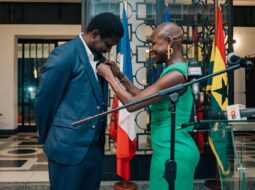
    France honors Ghanaian artist Ibrahim Mahama

  • Reclaiming Waste: Artists reimagine the environment

    June 15, 2025 • FeaturedArticle, News • 2643

    By John Owoo

    Accra – Ghana

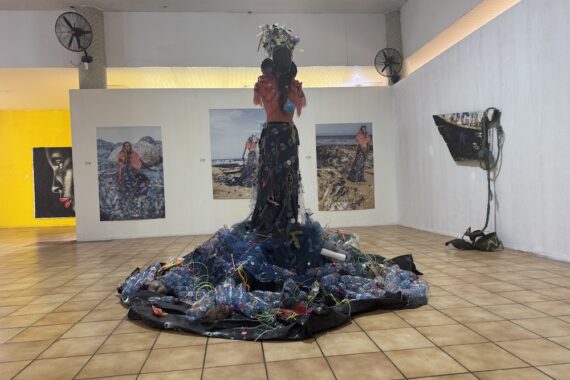
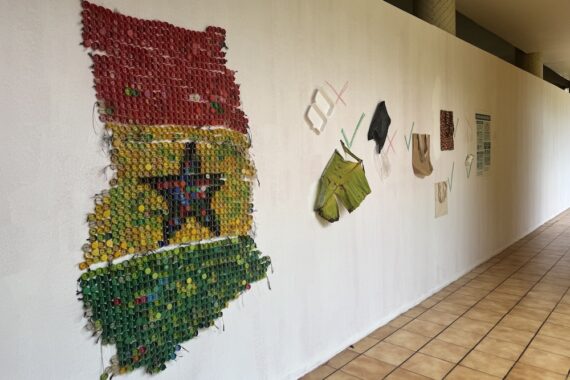
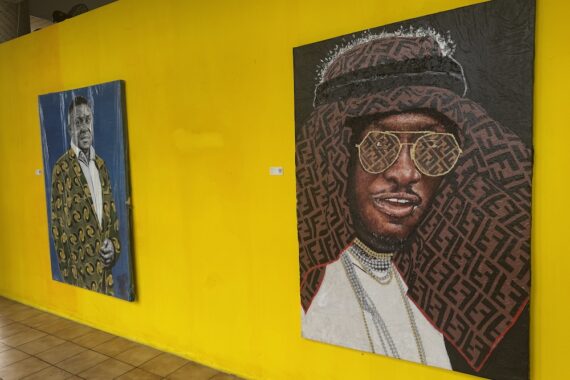
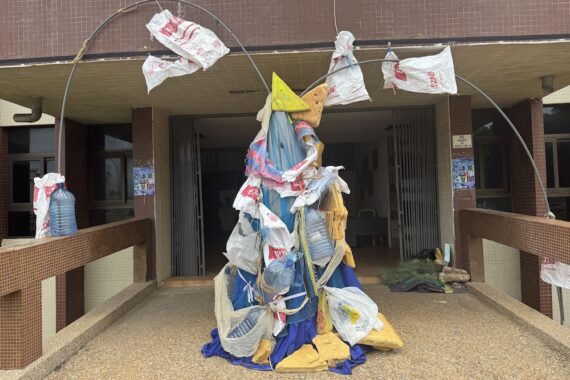
    As part of the activities marking World Environment Day, an evocative exhibition brings together a group of artists who confront the growing crisis of environmental degradation through a bold reimagining of waste.

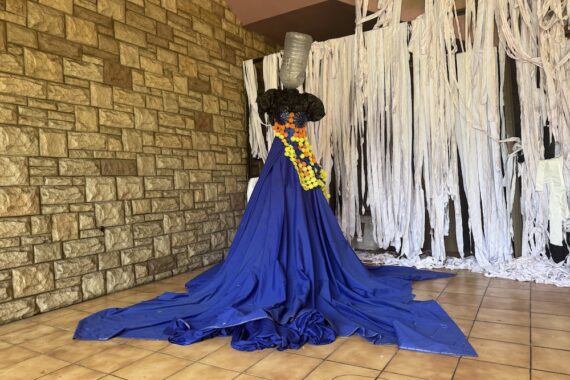
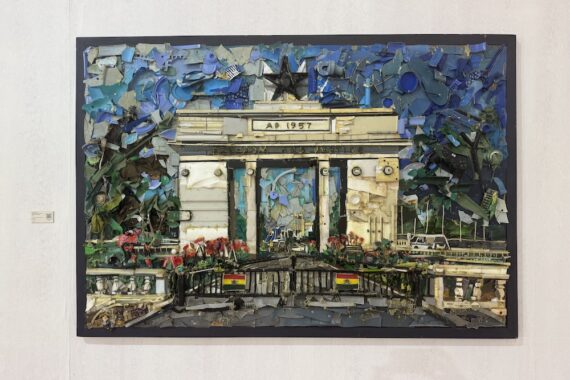
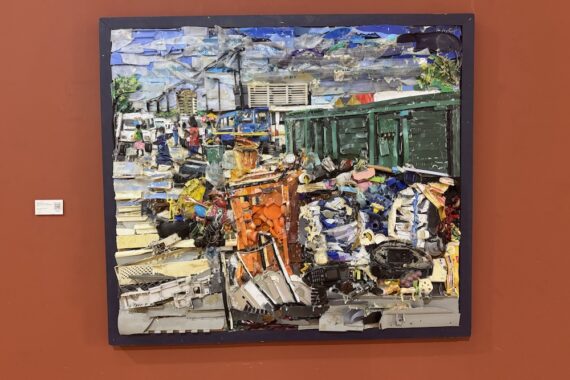
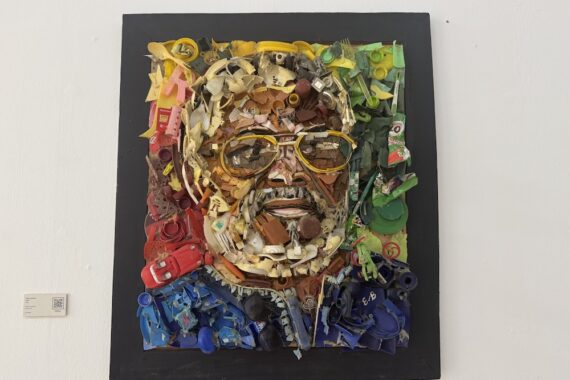
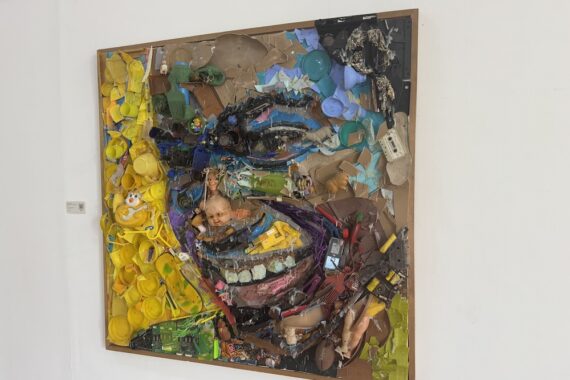
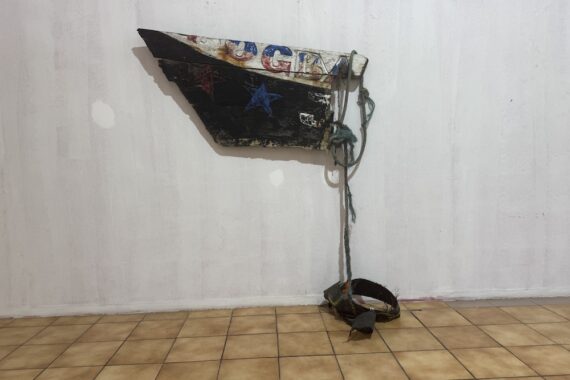
    Using plastic debris, discarded electronic parts, nets, wood, and worn clothes as their medium, the participating artists do not merely recycle materials—they reclaim narratives, awaken conscience, and advocate for urgent ecological justice.

    Currently ongoing at the Museum of Science and Technology in Accra, the exhibition features works by Dela Anya, Ananse Nipadua, Andrea Walter Ghia, and Beatrice Bee Arthur. The exhibition space buzzes with contradiction: beauty crafted from refuse, form emerging from formlessness. 

    Curated by fashion designer and eco-feminist Arthur (who is also participating as an artist), the powerful juxtaposition between the elegance of composition and the often unsightly materials used—candy wrappers, circuit boards, single-use plastics, flipflops, and synthetic textiles—cannot be missed. 

    Titled “Echoes of the Landfill,” these objects, often relegated to gutters, storm drains, landfills, rivers, and oceans, have found new life in sculptural forms, immersive installations, and assemblages that draw attention to humanity’s impact on the planet.

    Some artists view waste as a metaphor. Torn clothing, stitched into patchwork canvases and wrapped around large sculptures, speaks to the frayed fabric of our environment, hinting at how consumption has outpaced care. 

    Others adopt a more literal approach, building towers of e-waste that appear to teeter under the burden of technological excess. These pieces engage the viewer not only visually but also ethically, prompting us to confront what we discard and why.

    The curatorial narrative effectively connects individual artworks to global environmental concerns, including issues such as climate change, pollution, overconsumption, and the fast fashion industry. 

    However, it also highlights these issues, showcasing how communities in the Global South, often the final destination for the world’s waste, are developing innovative artistic strategies to raise awareness, protest exploitation, and propose alternative futures.

    What emerges is not a lecture, but rather a call — urgent yet hopeful. By transforming waste into a statement, the artists refuse to view discarded materials as an end. Instead, they propose a cycle of transformation in which creativity serves as both a means of resistance and a means of restoration.

    This exhibition highlights how art can act as a powerful ally in environmental activism. As we observe World Environment Day, it reminds us that sustainability encompasses not just policy and practice. Still, it’s also a matter of perception, and that viewing waste in a new light may be the first step toward treating our world more wisely.

    The exhibition ends on Saturday, June 5, 2025.

    Read More »
  • Environmental anxieties and familial bonds

    May 23, 2025 • FeaturedArticle, News • 2127

    By John Owoo

    Accra – Ghana

    In her latest exhibition, currently taking place at FCA Cantonments, Dei Centre, and FCA Ghana Studio 1 (all in Accra), Fatric Bewong immerses us in a world where environmental anxieties and familial bonds intersect through material and memory.

    Grounded in transformation, she thoughtfully assembles her works from the overlooked fragments of daily life—fabric scraps, discarded lottery forecast sheets, and a variety of reclaimed materials. These are not just remnants; they serve as repositories of shared histories and forgotten possibilities.

    Through cutting, gluing, suturing, stitching, and weaving, Bewong crafts enchanting spaces and intriguing forms that exist between the familiar and the surreal. Her meticulous process emphasizes both healing and repair, as well as creation, suggesting an ethics of care that extends from the domestic to the ecological.

    The resulting assemblages do not merely rest on surfaces; instead, they invite us inward, drawing the viewer into realms of wonder and reflection. Each piece poses a quiet question, a proposition, urging us to rethink our relationship with waste, memory, and the unseen threads that connect us to the earth.

    All three spaces are vibrant with color as folds of her work inundate the walls, ceilings, windows, and floors. Undeniably, she conjures magical space scapes, mysterious objects, and captivating propositions that spark our imaginations while taking us on a journey of curiosity and intrigue. 

    Curated by Dr. Bernard Akoi-Jackson, Adwoa Amoah, and Ato Annan, she opens portals of curiosity and intrigue with a sensitivity that is both urgent and tender, reminding us that even in detritus, there lies potential for magic, meaning, and radical connection.

    Titled “Revolutions Round about the Sun and Round about the Sons,” her artworks primarily focus on the natural and built environments while exploring themes such as consumerism, discarded waste, loss, death, memory, healing, and cultural narratives. Given her broad scope, she also addresses issues related to economics, gender, and identity. 

    The exhibition marks a pivotal moment in the artist’s career and seeks to extend the reach of her work even further beyond the exhibition itself. A series of accompanying projects and programs will be introduced to provide the artist and her audience with meaningful opportunities for exchange and discursive engagement, ultimately leading to a book project. 

    “Revolutions Round about the Sun and Round about the Sons” concludes on Sunday, June 8, 2025.

    Read More »
  • Anxieties and dissonances of women in focus

    May 19, 2025 • FeaturedArticle, News • 1963

    By John Owoo

    (Accra – Ghana)

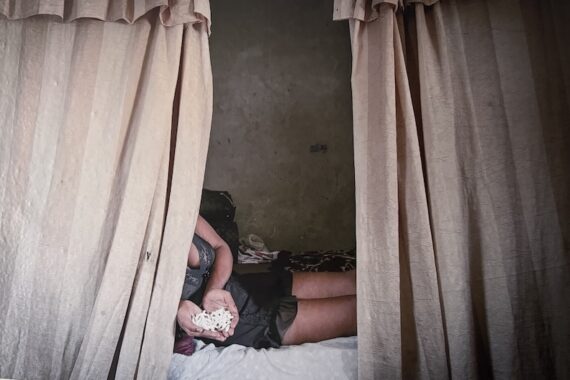
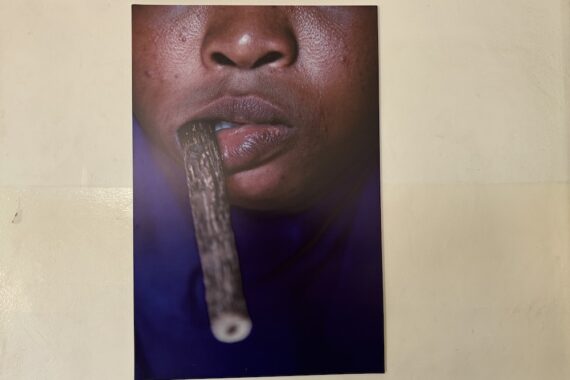
    In dimly lit rooms, behind closed doors, and through whispered traditions passed from mother to daughter, countless women across Sub-Saharan Africa are trained to provide pleasure, not their own, but that of men.

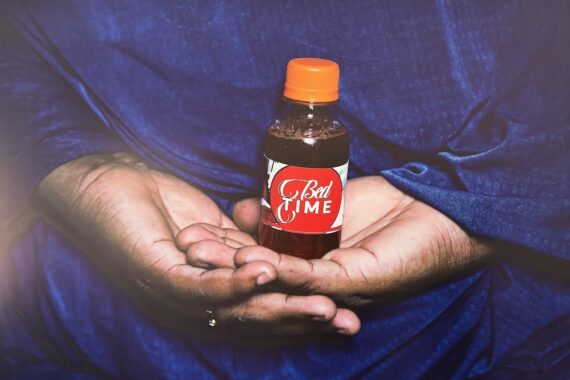
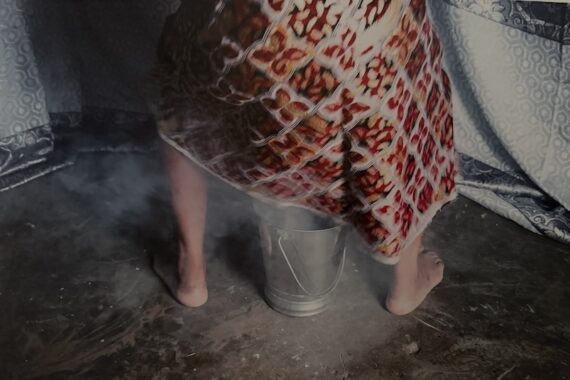
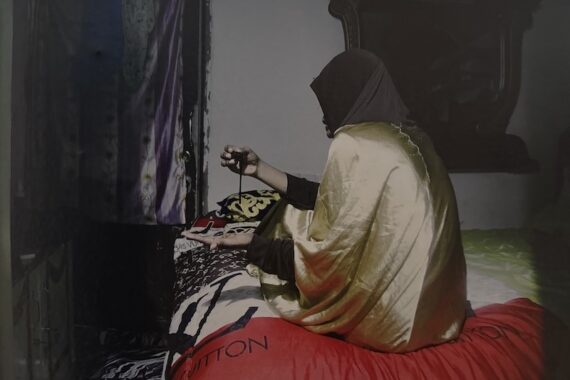
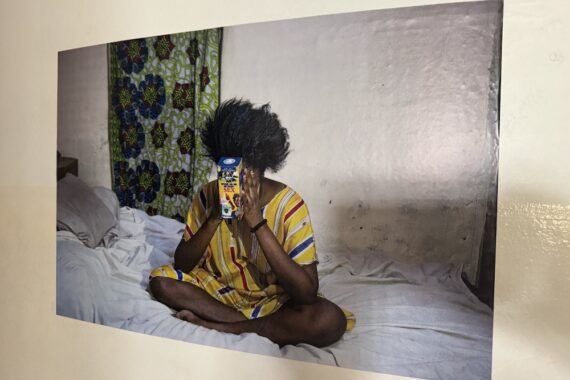
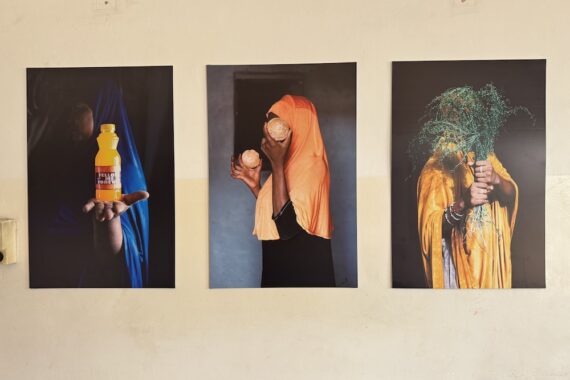
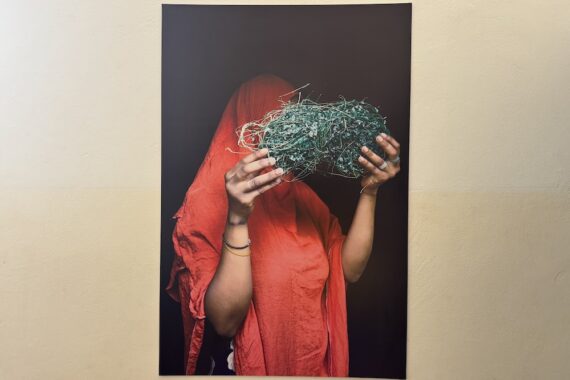
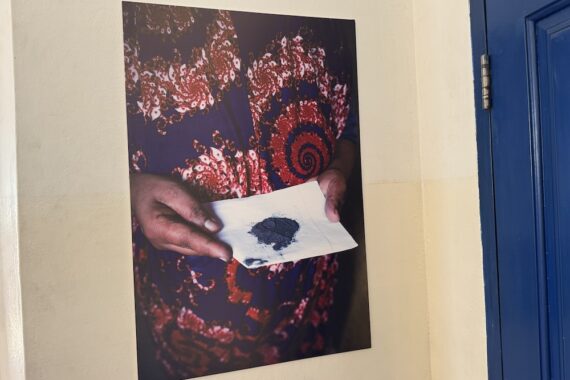
    Indeed, a photo exhibition by Ghanaian photographer Fibi Afloe, in collaboration with Belgian academic Prof. Ann Cassiman, unveils this hidden world and offers a searing, intimate look into the lengths vulnerable women go to satisfy male desire. It is currently ongoing at the Kawukudi Library in Accra.

    From bodily modifications and the use of cold creams, medications, vagina steaming, and secret herbs, to carefully choreographed sexual performances, the exhibition reveals not only physical acts but also the emotional and cultural weight carried by women conditioned to serve, please, and endure.

    Titled “Kayanmata,” the photos by Afloe draw the viewer into a realm where beauty, suffering, and agency collide, encompassing skin lightening and cosmetic procedures to conform to erotic ideals imposed by colonial residue and global media. These are not merely portraits of women, but of systems – patriarchal, economic, and traditional – that shape their sexual identities.

    Through deep conversations with single and married women, Cassiman and Afloe explored the moral anxieties and disagreements surrounding women and their sexuality. It also highlights that the issue relates to women’s expectations, resistance, and desires within marriage, along with their fears of unfaithful men and co-wives joining their households.

    The exhibition equally explores the impact of “Kayanmata” on couples, as most “Kayanmata” products promise to give women control over their sexual partners – a prospect that instills suspicion in men, who also have a fear of being manipulated by women.  

    Largely a documentary photographer based in Nima, Afloe’s work focuses on everyday life, intimate portraiture, and social themes ranging from gender, climate change, and culture. Her practice is shaped by a personal connection and a desire to express the lived experiences of those she photographs, often linking their stories to her own.

    An Associate Professor of Anthropology at the University of Leuven in Belgium, Cassiman focuses on young women in Muslim migrant communities in Accra. She explores themes such as kinship, womanhood, apprenticeship, knowledge, love, and marriage. Her research consistently emphasizes visual storytelling, both in her research methods and in exploring new forms of anthropological knowledge production.

    Produced by Cassiman and Nii Obodai in collaboration with Nuku Studio in Tamale, the exhibition ends on Saturday, May 31, 2025.

    Read More »
  • Yellow gallons draw attention to imperceptible burdens

    April 16, 2025 • FeaturedArticle, News • 2459

    By John Owoo

    (In Accra – Ghana)

    Undeniably, the world is increasingly fractured by inequality and the harsh realities of the socio-economic problems – that engulfed world economies following the fallout of the COVID-19 pandemic – alongside armed conflicts in various parts of the world.

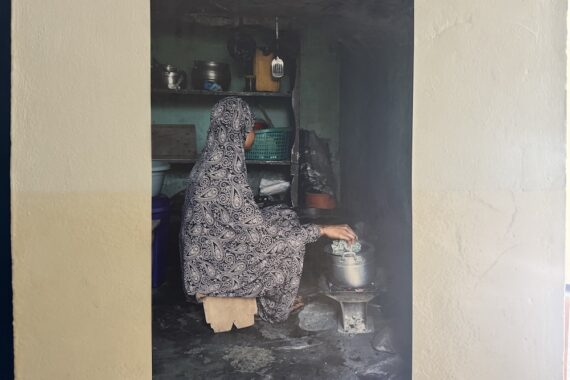
    Indeed, an exhibition of works by Germany-based Ghanaian artist Jeremiah Quarshie, which comprise symbolic yellow plastic containers that tend to confront this canker with unflinching clarity and poignant artistry, is currently underway at Gallery 1957 in Accra.

    Through a diverse array of works, the show navigates the complex terrain of poverty, labor, class and survival, drawing attention to the invisible burdens borne by marginalized communities. Rather than offering easy answers, the exhibition urges viewers to pause, reflect and engage with the systemic forces that shape everyday life – inviting empathy while provoking critical dialogue.

    Curated by Samuel Baah Kortey, Quarshie intertwines themes of unpredictability, memory, and power in a vibrant examination of Accra’s water crisis. The exhibition dilates on the persistent social and economic struggles in Ghana, reimagining them through an emotionally potent collection of works that provide a layered insight into the resilience of everyday Ghanaians.

    With yellow plastic containers and subjects from all walks of life perching on them, his portraits are defined by the intersections of portraiture, studio photography, references to Old Masters’ traditions and a distinctive realism that challenges the very nature of imagery and picture-making.

    In these new works, Quarshie revisits and deepens the themes explored in his 2016 exhibition at the same Gallery. Titled “Yellow is the Colour of Water” and curated by the American art historian Robin Riskin, it marked the debut of the now-iconic yellow gallons as a central motif in his practice.

    Still captivated by their cultural symbolism, significance and the regal figures who once posed among the gallons like monarchs of their own domain, Quarshie’s latest pieces journey back to those formative moments – indeed they open up space for reflection, renewed encounters and deeper engagement.

    He transformed the gallery into an immersive, participatory environment by inviting visitors into this dynamic interplay of game, chance and lived reality. Viewers are no longer mere spectators; they are drawn into a system where decisions must be made and outcomes remain uncertain.

    Titled “Memories of Yellow: A Game of Power & Chance”, the exhibition ends on Saturday April 26, 2025.

    Read More »
  • Exhibition mirrors ancient alchemy practice 

    April 11, 2025 • FeaturedArticle, News • 2201

    By John Owoo

    (In Accra – Ghana)

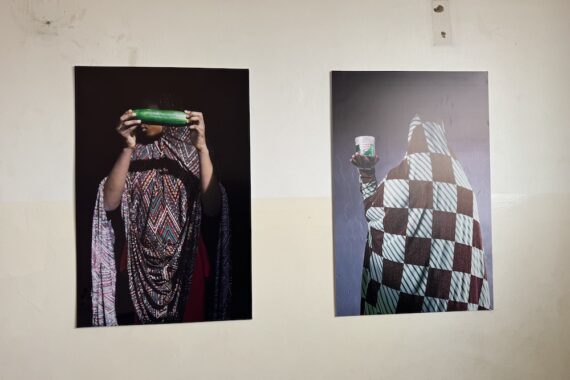
    Currently on view at Ada Gallery, nestled within the plush Villagio Vista apartments in Accra, is an exhibition featuring the works of six artists whose practices explore how tactile and visual elements shape our perceptions of identity, heritage and the creation of personal sanctuaries.

    Bringing together Sika Amakye, Mimi Adu-Serwaah, Araba Opoku, Na Chainkua Reindorf, Roisin Jones and Tizta Berhanu, the show assigns a distinct colour to each artist, while symbolizing the core of their artistic expression. This chromatic pairing underscores the metaphysical resonance of materiality and weaves a mosaic of narratives that traverse the realms of enlightenment, purification and rebirth.

    Curated by Sosa Omorogbe, the artists conjure a luminous metamorphosis, where pigments, textiles, metals, and memory dissolve and reassemble into forms richer than their beginnings. Like alchemists of the invisible, they summon the spirit of transformation, showing that art is not a fixed state, but a ceaseless unfolding – a dance of renewal and endless reinvention.

    Amakye transforms secondhand textiles, intricate beadwork and reclaimed objects into powerful expressions of ancestral history while reimagining their relevance in the contemporary world. Through her art, she creates a dynamic portal that navigates identity, community and the art of intergenerational storytelling, all woven into tactile compositions.

    Adu Serwaah’s use of wire mesh, raffia, stone beads and metallic pigments underscores a continuous process of metamorphosis. In her work, the acts of fragmentation and reconstruction become profound revelations of resilience, mirroring the alchemical transformation journey. The metallic tones, which shift with changes in light, symbolize both movement and renewal, embracing the delicate balance between decay and rejuvenation. 

    Reindorf’s work blends masquerade traditions with contemporary storytelling, reimagining cultural narratives through disguise and transformation. Stitching and fabric are woven throughout her pieces, symbolizing change, while her figures undergo both physical and symbolic evolutions, embodying red’s duality – destruction and creation, sacrifice and empowerment. 

    Opoku delves into the fluidity of cognition, memory, and identity, with her background in psychology deeply influencing her approach. By layering textures, she creates works that reflect the ever-shifting nature of selfhood, forging a connection between the intellectual and the visceral – like an alchemist who refines raw materials into something profound and elevated.

    Reindorf’s art intertwines masquerade traditions with contemporary narratives, reimagining cultural stories through the lens of disguise and transformation. Stitching and fabric run through her compositions, symbolizing change, while her figures undergo both physical and symbolic metamorphoses, embodying the dual nature of red – destruction and creation, sacrifice and empowerment.

    Jones delves into the alchemy of adornment through the color pink, a hue often associated with love, softness and introspection. Drawing inspiration from Morocco, Thailand and Japan, she views embellishment as a sacred practice where the layering of patterns and textures becomes an act of renewal. 

    Berhanu’s paintings, awash with swirling pigments, evoke dreamlike realms where emotions take on a palpable form. In her work, colors serve as both medium and message and her brushstrokes blur the lines between presence and absence, demonstrating how hues shape emotional experience, much like ancient alchemists sought to transmute base materials into gold.

    Titled “The Alchemy of Colour and Matter”, the exhibition ends on Sunday April 27, 2025. 

    Read More »
  • Poignant reflections at Berj Gallery 

    April 9, 2025 • FeaturedArticle, News • 2997

    By John Owoo

    (In Accra – Ghana)

    An exhibition of paintings by Betty Acquah, which are noted for pointillism and vibrancy where colour, texture and emotion intertwine to honour the often-unseen lives of men and women, is closing at the Berj Gallery in Accra. 

    Indeed, her florid canvases brim with stories of trials endured, ambitions nurtured, celebrations shared and successes hard-won. Through her art, Acquah elevates ordinary people into figures of quiet heroism, rendering their daily struggles and victories with compassion and grace.

    Curated by Sally Polley, each painting is a testament to her unwavering commitment to telling women’s stories alongside men with dignity and depth. Her brush is lush, often jubilant and capable of tender restraint while capturing the resilience and vulnerability of her subjects. 

    Whether depicting market women, mothers, porters, musicians, dancers, students, workers or trees, she imbues every figure with presence and pride, positioning them not as background characters in society but as central protagonists.

    Acquah’s artistic style is unmistakable – layered with energetic brushstrokes, rhythmic patterns and a brush oscillating between warmth and intensity. Her compositions are often packed yet carefully balanced, mirroring the complex, multifaceted lives of the subjects she portrays. 

    Titled “It Began With a Doodle; Emotions in Motion”, her works transform movement into colour while depicting raw mobility into a living range of emotion. Indeed, the seamless blends of tints give way to vivacious dots, where motion is no longer implied by volatility but through accuracy. 

    Viewers move from scenes of quiet endurance to vivid moments of celebration, passing through works that capture aspiration, labor, camaraderie and transformation. The artist and curator seem to suggest that these elements – pain, perseverance, joy and achievement – are inseparably intertwined in human lives. 

    What’s particularly moving is Acquah’s focus on “ordinary” people – those whose names may never appear in history books, yet who shape communities, families and futures through their daily acts of strength. This she achieves through pulsating energy to her canvases as if each figure is caught mid-motion, pressing forward with purpose.

    In a cultural context where women’s work – especially informal or domestic labor – often goes undervalued, Acquah’s portraits are radical. They reframe day-to-day activities as extraordinary, urging viewers to recognize and revere the foundational role played by women in society.

    Beyond Ghana, her work resonates on a global scale. Undeniably, the themes she explores – inequality, resilience, solidarity and empowerment – are universally relevant. And yet, her references remain deeply rooted in Ghanaian life: markets, textiles, communal settings and the quiet spirituality that threads through her imagery.

    The exhibition ends on Friday April 11, 2025. 

    Read More »
  • Prostitutes and Kayayei in retrospect 

    April 4, 2025 • FeaturedArticle, News • 1930

    By John Owoo

    (In Accra – Ghana)

    Despite being illegal – prostitution, which is a complex issue driven by factors like poverty, unemployment, lack of employment and access to economic independence – is widespread in the Ghanaian capital. 

    Indeed, an exhibition of paintings by Awanle Hawa Ayiboro Ali – that attempts to reframe the narratives around the sex trade while exposing the contradiction of prostitutes being desired and condemned at the same time – ended last week at Gallery 1957 in Accra. 

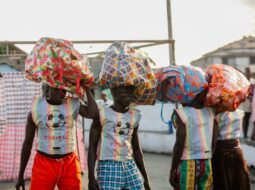
    Titled “Fine Feathers Don’t Make Fine Birds,” Ali explored the lives of two marginalized groups of young women in Accra – “Kayayei” (young female porters from northern Ghana) and equally young girls who are involved in prostitution on the famous Oxford Street, located in the heart of Osu, a suburb of Accra. 

    Curated by Nana Yaa Poku Asare-Boadu – who also took photos, which the artist transferred onto canvasses – the exhibition equally accentuates the connection between photography and painting, which have seen dramatic collaborations in recent years in Ghana and beyond.  

    Ali’s paintings are characterized by women in suits and satin curtains with baggy folds and a luminous shine that arouses profligate richness. Indeed, she interrogates themes of power, gender, survival and agency while employing deconstructed visual elements such as men’s suiting, nudity and flamboyant interpretations of African female sexuality. 

    With curtains representing both physical backdrops of wealth and symbols of inner transformation and resilience, the interplay of light, pose and drapery echoes the traditions of portraiture, where every element contributes to the narrative. Clearly, she emphasizes the power of collective female storytelling – the photographer, painters and subjects are all female. 

    With her figures parading blue-toned skins rendered through softly whisked layers of brushstrokes, she comments on the violence, discrimination and legal struggles of both groups. In the process, questions arise on whether art can reframe narratives around sex work and alternative economic and social structures that could allow for empowerment rather than marginalization.  

    One cannot deny the fact that both prostitutes and porters exist at the crossroads of societal exploitation and economic contribution. Despite enduring systemic biases, stigmatization and limited opportunities, both groups play an essential yet overlooked role in the nation’s financial and economic landscape. 

    Her art challenges conventions perpetuating gender disparities while offering critical perspectives on the portrayal of women in conventional societies. Through her work, she dismantles stereotypes and carves a path toward unapologetic self-expression, inviting viewers to reflect on the diverse facets of women’s identities.

    Read More »
  • Heterotopias and its correlations in focus 

    January 29, 2025 • FeaturedArticle, News • 2032

    By John Owoo

    (In Accra – Ghana)

    An exhibition of works by Rejoice Makafui Tsotorvor that explored the connections of power, agency and resistance by challenging dominant narratives and amplifying marginalised voices, ended last week at the Museum of Archaeology, University of Ghana (Legon). 

    Titled “What If – Heterotopian Speculations”, it equally investigated the intricate layers of colonialism, exploitation and resistance through a speculative and thought-provoking lens, centering on the metaphorical significance of mistletoe galls. 

    Undeniably, these unassuming growths – products of a symbiotic yet parasitic interaction between the mistletoe and its host tree – become a powerful symbol for examining histories often relegated to the shadows.

    Inspired by heterotopias, the exhibition presented a visual tapestry of drawings, animations and interactive installations that tend to encourage engagement with the ambiguities and complexities of social justice while challenging the traditional notions of time, space and social order. 

    Curated by Michael Babanao – the effronteries – with their hidden origins and complex relationships to their environment, mirror the dynamics of colonialism as they take on an invasive force altering its host in ways both visible and concealed.

    It evoked questions about agency, power and survival, asking viewers to reflect on the costs of exploitation and the enduring marks left on bodies, landscapes and cultural identities. Through this analogy, the exhibition unearths the unseen, illuminating silenced voices and untold narratives that have shaped the world as we know it.

    Through a vivid artistic intervention, the exhibition created a space for reimagining resistance and reclaiming histories long overshadowed by oppression. It encouraged viewers to envision alternative futures – ones where survival is not predicated on domination but on the recognition of interdependence, complexity and justice.

    Equally stimulated by German artist Käthe Kollwitz’s powerful expressions of social justice, Tsotorvor is a Ghanaian visual artist and educator whose practice explores the transformative potential of heterotopian spaces. 

    Her work is informed by Social Realism, New Materialism, Postcolonial Theory and Actor-Network Theory, reflecting her deep engagement with social justice, identity and the power of marginalised communities.

    Currently a tutor at Akatsi College of Education, she holds a BFA in Sculpture, an MPhil in Art Education and is currently pursuing her PhD in Sculpture. Her artistic explorations delve into the microscopic universes of mistletoe galls, transforming these miniature ecosystems into heterotopian canvases. 

    Read More »
  • Motherhood and its multifaceted experiences 

    January 24, 2025 • FeaturedArticle, News • 1846

    By John Owoo

    (In Accra – Ghana)

    An exhibition of large-scale portrait paintings by German artist Rebekka Macht that refelect a personal exploration of motherhood – a well-regarded tradition that is equally beset with intricacies and monumental challenges – are currently on show at Gallery 1957 in Accra. 

    Titled “Fragile Wings of Motherhood”, the artist captures the multi-dimensional principle of maternal existence while interlacing together themes of protection, vulnerability and societal entanglement. Her messages are effectively transmitted through human fugures in earth colours with blue and white backgrounds. 

    Undeniably, motherhood is a multifaceted experience that encompasses biological, psychological, social and cultural dimensions. Its complexities arise from a variety of factors, including the responsibilities of child-rearing, societal expectations, personal identity and the emotional intensity of the mother-child bond. 

    Curated by Azu Nwagbogu, her works are acts of distress, explosion and fragmentation, where human bodies (especially her children) are meticulously positioned to articulate the fragility and resilience of familial bonds alongside an arch-like protective dome over the shattered figures. 

    Fueled by her background in art and mathematics, her practice is a dialogue between memory and innovation. Indeed, the near ritualistic setups of her compositions reflect a perceptive consideration of form and function, which result in paintings that are permeated with a sense of contemporary endurance.

    As a christian by faith, Macht tends to recall formative experiences of choir practices and church plays alongside flashes that impart spiritual illumination while ensuring that creative outlets are mixed with an enduring sense of guilt.

    Macht, who completed her state examination in portrait painting under Prof. Jörg Eberhard in 2014, invites viewers into ambiguous spaces such as suffering and growth, pain and pleasure, strength and vulnerability, secular and etheric, societal constructs and breaking free. 

    Her work consists of large-scale portrait paintings through which she questions gender norms and conjures multilayered in-between spaces of ambiguity and circularity as well as a keen interested in the process of cyclical development in life.

    The exhibition ends on Saturday March 1, 2025.

    Read More »
  • Darkness in retrospect

    December 31, 2024 • FeaturedArticle, News • 1777

    By John Owoo

    (In Accra – Ghana)

    An exhibition of artworks by Dr. Sela Adjei that tend to convey mystery, danger, introspection, despair, grief and hope through darkness are currently on show at the Nubuke Foundation in Accra.

    Indeed, the gallery is inundated by imagery shaped from sculptural figurines ranging from “Baule” (La Côte d’Ivoire), “Senufo” (La Côte d’Ivoire, Mali and Burkina Faso), adinkra symbols (Ghana), linguist staffs, forms of ancient obelisks and “Yeve” religious symbols from Ewe speaking parts of West Africa.

    Darkness has often been used to convey enigma, risk or introspection in artworks ranging from Gothic novels to Film Noir, which was in vogue in the 1940s. Undeniably, many cultures associate darkness with the underworld or the abode of spirits, such as Hades in Greek mythology or the Egyptian Duat while others link it with creatures of the night including vampires, witches and ghosts.

    Titled “Children of the Universe”, the artist appears to be immersed in a long eclipse of total darkness – to him, it is no longer a fleeting period in his life but rather a time during which he confronts the bigger cosmos while commenting on cultures that associate darkness with death, doom and negativity.

    Fueled by the aesthetics of West African sculpture, Adjei delved into the pressing issues of power, extra-activism and ecological degradation while crafting works that call for deep reflection on the interdependence of humanity and nature.

    With backgrounds in either black or white, Adjei employs the use of thick and thin textured lines that flow in diverse shapes as extremely exaggerated figures evoke empathy, pragmatism and a shared sense of responsibility.

    He tackles tensions, social unrest, existential threats to our water bodies, soil poisoning and degradation as well as birth deformities from a place of darkness, whilst looking out to the calm that beckons and to the embryonic forms waiting to birth new life and hope. 

    Currently a lecturer at the University of Media, Arts and Communication (Institute of Film and Television) in Accra, Adjei is a multidisciplinary artist, researcher and curator with degrees in Communication Design and African Art / Culture from the Kwame Nkrumah University of Science and Technology (Kumasi) alongside a PhD in African Studies from the University of Ghana (Legon).

    The exhibition ends on Saturday March 29, 2025.

    Read More »
« 1 … 8 9 10 11 12 … 47 »

Subscribe to Arts Ghana News

Enter your email address to subscribe. Receive notifications of new posts by email.

RECENT VIDEOS

© 2026 Arts Ghana™

Website Managed by DelTin Technologies

imunify-bot-check