

By John Owoo
(Accra – Ghana)
Ghana’s political trajectory has encountered many instabilities, leading to different leadership ideologies and unstable governance, until the Fourth Republic, when it experienced smooth democratic transitions. Beyond archives, records, photographic documentation, and monuments that sustain its history, a sculptor chose to pay tribute to the country’s leaders using the relief clay modeling technique.
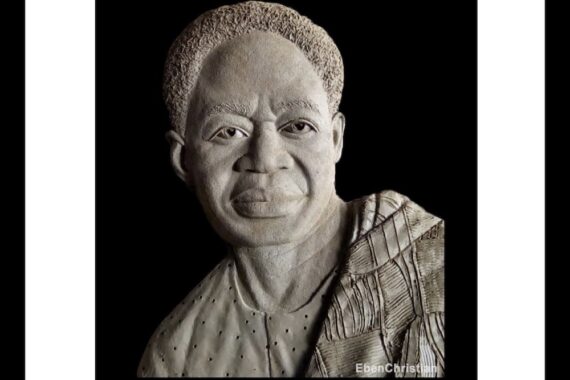
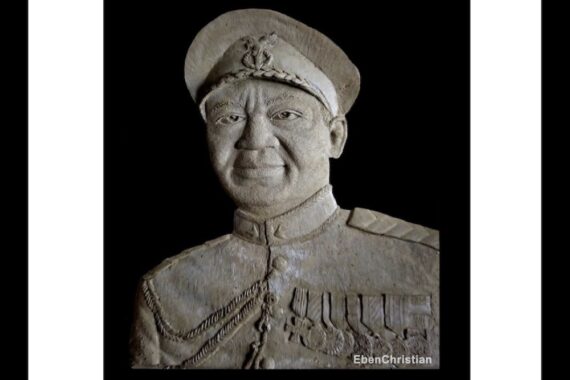
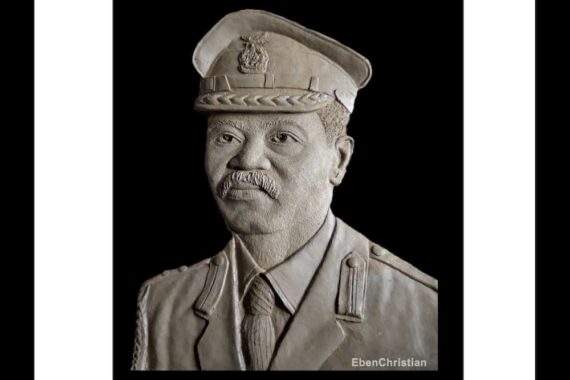
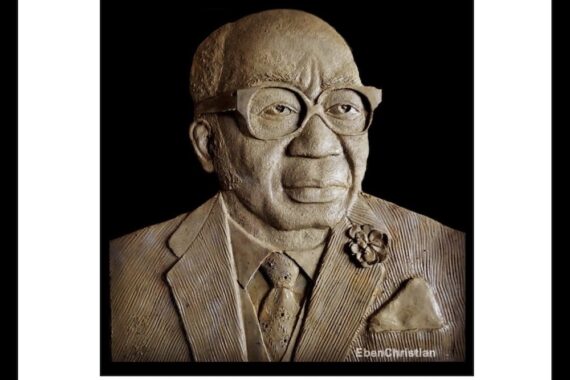
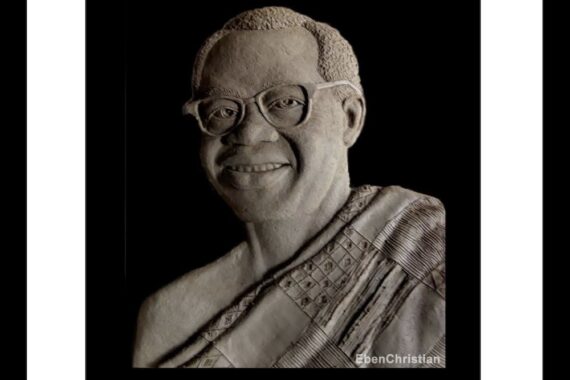
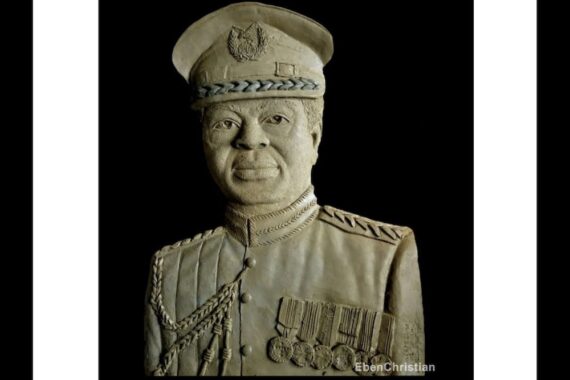
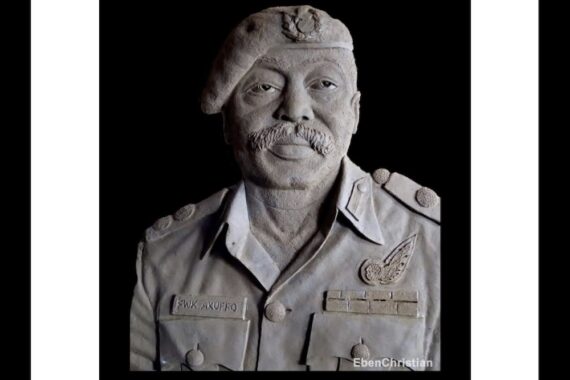
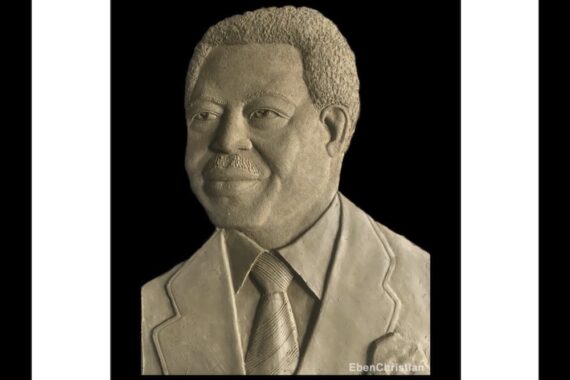
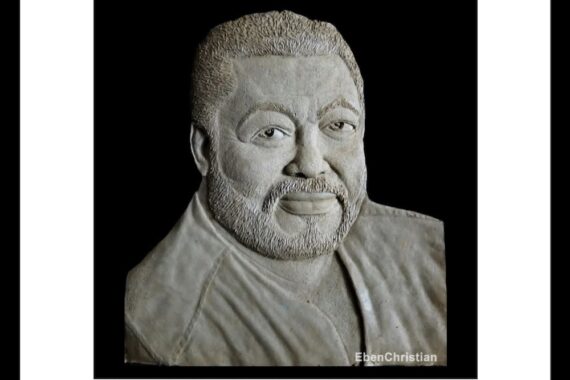
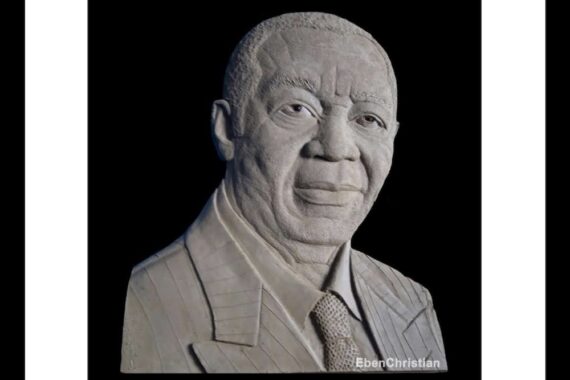
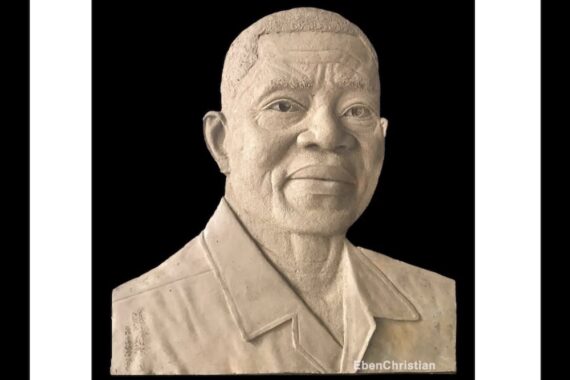
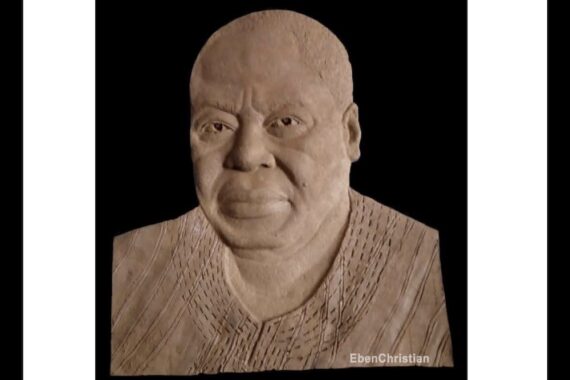
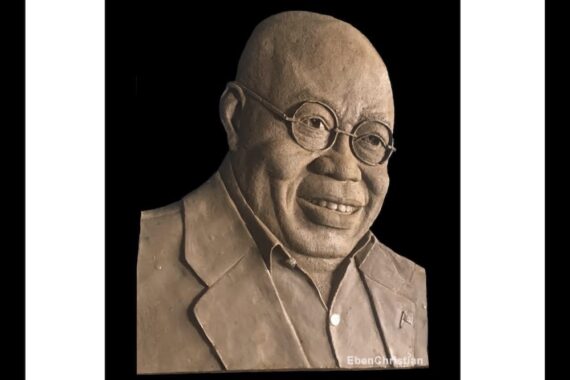
The Tribute Series: Flagstaff Edition is a 13-piece series of clay relief portraits inspired by Ghana’s political transition since independence on 6th March 1957. Ebenezer Christian conceived it as an artistic tribute to the country’s heads of state and presidents. The series becomes the faces of leaders whose political fortunes, legacies, and social status vary widely in the national memory.
Led by Osagyefo Dr Kwame Nkrumah, the series features Joseph Arthur Ankrah, Akwasi Amankwaa Afrifa, Edward Akufo-Addo, Kofi Abrefa Busia, Ignatius Kutu Acheampong, Jerry John Rawlings, Hilla Limann, John Agyekum Kufuor, John Evans Atta Mills, John Dramani Mahama, and Nana Addo Dankwa Akufo-Addo.
Christian modeled the relief portraits over 13 months, averaging a month of dedication to each piece. Using the clay relief modeling technique, which was inspired by the low relief technique in medallions and coinage, and the sculptor’s personal interest in relief sculpture.
The pieces measure about 12x15x2 inches; the portraits create an intriguing link between portraiture, sculpture, and historical documentation. Unlike the conventional in-the-round bust, which can be viewed from multiple angles, this technique projects the faces from a flat two-dimensional surface, creating an almost archival quality. In this view, the leaders appear not as distant sculptures but as projections embedded in history’s material.
At the heart of this relief clay modeling series is the concept of equality. Christian consciously shuns assigning sculptural prominence to any leader, instead placing all 13 leaders on a level artistic rendition. This is especially significant in a nation where citizens’ memories of political leaders are widely uneven. Some leaders remain firmly embedded in memory, while others have faded from popular memory.
The relief series poses the rhetorical question: How should a country honor its leaders? Frankly, political leadership inevitably invites different assessments, and public notions of each leader vary widely. However, the Tribute Series does not attempt to resolve these political and historical theses. Instead, it juxtaposes the leaders, allowing the portraits to serve as a visual transition through the republic’s leadership.
In this series, clay goes beyond just a modeling material to be a vessel for sustaining memory. In this Flagstaff Edition, Christian reminds viewers that history is not only archived in books and monuments; it can also be sustained in the sculptors’ hands, revealing contours of a face, the imprint of a relief portrait, and the enduring materiality of clay.


Nuce write up and pieces of art
Woow I love this concept so much inspired by the artist Christian, highlighting on the country’s history and tributes to political leaders crafted in relief sculpture, impressive about the resemblance too. Well done Christian
Every piece tells a story.
You can also check out my research publication on “The Concept of Chiaroscuro in Relief Clay Modelling”