

By John Owoo
(Rabat – Morocco)
The ongoing Visa for Music Festival 2026 in Rabat, Morocco, has offered audiences a rich encounter with diverse musical traditions, contemporary sounds and cross-cultural influences, as artists from different backgrounds brought their distinctive interpretations to the stage.
Women took center stage on the second day of the festival; indeed, from Senegalese roots music to Moroccan Arab-Andalusian influences, French-language contemporary sounds and Spanish indie-pop, the concerts demonstrated the festival’s commitment to musical diversity and international artistic exchange.
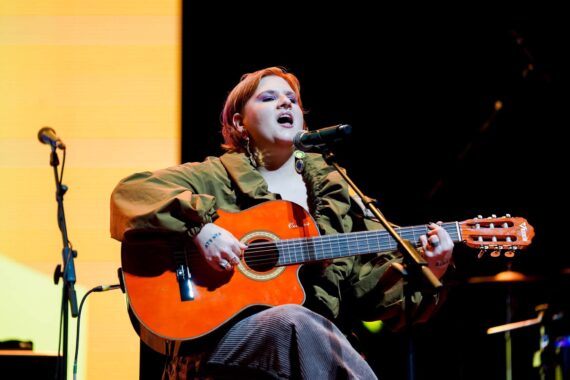
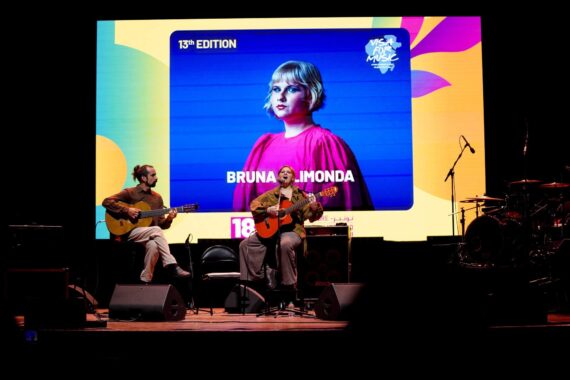
Brazilian singer-songwriter Bruna Alimonda brought a distinctive musical sensibility to the Mohammed V Theatre, drawing audiences into a soundscape shaped by contemporary Música Popular Brasileira (MPB), romantic brega traditions from Recife, pop, and broader Latin American influences.
Her performance reflected an artistic identity rooted in Brazil’s rich musical heritage while embracing contemporary expressions. Moving between melodic warmth and rhythmic vibrancy, Alimonda demonstrated an ability to weave different musical traditions into a cohesive sound, giving her music both a distinctive character and broad appeal.
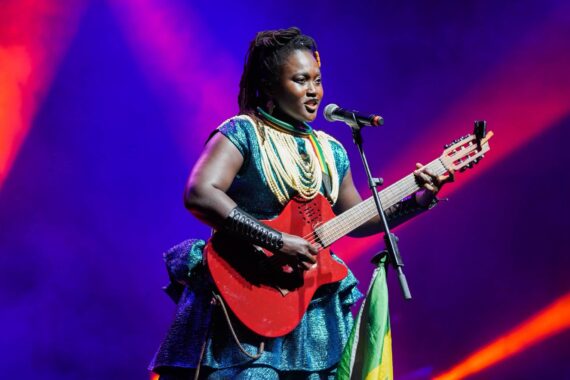
At the Bahnini Theatre, Senegalese singer-songwriter Mariaa Siga set the tone for the evening with an engaging performance that showcased her distinctive vocal character and eclectic musical sensibilities.
With a guitar in hand, she explored a soundscape that blended acoustic and electric textures, anchored by her deep, evocative voice. Singing in Diola, Wolof and French, Siga moved comfortably between world music, blues, folk-jazz and roots-reggae influences. Her performance reflected a musical identity deeply connected to her cultural origins while remaining receptive to contemporary global sounds.
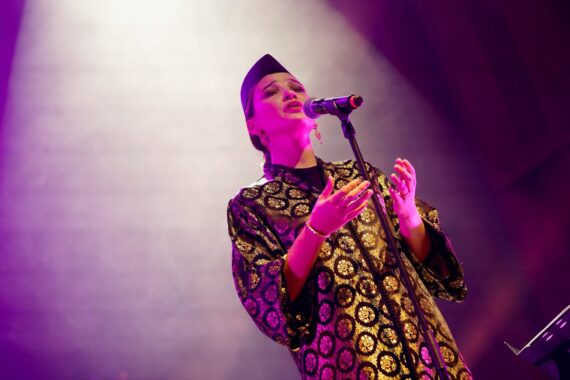
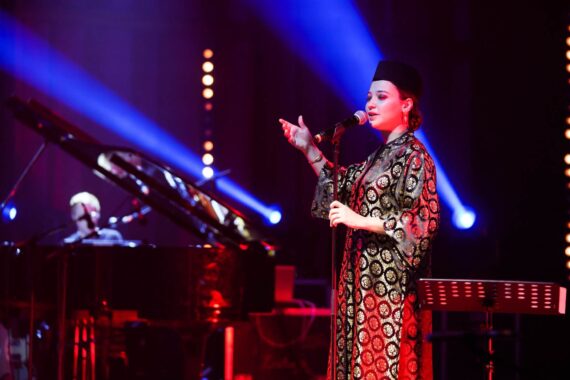
At the INSMAC Theatre, Moroccan singer-songwriter Meryem Aboulouafa presented a contrasting yet equally compelling musical experience. Her performance spanned pop, folk, and electronic music, with a particular focus on Arabic, especially Arab-Andalusian traditions.
Moving between delicate vocal expressions and soaring, expansive passages, Aboulouafa demonstrated an impressive ability to balance emotional sensitivity with musical intensity. Her approach brought traditional influences into dialogue with contemporary arrangements, creating a sound that felt both intimate and expansive.
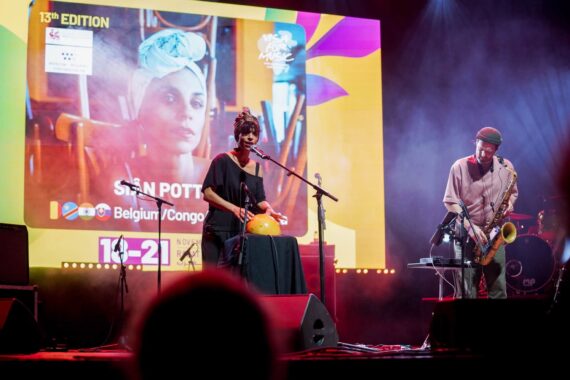
Also performing at the Mohammed V Theatre, Siân Pottok offered a musical journey shaped by a blend of cultural influences. Her compositions draw on African musical traditions and engage with jazz, folk, soul, alternative pop, and Brazilian rhythms.
Emerging as a distinctive voice in the French-language music scene, Pottok blends introspection and emotional depth with an infectious sense of rhythm and celebration. Her music demonstrates how diverse influences can coexist within a cohesive contemporary musical identity.
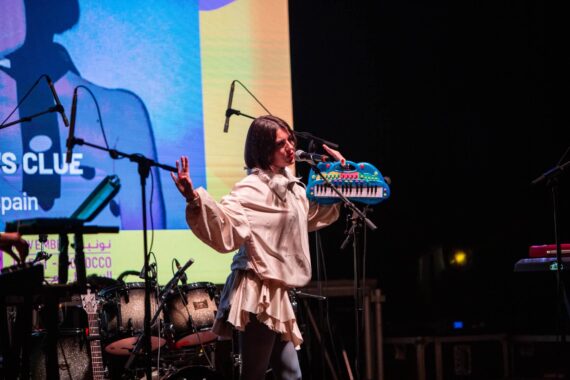
Meanwhile, at the Bahnini Theatre, Spanish singer-songwriter Raquel Adalid, performing under the project name Chlöe’s Clue, introduced audiences to a delicate blend of indie-pop and neo-folk.
Characterized by playful arrangements, bossa nova rhythms, and sensitive pop sensibilities, her music offered a refreshing alternative to more conventional concert sounds. Its understated charm and rhythmic fluidity created an inviting atmosphere, reflecting the project’s ability to combine subtle musical sophistication with accessible melodies.
Together, the four performances illustrated the breadth of musical expression Visa for Music celebrates. Beyond entertainment, the concerts highlighted music’s capacity to transcend linguistic and geographical boundaries, bringing different cultural experiences into a shared artistic space.
Pix – Courtesy of Visa for Music


