

By John Owoo
(Abidjan – Côte d’Ivoire)
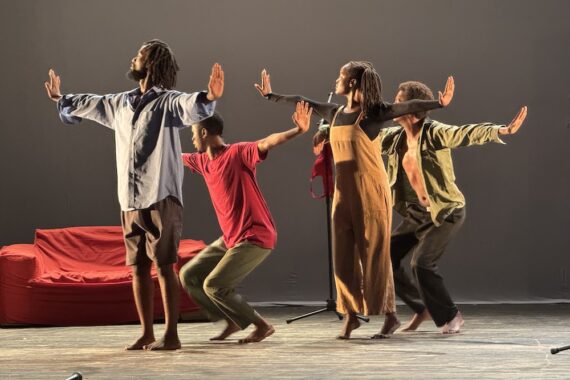
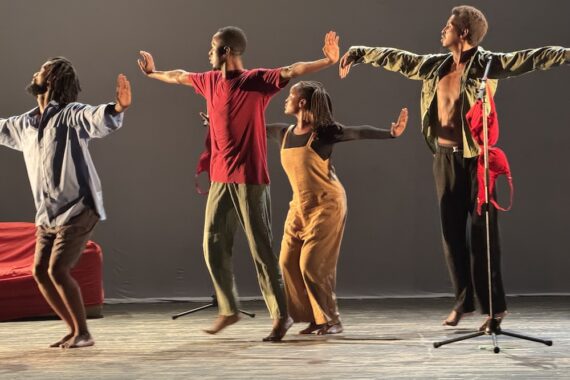
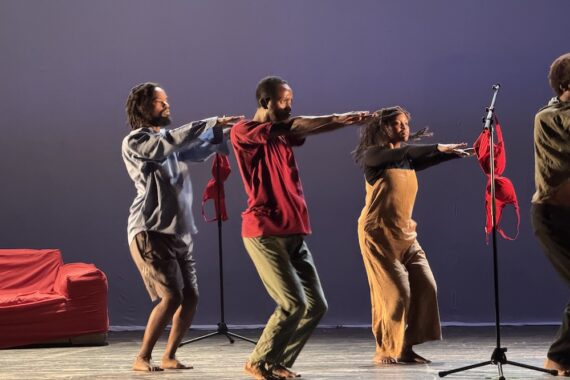
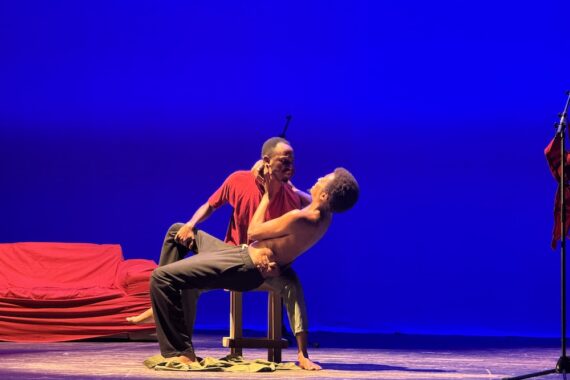
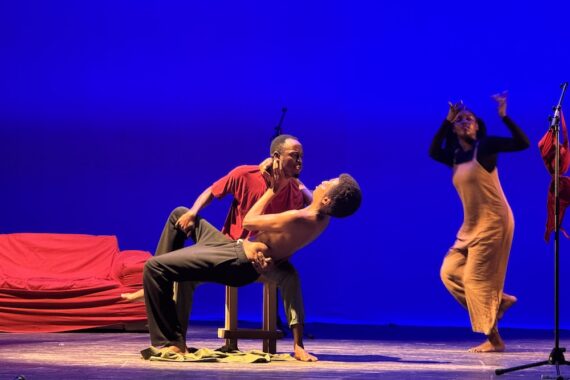
Burundian choreographer Josué Mugisha delivers a strikingly urgent performance that transforms the stage into a site of memory, resistance, and collective reckoning in a piece titled La Première Danse Politique.
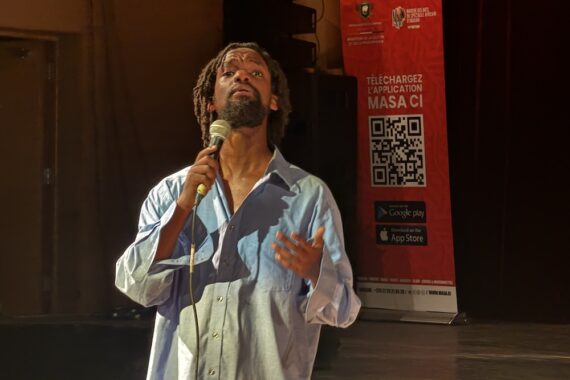
Rooted in the political crises that have shaped Burundi’s recent history, this dance drama, which was performed at the 2026 edition of the Market for Performing Arts Festival, does not merely recount events—it embodies them, turning movement into a potent language of protest and healing.
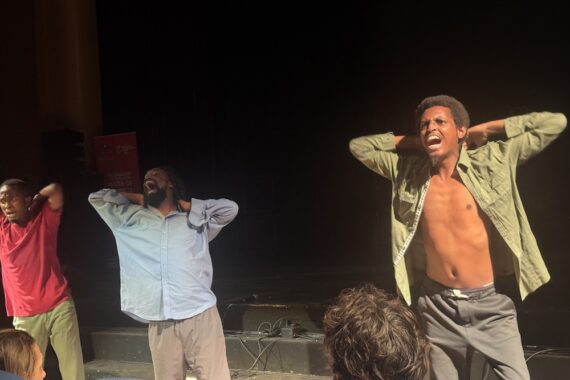
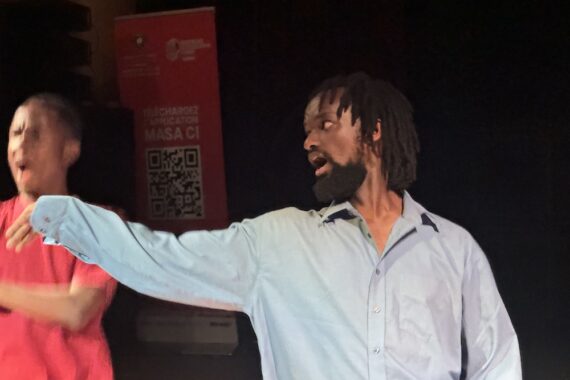
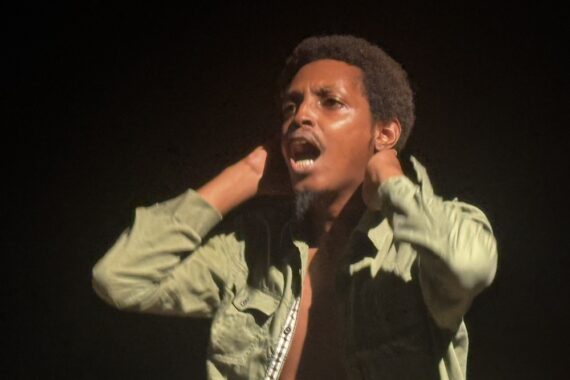
From the outset, the choreography establishes a tense atmosphere in which silence feels as heavy as the histories it seeks to uncover. Mugisha’s work draws deeply from postcolonial memory, confronting the long-standing culture of repression and unspoken trauma. The dancers move with a deliberate intensity, their gestures oscillating between fragility and force, as though negotiating the weight of inherited pain and the urgency of release.
What distinguishes this performance is its seamless merging of the political and the spiritual. The invocation of the sacred—referred to as ibanga—is not symbolic alone; it becomes an active force within the choreography. Ritualistic sequences unfold with hypnotic precision, suggesting that healing is not only necessary but communal. The performers’ bodies become vessels through which stories of suffering, resilience, and hope are transmitted.
Mugisha resists linear storytelling, opting instead for a fragmented structure that mirrors the gaps and silences in Burundi’s historical narrative. This choice proves effective, as it invites the audience to engage critically, piecing together meaning from movement rather than relying on explicit exposition. The stage becomes an archive of the unsaid, where absence speaks as loudly as presence.
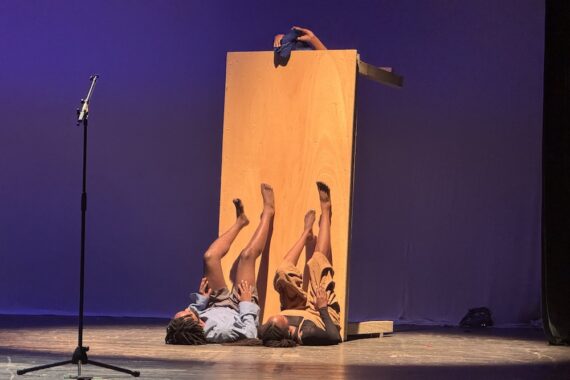
Visually, the piece is restrained yet evocative. Minimalist staging allows the choreography to take precedence, while subtle shifts in rhythm and spatial dynamics maintain a compelling tension throughout. The dancers’ physical commitment is notable; the performance is raw and unflinching, carrying an emotional charge that resonates beyond the confines of the theatre.
At its core, La Première Danse Politique functions as both an artistic manifesto and a call to action. It challenges the audience to confront uncomfortable truths and to acknowledge the necessity of collective healing in the aftermath of political violence. Mugisha’s work underscores the power of dance not only as an aesthetic practice but as a tool for social commentary and transformation.
In reimagining the “blanks” of history, this performance asserts that silence is no longer an option. Through movement, Mugisha and his ensemble reclaim narrative agency, offering a poignant reminder that the body can speak where words have long failed.


