

By John Owoo
(Accra – Ghana)
Nubuke Foundation is currently hosting Ghanaian artist Dr. Dorothy Akpene Amenuke, who transforms fabric, fiber, and found materials into an immersive meditation on identity and the politics of space.
Indeed, her latest solo exhibition, curated by N’Goné Fall, unfolds less like a conventional gallery display and more like a breathing organism, expanding and contracting through texture, symbolism, and movement.
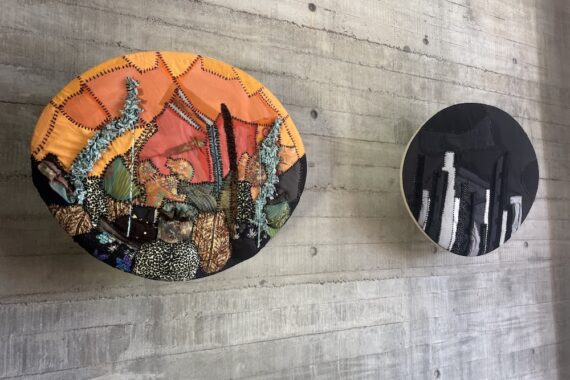
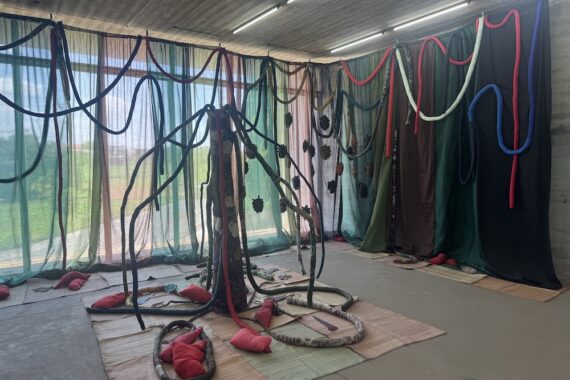
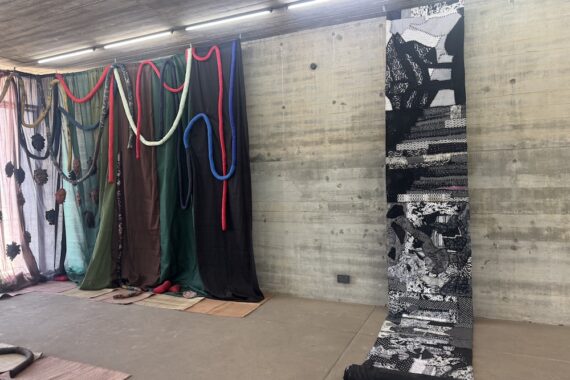
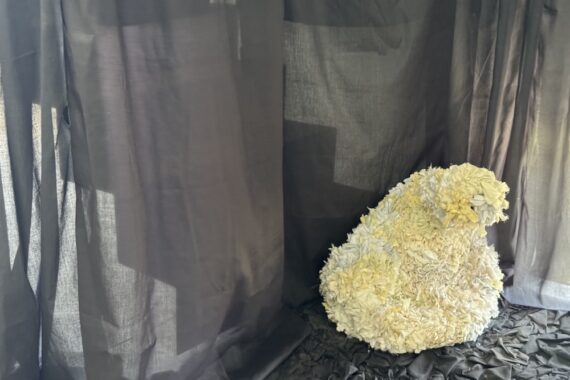
Spread across nine interconnected works, the exhibition draws visitors into a tactile world built from recycled textiles, jute ropes, pandanus mats, kapok, and used handbags. Undeniably, Amenuke’s use of discarded and organic materials is not merely aesthetic.
These objects serve as repositories of lived experience, carrying traces of personal histories and collective memory. In her hands, reused fabrics become living archives that collapse distinctions among past and present, public and private, and individual and communal.
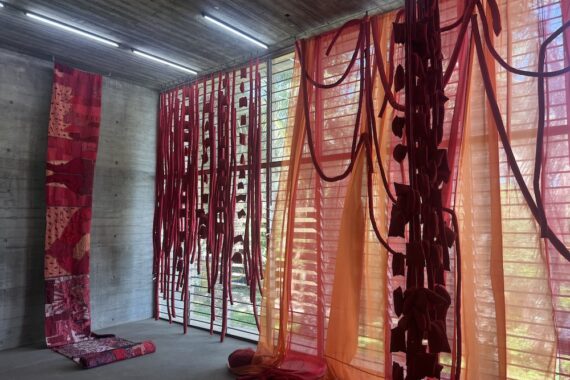
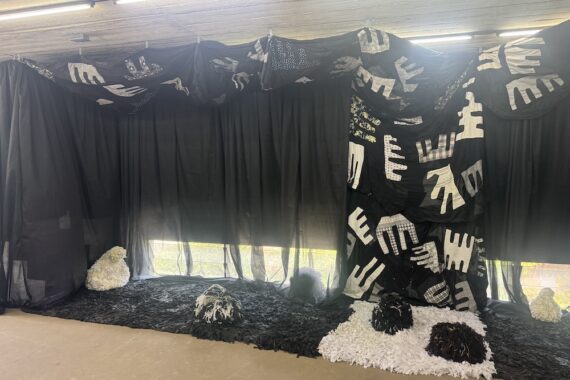
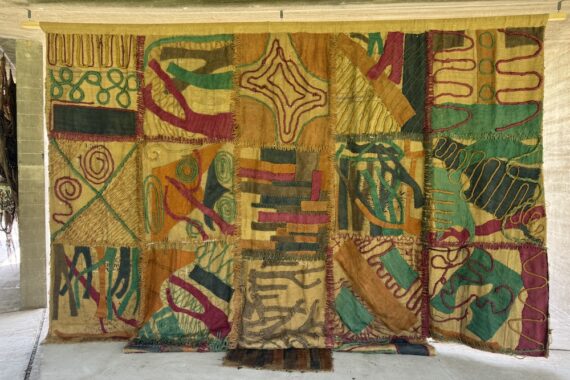
Among the most compelling works is the “Scroll” series, in which Amenuke explores language, communication, and coded systems of knowledge. Twisted jute ropes stitched onto hanging surfaces resemble ancient scripts or cryptic glyphs, suspended between the familiar and the unknowable.
The references to hieroglyphics and other symbolic writing systems lend the pieces an archaeological aura, as if viewers were encountering fragments of a forgotten civilization. Yet the works resist direct translation, preserving mystery as an essential part of their power.
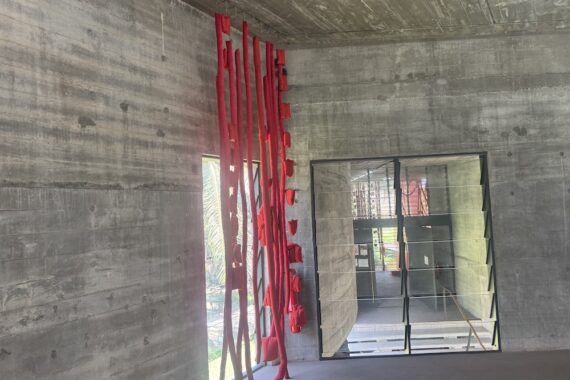
Elsewhere, “The Strength Within” confronts gendered expectations and the invisible pressures placed on women in both traditional and modern societies. Constructed from macramé knots, ropes, and used handbags, the installation transforms everyday materials associated with femininity into a powerful commentary on resilience, confinement, and self-determination.
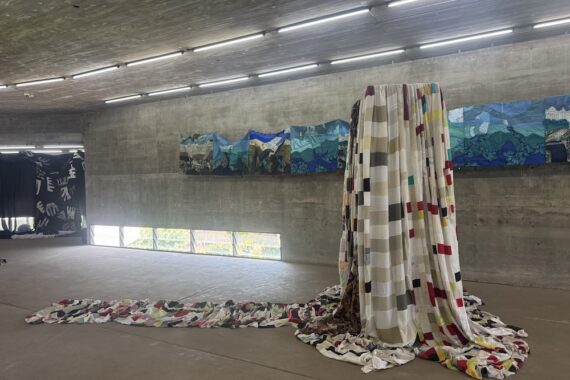
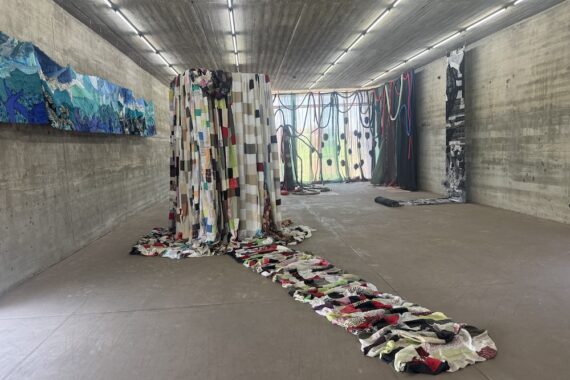
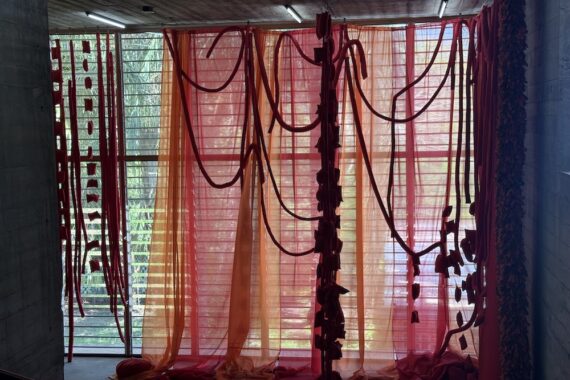
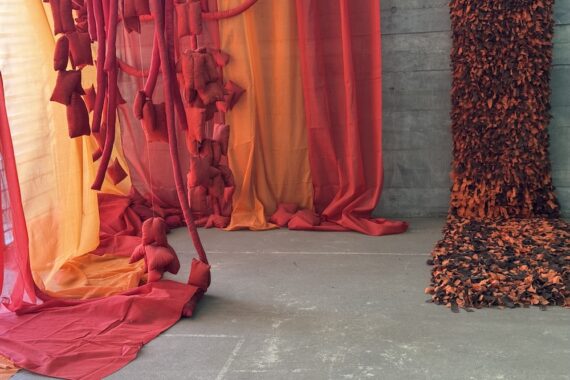
The exhibition reaches its most ambitious scale in “Habitation Variations” – two sprawling installations that dominate the gallery space with an almost unsettling presence. Here, Amenuke investigates borders, migration, territorial control, and the slow infiltration of one system into another.
The installations appear parasitic yet organic, spreading across walls and floors as if alive. Depending on one’s vantage point, forms merge and mutate into unfamiliar entities, creating a sense of instability that mirrors contemporary anxieties about displacement and contested spaces.
Amenuke’s exhibition succeeds by balancing conceptual depth with emotional resonance. Her materials speak softly yet insistently, reminding viewers that identity, history, and belonging are never fixed. She offers not merely objects to observe but environments to inhabit and reflect in.
Titled “Dreaming is a Map”, the exhibition ends on Saturday, May 30, 2026.


