


By John Owoo
(Abidjan – Côte d’Ivoire)
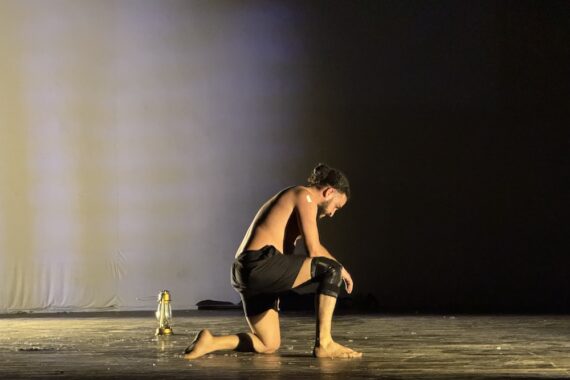
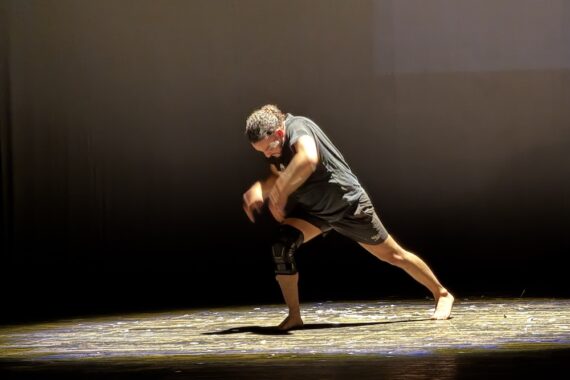
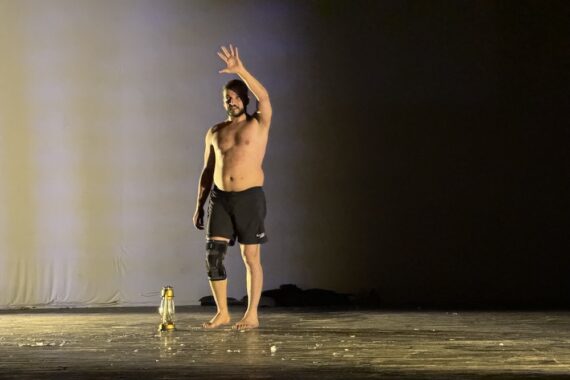
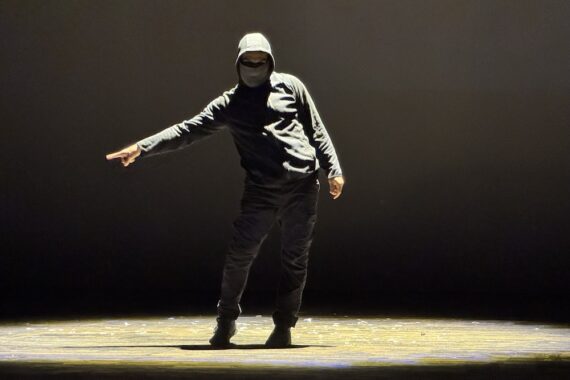
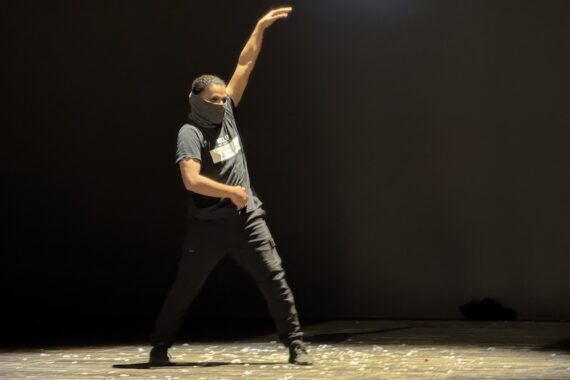
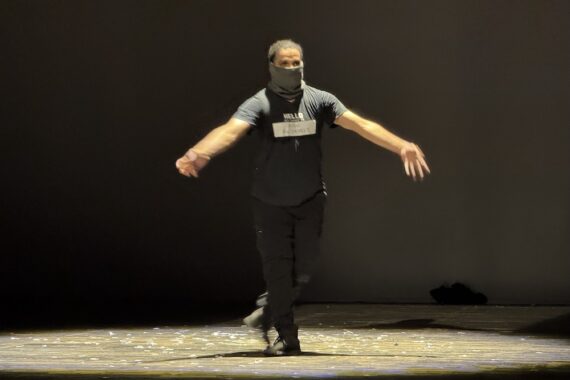
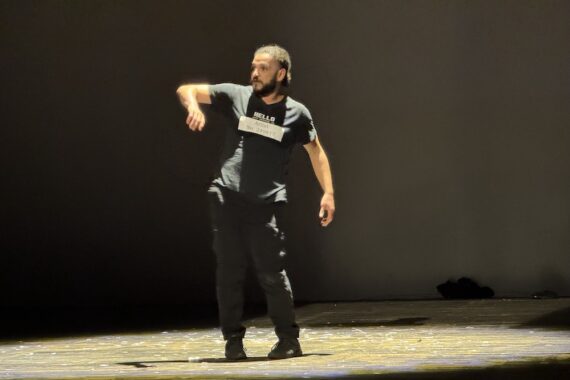
Egyptian dancer and choreographer Mounir Saeed delivered a riveting solo performance last night, captivating the audience with a deeply political, emotionally charged exploration of the barriers artists from the Global South face.
Presented to a group of dance enthusiasts and fellow practitioners at the Salle Kodjo Ebouclé (Palais de la Culture) as part of the Market for Performing Arts 2026, the piece transformed personal frustration into a universal narrative on mobility, inequality, and artistic freedom.
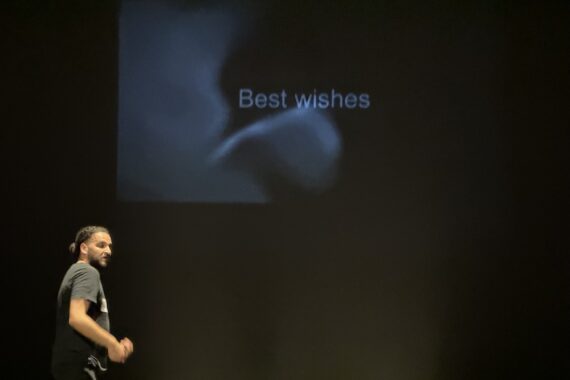
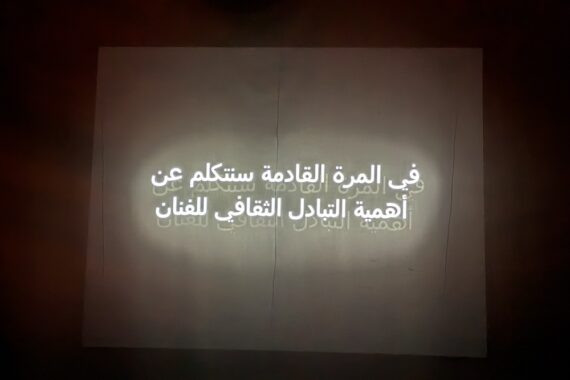
Minimalist in staging yet powerful in impact, the performance relied on a striking interplay of movement, text, and sound. A screen positioned prominently onstage displayed excerpts in both Arabic and English—phrases many artists know all too well.
These were paired with recorded voices, calm yet cutting, reciting the often arbitrary reasons Western consulates give for visa refusals. The effect was chilling: bureaucratic language stripped bare, revealing the systemic barriers hidden beneath administrative procedures.
Through a carefully constructed movement lexicon, the performer oscillated between restraint and intensity. Subtle gestures—hesitations, pauses, repeated attempts to move forward—evoked the psychological toll of rejection. These moments were punctuated by bursts of forceful, expansive motion, suggesting resistance and resilience. The body became a site of tension, caught between aspiration and restriction.
What made the work particularly compelling was its ability to translate a highly specific issue into a broadly resonant experience. The repeated phrases—“You will not return to your country,” “You do not have sufficient funds,” “You lack social ties”—echoed throughout the space, underscoring the dehumanizing nature of these assessments. In doing so, the performance highlighted not only the personal cost to artists but also the broader implications for cultural exchange and global artistic dialogue.
The audience responded with attentive silence, then sustained applause, signaling both appreciation and reflection. In an era when mobility remains deeply unequal, this performance is a timely and necessary intervention. It challenges audiences to reconsider the invisible barriers that determine who gets to be seen, heard, and celebrated on international stages.
Ultimately, the piece was not merely a dance performance but a poignant act of testimony—one that lingered long after the final movement.


