

By John Owoo
(Abidjan – Côte d’Ivoire)
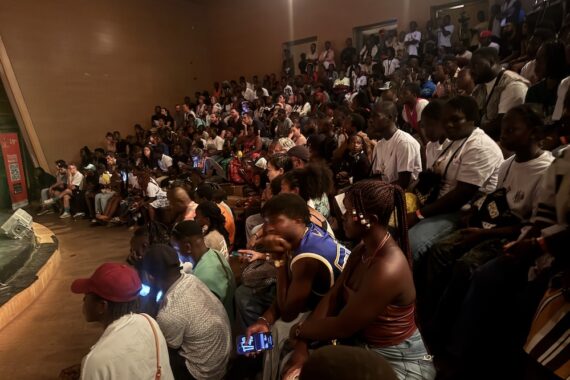
At the Salle Niangoran Porquet (Palais de la Culture) during the ongoing MASA Festival 2026 in Abidjan, two strikingly different yet thematically resonant dance works—Dans un couloir by Compagnie AT and Entre-temps by Moayé Ivoire—offered audiences a compelling double bill spanning personal introspection and socio-political critique.
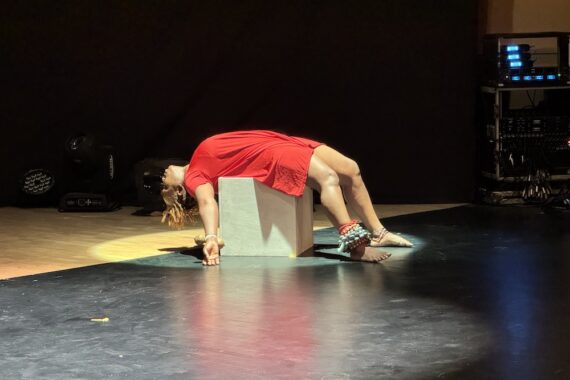
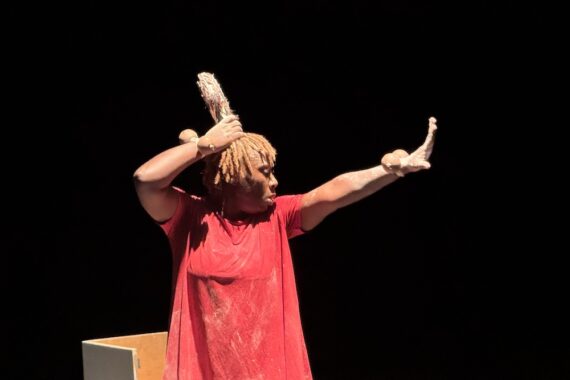
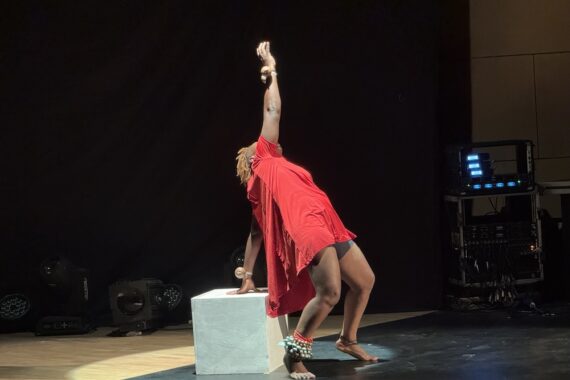
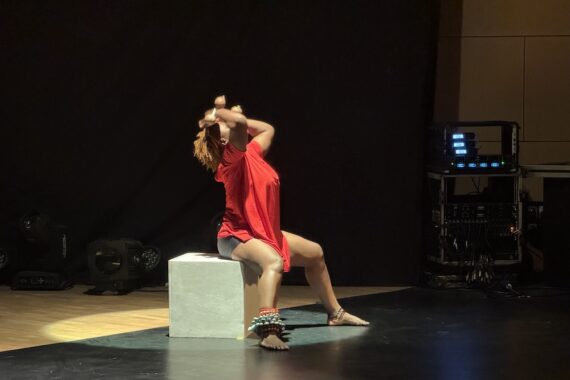
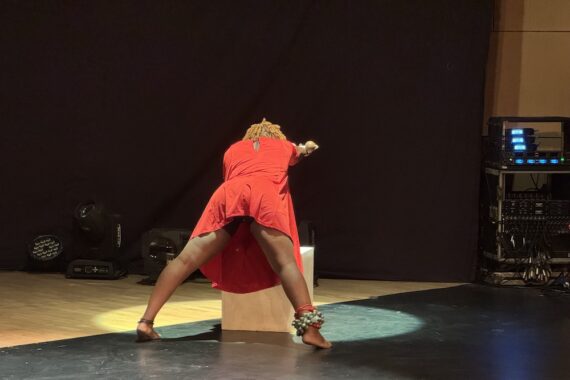
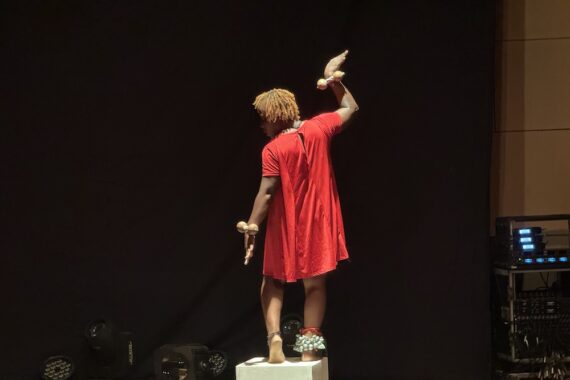
Dans un couloir, choreographed and performed by Aminata Traoré, is a subtle, immersive exploration of improvisation rooted in Ivorian traditional dance. Drawing on her extensive training and international exposure, Traoré crafts a performance language that feels at once instinctive and deliberate.
The piece unfolds like a living organism, guided by the immediacy of the present. Her body responds fluidly to space, evoking the spontaneous rhythms of Abidjan’s streets while preserving a refined choreographic sensibility.
Minimalist in staging, the work emphasizes corporeal expression and emotional nuance. Each gesture appears unforced, emerging organically as if shaped by unseen currents. The result is a meditative yet dynamic performance that blurs the line between structured choreography and lived experience. Traoré’s presence is magnetic, anchoring the audience in quiet contemplation of movement as both memory and discovery.
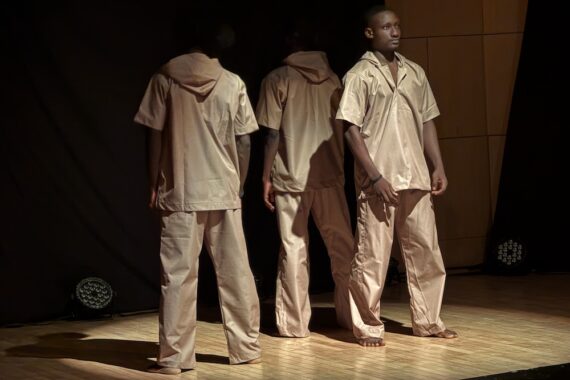
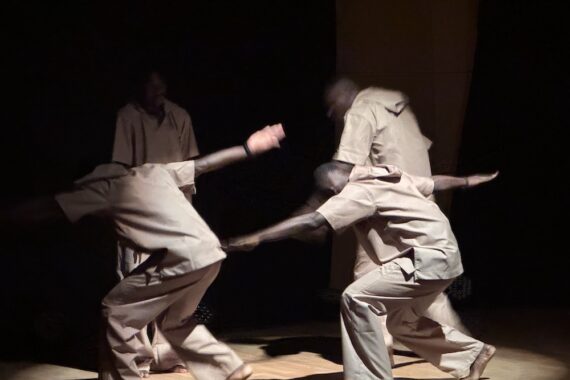
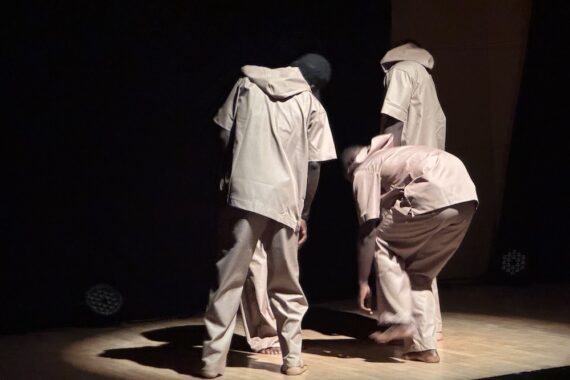
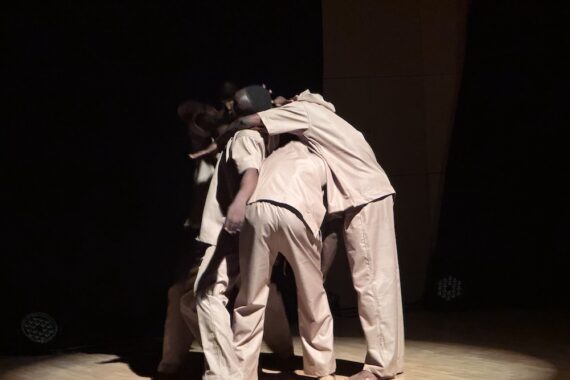
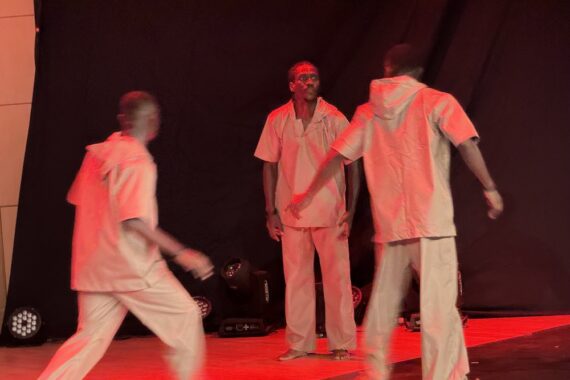
In contrast, Entre-temps by Moayé Ivoire takes a more overtly political stance. Created in response to contemporary societal challenges, the piece interrogates themes of autocracy, corruption, and systemic inequality. Through a series of evocative tableaux, the choreography paints a stark portrait of a world in which meritocracy is undermined by networks of power and influence.
The dancers embody figures caught in cycles of aspiration and disillusionment, especially as youth confront an uncertain future. Their movements oscillate between resistance and resignation, capturing the emotional weight of navigating a society with unevenly distributed opportunity. The choreography is direct and at times confrontational, using physical tension and group dynamics to underscore the imbalance between the powerful and the marginalized.
What distinguishes Entre-temps is its urgency. It does not merely present an abstract idea but actively questions the structures that shape lived realities. The work’s strength lies in its clarity of intent and its ability to translate complex sociopolitical issues into visceral, embodied experiences.
Together, these two pieces highlight the breadth of contemporary African dance at MASA 2026. While Dans un couloir turns inward, embracing improvisation and personal narrative, Entre-temps looks outward, challenging audiences to reflect on societal inequities. Both works, through their distinct approaches, affirm dance as a powerful medium for storytelling, reflection, and resistance.


Sounds amazing.