

By John Owoo
(Accra – Ghana)
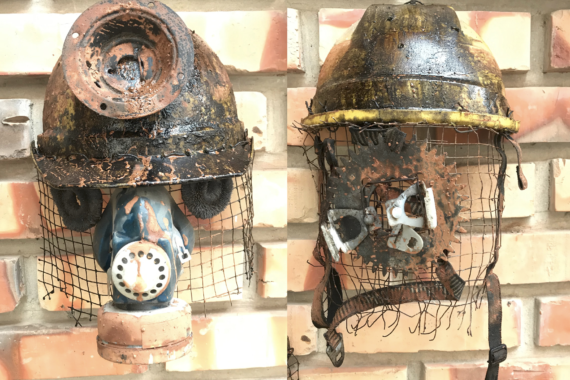
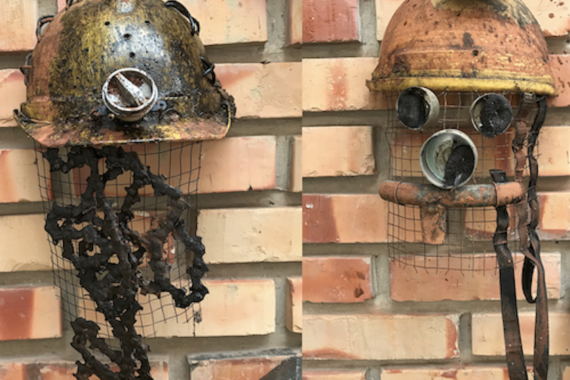
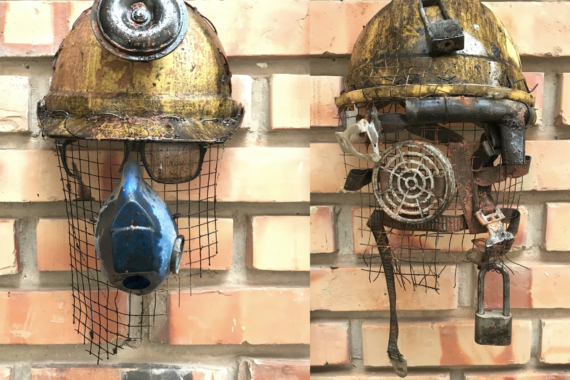
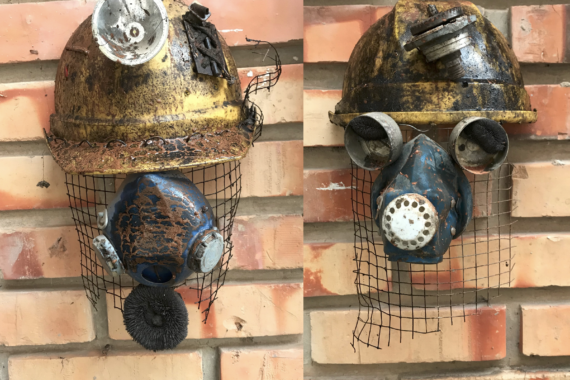
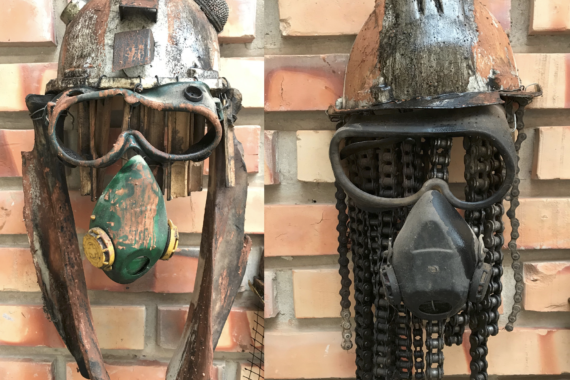
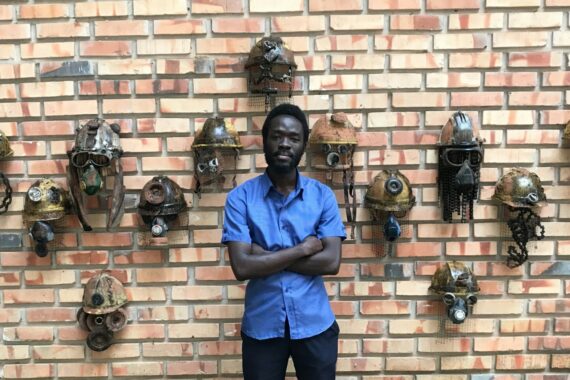
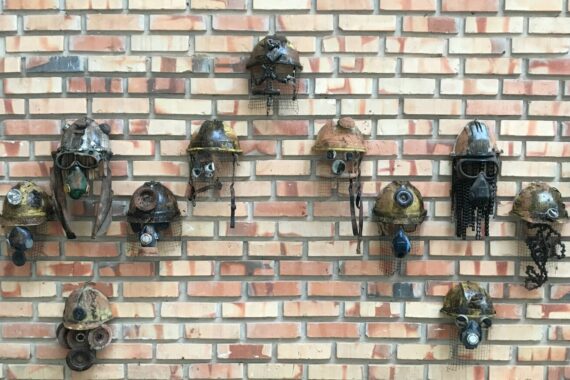
Ghanaian artist Ebenezer Christian confronts one of the country’s most pressing environmental crises with striking clarity in his 13-piece series, The Ambiguity of Mask.
Instead of depicting the visible devastation caused by illegal mining, popularly known as galamsey in Ghana, Christian shifts attention to a more elusive subject—the hidden power structures that sustain the practice.
At first glance, the sculptural masks appear to represent the miners who work at excavation sites across the country. Crafted from discarded mining tools, damaged safety gear, and other scavenged industrial materials, the works possess an unsettling physicality. Their weathered surfaces bear the scars of labor, danger, and environmental destruction, transforming industrial waste into compelling artistic statements.
Yet the artist’s inquiry extends beyond appearances. The masks become metaphors for concealment, prompting viewers to reconsider who truly benefits from Ghana’s illegal mining economy.
He suggests that the individuals seen operating excavators and digging pits are often only the visible actors in a much larger network. Behind them, he points to landlords, traditional authorities, financiers, and political actors whose influence frequently remains obscured from public scrutiny.
Titled We Know Within, the work reinforces this central argument. It suggests a collective awareness that responsibility for environmental degradation extends far beyond those working at the mining sites.
Like the disguise worn by an undercover journalist, the masks conceal identities while inviting deeper investigation. The artist cleverly reverses the traditional symbolism of the mask: instead of revealing cultural identity or spiritual meaning, these masks hide accountability.
His use of ready-made materials is particularly effective. The recovered mining equipment carries its own history, embedding the realities of extraction directly into each sculpture. This approach not only underscores the environmental consequences of galamsey but also demonstrates how contemporary African artists continue to use recycled materials to address urgent social and political issues.
What distinguishes Christian’s work is its refusal to offer simplistic narratives. Rather than assigning blame solely to miners, he urges audiences to interrogate the economic and political systems that perpetuate environmental exploitation. In doing so, the artwork becomes less an indictment of individuals and more a broader critique of complicity and institutional failure.
The Ambiguity of Mask is a timely intervention in Ghana’s ongoing conversation about environmental justice. Through inventive material choices and layered symbolism, he transforms discarded objects into powerful visual testimonies that urge viewers to look beyond the masks and confront the hidden faces behind one of the nation’s most destructive crises.


And the first shall be the last!!!!!!!!, Christian would always say….LOL. This work really is speaking and will continue to speak till centuries to come. Calli…..but stiillllllll…the sky is your limit. We want more
Stirring Up the Skill
Be in 🐜icipation
Indeed Ebenezer Christian you have tackled the right issues destroying our water bodies and affecting the country economy immensely. I believe that if the government take this short 13- pieces series serious it will go down to help solve the environmental crisis and economy displacement in the country. Great Christian keep the momentum high the sky is your limit