

By John Owoo
(Accra – Ghana)
Architecture is often associated with permanence—walls, roofs, foundations, and structures built to endure time.
At the Interstice, an exhibition at the Foundation for Contemporary Art (FCA) that ended on July 31, 2026, challenges that familiar understanding, proposing instead that architecture can be provisional, adaptable, and continually shaped by the people who inhabit it.
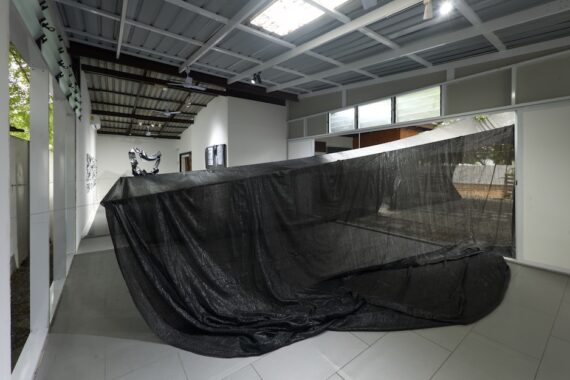
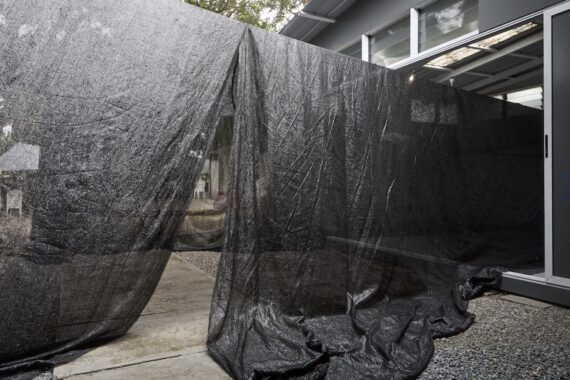
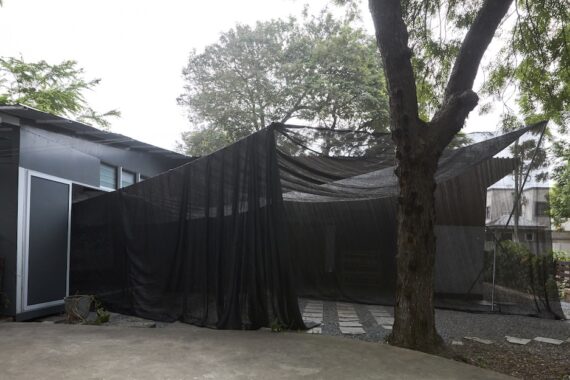
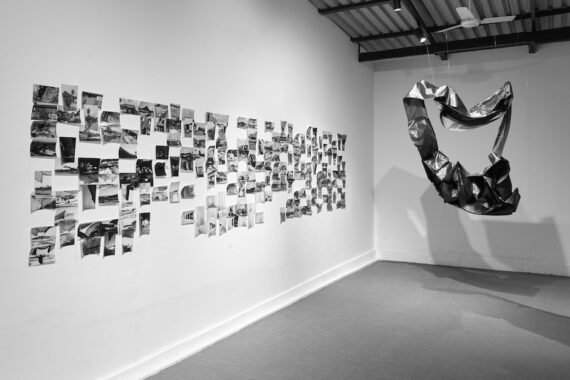
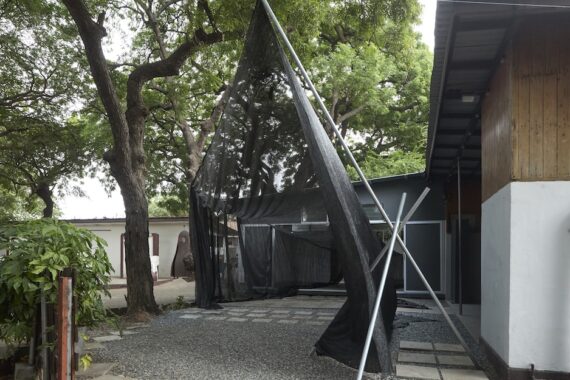
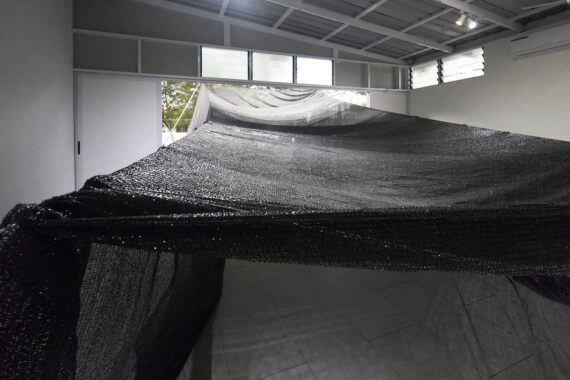
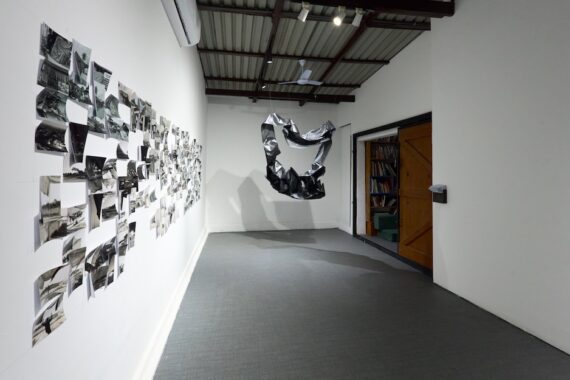
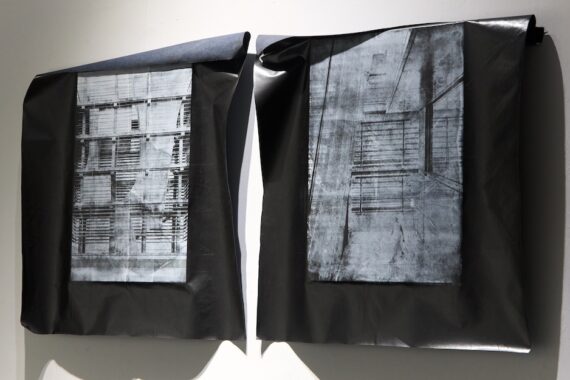
The site-specific intervention transforms FCA-Ghana by creating a physical dialogue among the gallery interior, its courtyard, and the historic W.E.B. Du Bois Center for Pan-African Culture. Accompanied by sculptural fragments, photographic research, and speculative architectural drawings, the exhibition considers architecture not as a finished object but as an unfinished, open, and civic system.
At the heart of the exhibition is the concept of the interstice—the space between things. Here, the spaces between inside and outside, permanence and ephemerality, and formal architecture and everyday construction become fertile ground for experimentation. Rather than treating these spaces as insignificant gaps, the exhibition presents them as places where alternative ways of building and living can emerge.
The project builds on At the Interstice, first realized in 2025 as a temporary intervention at TTO, the studio of cradlelist artists in Kumasi. Responding to a site marked by continual adaptation, overlapping uses, and conditions of social and political precarity, the earlier project used lightweight shade netting, steel poles, and tensioned cables to extend the institution into its surrounding landscape.
At FCA-Ghana, these spatial strategies take on a new form. Their emphasis, however, remains on openness, reversibility, and transformation. The installation appears less interested in imposing a definitive architectural statement than in creating a framework that can respond to its environment.
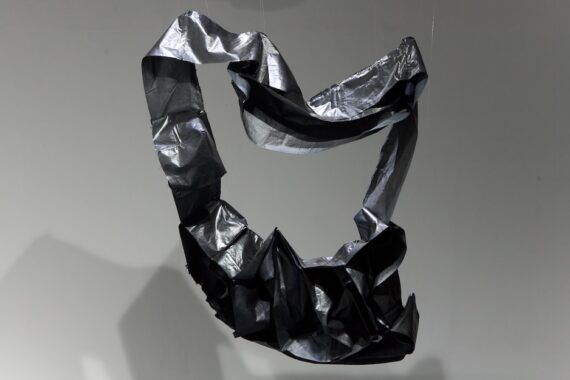
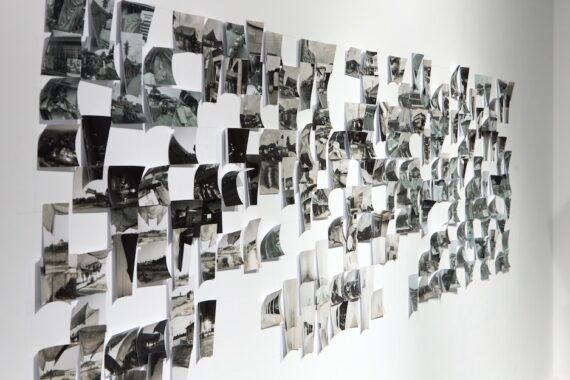
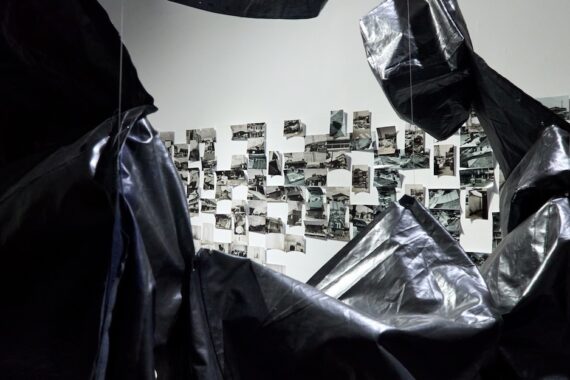
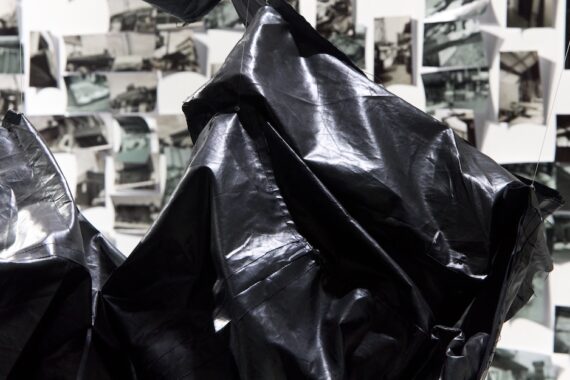
The accompanying works deepen this investigation. Sculptural assemblages made from found materials, photographic studies, and architectural drawings document recurring spatial tactics observed across compounds, workshops, markets, and everyday constructions in Ghana. These environments, often shaped by limited resources, improvisation, and collective negotiation, are presented as sources of architectural knowledge in their own right.
This is perhaps where the exhibition becomes most compelling. It shifts attention away from architecture as something produced exclusively by architects and formal institutions and toward the ingenuity of ordinary people who continually modify and appropriate spaces to meet changing needs.
At the Interstice ultimately asks viewers to reconsider what constitutes architecture and who has the authority to shape it. Its temporary structures and fragments suggest that civic space need not always arise from permanence. Sometimes it begins with adaptation, negotiation, and the creative possibilities found between things.


