

By John Owoo
(Accra – Ghana)
Home, in Lucky Lartey’s In Transit, is not a fixed place. It is something carried, remembered, reconstructed, and sometimes painfully left behind.
In a work that brings together contemporary dance, visual art, architecture, and history, the Australian-based Ghanaian choreographer, dancer, and visual artist turns the experience of migration into a deeply physical meditation on belonging and displacement.
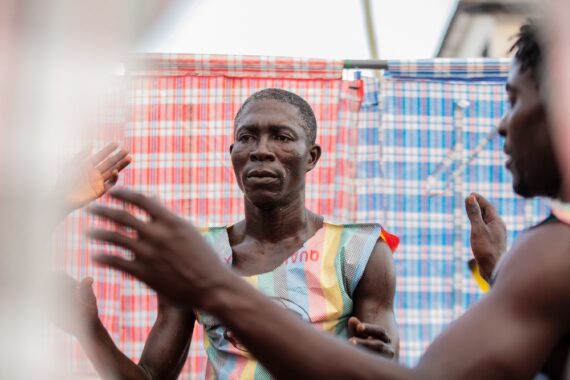
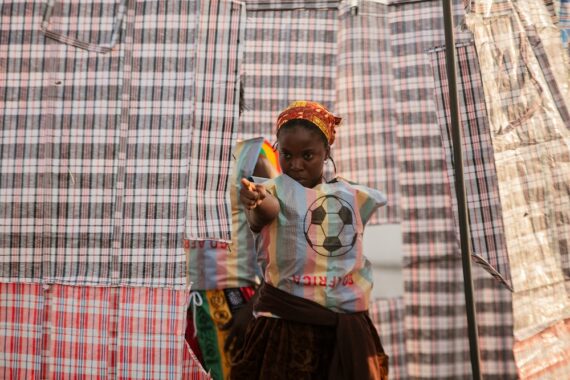
Originally presented in 2022 as a visual installation, In Transit returned to Ghana this year in a new phase of its creative development. Its transformation from installation to movement-based performance gives the work a new vocabulary, allowing the body to become an archive of migration.
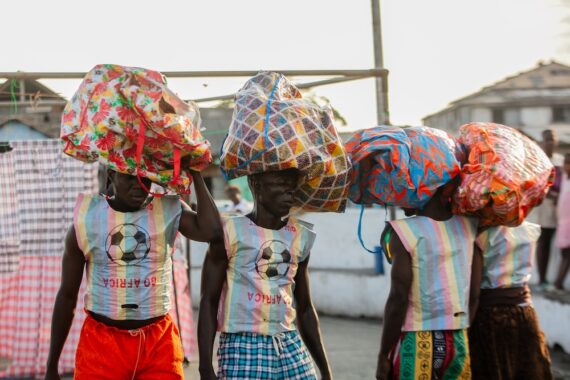
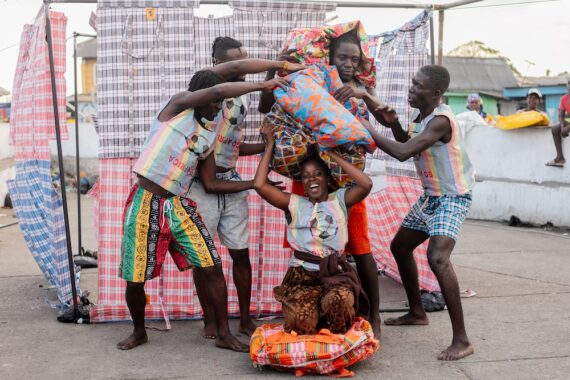
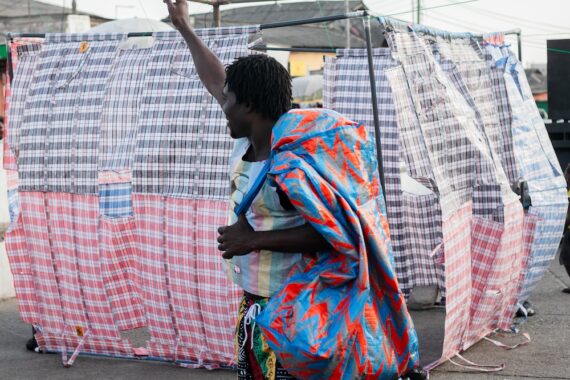
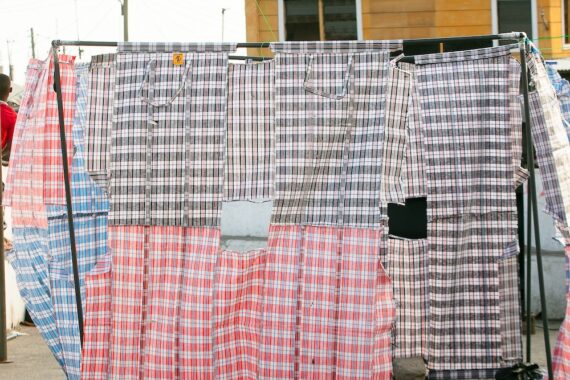
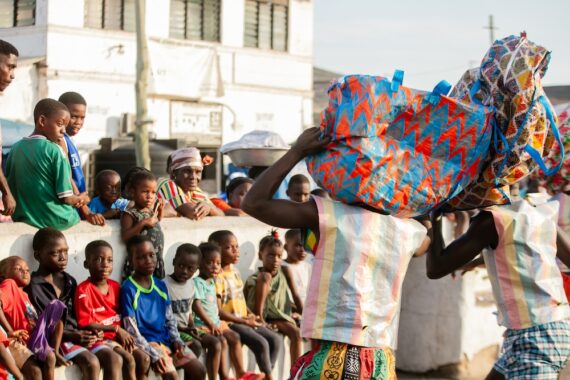
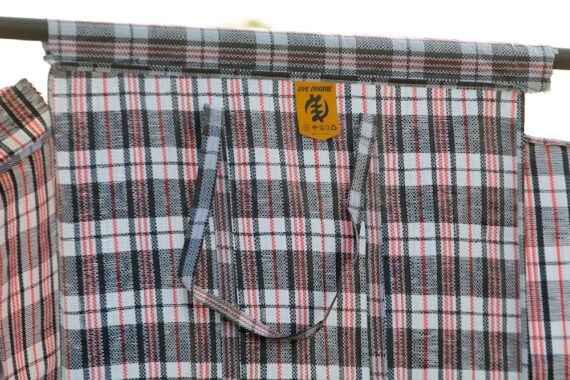
At its center is a miniature house constructed entirely from Ghana Must Go bags—a material whose familiar presence immediately evokes the histories of movement, departure, and displacement across West Africa.
The material choice is especially potent. The Ghana Must Go bag is more than a practical container; it carries the memory of people forced to pack their belongings and leave. Lartey draws specifically on the 1983 mass repatriation of more than one million Ghanaians from Nigeria amid a severe economic and political crisis. That history becomes the performance’s emotional foundation.
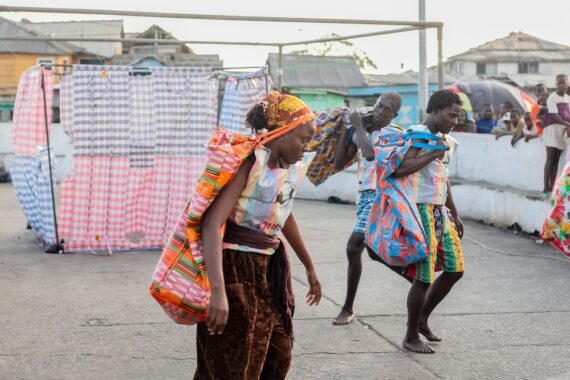
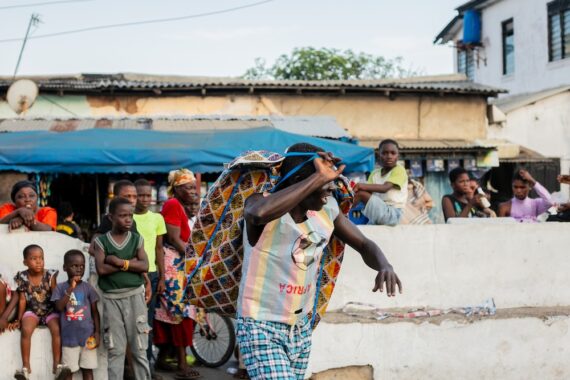
At Jamestown Roundabout Square on September 3, the work returned to an urban landscape intimately connected to Ghanaian history and contemporary life. This was significant. Rather than presenting migration as an abstract international experience, Lartey situated it within a recognizable Ghanaian cultural environment, allowing memory, place, and movement to collide.
The four days of intensive movement research that followed the house’s construction explored the physical and emotional states associated with leaving, carrying, belonging, rebuilding, and searching for home. These ideas suggest a choreography in which the body is both traveler and territory—carrying traces of places left behind while negotiating unfamiliar spaces ahead.
The miniature house offers a particularly compelling counterpoint to the moving body. A house typically signifies permanence, stability, and belonging; the Ghana Must Go bags, by contrast, speak of mobility and impermanence. By constructing a home from the very material associated with forced movement, Lartey creates a powerful contradiction: the displaced person attempts to build permanence from the evidence of departure.
Ultimately, In Transit is less concerned with providing answers than with keeping questions alive. What does it mean to leave home? Can home be rebuilt elsewhere? When movement becomes a permanent condition, where does belonging reside? Lartey’s work suggests that home may no longer be a destination at all but an unfinished structure carried within us.


