

By John Owoo
(Lomé – Togo)
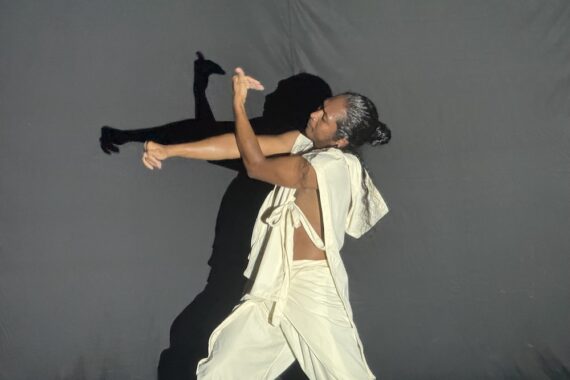
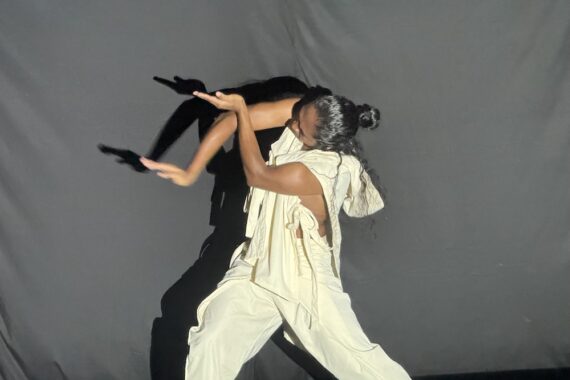
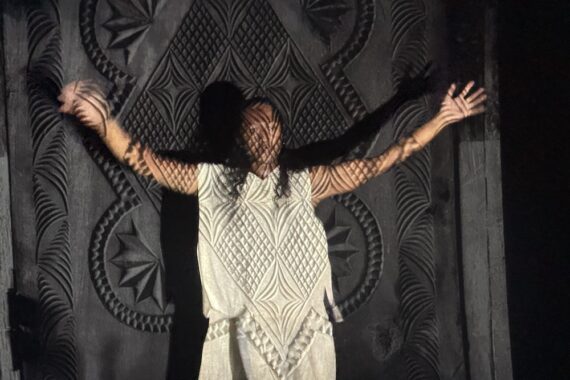
At the Maison des Arts et du Social, a dance piece titled Racine Carrée unfolded as a daring and visually arresting solo performance that brought experimental dance into conversation with digital art.
Presented as part of We Art Creative Hub’s activities under the auspices of OFF Biennial 2026, the work, conceived, choreographed, and performed by Tréma Michaël Rakotonjatovo, offered an intimate but ambitious meditation on identity, memory, and transformation.
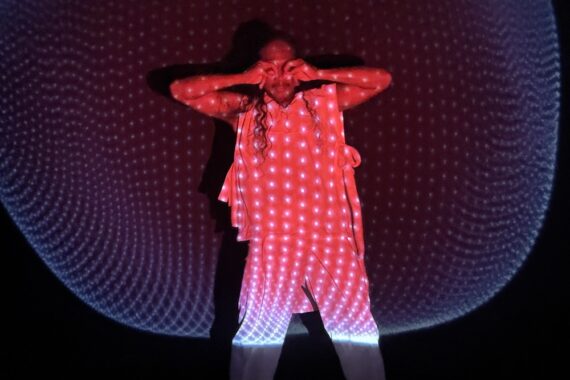
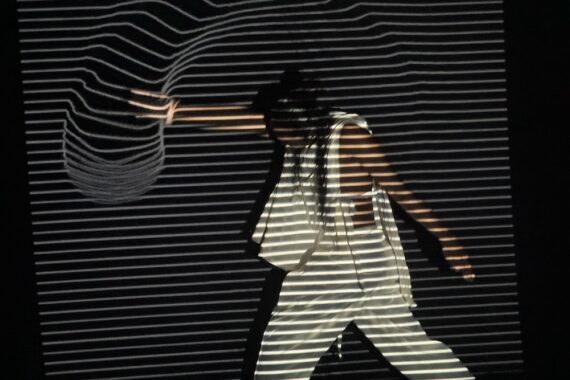
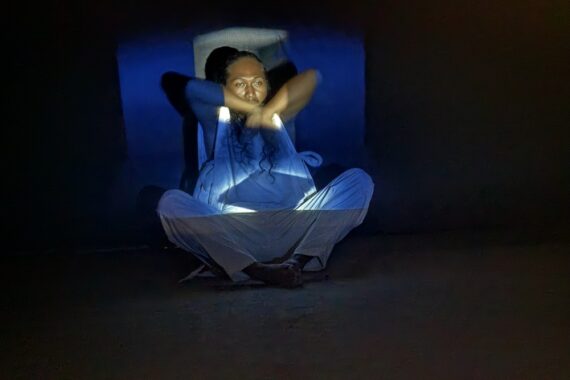
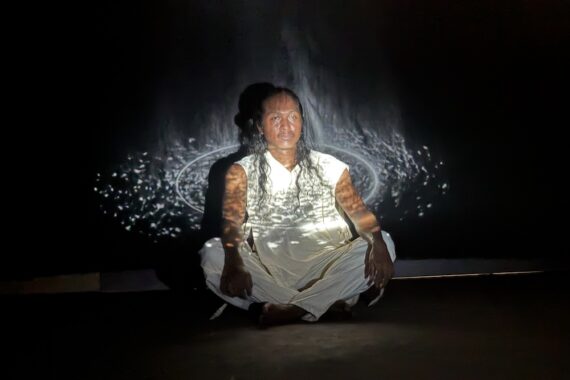
From its first moments in darkness, the piece established an atmosphere of mystery and tension. Thin lines of light emerged on the backdrop like a geometric code, mapping out a rigid world into which the dancer slowly entered.
Rakotonjatovo’s body seemed at first to resist this confined architecture, moving cautiously, then sharply, as though testing the limits of an invisible system. This opening struggle gave the performance an emotional charge, suggesting a body negotiating history, structure, and selfhood all at once.
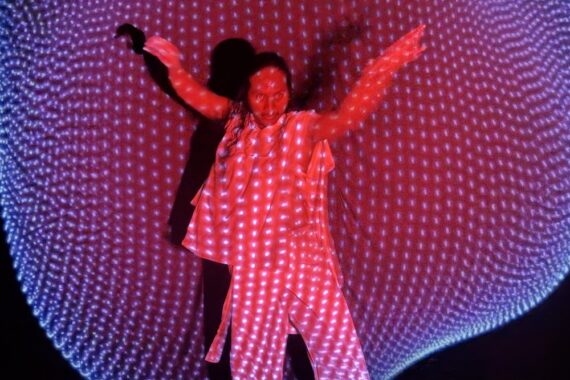
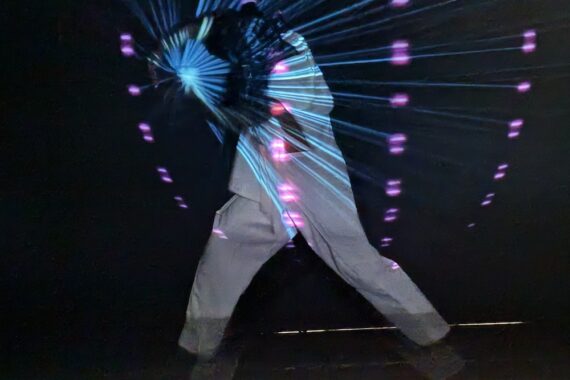
What made Racine Carrée particularly compelling was the way it treated digital technology not as decoration but as an active creative partner. The projection mapping responded to the dancer’s body with intelligence and sensitivity.
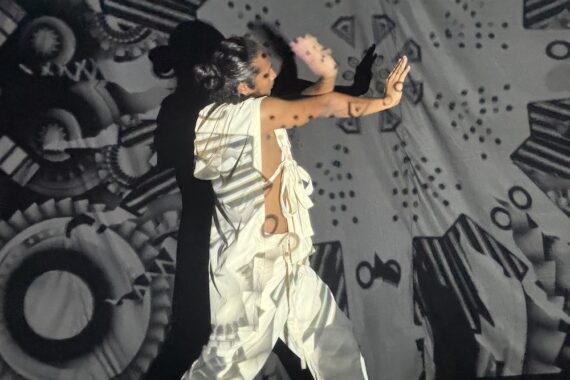
As the solo developed, geometric lines softened into more organic forms and Zafimaniry-inspired motifs appeared across the performer’s skin and the stage space. The visual effect was powerful: the stage became a shifting environment in which ancestral design and contemporary media fused into a single living surface.
The conceptual strength of the work lies in its central duality. The “root” evokes Malagasy heritage and artisanal knowledge, while the “square” suggests modernity, order, and technological logic. Rakotonjatovo did not present these elements as opposites in conflict for long.
Rather, the performance gradually revealed their interdependence. Tradition here was not fixed in the past, nor was technology framed as an alien force. Instead, the piece argued for tradition as a living system, capable of adaptation and renewal.
Physically, Rakotonjatovo delivered a focused and committed performance. His movement language shifted between tension and release, angularity and fluidity, mirroring the thematic arc of the work.
By the final moments, when movement and light appeared fully synchronized, Racine Carrée reached its most eloquent image: a body no longer trapped between ancestry and innovation, but energized by both.
In Racine Carrée, Tréma, the choreographer/dancer, crafted more than a dance solo. He offered a thoughtful and poetic reflection on how identity can remain rooted while embracing the future.
This pan-African initiative to professionalize the creative cultural industries, which also includes workshops for artists and art critics, is led by l’Agence NO’OXPERTISES and is part of the OFF program of the Biennale of Arts in Public Spaces, in collaboration with the following organizations: Kadam Kadam, Nord Ouest Cultures, and the plateforme noocultures.info.


