

By John Owoo
(Atakpamé – Togo)
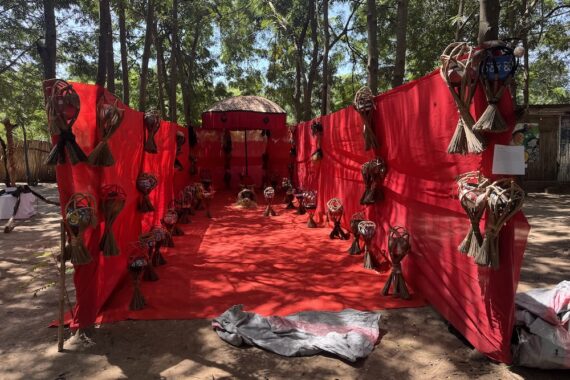
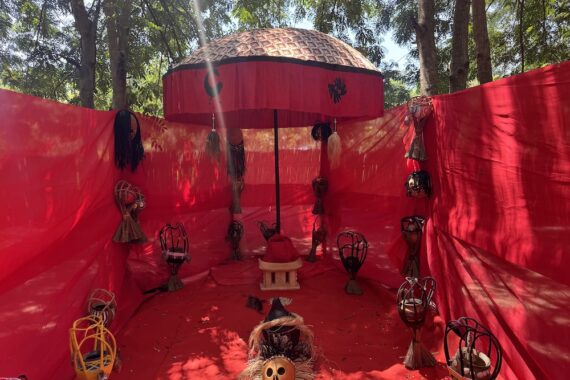
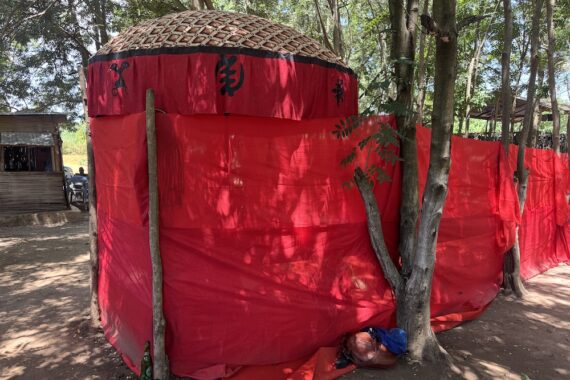
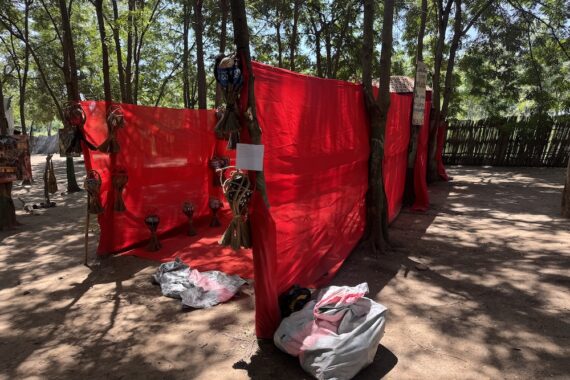
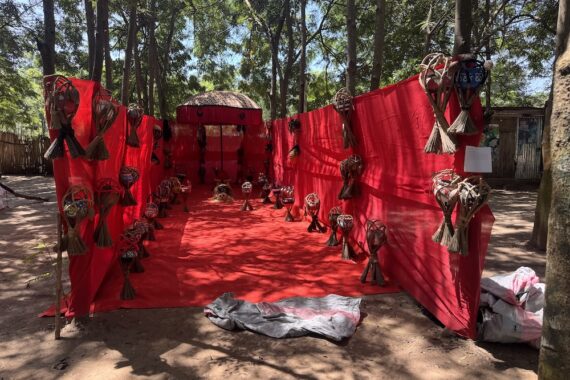
At the intersection of spirituality, cultural memory, and personal identity, Ghanaian artist Livingstone Amoako invites audiences to reconsider the significance of African hairstyles in Asɔneε So (Within the Shrine), an immersive installation presented during the Karp Kamina Artists and Researchers Residency in Atakpamé, Togo.
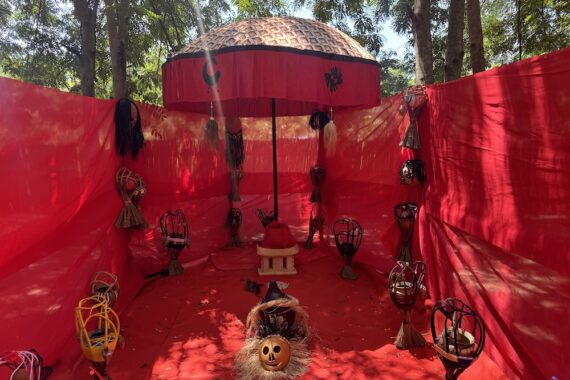
The work draws an intriguing parallel between the traditional African shrine and the contemporary hairdressing salon, presenting both as spaces of transformation where identity is shaped, inherited, and continually reimagined. Through this conceptual encounter, Amoako challenges the conventional separation of sacred and secular spaces, suggesting that everyday cultural practices can carry profound spiritual and historical meanings.
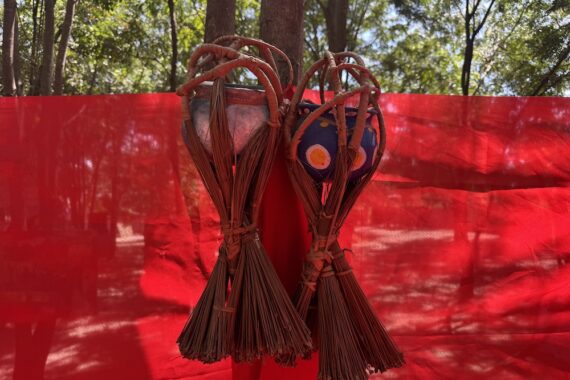
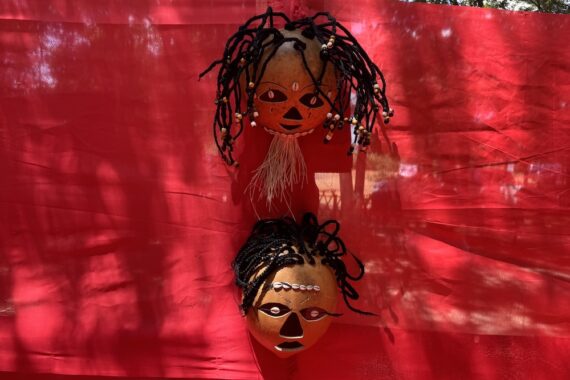
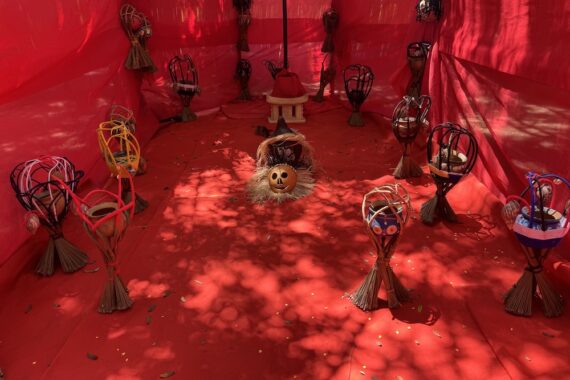
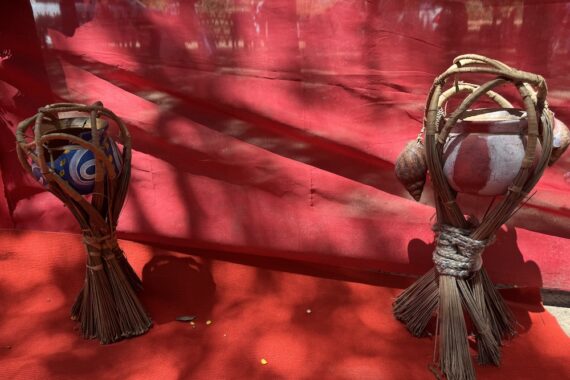
At the heart of the installation, African hairstyling, covered in bright red cloth and embellished with Adinkra symbols, is presented not merely as beautification but as a repository of cultural knowledge and collective memory. Braiding, threading, locking, and other indigenous hair practices become expressions of belonging, transmitting histories and traditions across generations. In Amoako’s interpretation, every strand and gesture carries traces of an inherited identity while making room for individual expression and contemporary influences.
Using gourds, brooms, and canes, among others, the installation draws on African cosmologies and on American anthropologist Horace Miner’s 1956 essay, Body Ritual among the Nacirema, which examines how cultural practices can seem strange when viewed from outside their familiar context. This reference adds a critical dimension to Amoako’s work, prompting viewers to question the assumptions that underlie distinctions between tradition and modernity, and between ritual and routine.
Amoako further explores the salon’s social choreography. The conversations, rhythmic hand movements, and repetitive gestures involved in styling hair become a form of ritual performance. Like communal ceremonies, these interactions create opportunities to exchange stories, transmit knowledge, and negotiate identity. Participation is therefore central to the work, positioning visitors as contributors to a living cultural environment rather than detached spectators.
Beyond its exploration of heritage, Asɔneε so raises timely questions about beauty, colonial influence, and the pressures of globalized beauty standards. By foregrounding African hairstyles as legitimate expressions of cultural and spiritual consciousness, the installation challenges the standards through which African hair is judged, accepted, or marginalized.
Its significance lies in this ability to locate cultural continuity within an ordinary, familiar setting. The hairdressing salon, often associated primarily with grooming and appearance, emerges as a space where ancestral memory meets contemporary life.
Through Asɔneε so, Amoako proposes that rituals do not necessarily disappear as societies change; they can migrate, adapt, and acquire new meanings. The installation ultimately affirms African hairstyling as an enduring expression of identity, resilience, and belonging, connecting the individual to community, history, and the continuing process of becoming.


