




By John Owoo
(Atakpamé – Togo)
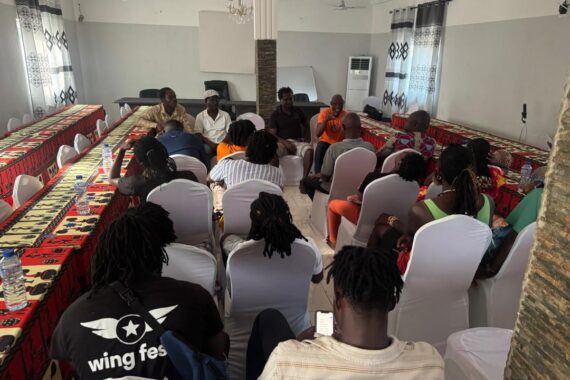
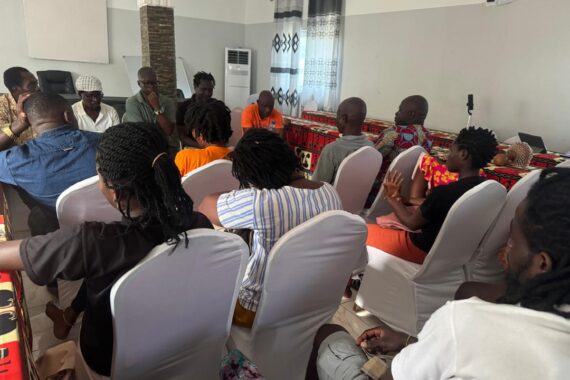
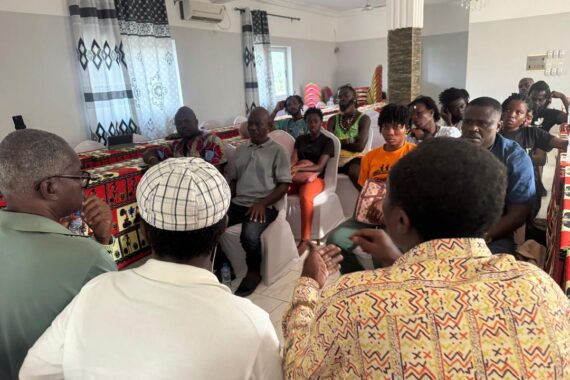
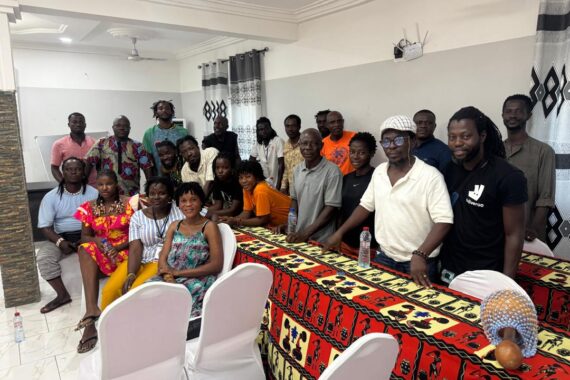
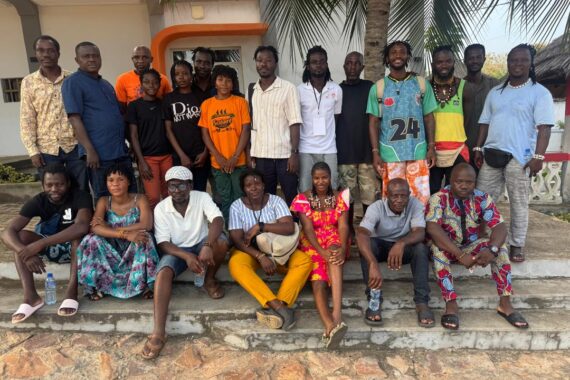
Whether formal academic training or self-directed learning offers a better pathway to artistic excellence took center stage during a panel discussion at Hotel Hong Kong in Atakpamé, Togo, as part of the ongoing Karp Kamina Artists and Researchers Residency.
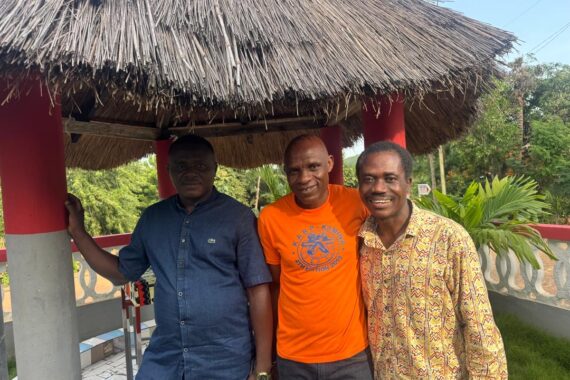
The discussion, titled “In the World of Art, What Is the Pathway: The Academy or the Self-Taught/Street Artist? Where Is the Balance?”, brought together fine artists Frederick Bamfo, Livingstone Amoako, and Ray Agbo to examine how different forms of artistic education shape creative practice.
Moderated by Kojo Biney, with Samuel Olou, director of Karp Kamina, as French translator, the speakers discussed the benefits of formal art education, which provides structured instruction in drawing, painting, sculpture, art history, critical theory, and professional practice, as well as offering access to experienced lecturers, mentors, studio facilities, peer networks, and exhibition opportunities.
However, self-taught artists often develop their visual languages through observation, experimentation, apprenticeships, community traditions, online resources, and everyday experiences. Street artists, in particular, draw inspiration from public spaces, urban culture, political struggles, and the realities of communities whose stories established institutions sometimes overlook.
The discussion also examined how galleries, curators, critics, collectors, museums, and biennials influence which artists receive recognition. Questions arose about whether academic qualifications and institutional connections give formally trained artists an advantage in securing exhibitions, critical reviews, and market opportunities.
Ghana’s rich artisanal traditions offered another perspective. Practitioners, such as fantasy coffin makers, acquire specialized skills through apprenticeships, family knowledge, and hands-on experience, challenging the assumption that artistic expertise must originate in an academy.
The panel further considered how rigid teaching methods and inherited artistic hierarchies might discourage experimentation, while acknowledging that a lack of structured training can sometimes limit technical development and professional sustainability.
Ultimately, the conversation underscored the need for a fairer artistic environment where practitioners from diverse backgrounds can thrive. Academic training can provide valuable tools, but it does not have a monopoly on creativity. Independence alone also does not guarantee artistic excellence.
The challenge, therefore, is not to choose between the academy and the streets but to recognize the value of both and expand opportunities for artists to develop, exhibit, and contribute to the cultural landscape.
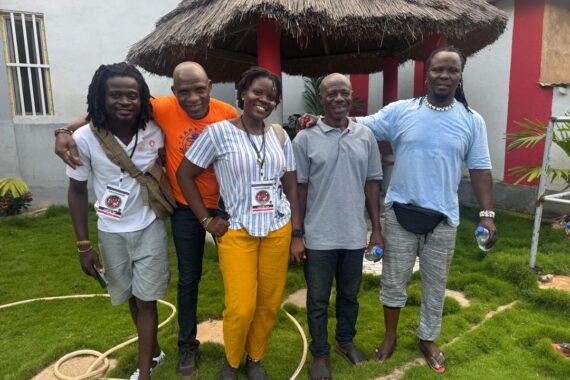
With a grand view of some of the seven hills of Atapkamé, Hotel Hong Kong has twenty-two well-furnished rooms, a conference room, a bar, a cozy garden, free internet, and a breathtaking view of the picturesque landscape of the city.


