

By John Owoo
(Atakpamé – Togo)
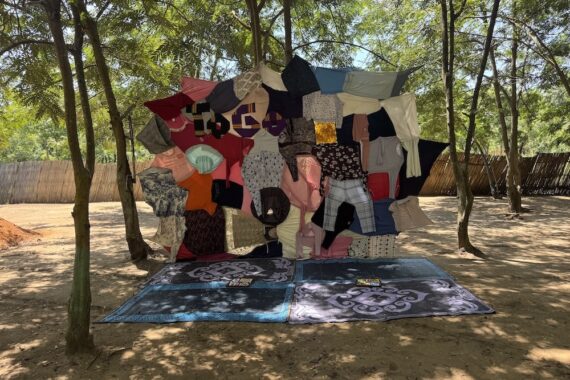
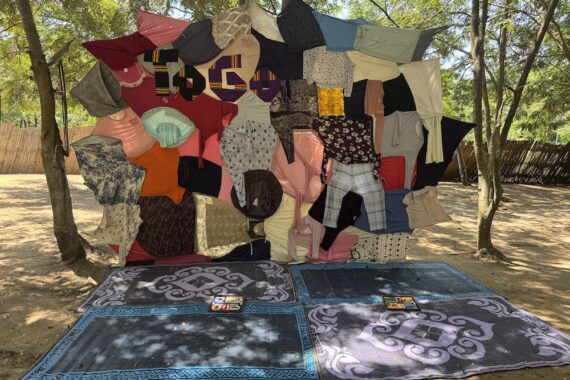
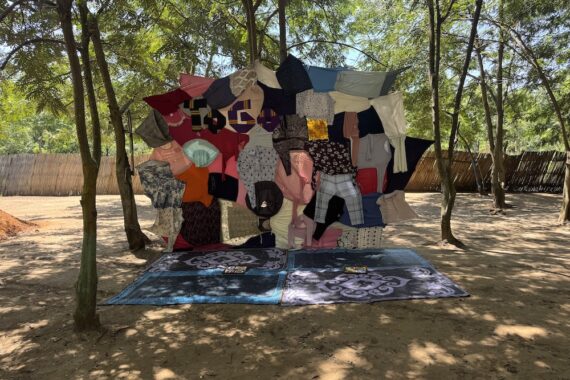
At a residency in Atakpamé, Togo, discarded clothes are finding new purpose beyond their former lives as garments. In The Games Feast, Ghanaian artist and academic Dr. Frederick Bamfo transforms second-hand clothing into an invitation to play, connect, and rediscover the value of communal experience.
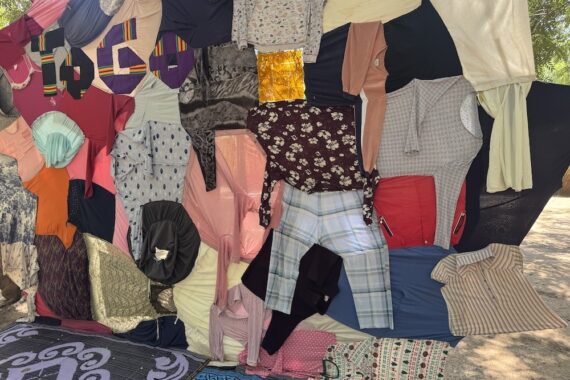
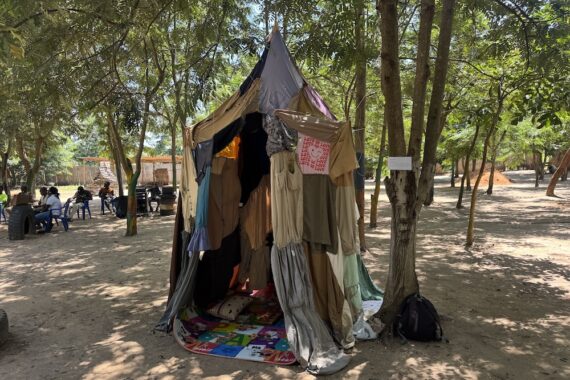
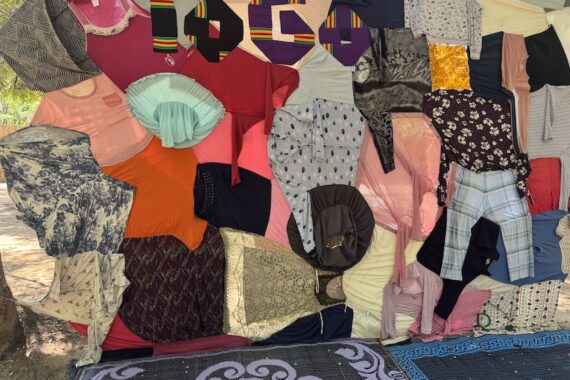
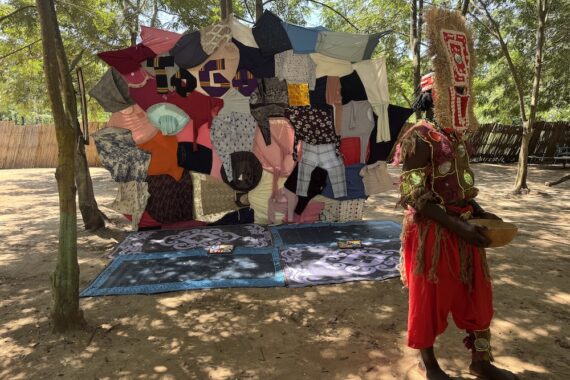
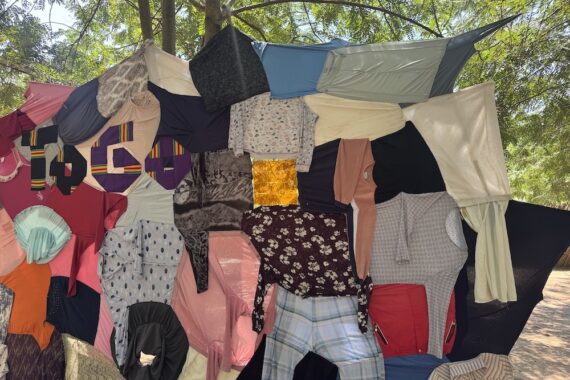
Developed in collaboration with children in this city, known for its eleven hills, the installation draws on Broni Wawu—secondhand clothes traded in local markets, including those bought on a market day in Atakpamé. Bamfo repurposes these garments into two site-responsive environments, one enclosed and one open, each offering a distinct setting for gathering and interaction.
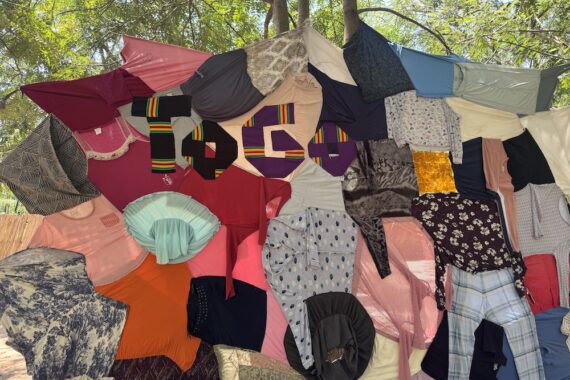
Rather than treating the clothes as waste or purely aesthetic objects, the artist treats them as carriers of human experience. His view of clothing as an extension of the skin gives discarded garments deeper significance. Each piece can hold traces of previous owners, journeys, and lives, making the installation a reflection on memory, identity, and the circulation of material culture.
Yet The Games Feast is not an exercise in nostalgia. Its central concern is what happens when these materials become instruments of social engagement. By sewing the garments into sculptural spaces, Bamfo creates environments that invite visitors to participate rather than remain passive spectators.
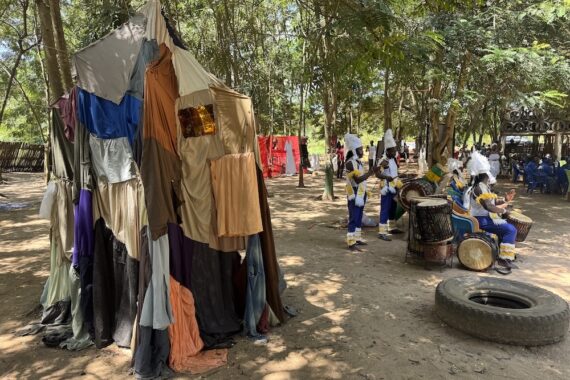
Games such as ludo and oware, along with dancing, skipping, and other forms of collective play, become central to this experience. These familiar activities create opportunities for interaction across generations and backgrounds, allowing play to serve as a shared language.
The installation’s collaborative foundation is equally significant: children’s participation positions them not merely as an audience but as contributors to the work’s creative and social life.
The use of Broni Wawu also introduces an important local dimension. These garments are familiar in everyday commerce and dress across Togo and other parts of West Africa. By repositioning them within an installation, Bamfo invites audiences to reconsider materials often taken for granted, revealing their capacity to carry stories and to foster new relationships.
Presented within the context of the Karp Artists’ and Researchers’ Residency in Atakpamé, The Games Feast connects contemporary installation practice with communal traditions and everyday life. Its strength lies in the intersection of artistic experimentation and accessible participation.
Ultimately, Bamfo proposes that art need not be confined to objects viewed from afar. Through recycled clothing, children’s collaboration, and shared games, The Games Feast becomes a living social space—one where the simple pleasure of playing together can renew collective memory and affirm the enduring value of community.


