

By John Owoo
(Accra – Ghana)
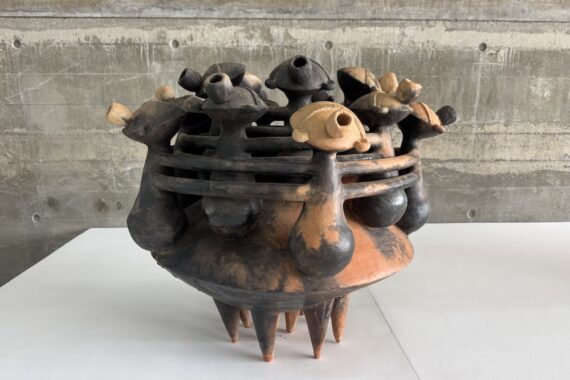
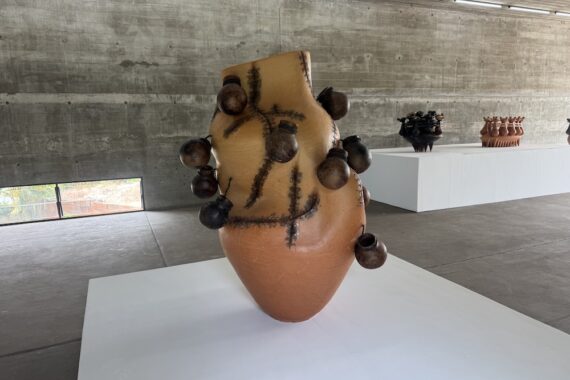
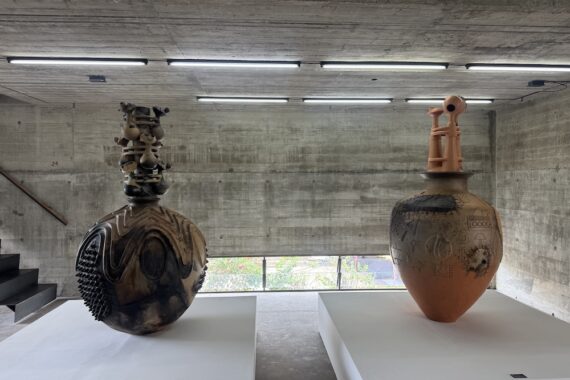
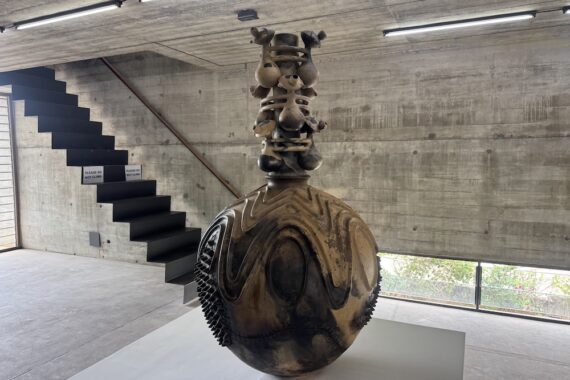
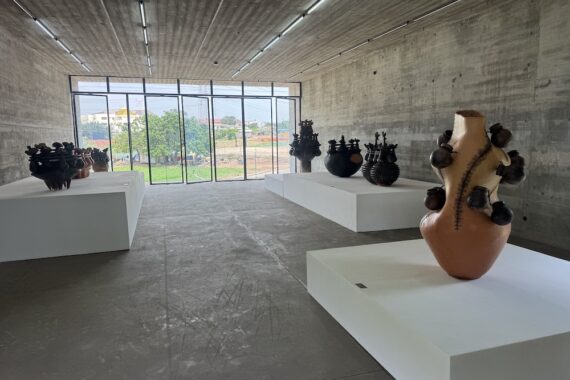
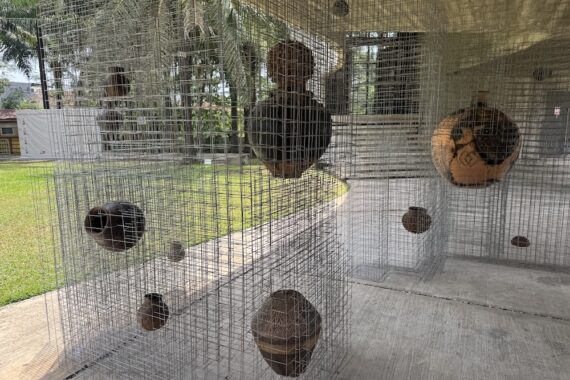
At Nubuke Foundation in Accra, Frederick Ebenezer Okai transforms earthenware fragments into sculptural reflections on cultural diversity, collective identity, and the possibility of repairing social divisions.
Curated by Senegalese architect / cultural policies consultant N’Gonné Fall, the exhibition draws on Ghana’s rich ceramic traditions and examines how broken objects can serve as metaphors for societies seeking reconciliation and renewed understanding.
Indeed, Okai has increasingly moved beyond the formal constraints of academic training to embrace a more intuitive and community-centered approach. Visits to more than 30 pottery centers across Ghana have shaped his artistic development, where encounters with local artisans revealed the depth of technical knowledge embedded in traditional production methods.
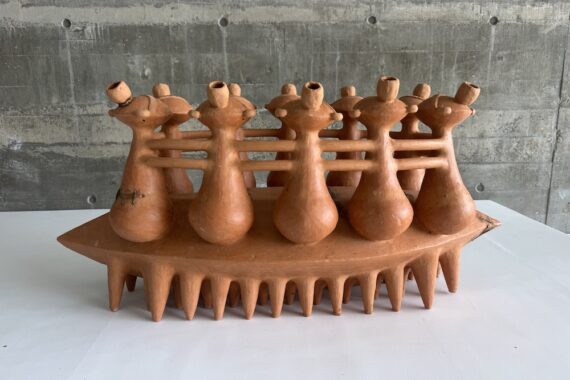
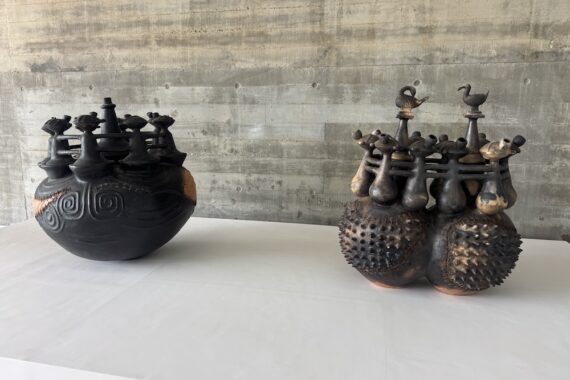
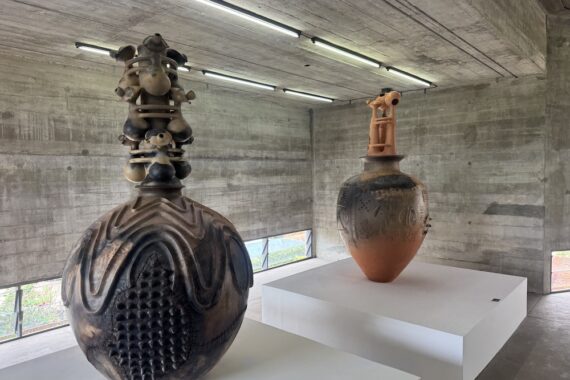
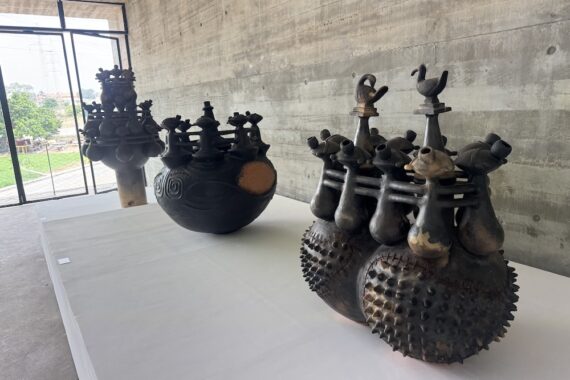
These experiences have informed a practice that brings together fragments, forms and materials gathered from different communities. Rather than concealing the fractures in his fired earthenware, Okai deliberately exposes them, binding pieces with glue and wire. The resulting sculptures suggest that differences need not disappear for unity to emerge. Instead, individual histories and cultural identities can coexist within a shared structure.
Repair is central to this artistic language. Drawing inspiration from the Japanese philosophy of wabi-sabi, which embraces imperfection, simplicity, and the passage of time, Okai treats cracks, scars, and irregularities as meaningful features rather than flaws to be concealed.
His works resist the pursuit of flawless finishes, allowing the marks of damage and restoration to remain visible. In doing so, the artist invites viewers to consider how societies might confront their own histories of division without erasing the experiences that shaped them.
The use of traditional ceramic motifs, including dots, further connects the sculptures to Ghanaian visual heritage. Yet these references are not merely nostalgic. By combining indigenous pottery aesthetics with contemporary sculptural experimentation, Okai creates a visual dialogue between inherited knowledge and present-day concerns. His works become repositories of collective memory, carrying traces of the places, people, and cultural encounters that shaped them.
Ultimately, the exhibition positions ceramics as more than a material practice. It becomes a way to think through belonging, difference, and social responsibility. Okai’s sculptures suggest that meaningful progress requires reflection, openness, and a willingness to rebuild relationships.
Unquestionably, the visible seams holding these works together offer a compelling proposition: unity does not demand uniformity. Sometimes, a collective’s strength lies in its ability to acknowledge its fractures, preserve its differences, and find new ways to hold together.
The exhibition closes on Saturday, April 17, 2027.


