



By John Owoo
(Lomé – Togo)
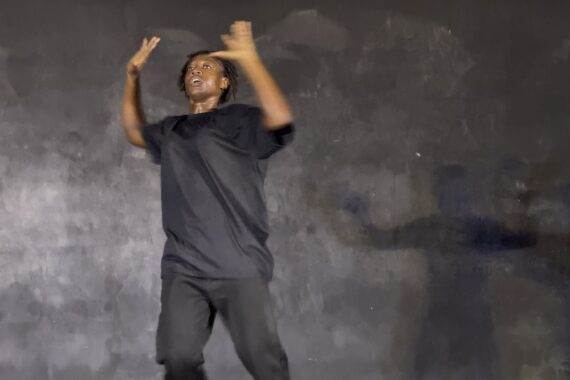
Synaptic Resonances brought the complexities of womanhood, the uncertainties of change, and the possibility of reinvention to life in a contemporary dance piece that captivated an enthusiastic audience at the Brin de Chocolat Cultural Center in the heart of Lomé, Togo.
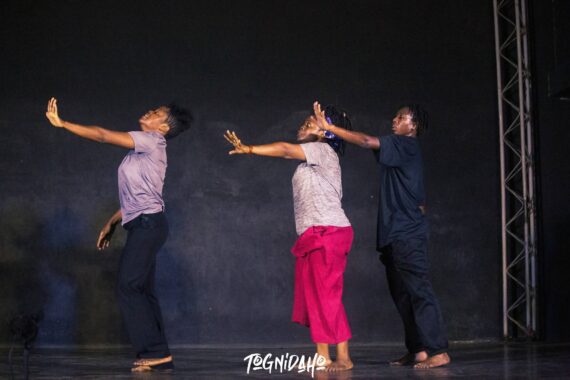
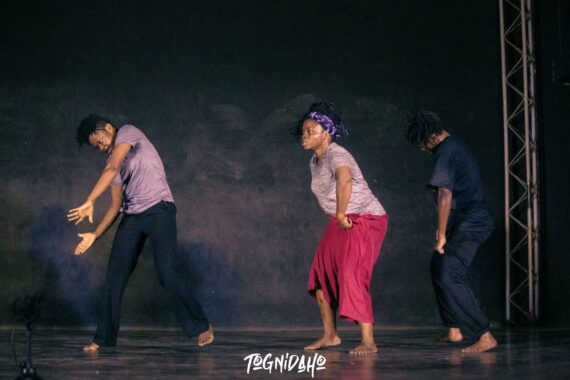
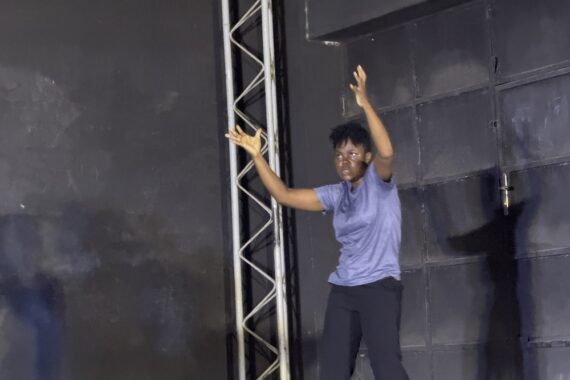
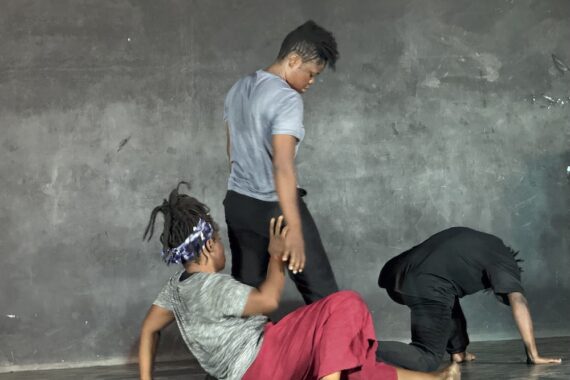
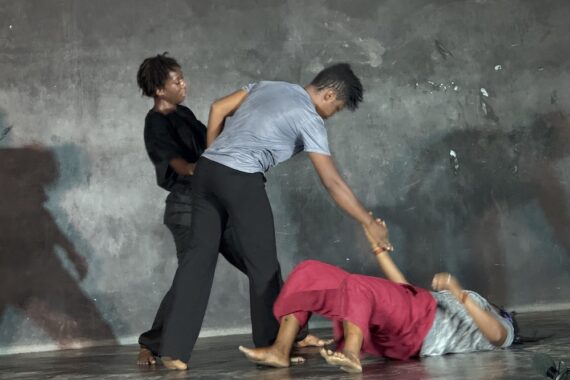
Choreographed by Beninese dancer Nourou-Deen Eniola, the work featured performers Bagna Malimda, Dogbe Akossiwa Dogbe, and Yerima Adjaratou, whose energetic movements and fluid transitions brought to life the intersecting lives of three women as they navigated personal upheavals.
At the heart of the performance are three women living in the same housing complex. Although they often cross paths, they keep their struggles largely hidden from one another. Each faces a different crisis: a single mother of three burdened by family responsibilities, a wealthy widow learning to rebuild her life after her husband’s death, and an unemployed woman grappling with yet another failed relationship.
With Madagascan choreographer Xtrema as artistic director, the stories provide a compelling framework for examining the uncertainties that accompany changing circumstances. Through fast-paced sequences, expressive gestures, and seamless scene transitions, the performers convey a spectrum of emotions, ranging from anger and vulnerability to desire, humor, and the search for belonging.
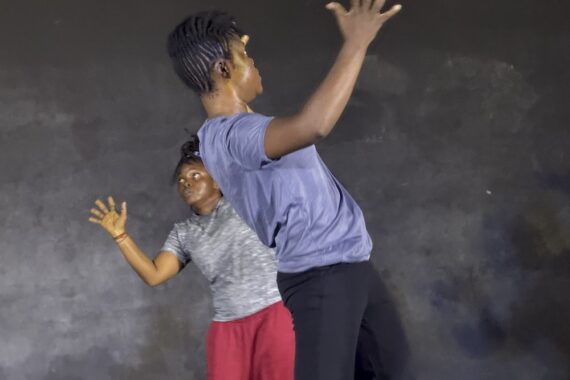
Rather than presenting these experiences as isolated struggles, Synaptic Resonances gradually reveals their connections. The women’s encounters shift from observation and distance to confrontation, recognition, and moments of solidarity. Their bodies become expressive landscapes, registering the emotional consequences of loss, displacement, and the challenge of beginning again.
A striking aspect of the work is its integration of video mapping and ancestral motifs. Projected patterns respond to the dancers’ movements, transforming across their bodies and throughout the surrounding space. Initially distinct, these visual signs gradually fragment and evolve into lines, networks, vibrations, pixels, and light.
This visual transformation reinforces the choreography’s central concern: the relationship between inherited identities and the possibilities of change. Ancestral patterns evoke the memories and cultural references that shape individual lives, while their gradual mutation points toward the need to imagine new ways of existing.
The interplay between movement and digital imagery also expands the stage beyond a conventional performance space. The city becomes a fluid landscape where private experiences intersect, collide, and ultimately contribute to a shared human experience.
Importantly, Synaptic Resonances offers no easy solutions to the difficulties its protagonists face. Instead, it invites audiences to consider how people endure uncertainty and find new forms of resilience as familiar structures begin to collapse.
By combining contemporary dance, visual technology, and reflections on memory, identity, and transformation, the production makes a persuasive case for dance as a language capable of conveying the complexities of everyday life.
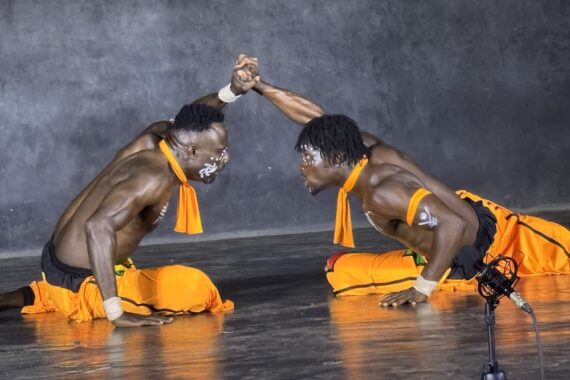
A Géants Arts Togo / NO’OXPERTISES Togo organized the production with support from the Institut Français du Togo, which included a floor show by acrobatic dancers.


