

By John Owoo
(Abidjan – Côte d’Ivoire)
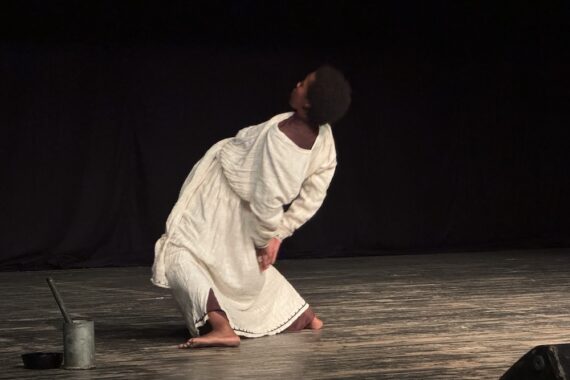
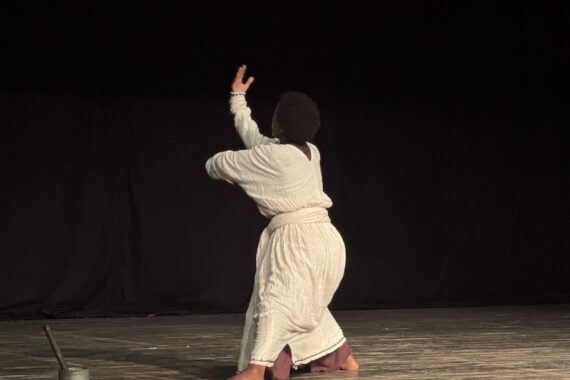
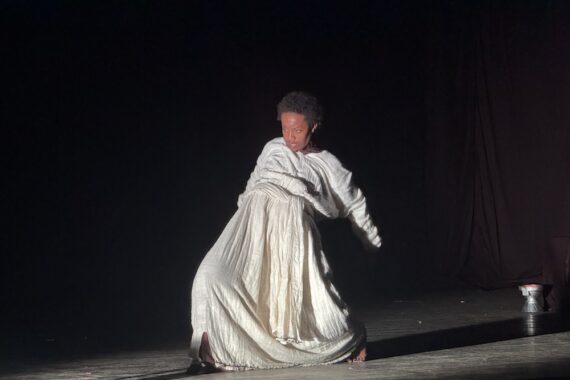
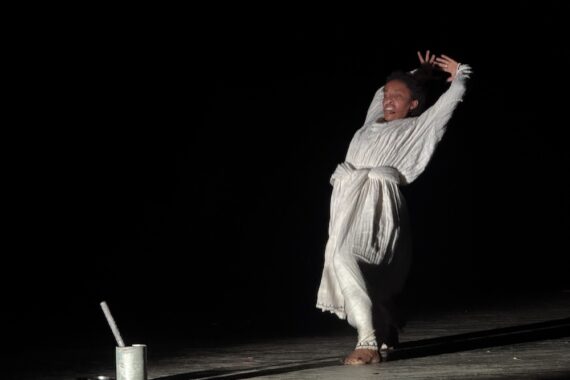
At once intimate and politically resonant, Unravel, conceived and performed by Ethiopian dancer Elsa “Zema” Mulder and featuring original music by Cheikh Ibrahim Thiam, unfolds as a poignant meditation on international adoption and the fragile threads of identity it weaves and unravels.
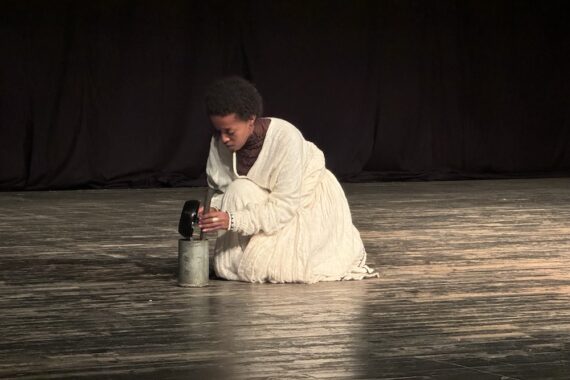
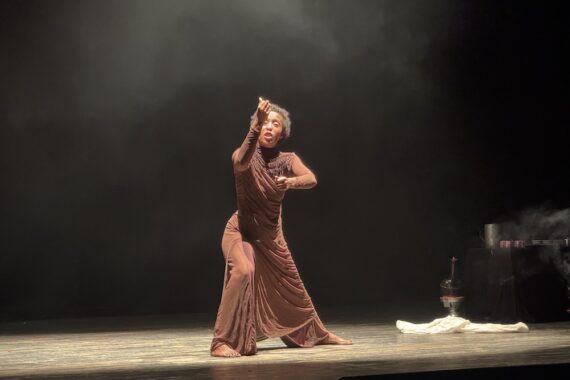
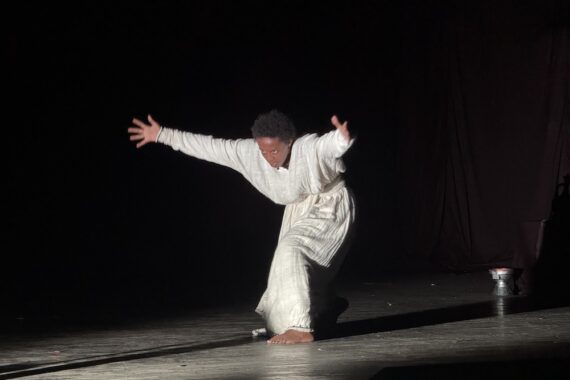
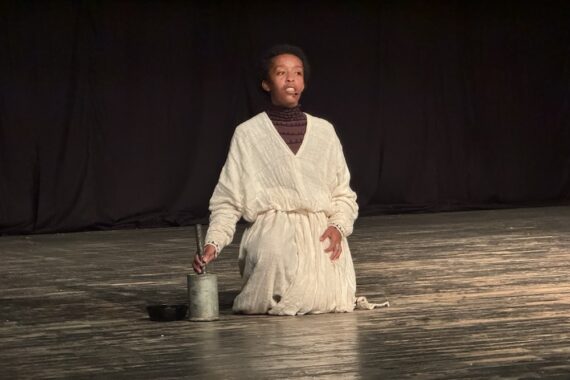
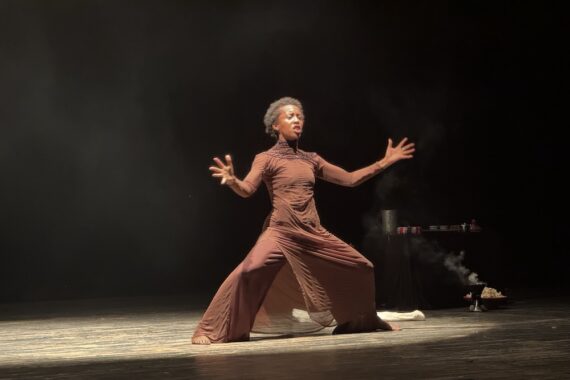
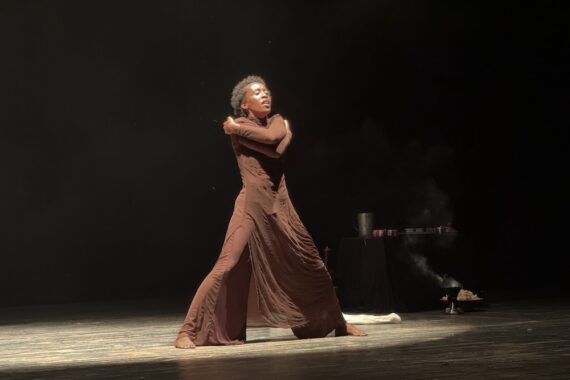
During a magical performance at Salle Kojo Ebouclé (Palais de la Culture), as part of the ongoing Market for African Performing Arts Festival, Mulder draws the audience into a quiet, almost ritualistic space as they perch and cling to their seats.
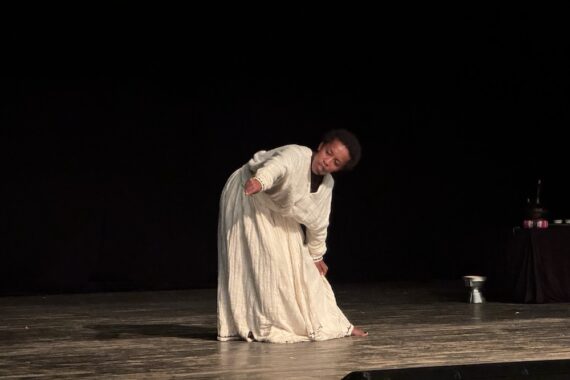
Inspired by the Ethiopian Buna coffee ceremony, the performance treats this cultural symbol not merely as an aesthetic reference but as a powerful metaphor for memory, belonging, and reconstruction. The stage becomes a site of both grounding and dislocation, where gestures oscillate between familiarity and estrangement.
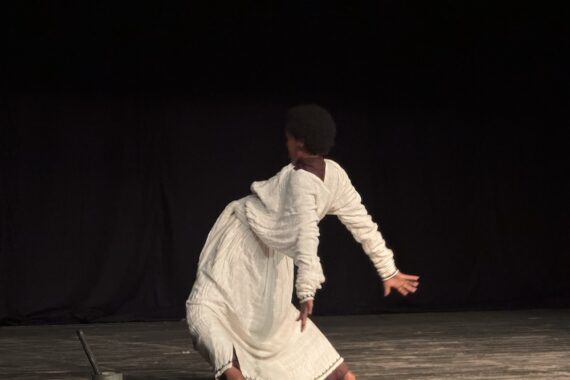
Mulder’s movement vocabulary is deliberate and restrained, yet charged with emotional intensity. Her body seems to carry the weight of absence—moments of stillness linger just long enough to suggest loss, while sudden shifts in rhythm evoke the internal rupture of separation. The choreography resists spectacle, privileging nuance and interiority. In these quieter passages, Unravel finds its strongest voice.
Thiam’s musical composition complements this sensibility with a soundscape that subtly bridges continents. The score shifts between textured sonic layers and sparse, almost fragile tones, mirroring the performer’s journey through fragmented memory and inherited silence. The interplay among sound, spoken word, and movement creates a multidimensional narrative that never feels forced, allowing the themes to emerge organically.
What makes Unravel particularly compelling is its refusal to simplify the adoption narrative. Rather than presenting a linear story, Mulder engages with the “unsaid”—the emotional and psychological complexities often overlooked in public discourse.
Separation, grief, and the body’s memory are examined not as abstract concepts but as lived realities. The performance interrogates what it means to belong to a place one may not fully remember and how identity is shaped in the absence of choice.
There are moments, however, when the piece’s introspective nature risks distancing the audience, especially for those less familiar with the cultural references embedded in the work. Yet even in these instances, Mulder’s sincerity anchors the performance, offering glimpses of vulnerability that resonate universally.
Ultimately, Unravel is a quietly powerful work that lingers long after it ends. It does not seek to resolve the tensions it raises but invites the audience to sit with them—to reflect on the complexities of origin, memory, and selfhood in an increasingly interconnected yet fragmented world.


Sounds powerful.
Hello John,
Wow, it was such a pleasure to read your article and to see how you received UNRAVEL. I felt truly understood through your words, and at the same time, I really appreciated reading your own perspective and reflections on the work.
Thank you so much for taking the time to engage with the performance so thoughtfully and for sharing such a positive and meaningful response. It means a lot to me to see how the work resonates with others and opens up space for different perspectives and conversations.
Thank you again.
Hello John,
Wow, it was such a pleasure to read your article and to see how you received UNRAVEL. I felt truly understood through your words, and at the same time, I really appreciated reading your own perspective and reflections on the work.
Thank you so much for taking the time to engage with the performance so thoughtfully and for sharing such a positive and meaningful response. It means a lot to me to see how the work resonates with others and opens up space for different perspectives and conversations.
Thank you again