

By John Owoo
(Accra – Ghana)
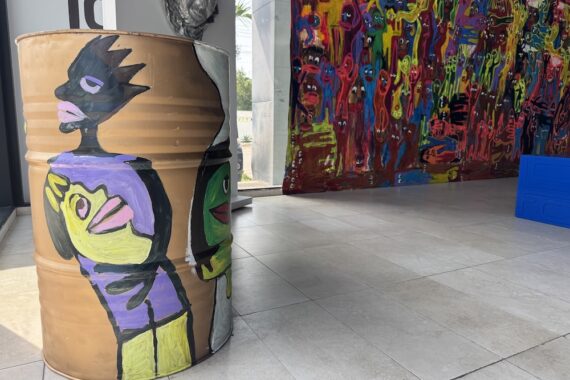
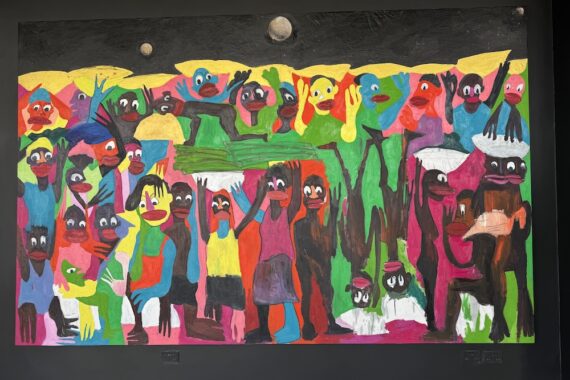
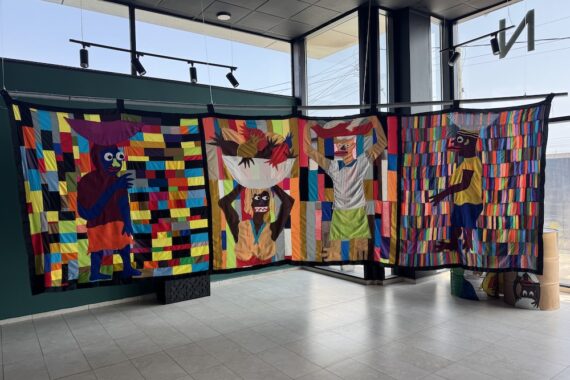
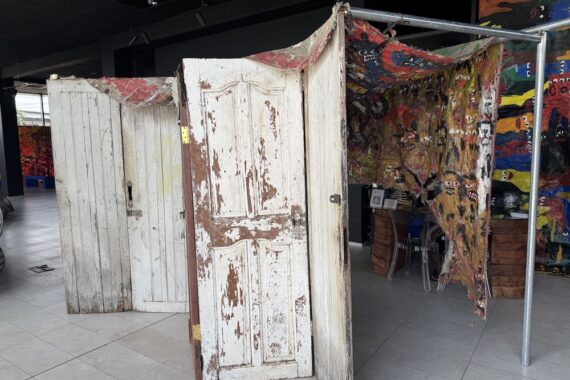
Mariama Wɔ Ha, a solo exhibition by Ghanaian artist Moses Adjei that unfolds as a profoundly moving meditation on memory, labor, and dignity—while transforming the space into an archive of lived experience—is currently underway at the La Foundation for the Arts in Accra.
Rooted in Adjei’s childhood as an orphan in Sodom and Gomorrah—one of Accra’s most stigmatized informal settlements—the exhibition connects personal history with urgent social commentary.
Central to the work is the figure of kayayei—women head porters whose daily labor sustains urban economies while remaining largely invisible within them. Indeed, his practice does not sentimentalize their struggles; instead, it insists on recognition, emphasizing resilience as both subject and method.
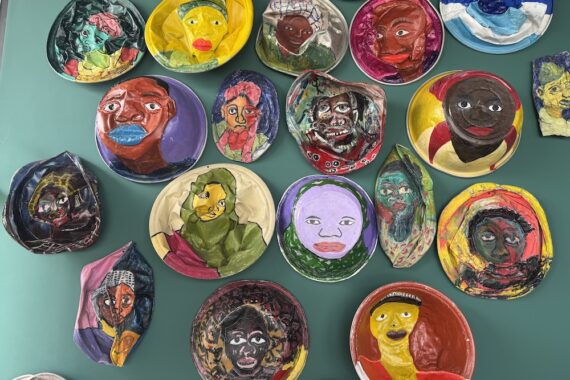
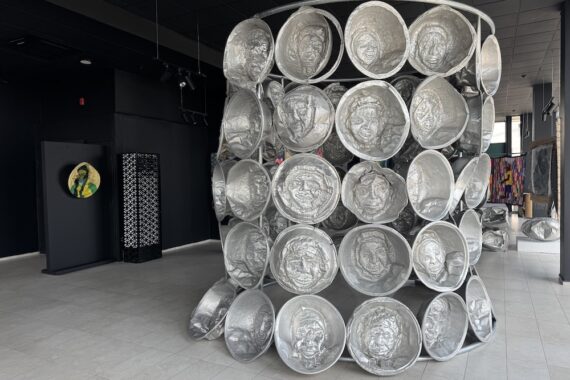
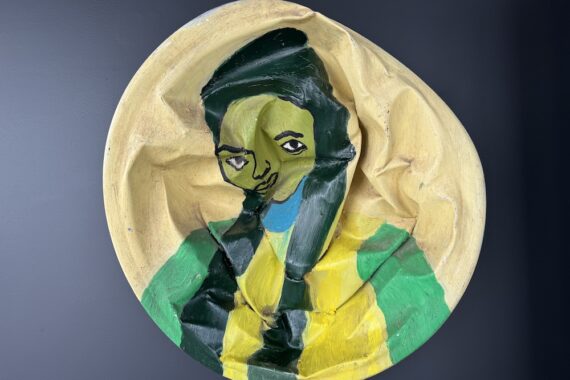
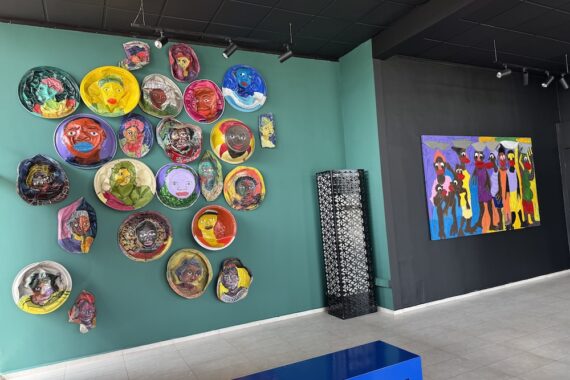
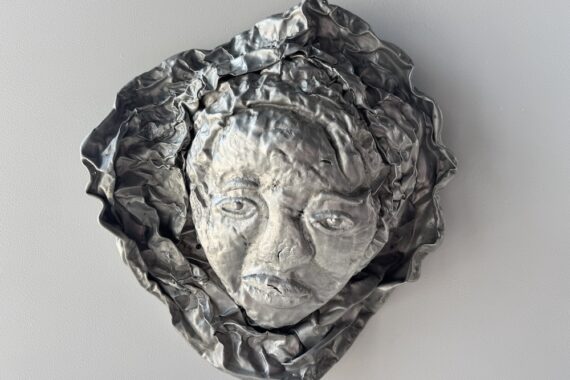
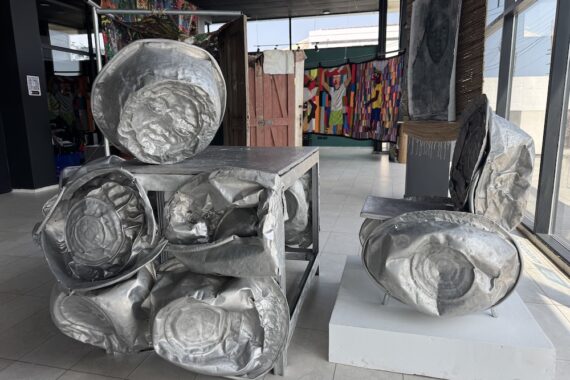
Curated by Rania Odaymat and presented in collaboration with The Beyond Collective, his sculptural series Apawa Coins anchors the exhibition. Working with discarded aluminum pans—tools of survival for the kayayei—the artist replaces the women’s worn vessels with new ones and carefully etches their faces into the old metal.
Using improvised tools made from scavenged nails, he infuses physical labor into each piece. The process is as meaningful as the final result: the rhythmic clang of metal evokes the soundscape of Sodom and Gomorrah, reminiscent of workshops, scrap yards, and markets where informal economies flourish.
These transformed pans operate across multiple registers. They serve as portraits, objects, and historical documents that blur the lines between craft and fine art. By elevating utilitarian materials into sculptural forms, Adjei challenges established aesthetic hierarchies and questions who—and what—is considered worthy of preservation.
Visually restrained yet emotionally intense, Mariama Wɔ Ha avoids spectacle in favor of deep engagement. The works require time: to read the etched faces, to feel the weight of metal, to confront the social and material economies of extraction that support modern urban life.
Ultimately, the exhibition presents art as a vessel for shared humanity. In Adjei’s hands, discarded metal becomes memory, loss becomes lineage, and seeing becomes an act of resistance. Mariama Wɔ Ha is not only a tribute to overlooked lives; it is a powerful argument for art’s ability to reclaim value where society has denied it.
The exhibition concludes on Wednesday, February 11, 2026.


