

By John Owoo
(Accra – Ghana)
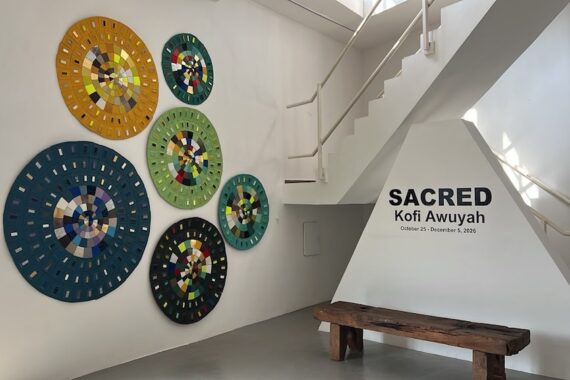
At World Faze Gallery, artist Kofi Awuyah invites viewers into a compelling exploration of power, spirituality, and cultural identity through an exhibition currently on view in Accra.
It examines how objects acquire meaning beyond their physical existence. Drawing on African traditions, historical references, and everyday materials, Awuyah investigates the relationship between material objects, spiritual protection, and humanity’s enduring quest for power.
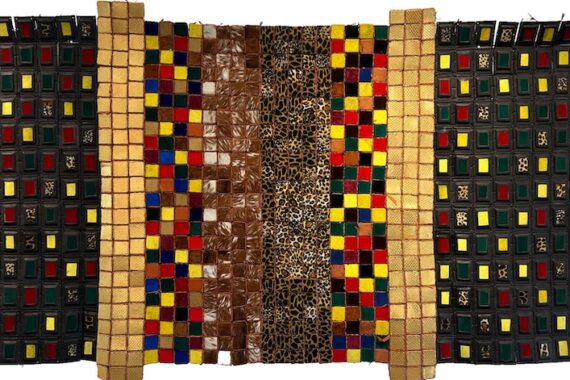
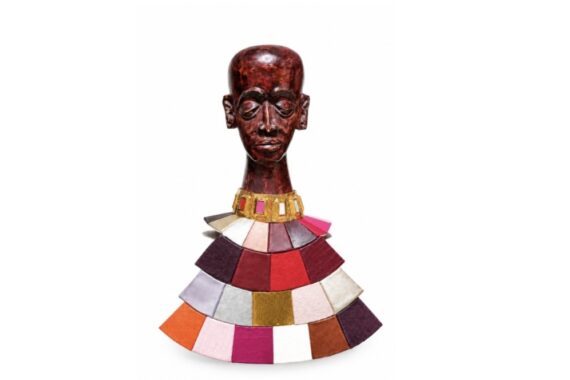
At the center of the exhibition is the talisman, an object historically associated with protection, authority, and the invocation of spiritual forces. Awuyah draws inspiration from diverse cultural references, including the batakari kɛseɛ (akotadeɛ) of the Ashanti, the breastplates of ancient Greek and Roman warriors, and the ceremonial garments of Jewish High Priests.
Through these connections, he considers how different societies have invested objects with spiritual significance, transforming materials into symbols of authority, survival, and resilience.
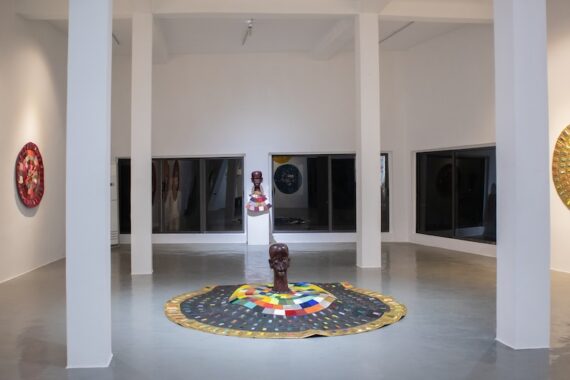
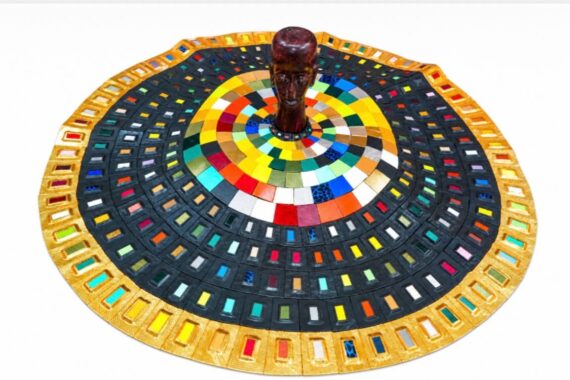
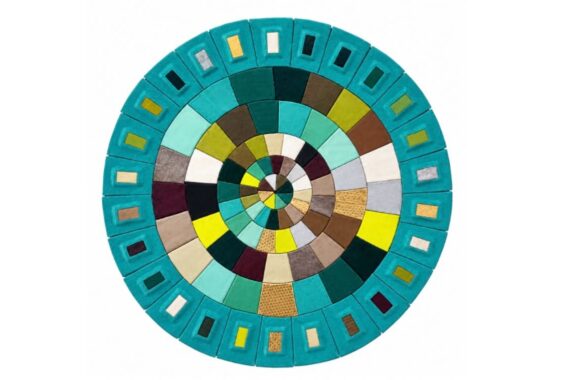
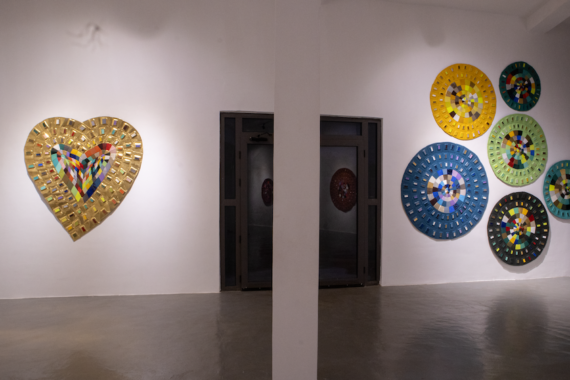
One striking installation features a carved human head surrounded by concentric circles of black, gold, and vibrant colors. The composition reflects the individual as a bearer of lived experiences, navigating competing forces and seeking protection within complex social and spiritual structures.
The dark surfaces suggest struggle and uncertainty, while the gold perimeter evokes authority, aspiration, and the pursuit of a better existence. The colorful center introduces identity’s emotional and psychological dimensions.
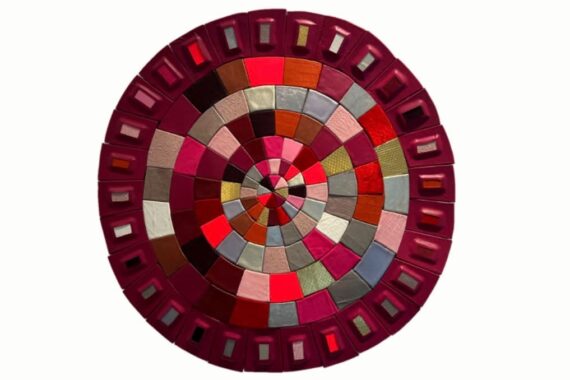
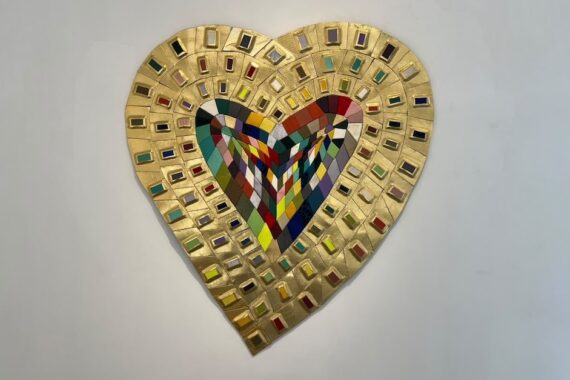
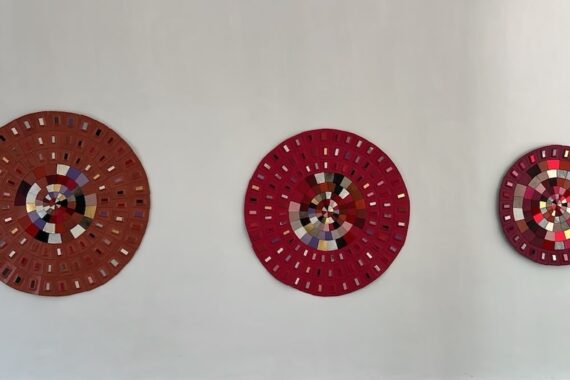
Materiality is central to Awuyah’s artistic language. Animal hides, leather, suede, synthetic leather, and other materials are assembled into forms that reference traditional protective regalia while raising questions about dominance, survival, and the exercise of power. His engagement with these materials extends beyond their physical qualities to examine their histories, cultural associations, and symbolic possibilities.
Interestingly, the artist draws on techniques associated with shoemaking and upholstery, employing cutting, gluing, and hand-stitching to construct his works. These processes become metaphors for separation, connection and reconstruction. Each stitch suggests the possibility of bringing fragmented elements together, presenting resilience as something developed through labor, repair and transformation.
Another significant dimension of the exhibition is Awuyah’s use of recovered leather and offcuts sourced from Kantamanto Market in Accra. Much of this material originates from European manufacturing industries and carries associations with luxury consumption. By repurposing discarded pieces into objects of spiritual and cultural reflection, the artist challenges conventional distinctions between waste, value, and reverence.
Awuyah’s exhibition offers more than an investigation of historical regalia or decorative forms. It raises pertinent questions about where power resides, how belief shapes human experience, and why societies continue to seek protection through material objects.
Through an intricate combination of craftsmanship, cultural references, and conceptual inquiry, he presents power not merely as an instrument of dominance, but also as a deeply personal and spiritual pursuit.
It ends on Saturday, November 5, 2026.


