

By John Owoo
(Kumasi – Ghana)
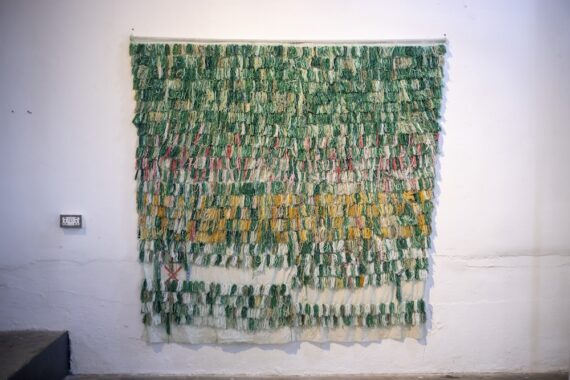
An exhibition of artworks titled I call upon these persons here present to witness that…, by Gideon Kobbla Hanyame, quietly transforms an ordinary domestic object into a profound meditation on purity, labor, and transformation.
The exhibition, which ended on Friday, July 17, at the Sculpture Auditorium, Kwame Nkrumah University of Science and Technology (Kumasi), centered on string-wound water filters, challenging the assumption that purity is untouched or uncontaminated. Instead, it argues that becoming “pure” is itself a process of exchange, sacrifice, and stain.
At the heart of the exhibition lies the paradox of the filter. It begins pristine and white, yet fulfills its purpose only by absorbing impurities. The cleaner the water becomes, the more visibly the filter changes. Hanyame seizes on this contradiction, elevating staining from an unwanted residue to an artistic language. In his hands, stain becomes evidence of labor, encounter, and transformation.
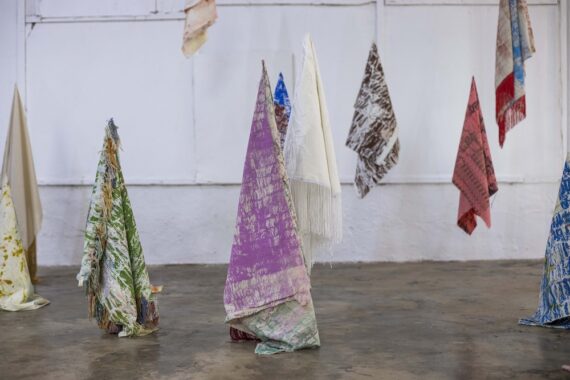
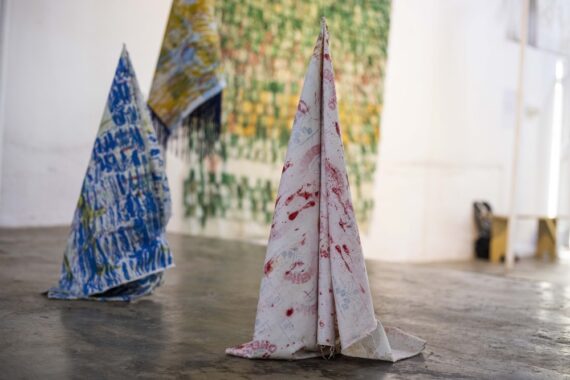
The exhibition is less concerned with presenting discrete artworks than with creating a constellation of experiences. The installation strategy rejects hierarchy, with no prescribed beginning or end.
Visitors are invited to move freely among the works, entering and exiting through multiple points, allowing each person to chart their own path through the exhibition. This refusal of a singular viewpoint mirrors the artist’s broader argument that identity, meaning, and form are always in flux.
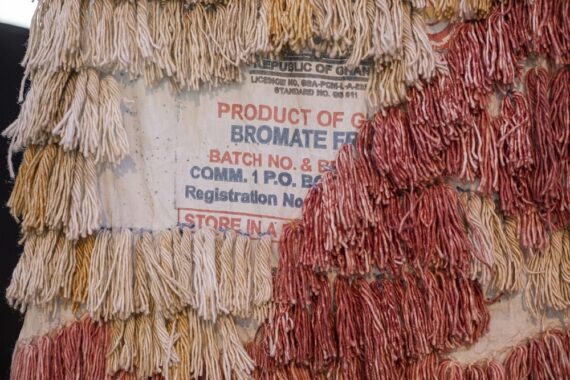
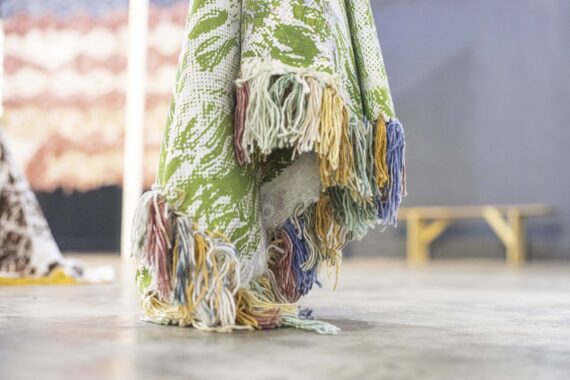
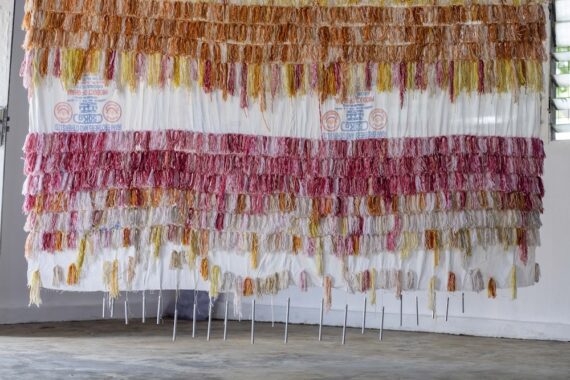
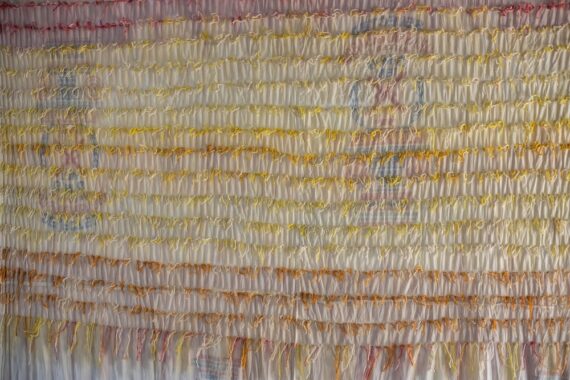
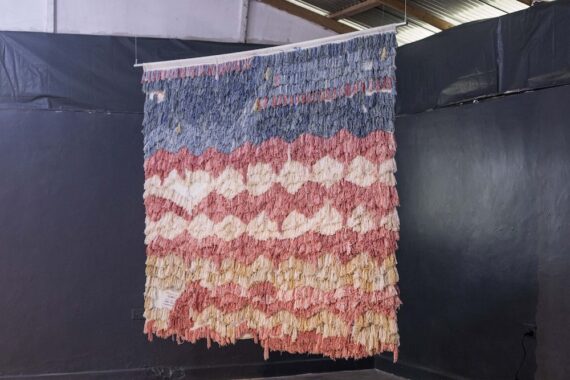
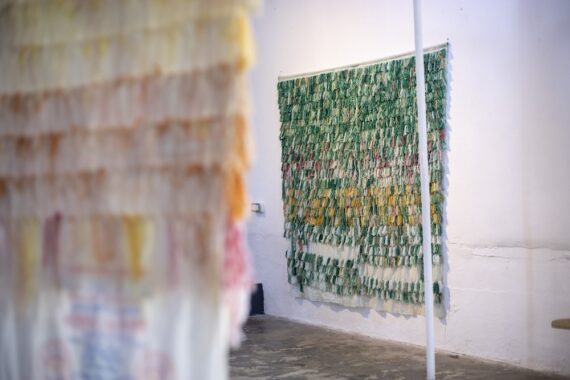
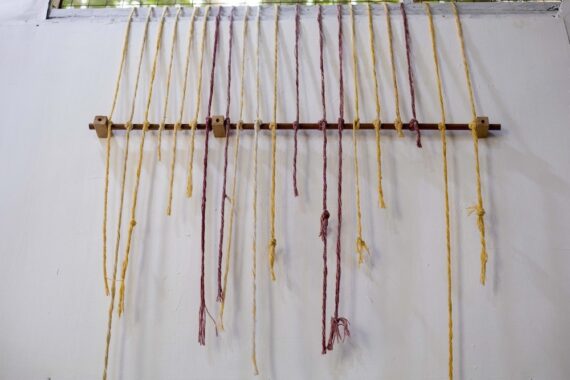
Materially, the works are compelling. Hanyame draws on local craft traditions and collaborative practices, incorporating dyed filter yarns, flour sacks, mirror frames and textile techniques into forms that hover between painting, tapestry and sculpture.
The use of tie-dye methods associated with local dyeing communities, along with collaborations with mirror-frame craftsmen, situates the work firmly within vernacular practices while pushing those traditions into contemporary conceptual territory.
Labor is everywhere visible. Unwrapping, stitching, perforating, dyeing, printing, and transferring become ritual acts that leave traces of effort and time. These gestures produce what the artist calls Nusia—“a thing” in Ewe—objects that resist easy classification and remain in a constant state of becoming.
What makes this exhibition particularly resonant is its insistence that impurity is not failure. Stain is not corruption but transformation. In a world increasingly obsessed with perfection and purification, Hanyame proposes something more complex: that our encounters, our labor, and even our contaminations are precisely what make us whole.


