



By John Owoo
(Accra – Ghana)
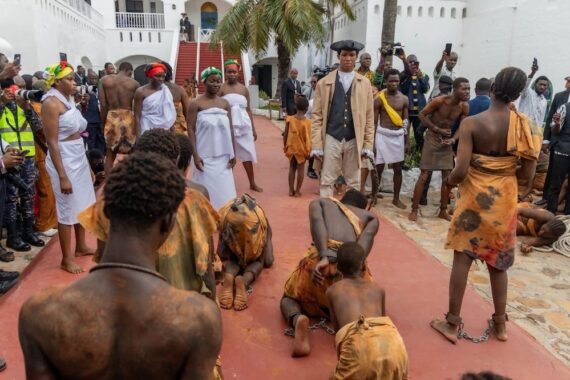
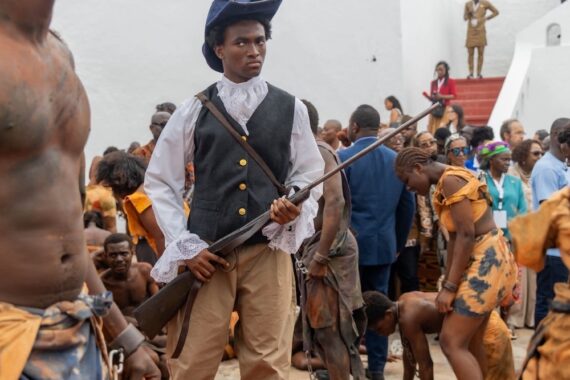
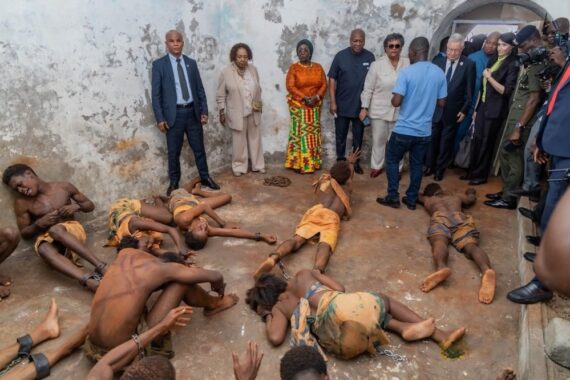
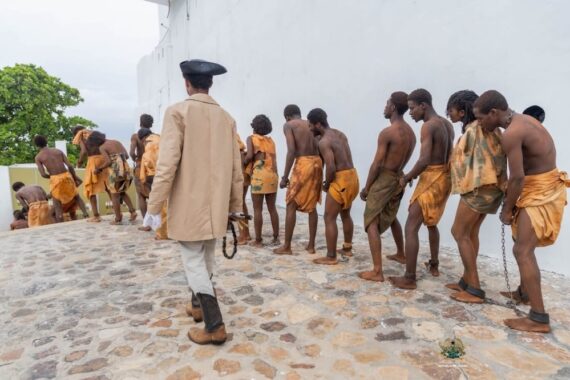
Last week, history was not merely remembered at the Christiansborg Castle in Accra—it was summoned through a historical theatre piece titled Echoes Through the Door of No Return.
Indeed, curator and director Dr. Abdul Karim Hakib transforms one of Ghana’s most significant sites of the transatlantic slave trade into a living theater of remembrance, where the ghosts of the past walk alongside contemporary calls for justice.
Presented in the wake of Ghana’s hosting of a Consultative Conference on Reparatory Justice, following the adoption of the landmark United Nations Resolution formally recognizing the trafficking of enslaved Africans as the gravest crimes against humanity, the production occupies a charged political and historical moment.
Yet rather than serving as a didactic lesson on slavery, it uses the language of performance—movement, music, ritual, and embodied storytelling—to create an immersive experience that is as emotionally affecting as it is intellectually provocative.
The castle itself serves as the production’s most powerful performer. Its weathered walls, courtyards, and dungeons become active witnesses to the horrors once committed within them. The audience is drawn into a journey that follows the enslaved’s trajectory.
From capture in the African hinterlands and forced marches to the coast, through the suffocating darkness of the dungeons, to the infamous Door of No Return, the site’s historical authenticity lends an unsettling immediacy to the performance, collapsing centuries into a single shared moment.
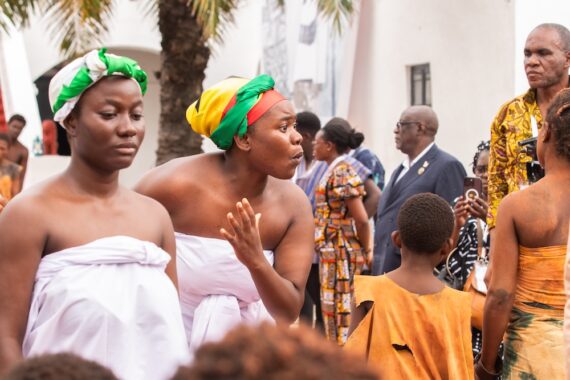
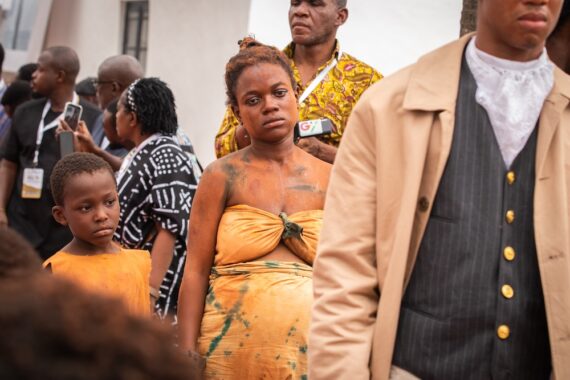
A cast of more than one hundred performers fills the space with an impressive physical and emotional presence. Choreographed sequences evoke collective suffering and resilience, while ritual elements draw on African traditions of remembrance and ancestral communion.
Directed by the Global Arts and Development Center, the production’s strongest moments arise when words yield to gesture, song, and silence. In these scenes, grief becomes palpable, and the audience is invited not merely to observe history but to feel its lingering weight.
Dr. Hakib avoids reducing the transatlantic slave trade to a narrative of victimhood. Instead, the performance foregrounds endurance, resistance, and survival. The ancestors who populate the work are not passive figures trapped in the past; they are active voices demanding accountability from the present. Their echoes reverberate through questions about reparations, restitution, and historical responsibility.
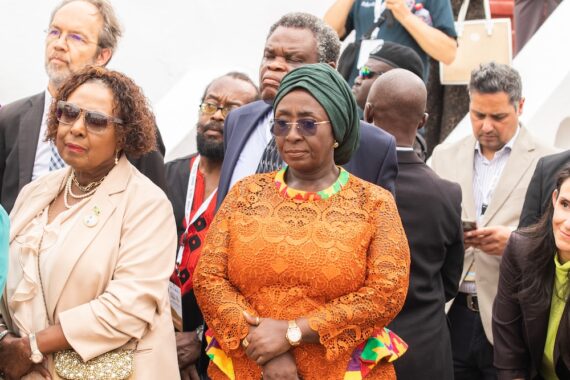
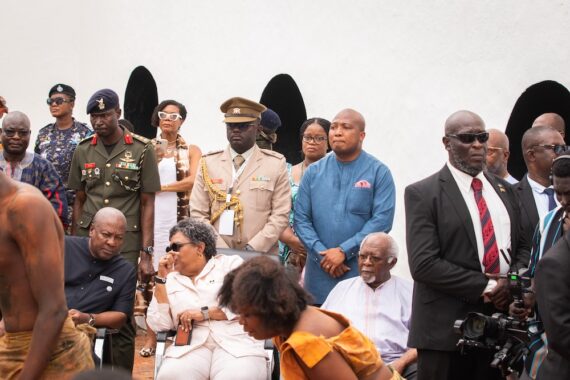
The presence of world leaders, including Ghanaian President John Dramani Mahama and Barbadian Prime Minister Mia Amor Mottley, along with diplomats and delegates from around the world, reinforces the work’s contemporary resonance. Yet Echoes Through the Door of No Return derives its greatest power not from political symbolism but from its ability to humanize an unfathomable history.
Part memorial, part ritual, and part political intervention, the production transforms Christiansborg Castle from a monument to suffering into a space for collective reflection. It is a theater that refuses comfort, insisting that memory remains an ethical act—and that the journey toward justice begins by listening to the echoes history still carries.


