

By John Owoo
(Accra – Ghana)
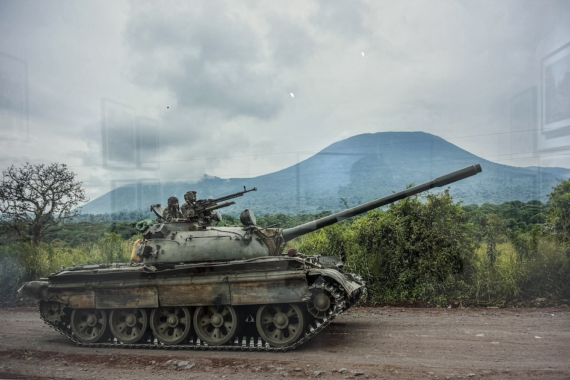
War photography often arrives from afar, bringing images of destruction, displacement, and death to audiences who may never encounter the conflict firsthand. Congo, Close to Home, however, offers a different kind of testimony.
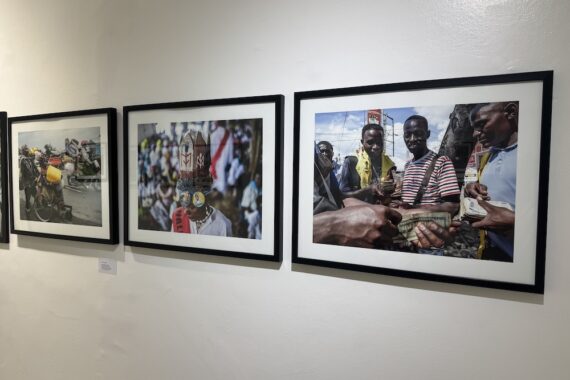
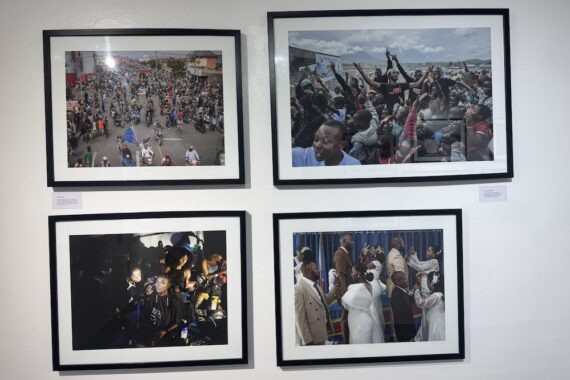
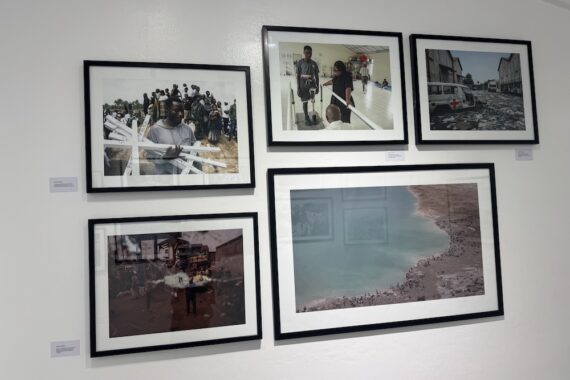
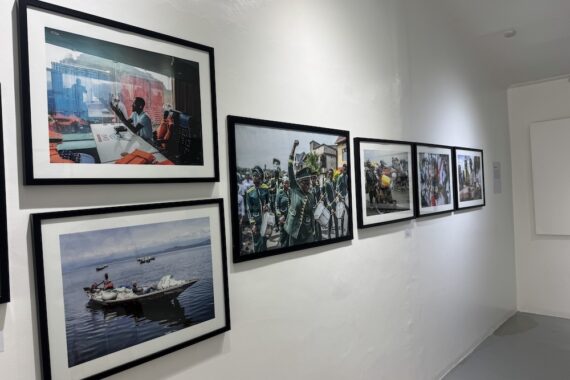
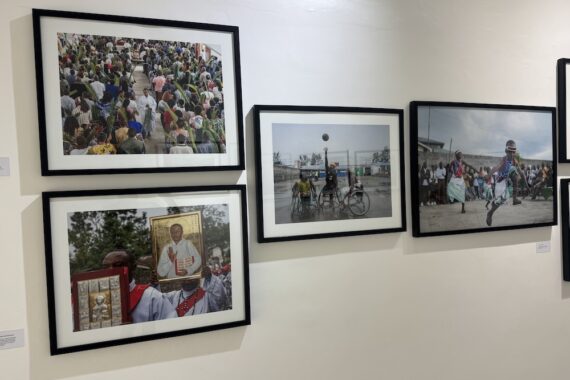
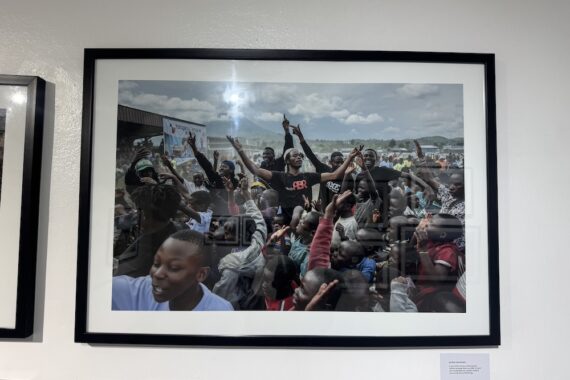
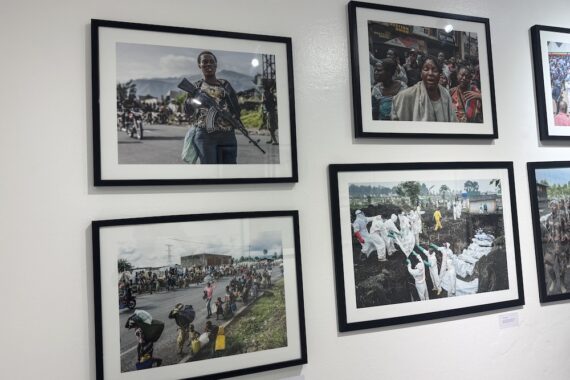
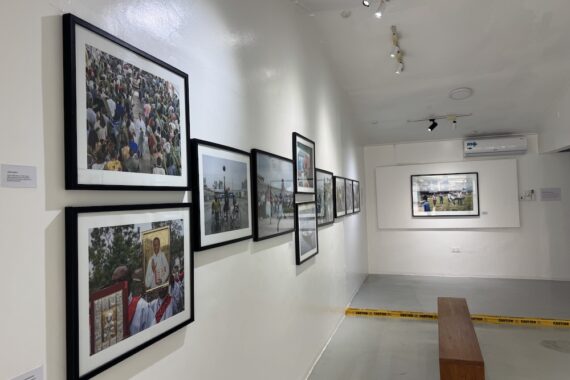
Presented at Dikan Gallery in Accra, the exhibition brings together the work of seven young Congolese photographers whose cameras remain embedded in the communities they document.
Aubin Mukoni, Arlette Bashizi, Gloire Chasinga, Guerchom Ndebo, Jospin Mwisha, Marie-Jeanne Munyerenkana, and Moses Sawasgwa photograph life in and around Goma, a city of more than a million people on the shores of Lake Kivu. Living under the shadow of conflict and occupation since January 2025, they document a society confronting violence while refusing to surrender its ordinary rhythms.
That tension gives the exhibition its emotional force. The photographs do not merely catalog war; they look at what unfolds alongside it. Markets continue. People dance. Couples marry. Children play. Families mourn. Graves are dug. Daily life, in all its fragility and resilience, endures.
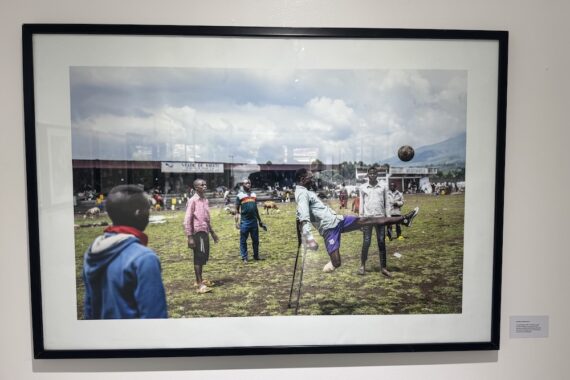
One particularly striking image shows a boy playing football on crutches at a camp for displaced people outside Goma. It could easily be read solely through the language of tragedy, yet the football introduces another dimension: childhood endures even in circumstances that try to take it away.
This is where the exhibition moves beyond conventional conflict photography. Its photographers are not visiting journalists passing through a crisis. They are witnesses who live with the consequences of what they photograph. Their proximity creates an intimate visual record in which the line between photographer and subject blurs.
Curated by Paul Ninson, chief curator of Dikan Gallery, the exhibition also advances a deliberate geographic argument. Displaying these photographs in Accra reminds us that Congo is not some distant African crisis beyond the concerns of other Africans. From Accra to Goma, the exhibition proposes a shared continental proximity—geographical, historical, and human.
There is also an important question of authorship. In an age when images of African conflict are frequently produced for international audiences, Congo, Close to Home places the camera in the hands of Congolese photographers. Their photographs therefore become personal documents as much as news images, preserving details that might otherwise disappear once international media attention shifts elsewhere.
Ultimately, Congo, Close to Home is an exhibition about a city that is broken but not emptied of life. Its photographs insist that beyond the headlines and statistics are people who continue to love, work, celebrate, grieve, and dream. In that sense, the exhibition does more than document Congo’s war; it documents the stubborn persistence of life within it.


