



By John Owoo
(Accra – Ghana)
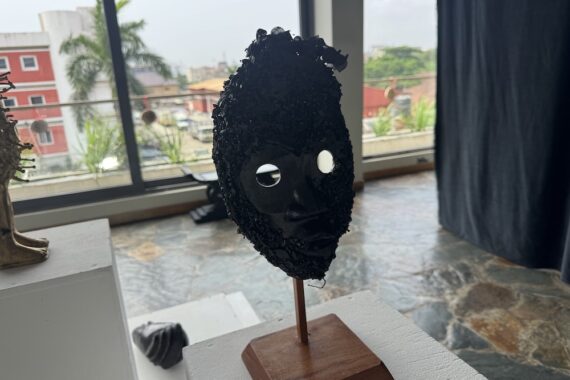
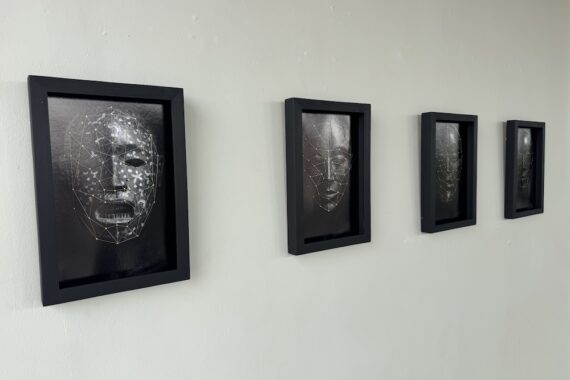
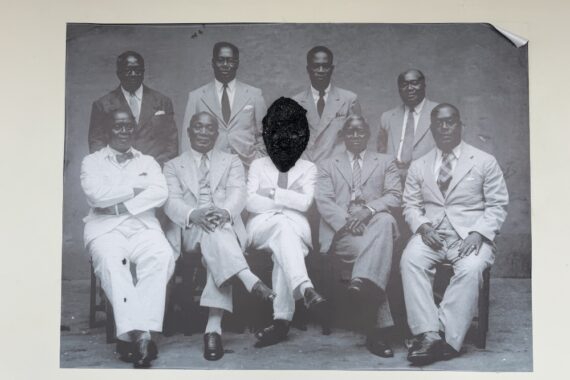
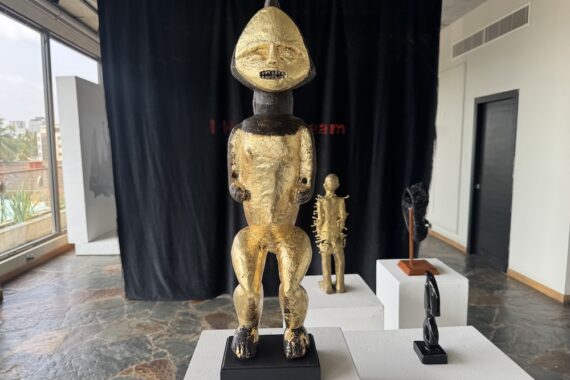
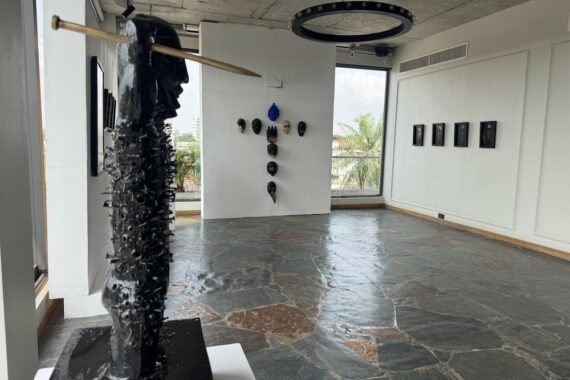
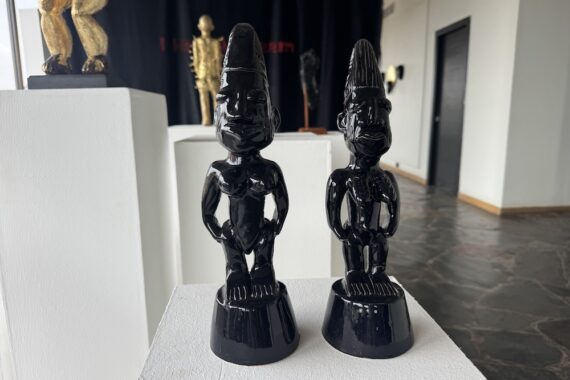
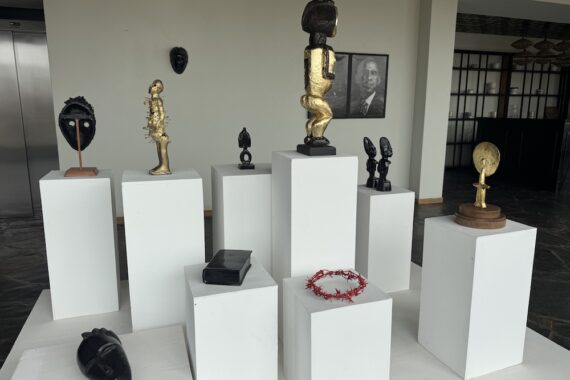
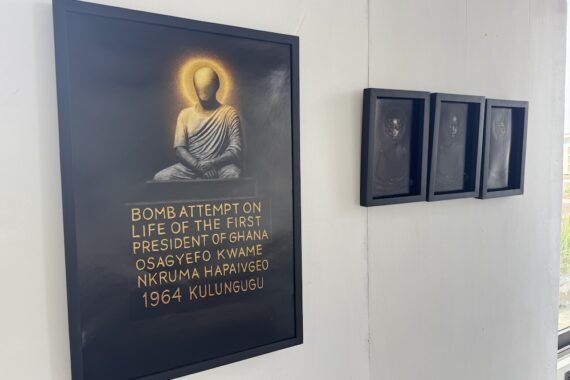
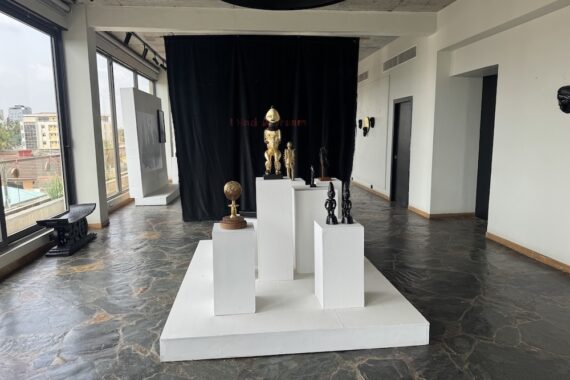
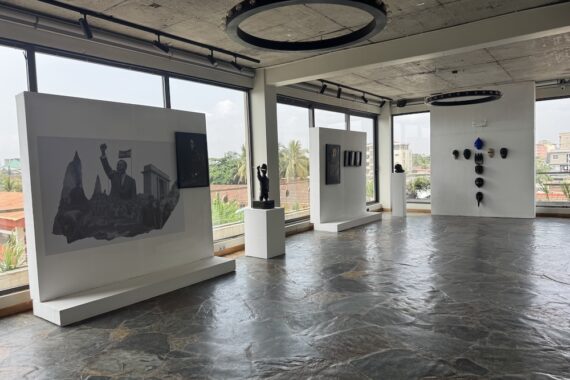
At Mix Art Gallery in Accra, The Revenants—a solo exhibition by Franco-Beninois artist Dimitri Fagbohoun—explores themes of memory, return, and ancestral presence.
Curated by Essé Dabla-Attikpo, the exhibition features over 20 newly commissioned works and highlights Accra as a vital space for exploring diasporic ties and cultural inheritance.
Fagbohoun, a France-based “third culture kid,” works in photography, sculpture, and installation. His practice is highly autobiographical, influenced by moving across borders and the conflicts that arise when geography, heritage, and identity intersect.
In The Revenants, these tensions are neither resolved nor softened; instead, they are highlighted as productive spaces for questioning how histories are remembered, misinterpreted, or erased. The exhibition’s premise is straightforward: what returns to us when memory is reclaimed? Fagbohoun explores this question through gestures familiar to many Africans in the diaspora and those undertaking journeys of return.
Indeed, ritual acts—such as adopting Akan day names, embracing local aesthetics, or inscribing symbols onto the body—appear throughout the exhibition as signs of rebirth rather than performance. These gestures serve as declarations of presence, indicating active engagement with ancestry rather than a nostalgic longing for it.
Material and spatial strategies are key to shaping the exhibition’s impact. The artist’s installations are immersive yet not theatrical, pulling viewers into carefully crafted environments that promote reflection instead of spectacle.
His use of photography and sculpture challenges fixed narratives, instead presenting fragments that suggest layered histories and spiritual continuities. The works function as propositions, prompting viewers to rethink how identity and ancestral knowledge are framed in contemporary art discourse.
Curator Essé Dabla-Attikpo describes the exhibition as a “call to unlearn,” challenging audiences, collectors, and institutions to reconsider inherited assumptions. Her claim that Vodun is “not fixed, tame, or easily understood” sets the tone for an exhibition that refuses to simplify. Instead of portraying belief systems as unchanging traditions, The Revenants emphasizes their dynamism and relevance today.
Ultimately, The Revenants positions itself as a space for dialogue rather than resolution. It invites viewers to examine their own connections to diaspora, history, and native belief systems, while recognizing the discomfort that such questioning might cause. In Accra—a city long associated with return and remembrance—Fagbohoun’s exhibition presents a timely and thoughtful reflection on what it genuinely means to reclaim memory today.
The exhibition, which Adetoye Aguessy supported, ends on Tuesday, January 6, 2026.


